

HIDDEN TREASURES #2 – West Virginia

Welcome to part two in our exploration of the most amazing places in the Central and Southern Appalachian Mountains — this time exploring some of our most fabulous Public Lands.
Droop Mountain Battlefield State Park
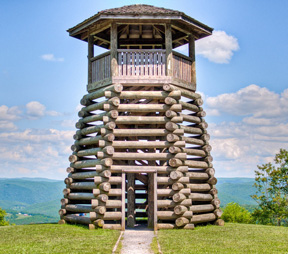
Photo by Jeff Culverhouse
Droop Mountain Battlefield, in the Greenbrier River Valley, is home to West Virginia’s last civil war battle scene. A system of hiking trails brings visitors to a natural spring, mountain bog, pump house and a series of caves. Hiking trails are less than one mile and range from easy to strenuous, and a Civilian Conservation Corps-built museum and lookout tower still stand by the battlefield. The park also offers reenactments of the battle during the month of October. Droop Mountain, part of the Civil War Discovery Trail linking more than 600 Civil War sites across the United States, offers a bit of history and adventure for hikers seeking a unique way to get outside. — JR
More Info: Located on Route 219, 15 miles south of Marlinton and 27 miles north of Lewisburg. Visit: droopmountainbattlefield.com
Bear Rocks Preserve
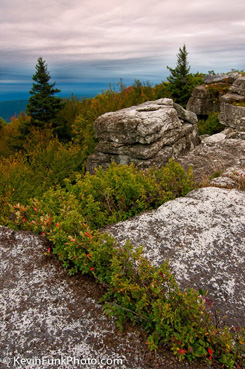
Photo by Kevin Funk (kevinfunkphoto.com)
Once damaged by major logging and extensive fires, Bear Rocks Preserve is now a recovering ecological preserve. Located on the Dolly Sods Plateau, this 477-acre expanse of subalpine landscape overlooks surrounding valleys with a view that can stretch as far east as the Shenandoah National Park. Although deforestation has left much of the plateau treeless, Bear Rocks Preserve is sketched with stunted red spruce and barren shrub species characteristic of subalpine zones.
Recovery efforts through The Nature Conservancy of West Virginia have encouraged growth and, as a result, plant life is abundant during the spring and summer. Trails take hikers past blueberry, huckleberry, mountain laurel and azalea bushes. Abundant wildlife roams the preserve — including black bear, white-tailed deer and bobcat. The plateau is home to cranberry bogs and giant boulders that offer the perfect lookout point for migrating hawks, falcons, songbirds and other sky-bound species. As recovery continues, efforts focus on reforesting once-abundant red spruce, protecting lands surrounding the preserve, and acquiring 15,000 acres of coal rights to transfer them to the Forest Service. The subalpine zoning provides a habitat to plants and animals normally found much further north, truly making this one of West Virginia’s most precious treasures. — JR
More Info: Located in the Potomac Ranger District of Monongahela National Forest. Visit: nature.org
Related Articles
Latest News
More Stories
Neighbors Help Neighbors
A photo essay that celebrates the volunteer spirit of the grassroots group Hurricane Helene WNC and speaks to the resourcefulness, collaboration and hard work embodied by thousands and thousands of volunteers, first responders and aid workers across the region after Hurricane Helene.

Halloween Approaches, and Night School Is in Session
The House of Art in Bluefield, West Virginia, looks like a haunted tower, making it the perfect location for its sixth annual haunt event: Night School. The Night School will be open every Friday and Saturday night through Oct. 31.
‘The Most Perfect Act of Love’
Hundreds of people attended the second annual Affirming Sumner Pride celebration on a 24-acre farm dubbed “Fruity Farm” in Bethpage, Sumner County, Tennessee.

Signs of Life: Endangered Bats Found in Nantahala for First Time in More Than a Decade
In the Nantahala National Forest, a team of biologists spotted Indiana bats, an endangered species that hasn’t been seen in North Carolina for the last 11 years.

‘First Line of Defense’
During Hurricane Helene and its aftermath, rural fire departments and other first responder hubs played critical roles in keeping their communities safe, even without power and cut off from outside support for days or weeks after the storm. Two years later, plenty of work remains to ensure these hubs have the resources they need to operate day to day and be ready when emergencies or natural disasters strike.

The Rocky Road — and Bridge — to Recovery
Hurricane Helene is estimated to have damaged nearly 7,000 private roads and bridges in Western North Carolina. Two years later, many restoration projects are complete, but the journey hasn’t been easy — and isn’t over for others.

Leave a comment
Your email address will not be published. Required fields are marked *
Leave a Comment