Get Our RSS Feed!
Front Porch Blog


Coal Ash Floods Congress and the Courts


Tuesday, April 23rd, 2013 | Posted by Brian Sewell


e. The trend is likely to continue until EPA announces clear rules to regulate the to

Since the 2008 Kingston, Tenn., coal ash spill, the toxic waste has been hotly debated in the media, Congress and the courts.

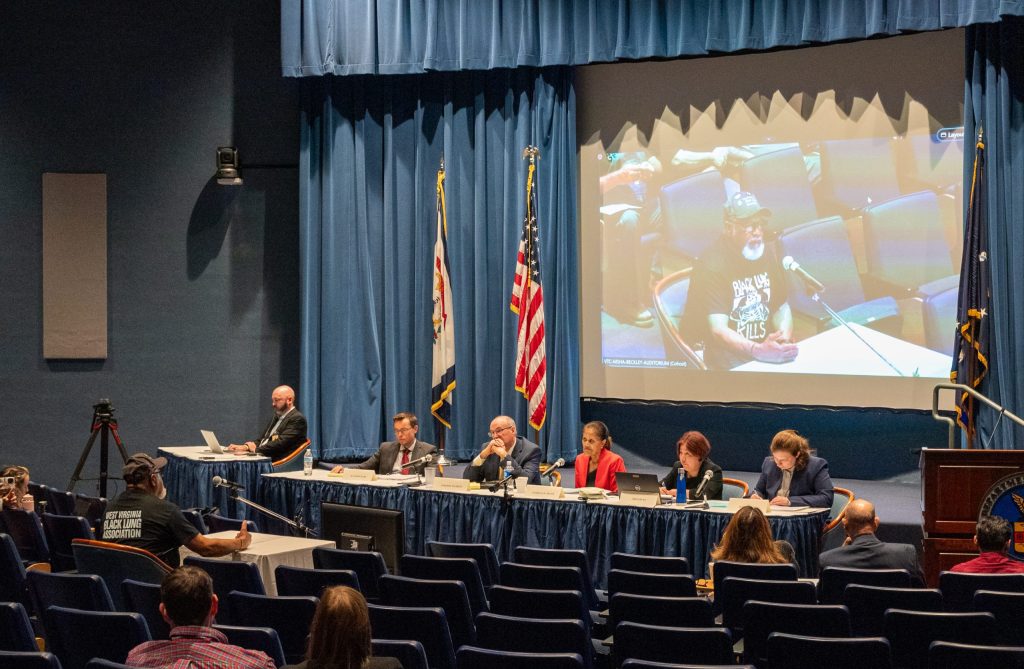
On April 11, the U.S. House of Representatives Subcommittee on Environment and Economy held a hearing in part to promote the Coal Ash Recycling and Oversight Act of 2013, drafted legislation that would prevent the EPA from implementing federal regulation of coal ash, leaving regulation up to the states.

Some witnesses, including the former director of the Mine Safety and Health Academy, Jack Spadaro, and Lisa Evans, an attorney for Earthjustice focused on hazardous waste, testified against the draft, which is modeled on past legislation that failed and was called “unprecedented” in environmental law by the nonpartisan Congressional Research Service.

“Without a doubt, when mismanaged, coal ash harms Americans nationwide by poisoning water and air and by threatening the very existence of communities living near high hazard dams,” Evans said at the hearing. “We must work together to establish regulations that foremost prevent injury to health and ensure the safety of all communities.”

Spadaro, who has been involved in the evaluation and regulation of coal waste dams since 1972 and wrote federal and state regulations governing the structural integrity of dams in the wake of the Buffalo Creek Flood, cautioned subcommittee members against moving ahead with the draft. According to Spadaro, the proposed legislation lacks the adequate engineering requirements and enforcement by a federal agency necessary to prevent another spill similar to the TVA disaster that would lead to irreversible environmental damage and possible loss of life.

“There are thousands of such structures in the United States at this time,” Spadaro said, “and the failure of one or more of these dams is assured unless strict engineering standards are imposed.” The Southeast is home to 40 percent of the nation’s coal ash impoundments, and according to the EPA, contains 21 of the nation’s 45 high hazard dams.

Read more
...


First Annual Climate Convergence in Raleigh, NC


Tuesday, April 23rd, 2013 | Posted by Sandra Diaz


Citizens converged in Raleigh yesterday to demand that political leadership begin to address the challenge of climate change. North Carolina House Rep. Pricey Harrison reminds the crowd that the state legislature belongs to the people. She recently re-introduced the Appalachian Mountains Preservation Act that would a) ban the burning of mountaintop-removal coal in the state, b) put into place comprehensive rules for the storage and disposal of coal ash waste, c) place a moratorium on the construction of new coal plants, and d) divest state pension funds from fossil fuels.

EPA Releases Proposal To Update Clean Water Act Standards for Power Plant Pollution


Monday, April 22nd, 2013 | Posted by Sandra Diaz


The U.S. Environmental Protection Agency has finally proposed a range of options to regulate waste water from power plants which are responsible for half of the nation’s water pollution. While the public comment period has yet to begin, a public hearing is schedule for July 9th in Washington, DC.

More details on the rule itself, and how to submit your comments will be become available on appvoices.org/rww/power-plant-waste/

Below is a press statement from Appalachian Voices and a number of allied organizations.

After 30 years of inaction, EPA finally proposes plans for power plant water pollution includes options protecting waters from toxic pollution as well as weaker standards that maintain the status quo

Washington, D.C. – The Environmental Protection Agency proposed a number of regulatory options late last Friday night, known as steam electric effluent limitation guidelines for power plants, two of which will finally clean up water pollution from hundreds of power plants.

Power plant water discharges are filled with toxic pollution such as mercury, arsenic, lead, and selenium – heavy metals that can cause neurological and developmental damage, cause harm in utero, damage internal organs and cause cancer. Power plants are the biggest sources of water pollution in the country, yet the EPA has not reviewed regulations for this industry in more than 30 years. To address this unacceptable delay, environmental groups filed a lawsuit in 2010 to force the EPA to take action and regulate this dirty industry.

Read more
...


Renewable Energy Standard Targeted by N.C. Legislature


Friday, April 19th, 2013 | Posted by Davis Wax


North Carolina number five in solar.

North Carolina is number five in solar, but that huge success is under attack in Raleigh. Photo by SEIA.

Despite job creation directly linked to North Carolina’s burgeoning clean energy industry, the state’s modest renewable energy standard continues to be targeted by lawmakers.

The “Affordable and Reliable Energy Act,” which narrowly passed the House Commerce Committee, would warp the state renewable energy portfolio standard into a shadow of the law created with bipartisan support and the backing of the state’s largest electric utilities in 2007.

According to a study by RTI International and La Capra Associates, the state’s renewable standard has led to a net gain of over 20,000 clean energy jobs even while more than 100,000 jobs were lost in the N.C. economy during the same five years. The state’s clean energy investment has created a net revenue of $113 million since 2007, while the total economic benefit of clean energy over the past five years was $1.7 billion.

Investors are listening up and jumping on board, too, as clean energy investment has grown 13-fold over the past five years in North Carolina, resulting in an estimated 8.2 million megawatts being saved through renewable energy and energy efficiency projects. Additionally, it is estimated that state government energy efficiency programs have saved $427 million in taxpayer money.

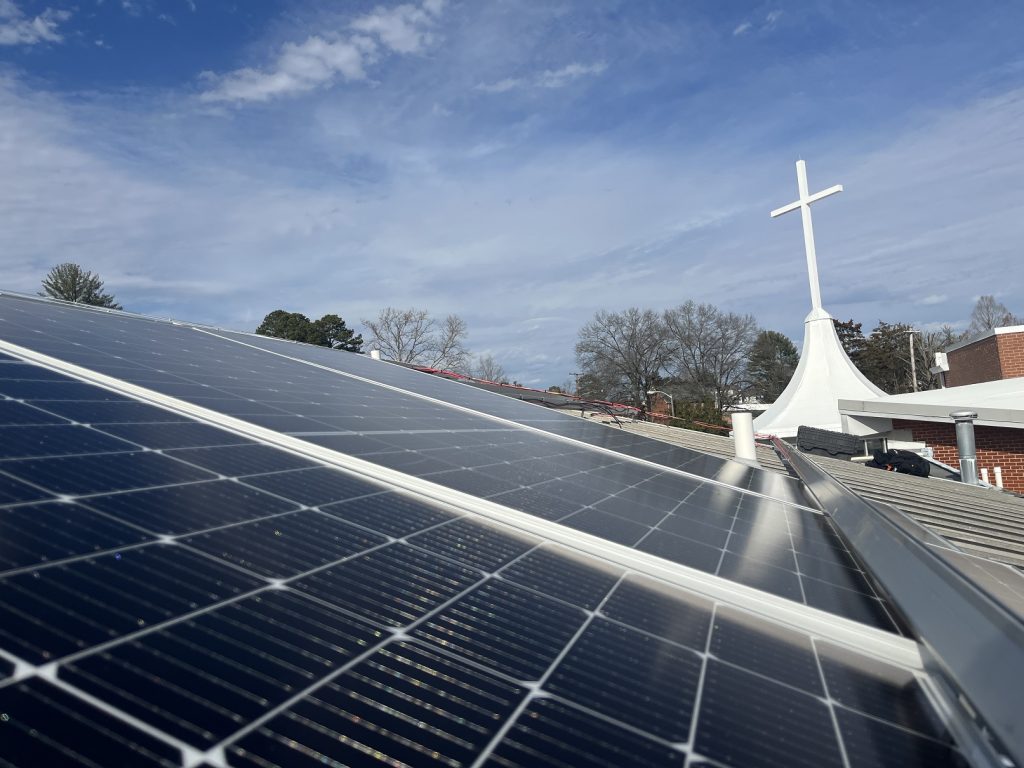
Solar energy has soared in North Carolina due to the REPS. The state is fifth in the nation in solar installed and is projected to reach number four by this year, according to the Solar Energy Industries Association. Out of the 30 utility-scale solar projects in the Southeast in 2012, 21 were in North Carolina.

Those benefits could be cut short if the tunnel vision that has taken over North Carolina politics prevails.

Read more
...


Meet Your New Interior Secretary


Monday, April 15th, 2013 | Posted by Brian Sewell


Sally Jewell, 51st Secretary of the Interior

Last week the U.S. Senate approved Sally Jewell, the chief executive of the outdoor retailer REI, as the Secretary of the Department of the Interior. Jewell was confirmed after an 87-11 vote — Senate Minority Leader Mitch McConnell was the only Appalachian senator to vote against her confirmation.

The day before her confirmation, President Obama said that Jewell had an “appreciation for our nation’s tradition of protecting our public lands and heritage, and a keen understanding of what it means to be good stewards of our natural resources.” Likewise, Oregon Sen. Rob Wyden, who chairs of the Senate Energy and Natural Resources Committee, stood in support saying Jewell had the “right kind of leadership” to rise to the task of reconciling competing environmental and energy interests.

No matter where you stand, Jewell faces a daunting task considering the department’s duty to oversee more than 500 million acres of public lands including national parks used for recreation and energy development. And regardless of her bipartisan support, Jewell will face a cantankerous Congress whose polarization is without precedent.

The broadly defined department’s responsibilities range from the Bureau of Indian Affairs to the Bureau of Ocean Energy Management, Regulation and Enforcement. Also under the Interior’s purview — and of particular interest to Appalachian politicians — is the Office of Surface Mining Reclamation and Enforcement, which oversees regulation of mountaintop removal under the Surface Mine Control and Reclamation Act. Since the beginning of 2009, OSM has worked to rewrite the stream protection rule to protect waterways from valley fills, and the process has been challenged, delayed and slowed-down at every turn.

Read more
...


“War on Coal” Claims are a War on Reality


Wednesday, April 10th, 2013 | Posted by Melanie Foley


A national average of 88,152 coal mining jobs under President Obama represents a 15 percent increase from the average under the Bush administration of 76,470. Graph by Appalachian Voices

The coal industry and the members of Congress who depend on its support have accused President Obama and the U.S. Environmental Protection Agency of waging a “war on coal.” Industry supporters argue that limits on emissions from coal-fired power plants and increased scrutiny of mountaintop removal mining permits are killing jobs. But the numbers show that, aside from being a tired rhetorical trope, the “war on coal” is also a myth.

This week, Appalachian Voices released an analysis of the latest data from the Mine Safety and Health Administration that reveals the fallacy behind “war on coal” claims. An average of 88,152 coal mining jobs under Obama represents a 15 percent increase from the Bush average of 76,470. Employment in 2011 and 2012 was the highest two-year period in 15 years. Each of the top 10 coal-producing states have seen more jobs on average under Obama than under Bush, and nine of those states saw higher employment in 2012 than at any point during the Bush years.

One of the main factors contributing to the employment increase is a decrease in productivity. Coal is growing scarce and difficult to reach, especially in Appalachia, and it takes more miners than it once did to mine the same amount of coal. Since its peak in 2000, productivity has declined 30 percent. Increased underground mining explains some of this decline since it requires more workers than large-scale surface mining methods such as mountaintop removal.

Read more
...


Appalachian Voices Applauds the Nomination of Marilyn Brown to TVA Board


Monday, April 8th, 2013 | Posted by JW Randolph


Dr. Marilyn Brown has the background to promote energy solutions in the Southeast and nationwide. So why are U.S. Senators Lamar Alexander and Bob Corker opposing her nomination to TVA Board of Directors?

Appalachian Voices applauds President Obama’s decision to re-nominate Marilyn Brown, a longtime advocate for energy efficiency, to the Tennessee Valley Authority Board of Directors. The president’s move was criticized by Tennessee senators Lamar Alexander and Bob Corker, who had been pushing for a nominee more friendly to “economic development” in the Tennessee Valley.

Dr. Brown has done a great service to the southeastern United States by serving on the TVA Board since 2010. A veteran of Oak Ridge National Laboratories, she has a long and distinguished career promoting solutions that help move America’s energy policy forward.

Brown was a co-lead of the “Scenarios for a Clean Energy Future” report, which was a groundbreaking look at the potential costs and benefits of cleaner energy alternatives. Other reports led by Brown have focused on the unharnessed economic potential for energy efficiency, industrial energy efficiency, metropolitan carbon footprints, and reviving manufacturing with federal cogeneration policy.

She is currently the director of the Climate And Energy Policy Laboratory at Georgia Tech, which researchs global energy security, clean energy employment, energy efficiency, climate change mitigation, renewable energy policies and trends in the American South, smart grid policies, and demand response. Brown was also cofounder of the Southeast Energy Efficiency Alliance, where she currently serves on the Board of Directors.

Read more
...


Elevated Selenium Levels Found in TN Streams


Wednesday, April 3rd, 2013 | Posted by JW Randolph


From the folks at United Mountain Defense, comes the sad but unsurprising news that Tennessee watersheds are suffering from surface mining. New stream data shows some of the highest selenium levels ever collected by UMD.

Selenium In Water Points to Destruction of Appalachian Streams, Water Quality

KNOXVILLE, Tennessee (April 03, 2013) – New water testing results obtained by United Mountain Defense (UMD) from a proposed coal strip mine near Claiborne, Tennessee show levels of selenium- an element known to cause developmental abnormalities- in water high enough to disrupt or destroy ecosystems and potentially effect human health.

The water testing, conducted on the site of Cooper’s Ridge (36.553086,-83.892117) and the site of a proposed surface strip mine by Kopper Glo Fuels LLC, analyzed 10 water samples from sediment pond discharge points. This analysis detected selenium at four testing points, ranging from 1.1 to as high as 5.0 mcg/L (parts per billion).

“These are some of the highest levels of selenium ever detected by our organization” said James Kane, UMD president and director of field operations, “5.0 mcg/L is unbelievable- this level of selenium is death for wildlife and could affect all downstream users. What happens to children who play in these streams? These results show that the Office of Surface Mining (OSM) and the Tennessee Department of Environment and Conservation (TDEC) are utterly failing the people of Tennessee by allowing these toxic discharges and not adequately regulating mining activities.”

Read more
...


Clean Water News: Congress Backs Down, N.C. Steps Up


Tuesday, March 26th, 2013 | Posted by Sandra Diaz


Thallium was once used as rat poison. Now DENR is suing Progress Energy for Thallium polluting the French Broad River from its Asheville power plant.

Last week, there was concern that the U.S. Senate budget resolution would end up containing measures to decrease funding for initiatives of the U.S. Environmental Protection Agency such as the release of guidelines for coal ash disposal and rules to ensure states are following water quality standards. Thanks to good Americans like yourself speaking up, the Senate budget remained free of dirty water amendments.

While the budget resolution is non-binding, and the Senate Appropriations Committee decides how funding gets allocated later in the process, the resolution send a strong message regarding the Senate’s priorities. Unfortunately, one of the more controversial amendments that did pass was in support of building the Keystone XL pipeline.

While the Senate backed down on loading up the budget resolution with dirty water clauses, the North Carolina Department of Environment and Natural Resources stepped and up and decided to take legal action against Progress Energy for the release of toxic heavy metals from their Asheville plant into the French Broad River. 

Western North Carolina Alliance, Sierra Club, and Southern Alliance for Clean Energy had filed a notice of intent to sue Progress Energy for violating the Clean Water Act for unpermitted seeps into the French Broad River. It appears DENR took notice and is now taking up their own case against Progress Energy. DENR is seeking injunctive relief and demanding Progress Energy solve the issue in lieu of the state seeking monetary damages.

Read more
...


America’s “Sadness Belt”: Appalachian States Worst in U.S. for Health and Happiness


Monday, March 25th, 2013 | Posted by Melanie Foley


Gallup and Healthways recently released their annual Well-Being Index for 2012, and Appalachia was found once again to be home to some of the least healthy and happy Americans. The most striking result of last year’s Well-Being Index is that while the happiest states are spread throughout the country, the lowest ranking states are all clustered in Central and Southern Appalachia, and the region’s neighboring states.

The Well-Being Index compiles surveys taken from all over the country all throughout the year and organizes them by state, community and congressional district. Participants are asked to evaluate their lives according to six categories:

- Life Evaluation: how a person’s current life compares with their expectations

- Emotional Health: deals with the respondent’s experiences and feelings on a given day

- Physical Health: encompasses diseases, physical pain, sick days, body-mass index, etc.

- Healthy Behavior: addresses both positive behaviors (e.g., exercise) and negative (e.g., smoking)

- Work Environment: questions for workers on job satisfaction, treatment from superiors, etc.

- Basic Access: includes access to food, housing, healthcare, etc.

Read more
...


Rep. Gloria Johnson Stands Up for Tennessee


Monday, March 25th, 2013 | Posted by JW Randolph


TN State Rep. Gloria Johnson, Delivered this Powerful Address for our Mountains

Representative Gloria Johnson (D-Knoxville), gave the following remarks regarding the Scenic Vistas Protection Act to the House Subcommittee on Agriculture and Natural Resources on Wednesday, March 20. Representative Johnson, despite being a freshman legislator in the minority, showed a tremendous amount of courage, even standing up to a hostile line of question from western Tennessean Andy Holt (R-Dresden). Representative Johnson highlighted the fact that people from across the ideological spectrum were coming together in support of protecting our mountains.

Over the last three decades, while the portion of our coal that comes from surface mining has grown, we have watched our mining jobs plummet and our miners be replaced by machines. Over this same period, Tennesseans from all walks of life, Republicans and Democrats, hunters and fishermen, conservatives and liberals, and people from all religious backgrounds have come together in support of this legislation – the Scenic Vistas Protection Act, and one of our greatest assets – our mountains. – Representative Gloria Johnson (D-Knoxville)

Watch the speech in full:

Get Microsoft Silverlight

Text below, as prepared…

Many of us are privileged to represent the beautiful, proud, and profitable mountains of Tennessee. These mountains are the oldest on the continent, and help drive a tourism industry that brings in more than $15 billion dollars to our state every year. Not only that, but they bring joy and peace of mind for millions of Tennesseans and our visitors.

The Senate killed this bill earlier this morning, but I wanted to speak on behalf of those who have prayed, called, and gathered here from all around the state. I think there is a lot of passion in the state for our mountains, and a lot of agreement in this room. We all want to protect our homes, our livliehoods, and create a better future for our mountain communities. Tennessee should be a leader in protecting our mountain way of life, not for sale to the highest bidder. What symbolizes our state more than our mountains? The mountains that were crossed by Davey Crockett, Daniel Boone, and Jack Daniel…

Read more
...


Will This March Madness Be An Upset for Clean Water?


Friday, March 22nd, 2013 | Posted by Sandra Diaz


Basketball

Help Prevent a Clean Water Upset (Picture by mvongrue, hosted by Flickr)

UPDATE: The Senate Budget Resolution passed without any of the amendments mentioned below. Victory!

As most of you know, between the federal House of Representatives and the Senate, the Senate is usually the level-headed older brother of the family and tends to be a more deliberative legislative body. But this month the Senate decided it wanted to shake things up a bit by creating a little March Madness of its own.

The Senate is going through a seemingly insane process known on Capitol Hill as a vote-a-rama to reach a deal on a final Senate budget resolution. Senate leadership is allowing any number of amendments to be presented and voted on — whatever they can get done in 50 hours.

While all the amendments have yet to be presented, several of them take aim at the U.S. Environmental Protection Agency’s ability to do its job, which is to protect our air, water and public health. Some of the amendments could stop the EPA from:

    - Making sure states are complying with and improving water quality standards in accordance to the Clean Water Act.
    - Creating national standards for how coal ash, the toxic waste produced by coal-burning for electricity, is disposed and stored.
    - Restoring critical Clean Water Act protections to streams, wetlands and drinking water standards.

TAKE ACTION: We are asking supporters to contact their Senators. If you haven’t yet, there is still time.

Read more
...


What We Weren’t Allowed to Say


Thursday, March 21st, 2013 | Posted by JW Randolph


In this legislative session, Tennesseans’ voices were silenced. Here’s what I would have said.

Yesterday, I was honored to be called to testify before the Tennessee State Senate Committee on Energy, Agriculture, and Natural Resources, along with a friend, hero and colleague, Ann League. Ann is a property owner and resident of coal-bearing areas in Tennessee, who has lived in the shadow of Zeb Mountain. After Ann and I were called to the bench, Chairman Steve Southerland cut us off before we could sit down and say a word. The committee killed the bill on a procedural mechanism without ever allowing for discussion or taking a vote on its substance. This was despite the fact that thousands of Tennesseans from across the ideological spectrum have called for the passage of this bill. We have prayed, pleaded and lobbied on behalf of our mountains and mountain communities. Yesterday our voices were shut out, and our bill was ignored. If allowed to speak, here’s what I would have said:

“Good morning, my name is JW Randolph and I’m the Tennessee Director for Appalachian Voices.

I grew up outside of Birchwood, Tenn., in a log cabin my father built on the shores of the Tennessee River. Walking the hills and hollows of our state is how I learned what home means. Hiking and fishing out in the woods and waters is how I got to know the best of what our country has to offer, the best of what our state has to offer, and its how I got to know my family. These experiences taught me about freedom, self-reliance and responsibility.

Later in life I learned that not too far away, these same mountains were being filled with ammonium nitrate fuel oil and being brought down, poisoning the streams we ran through. These streams are no different than the one in Hamilton County where I proposed to my high school sweetheart, and where I now take our two year old daughter to learn how to skip stones.

Although she doesn’t quite yet understand, I try to explain to her the fact that when I was her age, there were 500 mountains in Appalachia that are no longer standing.

Read more
...


Protecting Tennessee’s mountains? Not worth the Senate’s time.


Wednesday, March 20th, 2013 | Posted by JW Randolph


Despite broad citizen and political support for a bill protecting Tennessee’s mountains, the state Senate Energy, Agriculture and Natural Resources Committee today decided to not even allow public testimony on the measure and instead killed the bill.

SB99, the Scenic Vistas Protection Act, was slated to be heard by the committee during its usual meeting time at 9:30 (CST) this morning. The bill would prohibit mountaintop removal coal mining from ridges above 2,000 feet on the Cumberland Plateau.

Along with our good friend Ann League, a resident and property owner in Tennessee’s coal-bearing region, I had been scheduled to testify before the committee. But just as we were called up to speak, the chairman stopped us short. Several Members had left the room, and when none of the committee members offered a motion on the bill, the Chairman declared the bill dead, and we were not allowed to speak.

Despite the fact that Tennesseans from the left, right and center, and from a broad array of interests have come together to protect our mountains, our voices were silenced.

Instead, the senators chose to side with the coal industry whose political influence has long outlasted its ability to grow jobs in our state or protect the health and well-being of citizens in the coal region.

Two senators who have generally supported mountain protection, Ophelia Ford and Jim Summerville, didn’t come to the meeting, and a third, Charlotte Burks, who has voted for the bill in the past, left.

Update: We’ve posted my prepared statement here, and a powerful speech by Representative Gloria Johnson (D-Knoxville) here. The news has been picked up by outlets worldwide including Chinese television, Switzerland, Singapore, Businessweek, NBC News in states from coast-to-coast, and in dozens of outlets across Tennessee. Local blog Nooga.Com has a great summary

Stop Brushing off the Bad Stuff


Tuesday, March 19th, 2013 | Posted by Brian Sewell


However complex the causes of the ongoing health crisis in Appalachia, denial accomplishes nothing but the perpetuation of the status quo. Yet every time claims that could negatively impact the coal industry surface, Appalachian legislators throw up a black sheet.

West Virginia University professor and public health researcher Dr. Michael Hendryx’s latest article, “Personal and Family Health in Rural Areas of Kentucky With and Without Mountaintop Coal Mining,” appeared in the online Journal of Rural Health a couple of days ago. The study immediately gained the attention of Kentucky media, and supporters of the coal industry have been quick to write off Hendryx’s methods and conclusions — they just haven’t gotten around to reading it yet.

Hendryx has published more than 100 peer-reviewed articles. He’s the director of the West Virginia Rural Health Research Center and after receiving a Ph.D. in psychology, he completed a post-doctoral fellowship in Methodology at the University of Chicago. Little of that seems to matter, however, because much of his research is concentrated on poor health in Appalachian coal-mining communities, especially those where mountaintop removal takes place.

Like other studies Hendryx has conducted, the eastern Kentucky-focused article relies on comparing data gathered in counties with mountaintop removal to data from counties without it. More than 900 residents of Rowan and Elliott counties (no mountaintop removal) and Floyd County (mountaintop removal) were asked similar questions about their family health history and incidents of cancer to those that the U.S. Center for Disease Control uses in gathering data.

After ruling out factors including tobacco use, income, education and obesity, the study found that residents of Floyd County suffer a 54 percent higher rate of death from cancer, and dramatically higher incidences of pulmonary and respiratory diseases over the past five years than residents of Elliott and Rowan counties.

These results should surprise no one, least of all the families in Floyd County that participated in the study. Yet somehow, supporters of the widespread use of mountaintop removal still refuse to consider that blowing up mountains might impact human health.

Read more
...


Tennessee Game Changer: Conservative Union Running Pro-Mountain Ads Statewide


Tuesday, March 19th, 2013 | Posted by JW Randolph


Conservative Ad Buy Turning Scenic Vistas Bill into Bipartisan Bombshell

When it comes to Tennessee, most everybody has their reason for supporting our mountains. Whether it is a liberal urban Democrat like Representative Steve Cohen (D-TN), or a mainline Republican like Senator Lamar Alexander (R-TN), its not a complicated equation.

Now, it turns out, a radically right-wing group in Tennessee – the Tennessee Conservatives Union – has not only come out in support of the Tennessee Scenic Vistas Protection Act, but is planning to run statewide television ads in support of protecting Tennessee’s mountains. This is astounding, to say the least. The Conservatives Union is no small player in Tennessee politics, calling itself the oldest and largest conservative organization in the state. With more than 12,000 members, they are widely credited for defeating the state income tax, among other things. Now they are looking to protect our mountains from, allegedly, a Chinese company that has bought out mineral rights in Tennessee.

Appalachian Voices doesn’t necessarily agree with every sentiment in this advertisement. It doesn’t matter if somebody is from Beijing or Bristol, we don’t think they should be blowing up mountains. We certainly don’t agree with the Conservatives Union on many important issues related to energy and the environment, but the fact that the Tennessee Conservatives Union is stepping up to stop mountaintop removal shows that the breadth of support for protecting Tennessee’s mountains ranges all the way from left-to-right, odd-to-even, and low-to-high.

According to the TN Conservatives Union, this ad will begin airing tomorrow (3/19) on Fox News.

Now is the time for you to pick up the phone and call Committee Members to tell them YOUR reason for supporting the bipartisan Scenic Vistas Protection Act (SB 99/HB 43). The Senate Energy, Agriculture, and Natural Resources Committee will take up the bill first at 9:30 AM on Wednesday. The House Subcommittee on Agriculture and Natural Resources is scheduled to vote at 1:30 the same day.

These committee offices have told us that they are hearing from a LOT of people who are working to protect our mountains, so keep up those calls! Talking points below…

Senate Committee Members:
Chairman Steve Southerland (R-Morristown)/615-741-3851
Mae Beavers (R-Mt Juliet)/ 615-741-2421
Jim Summerville (R-Dickson) / 615-741-4499
Mike Bell (R-Riceville) / 615-741-1946
Charlotte Burks (D-Monterey) / 615-741-3978
Ophelia Ford (D-Memphis) / 615-741-1767
Todd Gardenhire (R-Chattanooga) / 615-741-6682
Dolores Gresham (R-Somerville) / 615-741-2368
Frank Niceley (R-Knoxville) / 615-741-2061

House Committee Members:
Chairman Ron Lollar (R-Bartlett) / 615-741- 7084
Curtis Halford (R-Dyer) / 615-741-7478
Andy Holt (R-Dresden) / 615-741-7847
Judd Matheny (R-Tullahoma) / 615-741-7448
Billy Spivey (R-Franklin) / 615-741-4170
John Tidwell (D-New Johnsonville) / 615-741-7098
Ron Travis (R-Dayton) / 615-741-1450
Brenda Gilmore (D-Nashville) / 615-741-1997 [This is a “Thank you!” as Representative Gilmore is a cosponsor of the Scenic Vistas bill.]

Please pass this along, so that legislators hear from as many Tennesseans as possible. Talking points and bill information below…

Read more
...


Canvassing Against Coal Ash


Friday, March 15th, 2013 | Posted by Matt Grimley


The Red, White & Water team hit the streets near Belmont, N.C., to speak with residents who live near Duke Energy's G.G. Allen Steam Station about the threats of coal ash pollution.

Last Saturday, the Red, White and Water team traveled to Belmont, N.C., to the G.G. Allen Steam Station for a day of canvassing. Walking door-to-door, we asked residents of the communities near the coal-fired power plant if they had been impacted by water pollution.

I met Archie Dixon, who was featured in the Gaston Gazette a few months ago. Dixon had complained to Duke Energy, which owns the power plant, about coal ash staining his property and getting into his drinking water. I spoke with him while he and his grandson (also named Archie, or “Lil’ Arch”) waited for a plumber for a broken pipe on their property. In his garage sat a waist-high stack of bottled water. Mr. Dixon said that he still refuses to drink his own home’s water.

The pollution near the plant happens in two ways. One is through coal ash ponds. Coal ash is the waste byproduct from burning coal and it contains contaminants such as arsenic, mercury and chromium. Because the one active coal ash pond at G.G. Allen is an unlined impoundment, these toxics can seep into groundwater. Tests near the plant have revealed exceedances in manganese, iron and nickel in the groundwater.

Effluent is the other form of pollution at G.G. Allen — the plant wastewater that discharges directly into the surface waters of nearby Lake Wylie. Under the Clean Water Act, permits are issued for each of the plant’s discharge points. These permits, however, only set limits for traditional pollutants, including oil and grease, “total suspended solids” and pH. They rarely limit pollutants such as mercury, selenium, and arsenic. And with a lack of federal guidelines, many states don’t set their own permit limits for these toxic chemicals.

Read more
...


Scenic Vistas Vote Delayed One Week


Thursday, March 14th, 2013 | Posted by JW Randolph


Yesterday, at the request of the sponsors, votes on the “Scenic Vistas Protection Act” were delayed one week, to the next Committee calendar on Wednesday, March 20th.

The Senate Energy, Agriculture, and Natural Resources Committee will take up the bill first at 9:30 AM on Wednesday.

The House Subcommittee on Agriculture and Natural Resources is scheduled to vote at 1:30 the same day.

These committee offices have told us that they are hearing from a LOT of people who are working to protect our mountains. Keep up those calls! Talking points below…

Senate Committee Members:
Chairman Steve Southerland (R-Morristown)/615-741-3851
Mae Beavers (R-Mt Juliet)/ 615-741-2421
Jim Summerville (R-Dickson) / 615-741-4499
Mike Bell (R-Riceville) / 615-741-1946
Charlotte Burks (D-Monterey) / 615-741-3978
Ophelia Ford (D-Memphis) / 615-741-1767
Todd Gardenhire (R-Chattanooga) / 615-741-6682
Dolores Gresham (R-Somerville) / 615-741-2368
Frank Niceley (R-Knoxville) / 615-741-2061

House Committee Members:
Chairman Ron Lollar (R-Bartlett) / 615-741- 7084
Curtis Halford (R-Dyer) / 615-741-7478
Andy Holt (R-Dresden) / 615-741-7847
Judd Matheny (R-Tullahoma) / 615-741-7448
Billy Spivey (R-Franklin) / 615-741-4170
John Tidwell (D-New Johnsonville) / 615-741-7098
Ron Travis (R-Dayton) / 615-741-1450
Brenda Gilmore (D-Nashville) / 615-741-1997 [This is a “Thank you!” as Representative Gilmore is a cosponsor of the Scenic Vistas bill.]

Tell these legislators your name and let them know you are a Tennessean who cares about protecting our mountains. And please pass this along, so that legislators hear from as many Tennesseans as possible.

Talking points and bill information below…

Read more
...


Sally Jewell questioned by Senators Manchin, Alexander


Wednesday, March 13th, 2013 | Posted by Thom Kay


Sally Jewell Confirmation

The Obama administration’s pick to run the Department of the Interior, Sally Jewell, had her confirmation hearing last Thursday before the Senate Energy and Natural Resources Committee. Jewell is the chief executive of REI, the outdoor equipment company, and has experience as an engineer for Mobil, a banker for Washington Mutual, and a board member of the National Parks Conservation Association.

During the hearing, she was questioned by Sen. Joe Manchin (D-WV). He predictably focused on coal and the potential for any new regulation on the industry. Manchin asked Jewell for the definition of a stream, which apparently she does not carry around in her pocket at all times. After not giving much of a response, Manchin seemed content to offer his own:

“Is it basically a flowing water stream,” he said. “Twelve months a year, mostly a wet water stream that flows 12 months a year.”

That definition is somewhat similar to the official definition of a perennial stream. According to the Office of Surface Mining, Reclamation, and Enforcement, a perennial stream is “a stream or part of a stream that flows continuously during all of the calendar year as a result of ground-water discharge of surface runoff” — an interpretation that is commonly used by state regulators too.

Manchin and the coal industry would prefer that perennial streams be the only interpretation of “stream” under the Surface Mining Control and Reclamation Act of 1977. But it does not include intermittent or ephemeral streams, which carry water for most of the year, but not perennially. If OSMRE were to finalize a rule-making prohibiting the dumping of waste into streams according to Manchin’s narrow definition, mining companies would continue using valley fills to dump mountaintop removal waste, polluting ecosystems and communities.

Read more
...


A Week of Education and Action


Wednesday, March 13th, 2013 | Posted by Nathan Jenkins


As part of Mountain Justice Spring Break, students acted out a skit demonstrating how banks directly support mountaintop removal. Photo by Nathan Jenkins

Last week, more than a hundred college students from around the country spent their spring break in Appalachia, Va., to learn about mountaintop removal coal mining, involve themselves in nonviolent actions, and volunteer for social projects that benefit a community that all too many choose to ignore.

By the time I arrived on Friday, the students had already learned about mountaintop removal coal mining. They had toured several mine sites in Wise County, learned how to test water for contaminants, and studied the ecosystems of Appalachia’s incredibly diverse forests.

They had worked on a full day of trail maintenance on Pine Mountain and volunteered much needed manpower to a mobile health services group that provides essential care to impoverished residents forgotten by the coal industry.

Earlier in the week, the students learned about banks that invest in mountaintop removal and how to use nonviolent action to effect change. By Friday, they were ready to make a statement. After a hot breakfast, we loaded up a caravan of cars and set out for a peaceful protest on the sidewalks outside of UBS Bank in Kingsport, Tenn.

Once there, I had my first glimpse of handcrafted props for the planned skit as they were pulled out of pickups and station wagons. The group marched around the block drawing cheers and honks of support from passing motorists. The students then sat on the sidewalk singing songs and chants, as well-dressed bankers peered out from the windows above and sent secretaries to lock doors despite a significant presence from the local police force.

For their part, the officers were incredibly polite and a few even asked me for more information about mountaintop removal. I walked the officers through the narrative of the skit as we watched a giant “fat cat” banker slip dinner plate sized coins into a 4-foot wide piggy bank while a dragon inspired dragline chewed through our mountain resources.

Read more
...