

The Future of Film is in West Virginia
Film production tax credit spurs growing industry

By Amanda Larch Hinchman
Many well-known TV and film productions have developed out of the Mountain State in years past, but the West Virginia Film Office, reestablished in July 2022, is looking to the future to continue to grow the film industry.
One of 38 states with a film production tax credit incentive program, West Virginia is beginning to see similar industry growth compared to states like Georgia and North Carolina. The credit is up to 31% for productions that hire 10 or more West Virginians, according to Dave Lavender, manager of the West Virginia Film Office, nestled within the West Virginia Division of Economic Development.
With a lower threshold compared to states like New Jersey, where the minimum spend for productions to qualify for the tax credit is $1 million, in West Virginia, the number is $50,000 in a calendar year.
“It’s recognized as one of the best tax credits out there,” Lavender says. “I love that the legislature put in such a low threshold, and a number of micro-budgets have gotten the credit.”
With limited permitting, the state is prime to do business, especially with productions that respect it, Lavender explains.
“You can’t go out of your way to disparage Appalachians or West Virginians — we’re not going to give a tax credit to ‘Buckwild’ — but the good thing is that whether it’s been outside or local productions, we’ve run into a lot of great storytellers and unique stories,” Lavender says. “There’s a great niche for West Virginia.”
How do tax credits support the West Virginia film industry?
Centrally located within half a day’s drive of half of the U.S. population, and with its diverse history and geography, West Virginia is ideal for a range of productions, explains Lavender.
“While Hollywood likes to call something under $10 million an indie movie, and we can easily do those size of productions, we definitely are tailor-made for a true, first-time indie filmmaker to make a micro-budget film here,” Lavender says.
Music videos, feature-length documentaries, unscripted or feature films and TV series all qualify for the tax credit. There aren’t currently qualifications for commercials, short films or event productions such as concert videos or game shows, but that hasn’t stopped many of those productions from filming in the state. Most recently, Brad Paisley shot two music videos in the New River Gorge, and Lavender shares that he’s hopeful for exemptions in the future, including to allow short films to qualify as long as they surpass the set $50,000 spend.
The state legislature is in charge of extending the tax credit when its five-year run ends Dec. 31, 2027. Filmmakers like Jeff Tinnell, co-owner of Allegheny Image Factory, a West Virginia-based film production company, have already started working with members of the legislature and government representatives about expanding the credit.
Tinnell shares that since the institution of the tax incentive, his business has done seven feature film productions in the state, with more in the works. He calls the incentive a great economic driver and a way to introduce those in the industry to the state.
“I think we’ve gotten the data and shown the positive impact that we hope the legislature understands why this is good,” Tinnell says. “It’s important to get that messaging out. I think some strategic players within the state government see the value of this and will work to extend it.”
By the time West Virginia’s next legislative session begins in January 2027, Tinnell hopes it will be on the agenda to discuss.
“We will be very active,” Tinnell says. “I have not seen a negative for the state of West Virginia by having this incentive.
“Credits are in lots of different industries and fields, including in West Virginia. They’re there for a reason, it’s an economic stimulus, and I feel like we can show the economic stimulus part of it — why it’s a worthy investment.”
West Virginia is one of 12 states with a transferable tax credit; most others offer a cash rebate, typically at a lower volume. Companies keep track of their in-state spend and can get a transferable tax credit to either go toward tax liens in West Virginia, or they can sell it to a company with a tax burden in-state.
“The industry is very familiar with this transferable tax credit,” Lavender says. “Typically, the buyer will buy it at a slight discount, so around 95 to 90 cents on the dollar, sometimes less, depends on the filmmaker, so they can get a break on their taxes but then also be supporting the creative industry in West Virginia.”
Businesses with a tax liability can buy tax credits at a bargain, and larger companies can support more growth in the area by buying the tax credits for a project — essentially becoming producers, Lavender explains.
“This film tax credit is one where everybody can participate; you can get a break on it and also lift up the film industry,” he says. “The tax credits have been very easily sold and transferred.”
Since the tax incentive launched in 2022, the total spend of production companies that have leveraged it is $37.3 million through the first quarter of 2026, with more in the works, according to Lavender.
“We’re building it, and every year we’re seeing the increase,” Lavender says.
In both 2024 and 2025, the film office aided more than 100 productions and continues to do so by helping secure locations, crew and services through its Reelscout online database, which already has 5,000 locations and about 1,700 crew members logged.
“We’ve been concentrating on trying to build more of a workforce here,” he says.
Boom in indie filmmaking around the state
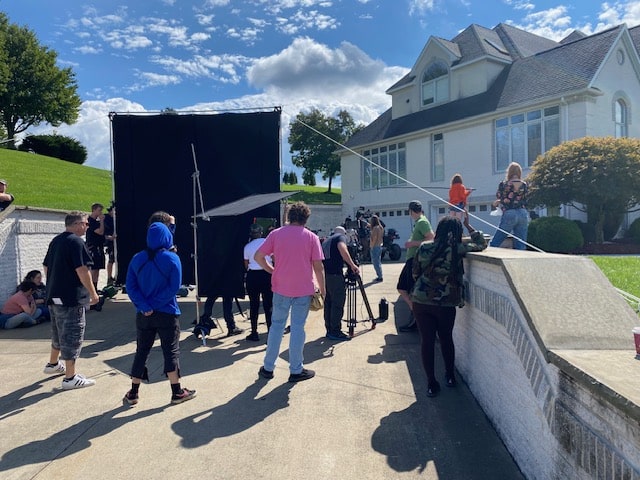
The grassroots growth of indie filmmaking is another central key to continued film successes in West Virginia. Many in the industry have returned to the state, and others are working here for the first time.
As part of his responsibilities, Lavender connects with filmmakers throughout the country, encouraging them to travel to West Virginia for their next projects. These include award-winning journalist and indie filmmaker Tom Whitus, whom Lavender met at the American Film Market in 2024, convincing him to film his latest movie, a western titled “Valley of the Shadow,” in Weston. Available now on Amazon Prime Video, Whitus shot it for about $70,000, bringing on board West Virginia filmmakers like director of photography Justin Litton.
“Other states have made it so expensive to get in the game that we could be the new hot spot for the next great indie filmmakers,” Lavender says. “Not only are we really helping micro-budget and student films but also helping people come back home and make some of their projects happen.”
At Allegheny Image Factory, Tinnell and his brother and business partner Robert have multiple instances of success, including on Netflix with two U.S. Top 5 films in early 2026 and 2019’s “Feast of the Seven Fishes,” a holiday movie filmed in Fairmont that has inspired its own festival and increases in popularity each holiday season.
“This is our ‘A Christmas Story,’” Lavender says. “I think having something made in your town and letting youth know this movie was made here does something that you can’t hardly put a price on.”
Productions shot in the Mountain State can be found on a variety of networks and streaming services like Netflix, Peacock, ABC, NBC, HGTV, Discovery and Lifetime, and the largest to date, coming in at $12 million, has been the 2025 Disney/20th Century Fox pilot for the reboot of the “Prison Break” series, shot at the West Virginia Penitentiary in Moundsville and surrounding areas.
“One of the keystones for West Virginia film has been building relationships and a fertile business ground so production companies can return again and again,” Lavender says. “I call it the last great team sport because you’ve got everyone involved, and you’re spreading the money all around the community. That direct impact is huge.”
The West Virginia Film Office also celebrates film anniversaries; hosts, promotes and sponsors workshops and panels with related organizations; and supports film festivals. Since 2022, 13 new festivals have been established across the state, and long-running festivals continue to celebrate the stories emerging from West Virginia.
Hopeful for the future of filmmaking in West Virginia
The Mountain State has many opportunities to educate and train the next generation of filmmakers; for example, Marshall established the state’s first four-year BFA degree in filmmaking in 2024.
“Supporting the student standpoint is to hammer home this idea that your story is worth telling, that you can stay here and make a living in the creative economy and creative industry,” Lavender says. “I want to add to the conversation that in Appalachia, the arts can be, and should be, if you want it bad enough, Plan A.
“As with the rich tapestry of artists and music here, we’re that deep in film, too. There’s a lot of fresh stories out there. Support your local filmmaker. I truly believe the next Steven Spielberg is a 13-year-old girl in Beckley with an iPhone.”
Dale Morton can attest to the changes within the film industry in West Virginia. Owner of Dale Morton Studios, specializing in costumes and mascots, he taught himself special effects makeup, prosthetics and sculpting from a young age, learning different techniques and tricks over the years. Growing up a big fan of science fiction films, he says he was “very interested in learning how monsters are made.”
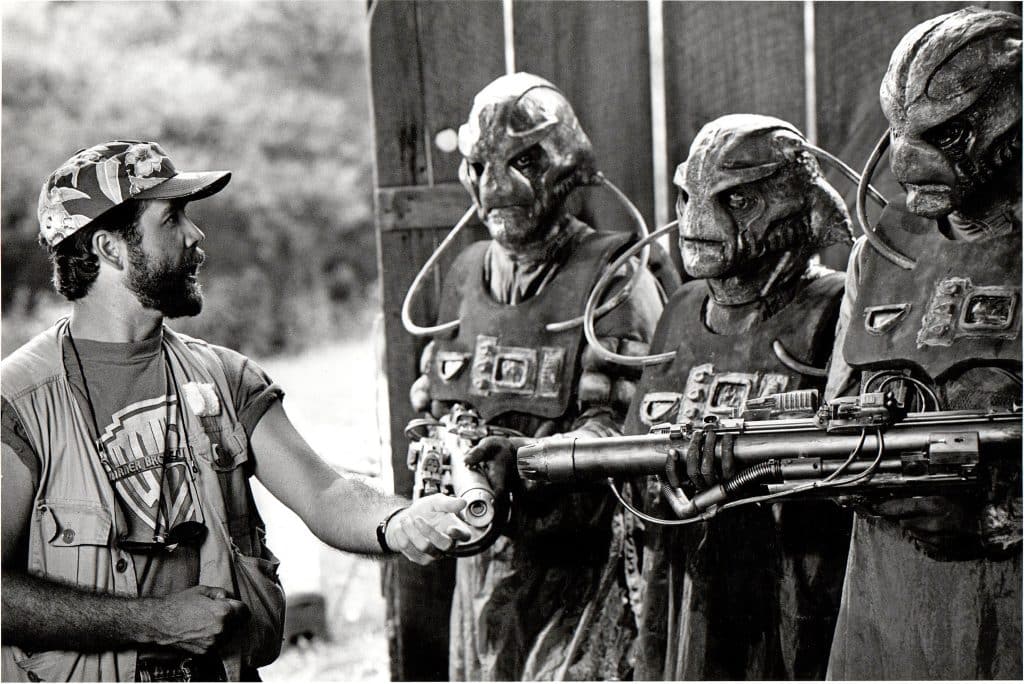
Morton’s costume and prosthetic work have appeared in multiple projects, beginning with legendary West Virginia filmmaker Danny Boyd’s second film, “Strangest Dreams: Invasion of the Space Preachers.” In the 1990 film, Morton was tasked with designing and building full-bodied alien creatures. Another standout on Morton’s resume is makeup effects for a 1990s episode of “Rescue 911” set in Beckley.
“I did some elaborate alien makeups for them and recreated a number of props in the original ‘Star Trek’ series,” Morton says.
Since 2001, his specialty mascots have been used in anything from local commercials and indie proof-of-concepts to an Oscars ceremony sketch, an episode of the “Dynasty” reboot and even one movie made by Jamie Foxx that, unfortunately, remains unreleased.
Still open to film work, today Morton mainly focuses on his costuming and mascot business, though he says he wants to make a film of his own one day. He’s hopeful for the future and would like to see the arts scene continue to grow in the state, he says.
Doing his part to train the younger generation, including welcoming student groups to tour his studio in Hurricane, West Virginia, Morton also employs part-time workers, one of whom is a high schooler interested in following in his footsteps.
“He’s very enthusiastic about everything I set for him to do,” Morton says. “Now he can get experience and use that wherever he goes.”
Related Articles
Latest News
More Stories
The Shenandoah Salamander
The Shenandoah salamander is a woodland salamander, which has adapted to life at higher elevations away from water. This sparkling rarity lives among the dry leaves, cracked logs, and stony hillocks on the highest peaks of Shenandoah National Park.
‘Foraging Is a Way of Connecting’
Foraging has experienced a modern resurgence, partly because of social media, online groups, the pandemic and people wanting to connect with nature. It also builds community, whether in person or online.

Colorblind Viewfinders Make Appalachian State Parks More Accessible
Virginia State Parks is the first park system in the nation to have a colorblind viewfinder at each one of its 43 locations — thanks to the dedication of one park ranger. Other states are following suit.
Preserving Firefly Magic
Deep within an undisturbed forest in the Southern Appalachian Mountains, visitors may spot a continuous blue glow unlike anything they have ever seen before. That glow is the blue ghost firefly.
English Language Learning in Appalachia
Learning English is always difficult. But current aggressive approaches to immigration policy are creating more barriers for learners and the programs that serve them than ever before in Appalachia and beyond.
Pike County Rejects Mega Landfill
Many residents of Pike County, Kentucky, are breathing a sigh of relief since county commissioners finalized their decision to rescind a contract with an out-of-state waste management company.

Leave a comment
Your email address will not be published. Required fields are marked *
One response to “The Future of Film is in West Virginia”
-

The ORIGINAL West Virginia Film Office was started in 1989 under Gaston Caperton’s administration. I was asked to perform dual functions while working as the Tourism Advertising Director, to set up the office and assist West Virginia filmmakers. Danny Boyd was the first person I contacted. From that meeting, we developed the first listing of in-state film service personnel and related services. I was able to secure grant funding for Danny’s next project. In the initial year, we brought in four major projects and assisted in several smaller ventures, all on a zero allocated budget. This chapter seems to have been forgotten.

Leave a Comment