
‘Foraging Is a Way of Connecting’
How foraging provides a sense of community in-person and online

By Debra Murray
Foraging is the act of gathering plants and fungi for food and medicine. Humans in Appalachia and beyond have always foraged, but now, social media influencers and online community groups are using their platforms to introduce it to new people.
Foraging has experienced a modern resurgence, partly due to the rise of social media foraging content, online foraging communities, the pandemic and a desire to connect with nature. But some groups have never stopped foraging. Appalachian foraging traditions were influenced by Indigenous traditions about how to use various plants.
Today, amateur and advanced foragers alike can gain new skills right from their social media feeds or through connecting with local foraging organizations. While online spaces can make foraging more inclusive, new foragers should be careful to avoid misidentifying plants and overharvesting due to inaccurate information or a lack of understanding. Foraging can also build community, as local clubs and mycological organizations offer opportunities to bond with other members and strengthen plant identification and harvesting skills.
The internet’s mushroom auntie
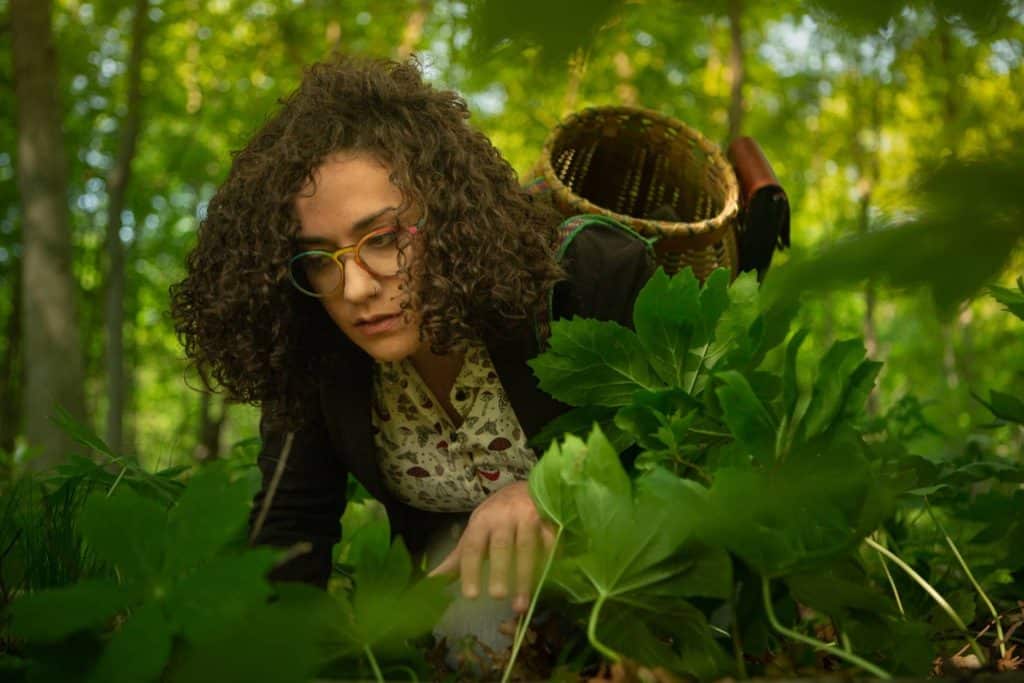
Nicknamed the internet’s mushroom auntie, Gabrielle Cerberville (@chaoticforager) has 1.1 million followers on TikTok, where she shares foraging advice and plant identification. She is also a Ph.D. student at the University of Virginia, studying in the music composition and computer technologies program. Cerberville recalls her first foraging experience at 5 years old when she harvested wild blueberries in Pennsylvania.
“When I was a little kid, blueberries came in big hard plastic clamshells, and they tasted terrible; they tasted like nothing, and they were all mushy and weird,” Cerberville says. “But wild blueberries were so good, and I think that kind of set me up to really appreciate wild food as being something extra special, and I foraged all kinds of things when I was a kid. I spent all of my time outside as much as I could, but then I really kind of came back to foraging as an adult when I was in my early 20s.”
Cerberville, who has been posting her foraging videos for years, wants people to forage as a way to live, embracing nature.
“There is a way to live harmoniously with nature,” Cerberville says. “There is a way to take from nature and also give back to nature, and all of that is part of foraging.”
Her content started as diaries of her forays, but during the pandemic it shifted to be more educational as viewers wanted to learn to forage in their areas.
“[People] were looking for something that they could do that would get them outside of their houses that was still safe, and ultimately it became a really important way for me to connect with people during that time as well,” Cerberville says.
Cerberville hopes that people take away from her content that foraging is achievable and people are built to do it.
“Human beings have very good pattern recognition, and we learn things through multiple senses, and foraging gives you the opportunity to learn a lot through your senses,” Cerberville says. “And you also don’t have to be so reliant on other systems to find food, because food is in your landscape, and it is free and available and abundant.”
Cerberville offers paid guided foraging walks that provide in-person opportunities learn plant identification, get ethical harvesting tips and more. One of the most important things she takes from her practice is paying attention to the world around her.
“Modern life really encourages us to be pretty self-centered overall,” Cerberville says. “We spend a lot of time focusing on our immediate needs or our immediate family, and the communities are harder to access. We spend a lot of time isolated from one another.”
For Cerberville, sharing her foraging content has allowed her to connect with people online and in-person.
“Foraging is a way of connecting. It’s a way of connecting with your environment,” Cerberville says. “It’s also a way of connecting with other people because one of the first things you want to do when you make a really great forage dish is to share it with other people.”
She also published a book, “Gathered: On Foraging, Feasting and the Seasonal Life,” in 2025. The book is part field guide, part memoir, and part cookbook and is arranged seasonally.
“What I needed to write was a book to introduce new foragers to what it was like to forage and how to pay attention and how to read a landscape so that you’re not just going in blind, but you have an idea of what to look for,” Cerberville says.
Her first piece of advice is to start in a familiar green space, like a park, and begin noticing what is growing there. She also suggests joining a local foraging club.
“Try to pay attention to all of the details,” Cerberville says. “What does it smell like? What does it look like? Where is it growing? What do the leaves look like?”
Sustainable harvesting
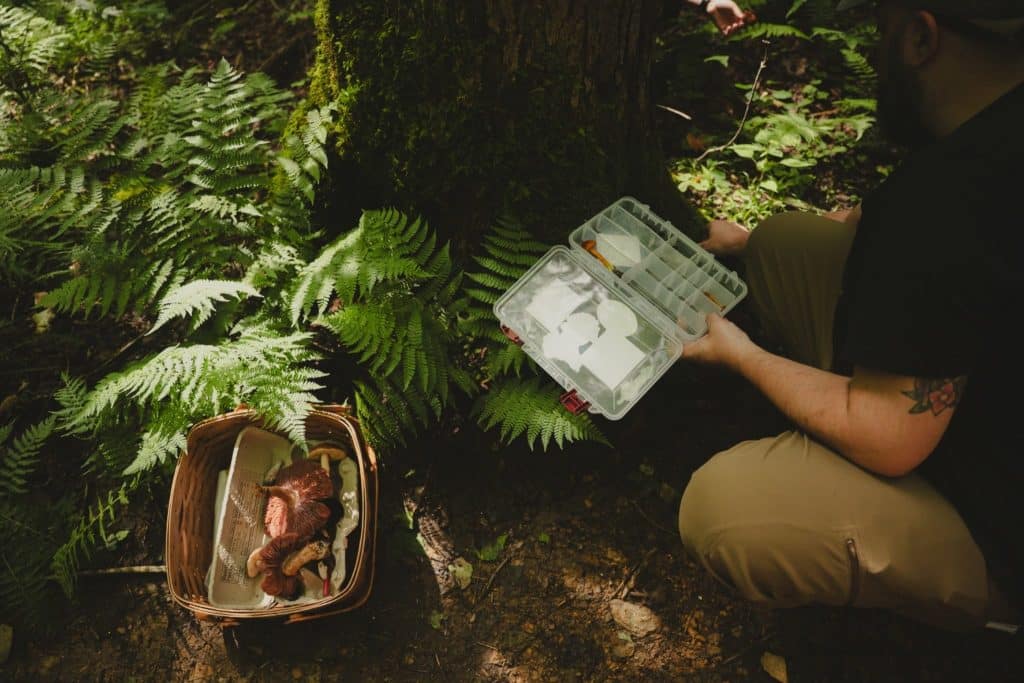
Cerberville finds that unintentional overharvesting is most common for new foragers. Overharvesting is when a natural resource, like a plant or mushroom, is removed faster than it can reproduce.
“The people who are more prone to overharvest are newcomers to foraging, and there are people who only know one or two different plants or mushrooms, and they think that that’s all that they’re going to see,” Cerberville says.
To combat overharvesting, many plant conservation practices come from Indigenous teachings.
“Within many Indigenous worldviews, plants are considered to be relatives worthy of the care and respect one would give to their human relatives,” reads a passage from the 2024 Forest Botanicals Region Living Monument Online Exhibit. Most forest herbs are very slow-growing and must be harvested sustainably to ensure their survival.”
The online exhibit lists several practices that come from traditional Indigenous knowledge: “only harvesting a small portion of the plants growing in an area, never digging the roots of plants until the seeds have matured, planting seeds, dividing and replanting a portion of the roots that are harvested, and, when possible, harvesting leaves instead of roots.”
Local groups and networks can also help new foragers learn how to harvest responsibly.
Local foraging groups provide community, skills-building
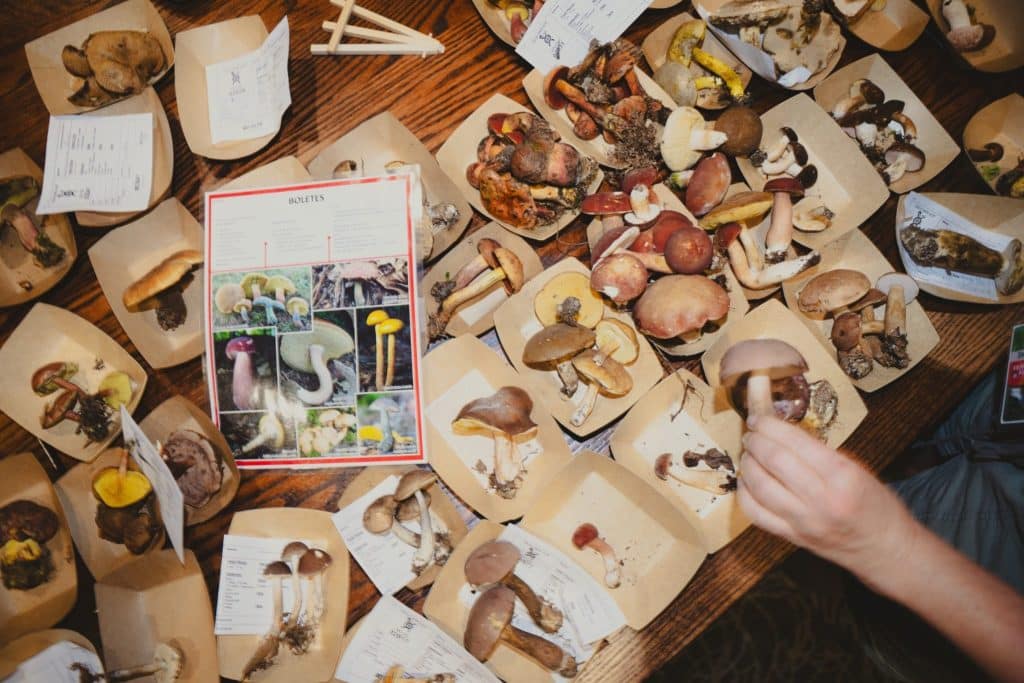
The West Virginia Mushroom Club is one of the oldest and most active amateur mycological organizations in Appalachia, explains Dina Hornbaker, club president.
Hornbaker began foraging mushrooms in her early 20s while working in landscaping and noticing fungi growing around her.
“I just started noticing mushrooms popping up everywhere more frequently,” Hornbaker says. “I’m also an avid outdoor enthusiast, so I was always really curious to better understand what these things are, and from there it just grew.
“We’ve seen an increase in our membership over the last several years,” Hornbaker says, referencing the COVID-19 pandemic as a catalyst, when more people wanted to better understand the nature around them.
Participating in a foraging club or mycological organization offers community and educational opportunities such as workshops.
“It can create a lot of community culture, like the process of folklore, for instance, is learning fungi from people to people,” Hornbaker says. “It’s a really great way for community engagement and culture in that regard. Also, just better understanding our environment and the species that grow in our region is really important.”
“All mushrooms are edible, but some only once,” is something Hornbaker says as a constant reminder for foragers to eat only mushrooms that are not toxic to humans. This requires the ability to recognize mushrooms and know which fungi to avoid.
The club has regular foraging outings to help beginners develop identification skills and learn sustainable foraging techniques to avoid overharvesting.
“There’s definitely sustainable techniques to forage properly,” Hornbaker says. “You certainly don’t take all of the mushrooms that you see in one site. You always leave around 35 to 40 percent of those species around, so that they could reinoculate and repopulate in that area as well.”
The club also hosts an annual multi-day foray with guest speakers, live music and workshops like using mushrooms to make mocktails and creating a spore print. Hornbaker says people travel from across the country for the annual foray.
“It’s always a really amazing experience, especially for those who have never attended,” Hornbaker says. “We always have our regulars that come year after year.”
The West Virginia Mushroom Club, like many other foraging organizations, educates beginners through guest speakers and plant identification practices.
“We do have a lot of mycologists that are involved with our club, especially our speakers,” Hornbaker says. “We primarily focus our club to be open towards community and amateur mycology because public education for fungi is shared knowledge to everybody.”
And whether it’s online, at a club gathering or in the woods, foraging is all about connection.
Related Articles
Latest News
More Stories
Signs of Life
In the Nantahala National Forest, a team of biologists spotted Indiana bats, an endangered species that hasn’t been seen in North Carolina for the last 11 years.
‘First Line of Defense’
During Hurricane Helene and its aftermath, rural fire departments and other first responder hubs played critical roles in keeping their communities safe, even without power and cut off from outside support for days or weeks after the storm. Two years later, plenty of work remains to ensure these hubs have the resources they need to operate day to day and be ready when emergencies or natural disasters strike.
The Rocky Road — and Bridge — to Recovery
Hurricane Helene is estimated to have damaged nearly 7,000 private roads and bridges in Western North Carolina. Two years later, many restoration projects are complete, but the journey hasn’t been easy — and isn’t over for others.
After 20 Years, Letcher County Prison Proposal Is Still Alive, Though Obstacles Remain
A $605 million proposal for a federal prison on a former strip mine site in Letcher County, Kentucky, championed by U.S. Rep. Hal Rogers, refuses to die, despite local opposition, a lack of support from the executive branch and numerous other obstacles.
The Washout and Rebuild
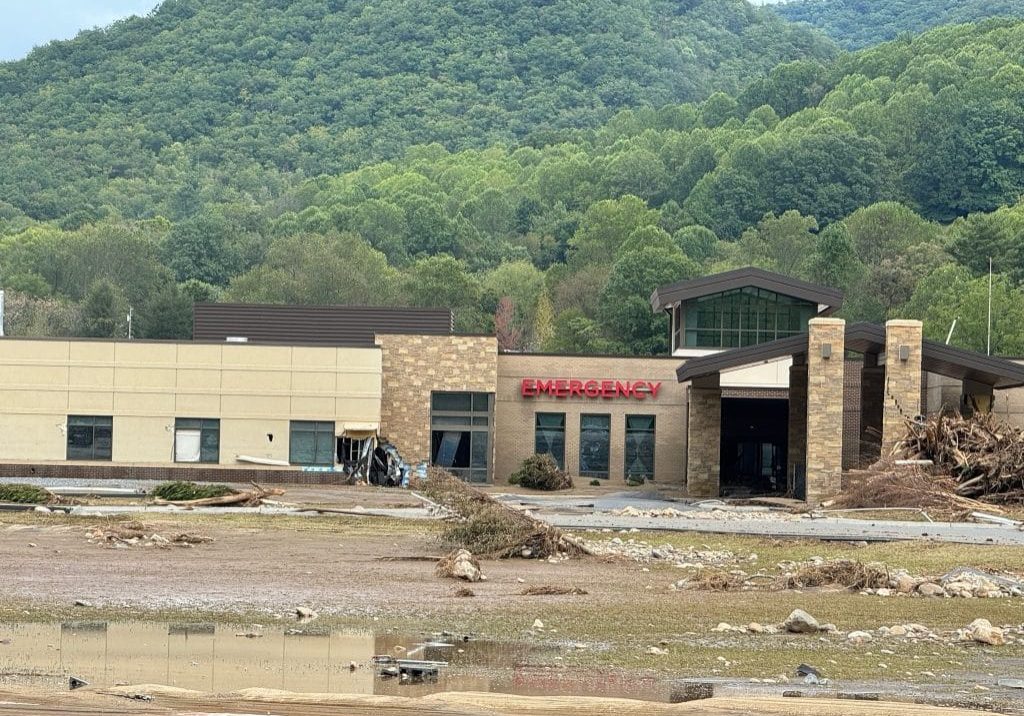
For nearly two years, residents of Unicoi County, Tennessee, have had to make do without a hospital after Hurricane Helene destroyed the rural hospital. Ballad Health, which owns the hospital, broke ground on a new location — in another floodplain — in August 2026.
The Shenandoah Salamander
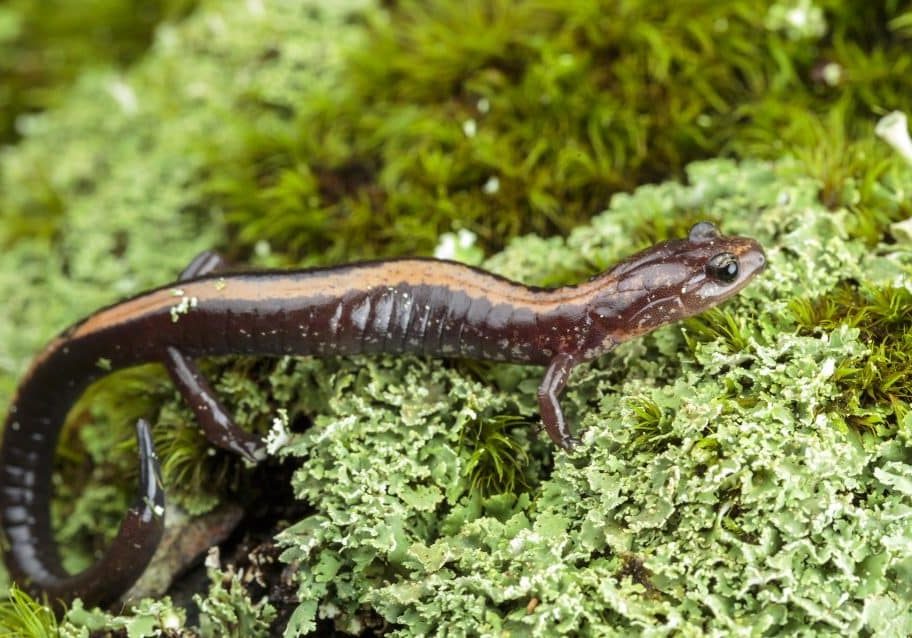
The Shenandoah salamander is a woodland salamander, which has adapted to life at higher elevations away from water. This sparkling rarity lives among the dry leaves, cracked logs, and stony hillocks on the highest peaks of Shenandoah National Park.

Leave a comment
Your email address will not be published. Required fields are marked *
Leave a Comment