
Front Porch Blog
Virginia advocates secured big wins at the 2026 General Assembly

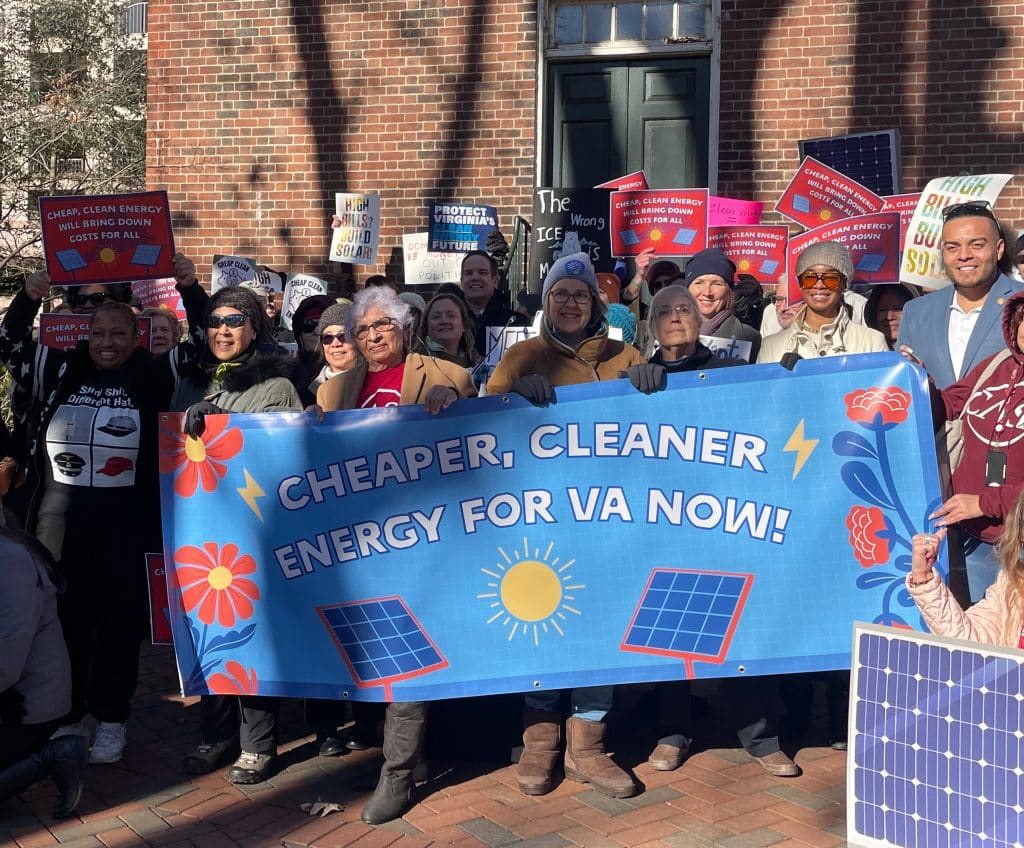
The 2026 Virginia General Assembly session turned out to be a monumental year for clean energy policy in the commonwealth, with significant clean energy and energy affordability bills passing both the House of Delegates and Senate.
With the strike of the gavel, the 2026 Virginia General Assembly session came to a close on Saturday, March 14. In total, 2,367 bills were introduced as well as thousands of additional resolutions. Over 1,200 bills were passed and sent to Gov. Abigail Spanberger’s desk.
This was a big session for clean energy and affordability advocates, with quite a few multi-year campaigns coming to fruition and big steps taken toward a clean and affordable Virginia. We’re thrilled to see many of the bills we supported pass!
This was also the General Assembly session where data center issues moved into the limelight. What was once a fringe issue became arguably the defining issue of the session. For a wrap-up on data center legislation and budget negotiations keep an eye out for Part Two of this blog, which will focus solely on data center issues.
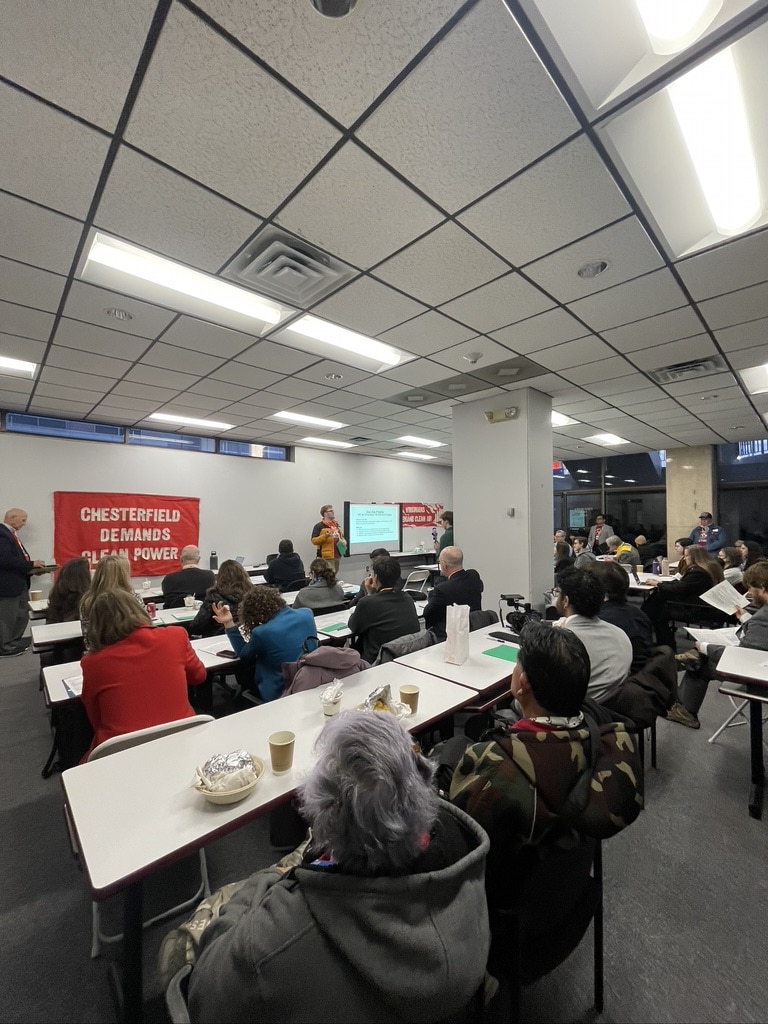
This session also highlighted how critical it is for residents like you to speak to your legislators and demand change. Virginians braved well-below freezing temperatures and icy travel conditions to attend the Clean, Affordable Energy Rally and numerous lobby days throughout the session. Without advocates like you, many of the victories highlighted below wouldn’t have been possible.
Accelerating clean energy development

Arguably the most significant pieces of legislation passed were HB 397 (Herring)/SB 802 (Locke), which directs the state Department of Environmental Quality to take the steps necessary to rejoin the Regional Greenhouse Gas Initiative. RGGI is a multistate program that reduces carbon dioxide emissions from power plants by requiring them to buy carbon dioxide emission credits through an auction for every ton of carbon dioxide they emit. The proceeds of the auctions fund energy efficiency and flood resilience programs across the commonwealth. Over time, the number of emissions credits available is reduced, incentivizing the power sector to emit less carbon. When Virginia participated in the program from 2020 through 2023 over $827 million was directed to the energy efficiency and flood resilience programs. (Former Gov. Glenn Youngkin illegally removed Virginia from RGGI in 2023.) Soon, Virginia will be reducing harmful climate pollution and reaping these benefits once again.
Another significant piece of legislation this session was HB 628 (Callsen)/SB 175 (VanValkenburg), which raises the amount of small, local solar power required under the Virginia Clean Economy Act and increases the amount of solar that Dominion Energy must install on brownfields and former minelands. This will shift some of the clean energy development in Virginia away from greenfields and toward lands that have already been disturbed by industrial or mining activity.
We also saw improvements to shared solar in Virginia this year. Shared solar is a program that allows customers to subscribe to a share of a solar farm’s energy output and receive credits on their bill. It is a great opportunity for renters, those living in apartment buildings and people in homes who can’t install solar to take advantage of the benefits. HB 807 (Sullivan)/SB 254 (Surovell) expand the shared solar program in Dominion territory, while HB 809 (Sullivan)/SB 255 (Surovell) expands the Appalachian Power shared solar program and fix a billing provision that improves the shared solar customer experience.
In 2020, the General Assembly passed the Virginia Clean Economy Act, a major legislative package requiring our largest electric utilities to transition to 100% clean energy by mid-century. However, every year fossil fuel interests and their legislative allies have attempted to weaken or repeal this landmark law. This session, a number of bills were introduced that would have undermined the Virginia Clean Economy Act or promoted new methane gas power plants. These bills were all defeated. We’re grateful to the legislators who defended this incredibly important law.
Taking advantage of advancements in energy storage technology
A key aspect of the clean energy transition is being able to store the energy produced during sunny or windy days for later use at night during peak demand time. Recent advancements in energy storage have reduced the costs and made it more efficient, flexible and longer-lasting. The VCEA requires a modest investment in battery energy storage, but these recent developments made it clear that the commonwealth must go further. HB 895 (Sullivan)/SB 448 (Bagby) does just that by increasing the short-and long-duration energy storage that Dominion Energy and Appalachian Power are required to build or acquire by 2045.
Technology exists that lets more Virginians opt in to programs that allow them to connect their smart appliances to the grid and save money when electric demand is high. The legislature took steps this session to expand these virtual power plant programs. HB 1467 (Franklin) establishes a VPP pilot program for Appalachian Power and HB 562 (Reid)/SB 487 (McPike) authorizes electric cooperatives to establish and implement VPP programs.
Keeping energy bills in check
With an incredibly cold winter across Virginia, folks are feeling the strain of high utility bills. Even without factoring in the weather-related increases, a ruling by the State Corporation Commission in 2025 means that customers of Dominion Energy will see their monthly bills rise by $11.24 per month on average in 2026. Appalachian Power customers’ monthly bills this spring will be almost $44 higher than in July 2022. Legislators took steps to this session to slow the rising bills.
SB5 (Locke)/HB3 (LeVere-Bolling) establishes a weatherization and low-income energy efficiency task force to identify barriers and recommend solutions to more effectively deliver energy efficiency and weatherization to eligible Virginians.
HB 1360 (Shin) directs the State Corporation Commission to investigate and remedy the practice of investor-owned utilities running their own, more expensive power plants when cheaper electricity is available. This practice has cost Virginians more than $1 billion since 2015! The legislation focuses on coal- and oil-fueled power plant operations so that ratepayers aren’t paying for dirty energy when cheaper alternatives are available.
Improving pipeline safety
A bill with broad bipartisan support to ensure the safety of communities and environments across Virginia, HB 1073 (Rasoul) directs the State Corporation Commission to develop regulations for advanced pipeline leak detection standards. This will improve the safety and efficiency of in-state methane gas pipelines.
So many of the successes of this session on clean energy, affordability, pipeline safety and climate protections were made possible by thousands of advocates like you calling, emailing and visiting their legislators to ensure they are accountable and making positive change in Virginia. But the work doesn’t stop with the passage of the bills. Now comes the critical work of implementing the programs to ensure that they work for all Virginians.
There is also a lot of unfinished work to do developing guardrails on data center development and ensuring that these facilities aren’t polluting our air, driving up our bills and depleting our water systems. Be on the lookout in the coming weeks for a Part Two of this 2026 Virginia General Assembly session wrap-up blog focused solely on data centers and the work that we still need to accomplish to rein in their development.

PREVIOUS
NEXT

Leave a comment
Your email address will not be published. Required fields are marked *
One response to “Virginia advocates secured big wins at the 2026 General Assembly”
-

Clean renewable energy is the future of our world. All fossil fuels are polluting our environment and our people. Wildlife and people are dying every day because pollution from these dirty fossil fuels. It is not enough to talk about ending our reliance on fossil fuels, when it is now imperitave that we stop using these fuels or our planet will not be able to recover from golbal warming and climate change. These are both destroying our planet more and more every day we don’t act to stop the use of all fossil fuels.

Leave a Comment