
Front Porch Blog
Part one: The $3 billion health costs of Dominion Energy’s proposed Chesterfield gas power plant

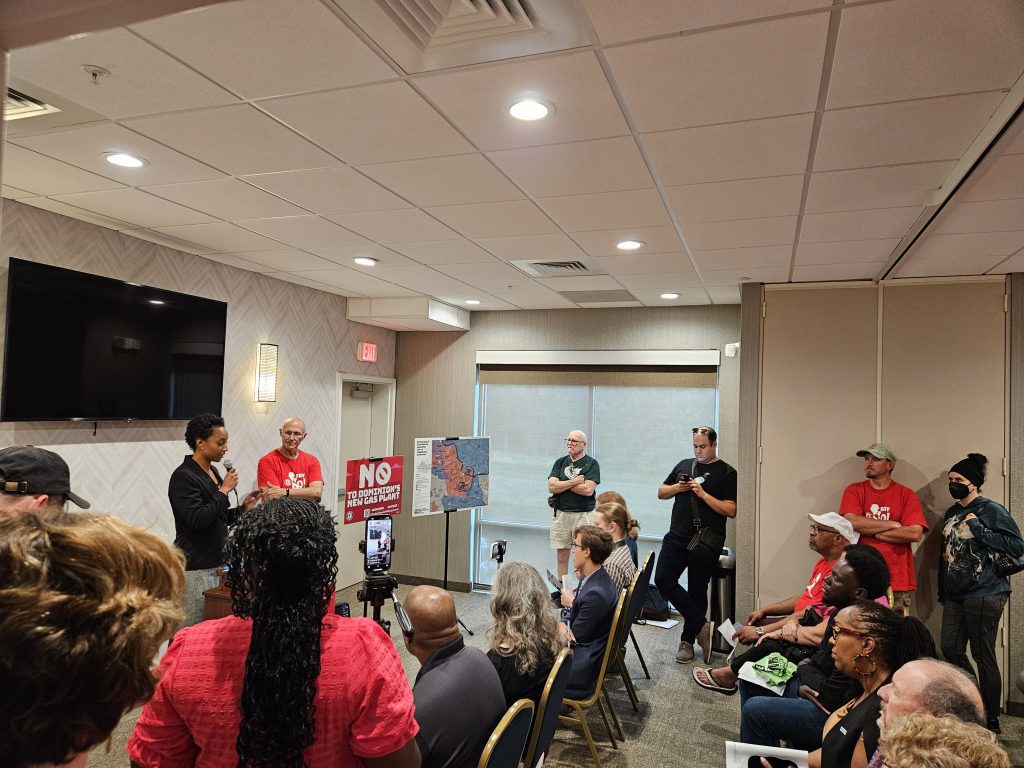
In September, both the Virginia Department of Environmental Quality and the State Corporation Commission are holding hearings on Dominion’s proposed gas power plant in Chesterfield. Both agencies are currently accepting comments from the public. Photo by Jessica Sims
This is the first of two blogs looking at how Dominion Energy’s plans for a new methane gas power plant in Chesterfield would affect the local community and everyone in Virginia who gets power from the state’s biggest power company. We’ll dive into the latter in part two!
For over two years, residents of Chesterfield, Virginia, have been fighting against a proposed gas-fired power plant in their community. On Aug. 7, over 130 concerned residents attended a press conference hosted by the No New Gas Plants Coalition, followed by an informational briefing led by the Virginia Department of Environmental Quality on the draft air permit. The briefing was a space for the public to try to get their questions answered — and many attendees expressed their concerns with the proposed plant.
“Dominion’s proposed plant threatens our community’s health and our environment, and it’s being planned without real community input,” said Nicole Martin, president of the Chesterfield County NAACP. “We refuse to let Chesterfield be a sacrifice zone for outdated fossil fuel infrastructure.”
The proposed Chesterfield gas plant, aka CERC
Dominion Energy, the largest power company in Virginia, is proposing a 944-megawatt methane gas peaker plant in Chesterfield County. Peaker plants are designed to operate during times of high energy demand, such as during hot summer afternoons or cold winter nights, but they emit higher amounts of pollution for each unit of electricity produced. This proposed facility, known as Chesterfield Energy Reliability Center, or CERC, would be at the site of a former coal-fired power plant that had been in operation since the 1950s and close to the Dutch Gap Conservation Area along the James River. The coal units closed in 2023 but two gas- and oil-fueled units remain in operation.
In 2009, the Chesterfield Power Station was ranked 36th in a list of the top 100 polluting coal power plants in the U.S., in a report from the Institute for Southern Studies. Arsenic, chromium, dioxins, lead, mercury and nickel were released into the air from the Chesterfield Power Station, according to the Environmental Protection Agency’s Toxic Release Inventory. The site is also home to two unlined ponds that hold 15 million cubic yards of coal ash, a toxic byproduct of coal-fired power generation.
The surrounding community has been saddled with pollution for decades, and residents are speaking out against the power company’s plans to bring a new polluting project to their doorstep.
Health impacts
“This plant is dirty and expensive, no two ways about it,” said Rachel James, Staff Attorney for the Southern Environmental Law Center, at a press conference before the DEQ informational briefing. SELC represents several clients, including Appalachian Voices, in a proceeding in which state regulators will decide whether this power plant receives its underlying operating permit, known as a Certificate for Public Convenience and Necessity.
“Burning methane is bad for our health. If allowed, this plant would spew out several harmful contaminants, including fine particulate matter, which is one of the most deadly air pollutants.”
Particulate matter, volatile organic compounds, carbon monoxide and greenhouse gases could all increase from what was emitted in 2022, the final year that the coal units were in operation, based on information in Dominion’s air permit application and the draft air permit for the Chesterfield proposal.
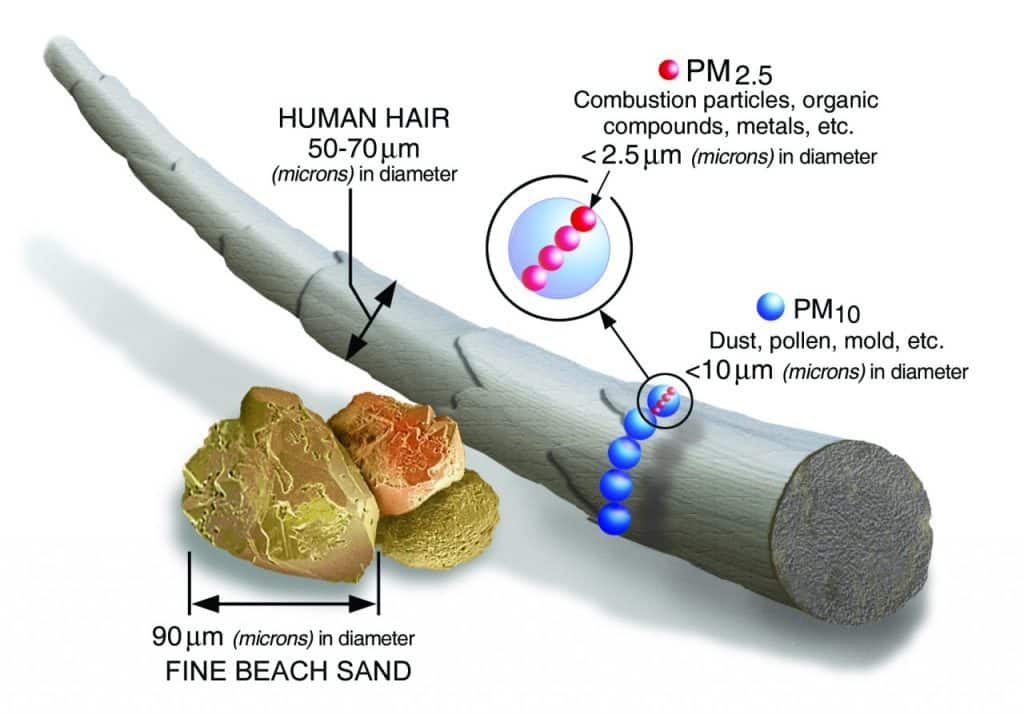
Particulate matter is comprised of small particles finer than a human hair that come from a number of different sources, such as the combustion of gas or coal from power plants. When people inhale these fine particles, it can lead to a number of negative health complications such as heart attacks, lung disease, asthma and difficulty breathing. Children, the elderly, and people with pre-existing conditions are particularly at risk, as are low-income and minority communities that are more likely to be exposed to damaging amounts of particulate matter.
“Health-related costs associated with the gas plant are estimated at nearly $3.2 billion,” James stated.
Volatile organic compounds are human-made chemicals often used in industrial processes and can be produced from the combustion of coal or gas in power plants. When they are released into the environment, they commonly cause contamination of groundwater. When people are exposed to VOCs, these compounds can cause headaches, nausea, eye and nose irritation, damage the liver, kidneys and nervous systems, and are suspected to cause cancer.
“From a community perspective, the fact that this community has been exposed to 70 years of coal pollution doesn’t justify exposing it to even more pollution,” said Chesterfield resident Jason Woodby at the DEQ informational briefing on Aug. 7. “In fact it kind of does the opposite. This community has had 70 years of being polluted and breathing in toxic air. Enough is enough!”
There are two opportunities to stand with the Chesterfield community in opposition to this power plant. First is through the Virginia Department of Environmental Quality air permit process. The state has issued a draft air permit. Comments on the draft air permit will be accepted from Aug. 8 through Oct. 8, and a hearing for the permit will be held on Sept. 8 and with a rally at 4pm before the hearing.
DEQ accepts comments via email at [email protected] or postal mail addressed to Alison Sinclair; DEQ Piedmont Regional Office, 4949 Cox Rd, Glen Allen, VA 23060. All comments must include the name, address or email address of the person commenting. DEQ also accepts written and oral comments at the public hearing. RSVP here for the hearing on Monday, Sept. 8, at 5 p.m. at SpringHill Suites Chester, 12301 Redwater Creek Road, Chester, VA 23831.
The second way to stop CERC is through the State Corporation Commission’s Certificate of Public Convenience and Necessity process. A hearing has been scheduled for the CPCN on Sept. 23, and comments are being accepted through Sept. 16. If you want to learn how to make comments to the SCC, Appalachian Voices is offering an office hour on Thurs., Sept. 4 at noon, where you can learn to draft your own comments.

PREVIOUS
NEXT

Leave a comment
Your email address will not be published. Required fields are marked *
Leave a Comment