

Colorblind Viewfinders Make Appalachian State Parks More Accessible
Virginia State Parks is first in the nation to have viewfinders for colorblind guests at all parks, other states are following suit

By Debra Murray
Virginia State Parks is the first park system in the nation to have a colorblind viewfinder at each one of its 43 locations — thanks to the dedication of one park ranger.
Ethan Howes, assistant park manager at Twin Lakes State Park, has a common form of colorblindness, which makes it hard to distinguish between red and green. In 2023, he was the chief ranger at Natural Tunnel State Park in Scott County, where he helped lead an initiative to install EnChroma-adapted viewfinders in all state parks. At some parks, visitors can also check out EnChroma colorblind glasses to use during their visit.
The viewfinders and glasses help people with red-green colorblindness, like Howes, enjoy a wider color range. The viewfinders look like the mounted binoculars spotted at scenic areas — except they have specialized optical filters to block certain wavelengths of light. This allows people with red-green colorblindness to see the views with a broader range of colors.
Of the more than 8 million people visiting Virginia State Parks annually, approximately 341,000 are colorblind, according to a press release by the Virginia Department of Conservation and Recreation.
“It’s kind of one of those hidden disabilities that you don’t talk about, and then you get made fun of if you say the wrong color, or you color something wrong in school,” Howes says, emphasizing that he wanted to “give something back” and heighten awareness of people with color blindness.
The joy of seeing a flower in a new way

Howes was first introduced to colorblind viewfinders in Tennessee, which inspired him to bring the idea to Virginia, especially after hearing his family’s reaction to his experience.
“It affected me, but what I walk away with most from it is how it affected my loved ones,” Howes says. “I called my mom, and she broke down crying with excitement and happiness for me to be able to experience that. That’s what struck me the most about my experience looking at the viewfinder. It wasn’t necessarily the colors that I was able to see, but the reaction that my mom and my sister had from it.”
Now, he enjoys watching other people with colorblindness experience the same joy of seeing colors they couldn’t experience without the viewfinders.
“Hearing the stories of other folks that have had those same experiences, that’s what really gets me, what makes me feel joy, to bring that to people,” Howes says.
He recalls that when he was working at Natural Tunnel, a family came to visit, and the father and son had red-green colorblindness. They used the viewfinder at the park’s gazebo.
“They started freaking out over it,” Howes says. “They came down to our camp store and were enthusiastic about it. The mother was beside herself that her son and husband had witnessed this color spectrum.”
Afterward, the family participated in a cave tour, during which the father and son were able to use colorblind glasses offered by the park.
“The son and father kept pointing out different flowers,” Howes says. “Taking the glasses off and saying, ‘Wow, that looks red to me without the glasses, but I put them on, and it’s a bright pink color,’ and the mom was very moved by it, and pretty much close to tears when I talked to her about it.”
Making accessibility a top priority in Tennessee State Parks
Other state park systems in Appalachia are also installing viewfinders for visitors with colorblindness, including 12 parks in Tennessee. Ryan Jolley is the accessibility coordinator for the Tennessee Department of Environment and Conservation on behalf of Tennessee State Parks, where he explains that accessibility is a top priority.
With so many people who have red-green colorblindness visiting state parks, Jolley explains that resources like the colorblind viewfinders are important to help people experience nature in the fullest way possible.
“It’s important because we want people to have a relationship with nature, and you foster that relationship through those meaningful experiences,” Jolley says. “So these are a tool to help bridge the gap, so they can experience the environment in the fullest way possible.”
Jolley has low vision and can only see through his peripheral vision. Low vision is a permanent visual impairment that cannot be corrected with glasses or contacts and significantly impacts daily activities such as reading and recognizing faces.
Tennessee State Parks offers accessibility programs to help people plan outdoor activities and develop skills for their adventures. The programs help park users develop orientation, trip-planning and mobility skills that allow them to plan out an adventure unique to their needs, according to Jolley.
Jolley also encourages anyone with a suggestion to make a park more accessible to contact a park ranger or the park manager.
“I want folks to know that if there’s something that they need in order to remove barriers to access the outdoors, to contact their park ranger, their park manager, express what those needs are, and if we can work with them to accommodate them, we’ll do everything we can to do it,” Jolley says.
Both Howes and Jolley want to make state parks as accessible as possible for visitors.
“The outdoors are for everybody; we should try to remove as many barriers as we can for people to fully enjoy the outdoors in a safe manner,” Howes says. “The viewfinders allow people to share their experiences. The family that came to Natural Tunnel, the memories that they created there are going to be of the excitement of seeing a flower in a different way.”
Related Articles
Latest News
More Stories

Halloween Approaches, and Night School Is in Session
The House of Art in Bluefield, West Virginia, looks like a haunted tower, making it the perfect location for its sixth annual haunt event: Night School. The Night School will be open every Friday and Saturday night through Oct. 31.
‘The Most Perfect Act of Love’
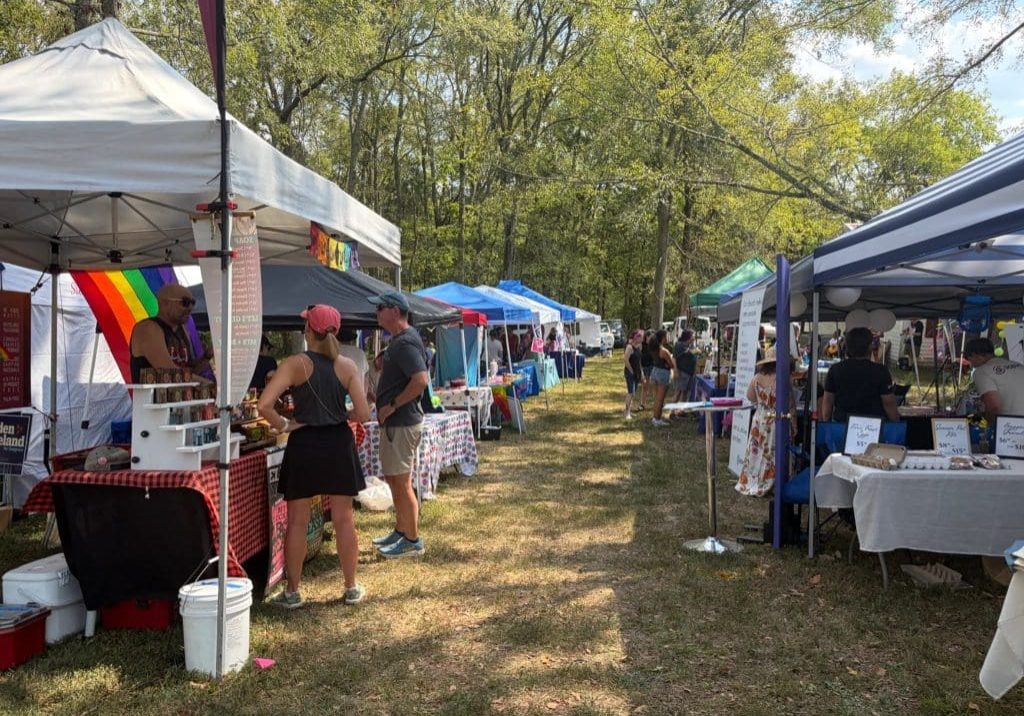
After losing its rural pride celebration, hundreds of people attended the second annual Affirming Sumner Pride celebration on a 24-acre farm dubbed “Fruity Farm” in Bethpage, Sumner County, Tennessee.

Signs of Life
In the Nantahala National Forest, a team of biologists spotted Indiana bats, an endangered species that hasn’t been seen in North Carolina for the last 11 years.

‘First Line of Defense’
During Hurricane Helene and its aftermath, rural fire departments and other first responder hubs played critical roles in keeping their communities safe, even without power and cut off from outside support for days or weeks after the storm. Two years later, plenty of work remains to ensure these hubs have the resources they need to operate day to day and be ready when emergencies or natural disasters strike.

The Rocky Road — and Bridge — to Recovery
Hurricane Helene is estimated to have damaged nearly 7,000 private roads and bridges in Western North Carolina. Two years later, many restoration projects are complete, but the journey hasn’t been easy — and isn’t over for others.
After 20 Years, Letcher County Prison Proposal Is Still Alive, Though Obstacles Remain
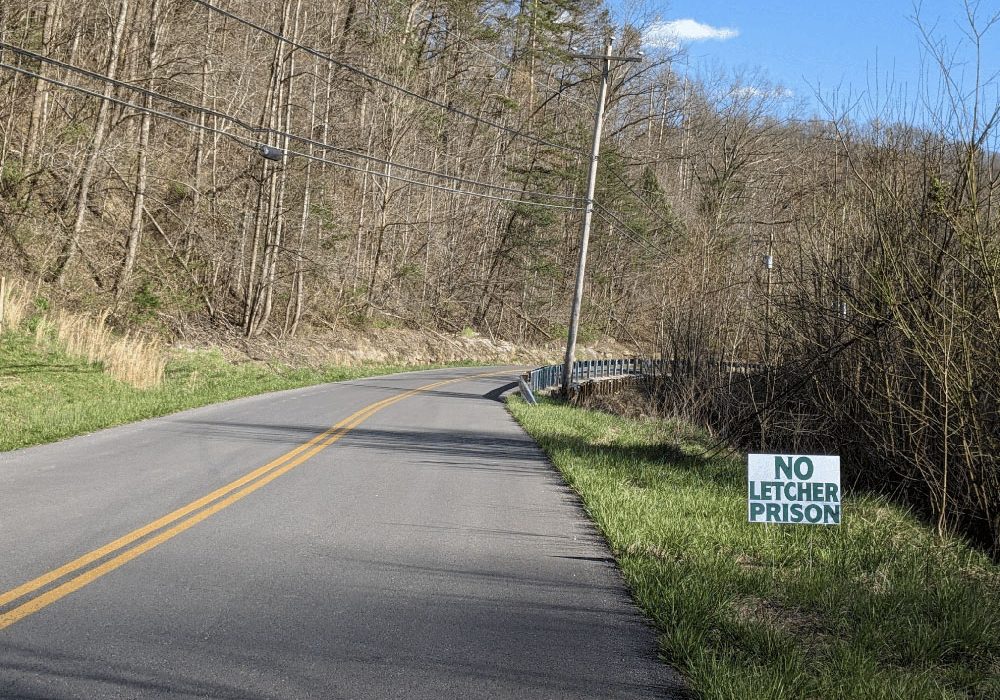
A $605 million proposal for a federal prison on a former strip mine site in Letcher County, Kentucky, championed by U.S. Rep. Hal Rogers, refuses to die, despite local opposition, a lack of support from the executive branch and numerous other obstacles.

Leave a comment
Your email address will not be published. Required fields are marked *
Leave a Comment