
Front Porch Blog
Communities face mounting harms from Mountain Valley Pipeline

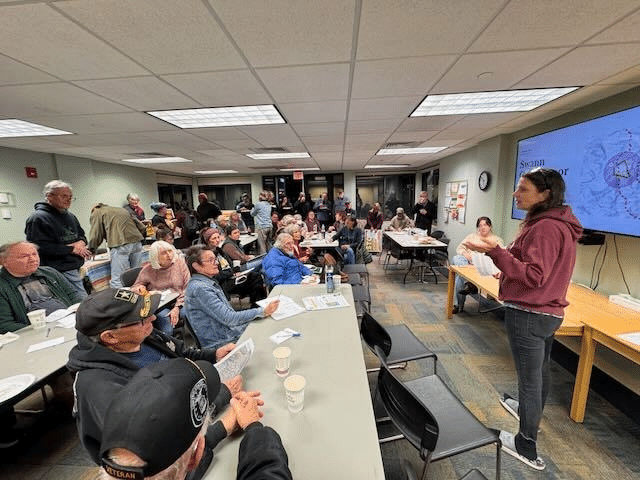
Crystal Mello of the Protect Our Heritage, Water Rights coalition speaks to community members gathered for an information meeting on MVP Boost, a proposal to expand the gas capacity of the Mountain Valley Pipeline and add a new methane gas compressor station in Montgomery County, Virginia.. Photo by Dan Radmacher
The ruinous Mountain Valley Pipeline has been in operation since June 2024, but serious problems persist. Communities in West Virginia and Virginia continue to face unresolved restoration issues in areas where developers were given right of way for construction, in addition to safety concerns, sediment runoff and pipe slippage along the route.
Residents continue to monitor ongoing problems, and are now confronting two new projects proposed by the same violation-riddled developers of the MVP. The pipeline remains deeply controversial — and harmful to the communities it cuts through.
Pipeline safety protections under threat
With reduced enforcement at the federal agency that monitors interstate pipelines, the Pipeline and Hazardous Materials Safety Administration, there is growing concern that pipeline safety is being adequately monitored. Even before recent staff cuts, the agency already needed more funding and resources. Now, with reduced capacity and more uncertainty, the need for state-level protections and monitoring are more critical than ever.
In January 2025, PHMSA finalized its new leak detection and repair rule, the culmination of years of stakeholder engagement and regulatory review. As the agency moved to finalize the rule, it hit a roadblock with the Trump administration after President Donald Trump issued an executive order withdrawing rules that hadn’t made it to the Federal Register. As a result, the leak detection rule was frozen — the administration did not allow PHMSA to formally issue the rule.
This left the much-needed improved federal safety protections in limbo. However, states have the authority to adopt stronger regulations for intrastate pipelines — pipelines that begin and end within state borders. Those measures could include requiring annual leak surveys or reducing intentional emissions. Colorado has already taken this step, directing its public utilities commission to formulate and adopt the safety suggestions from the proposed federal rule. Virginia could follow suit, especially since new leak detection technology can be used more frequently, leading to fewer incidents and increased safety for communities across the commonwealth.
Requiring odorant in pipelines that begin and end within a state’s borders is another way to strengthen state safety standards. Large interstate pipelines like MVP are not required to put odorant, a chemical that adds a distinctive rotten egg smell to the gas, in the line. Without odorants, there is no way for local first responders or residents to smell when a transmission line leaks, increasing the time it would take to identify and fix the leak, and potentially increasing risk of explosion.
Additionally, community members seeking information about safety records along the route face months-long delays for answers through public records requests. For example, a records request placed by Appalachian Voices in July 2024 was not released to the organization until February 2025. Information that could help explain testing schedules, any anomalies along the route or corrective actions taken should be made available as quickly as possible.
Local residents continue to monitor MVP route
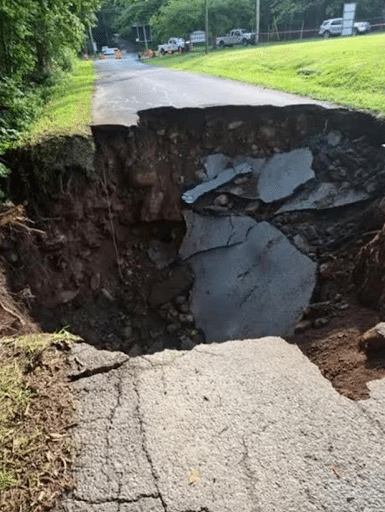
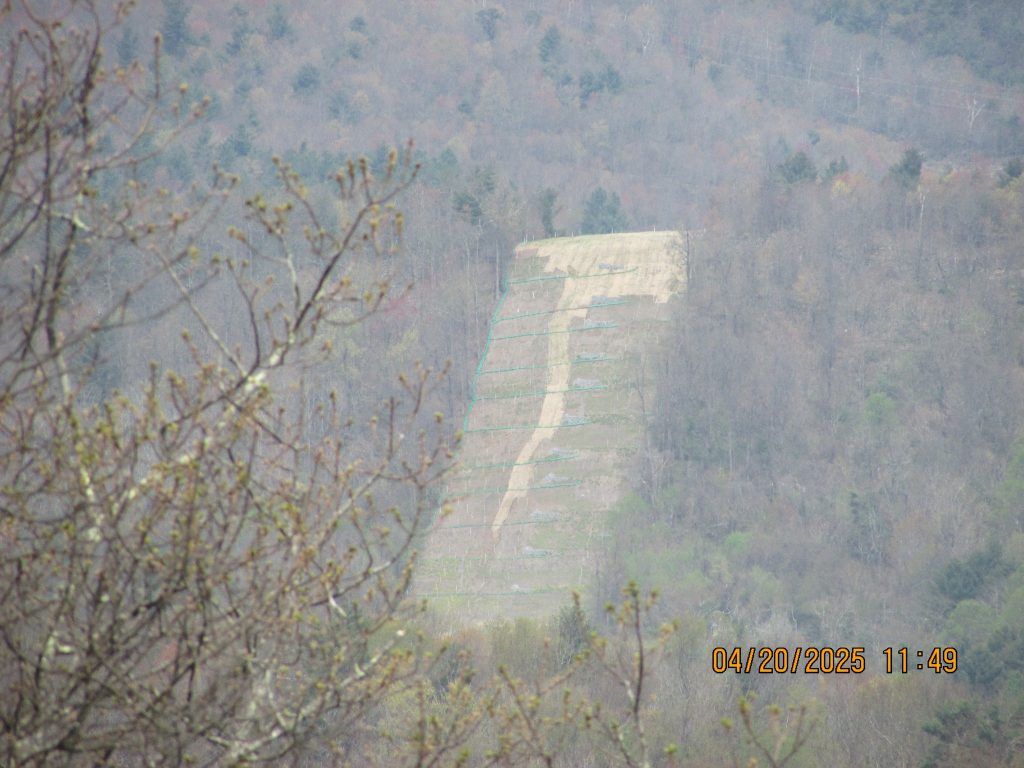
Although MVP has considered restoration efforts complete since 2024, many recent filings show ongoing lack of vegetation on the Right-of-Way, the area that the company is meant to maintain for access to the pipeline. If you travel the route, you see bare strips crossing steep mountains, erosion controls dislodged, and slopes showing areas of sinking land. Preserve Giles County reported in a July FERC filing about ongoing ground disturbance near a former limestone mine. Alarmingly, the images they provide include a sinkhole-like disturbance along a road.
Filings from residents also warn of animals trapped in MVP netting, and express alarm about the use of generators as permanent power sources for what the company describes as “power reliability” at a workspace site, as they would add to the pollution from the project.
Farmer speaks out about MVP’s negative impacts on his land
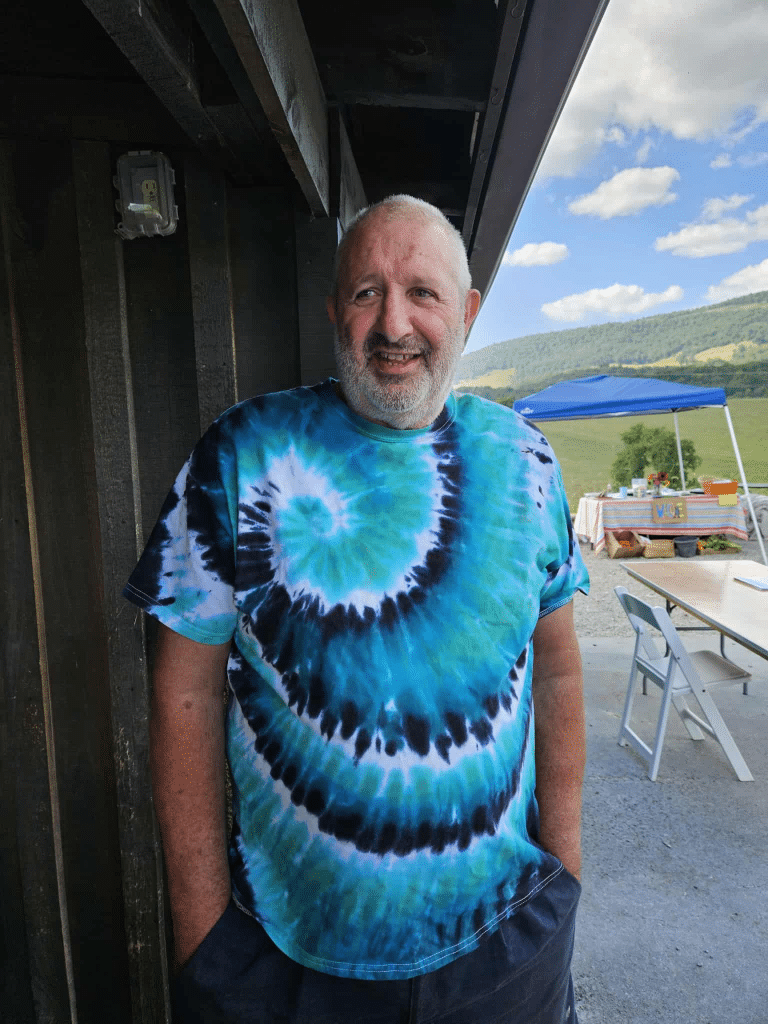
West Virginia resident Maury Johnson has submitted numerous complaints to FERC. Amid his busy schedule advocating for his community, I spoke with Maury, whose organic farm is crossed by MVP. His detailed monitoring of the pipeline’s construction and impact on his property and many locations along the route in West Virginia has resulted in dozens of actionable notices of violation from the West Virginia Department of Environmental Protection. His responses have been edited for length and clarity.
Why is engagement with PHMSA important?
Maury Johnson: I’ve had inspectors on my property on several occasions, which resulted in some pipe being replaced and other pipe being repaired. I’ve been to the Gas Pipeline Advisory Committee meetings twice and gave comments to PHMSA on landowner safety issues, and I’ve inspired other landowners from across the county to attend those meetings. Also, I attended the Pipeline Safety Trust meeting and other PHMSA meetings where we get to talk to and meet with PHMSA officials about the concerns of not only MVP but all pipeline construction across the county. I attended the PST 25th anniversary commemoration of the explosion in Bellingham this summer. The dedication of that monument to the three young men who were killed there in 1999 drives home the point that pipeline safety should be on everybody’s radar.
What do you feel are the most urgent safety concerns with MVP?
Maury Johnson: Right now, all of the slips on these steep slopes in both West Virginia and Virginia add stress to the pipe and basically make the chance of explosion that much greater. As [the saying goes] you can’t legislate against gravity.
What have your complaints highlighted?
Maury Johnson: The slope above Kellers Creek in Summers County, West Virginia, has slipped numerous times since construction started. It was redone when they put the pipe in and they had to redo it last year …There’s major slips across West Virginia and Virginia that I’m documenting. We still have concerns that there’s pipe that has been put in the ground that should have never been put in the ground owing to outdated pipe coating, construction during winter, general terrain and some of the terrain [developers] admitted were some of the steepest they’d ever put pipes in.
How would you recommend people engage on pipeline safety?
Maury Johnson: Engage with the Pipeline Safety Trust, whose experts have lots of resources and help. Talk with other frontline communities across the county, which are easy to find, like Appalachian Voices, who are there to help people understand the issues.
MVP proposes new gas compressor station expansion
As communities continue to grapple with unrestored rights-of-way and ongoing sedimentation issues, MVP now wants to increase the gas capacity and pressure in the pipeline. MVP’s proposed “MVP Boost” project would expand gas compressor stations at the three existing locations in Fayette, Wetzel and Braxton counties inWest Virginia. tThe project would also build a massive, methane-gas compressor station in Elliston in Montgomery County, Virginia. The MVP Boost expansion would significantly impact local air, water, communities and wildlife.
Of particular concern, the proposed Swann Compressor Station in Elliston would be nearly five times larger than MVP’s failed Lambert Compressor Station project, posing serious risks to Eastern Montgomery County’s air, safety and quality of life. The Federal Energy Regulatory Commission recently accepted scoping comments on the project, inviting the public’s input on environmental and cultural impacts from MVP Boost. Unfortunately, despite calls from community members and U.S. Rep. Morgan Griffith to extend the comment period, FERC declined. Comments can be submitted to FERC, using Docket No. CP26-14. FERC has now announced it will prepare an environmental assessment to be issued on Aug. 7 with a decision on the project’s certificate by Nov. 5.
Elliston County residents organize to oppose MVP Boost
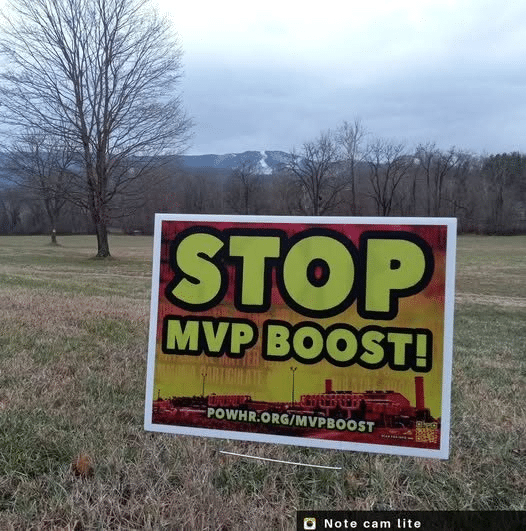
When members of the impacted community in Elliston became aware of MVP’s proposal, they immediately organized, flagging numerous concerns and questions about the project, and hosting packed community meetings to tell neighbors. FERC’S rushed review process of MVP Boost is raising serious concerns. The Montgomery County Board of Supervisors recently adopted a resolution of opposition, citing unaddressed safety concerns. You can connect with organizers leading this fight by visiting powhr.org/mvpboost and filling out the interest form at the bottom of the page
MVP Southgate awaits regulatory decisions
Waiting in the regulatory shadows is MVP’s 31-mile pipeline extension project called Southgate. Communities have fought this project for years, leading North Carolina and Virginia to previously deny water and air permits for Southgate.. When developers sought to change Southgate’s design and gas-carrying capacity, members of the public and elected leaders called on FERC to initiate a new certificate review process noting the new the project differs significantly from the version approved under FERC’s original 2020 Certificate of Public Convenience and Necessity. Additionally, MVP has failed to show that Southgate is needed to meet regional demand for gas, as documented in the recent London Economics International report commissioned by the Southern Environmental Law Center.
Despite the evidence that the project is unneeded, FERC granted approval of the requested amendment to change the project’s route, pipe diameter and gas-carrying capacity on Dec. 18, 2025. In addition to FERC’s approval, the North Carolina Department of Environmental Quality issued a Clean Water Act Section 401 permit in November 2025, despite significant opposition from local communities. On Jan. 13, the Virginia Department of Environmental Quality granted the project a Virginia Water Protection Permit, but Southgate still needs approval from the U.S. Fish & Wildlife Service and permits from Virginia DEQ and U.S. Army Corps of Engineers, with those decisions expected in January 2026.
Honoring the fight against MVP

Amidst new and old facets of the fight against MVP, community members continue to band together, look out for their beloved homes and land, while working to hold the company and regulators accountable. A new documentary, “A Beast Touch the Mountain: Mountain Valley Pipeline and the fight for Appalachia,” showcases some of the incredible community members who have worked for years to protect against MVP. The film by acclaimed director James Mottern follows Bent Mountain residents in Roanoke County and other advocates as they expose the project’s harms. The film is screening across the country, and is now available via streaming platforms on Amazon, Apple TV and Google Play. It is both heartbreaking and inspiring, reflective of the decade-long fight against MVP.

PREVIOUS
NEXT
Related News

Leave a comment
Your email address will not be published. Required fields are marked *
4 responses to “Communities face mounting harms from Mountain Valley Pipeline”
-

It’s ALL about the MONEY! They don’t care about how much harm it does to people, animals, land, water, trees, forests! It’s ALWAYS about Adding More $$$$$ to their Already Overstuffed Bank Accounts!
-
It is not hard to look around and notice that climate is really changing…in WA we have barely had any snow, only in the mountains and that is not the norm,
We need to stop harming the planet with “growth” at the expense of protection of our planet. Since we are not having much snow who knows what water will be like in spring and summer and then gardening and perhaps also and increase risk of fire because of dryness of the woods in the flatlands.. -
Our mountain communities need our support, and they should not be stripped of their environments.
-
Those public meetings are a joke and always will be! They get what they want every time!


Leave a Comment