
Front Porch Blog
Fluvanna County fights back against proposed Tenaska gas plant

Columbia, Va., in Fluvanna County. Creative Commons Attribution-Share Alike 3.0 Unported License
UPDATE, March 3: The Fluvanna County Planning Commission rejected Tenaska’s special use permit on Feb. 24 and now the county board of supervisors will make the final decision on Tenaska’s proposal on Wednesday, March 18, at 6 p.m. Register to attend the meeting!
Fluvanna County is situated in Virginia’s Piedmont region. It is a county of great beauty — home to rolling fields, forest, bordered by the James River and bisected by the Rivanna River, the first Virginia river designated as a state Scenic River. It is also home to one of the largest gas-powered electricity-generating facilities in the region. Now, the company behind that methane gas plant wants to double Fluvanna’s gas infrastructure.
Nebraska-based Tenaska has operated a 940-megawatt methane gas plant in the county since 2004. Locals strongly opposed the existing plant at the time of its permitting, and it has produced air and noise pollution in the years since. Many in the community felt that Tenaska did not fulfill its promise to be a good neighbor in the years since the plant became operational.
In August, Tenaska announced plans for a new methane gas plant, an even larger 1,540-megawatt plant. This announcement was met with immediate concern, as the plant would be close to the existing location and would mean additional environmental burdens for the area.
The community has responded swiftly to learn more about the potential impacts. Having dealt with decades of noise pollution from the existing Tenaska plant, neighbors were deeply apprehensive about additional noise burdens that disrupt daily life for nearby residents and wildlife. They are additionally concerned about the damage a new plant would do to nearby waterways as the plant would take 7 to 8 million gallons of water per day from the James River for cooling purposes, discharging heated water into either the Rivanna River or Cunningham Creek.
The Fluvanna Horizons Alliance formed to help educate neighbors about the project, and to seek answers from the developers and county officials. Tenaska announced it was hosting a community meeting on Aug. 14, which doubled as an official county meeting. Developers took questions from the audience written on postcards — but only answered some of them. All questions about emissions from the new plant were ignored and instead, the focus was the company’s perspective about how beneficial the project would be for the county.
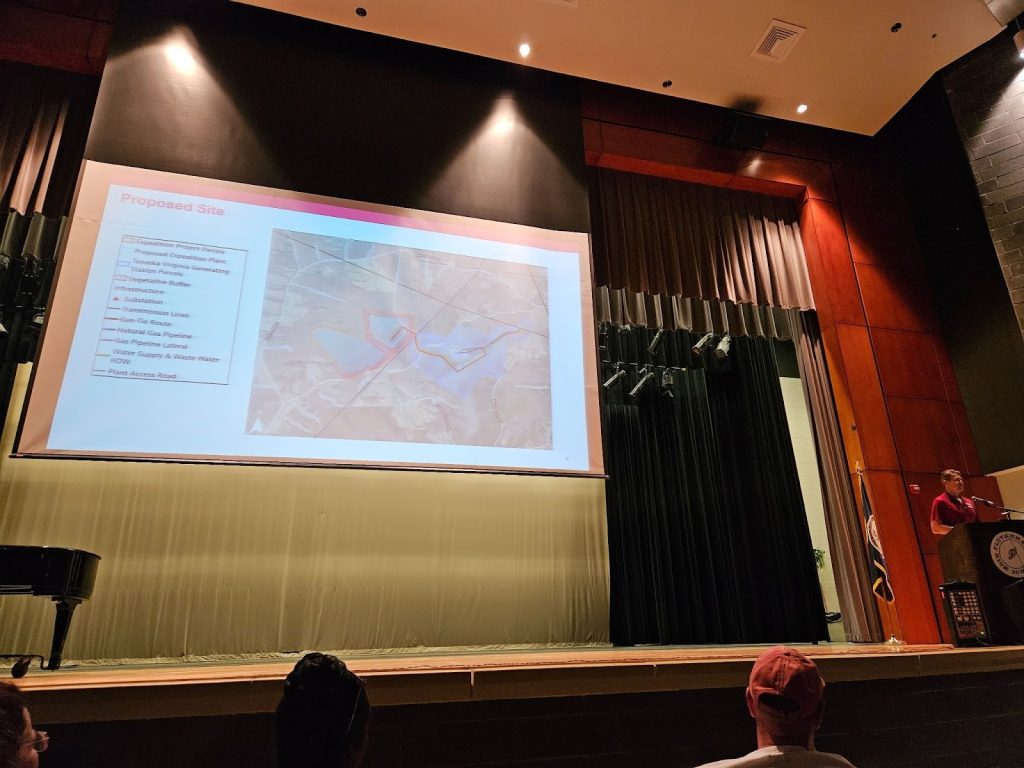
This community session left Fluvanna residents with more questions than answers, and the Fluvanna Horizons Alliance quickly organized a new community meeting to learn more about the plant’s potential impacts, and how residents could actively oppose the project.
Drawing a crowd of over 80 attendees, the Sept. 22 community meeting included neighbors and elected officials. Josephus Allmond of the Southern Environmental Law Center, also a Fluvanna resident, spoke about the environmental and health concerns associated with the plant. Specifically, local health damages could reach between $27 million to $50 million annually, according to the Harvard School of Public Health, in a report to be released publicly on Jan. 8, 2026.
Residents asked many questions about the impacts of noise and air pollution, the strain on the James River and the massive amount of traffic from construction of the plant. I also spoke at the community meeting, highlighting areas around which to organize, and painting a picture of the broad fossil fuel expansion in the region, proposed because of the purported energy needs of data centers and artificial intelligence.

Supervisor Chris Fairchild, who represents the Cunningham District where the plant would be located, attended. He announced another meeting for Sept. 30, which would be open to the public and have Tenaska staff present to answer questions.
At the Sept. 30 meeting hosted by Fairchild and Supervisor Mike Goad, who represents the Fork Union District of Fluvanna, community members were permitted to ask questions verbally, but questions again went unanswered. Of specific concern to attendees were the potential traffic impacts from construction, and the lack of an environmental study or any information on emissions. Tenaska repeatedly responded that an environmental study would be performed during the air permit review process with the Virginia Department of Environmental Quality, but many in the audience felt the company should be performing health and environmental studies now. Tenaska representatives again came with absolutely no information to share on the expected emissions from the plant.
Community residents maintained their fierce opposition through the fall, highlighting at a Nov. 19 board of supervisors meeting that the project also does not meet the requirements of the county comprehensive plan and sharing concerns about water and air quality. County officials initially announced that they would allocate $60,000 for a traffic study of the proposed plant, but local residents questioned why the county should pay for studies instead of the company. Tenaska eventually agreed to pay for the traffic study, which is expected to be completed by Jan. 6.
On Dec. 19, Tenaska wrote to residents on parcels adjacent to the proposed plant offering cash payments for four years instead of undertaking noise mitigation efforts.
The Fluvanna Planning Commission will review the Tenaska proposal at its Jan. 13 meeting to determine if the plant is in “substantial accord” with the county’s comprehensive plan. The vote will serve as a recommendation to the Fluvanna County Board of Supervisors, which would grant the county’s final approval or denial of a special use permit for the plant. Between now and the January meeting, residents are encouraging neighbors to make their voice heard and to attend the Jan. 13 meeting.
UPDATE: The Fluvanna County Planning Commission rejected Tenaska’s special use permit on Feb. 24 and now the county board of supervisors will make the final decision on Tenaska’s proposal on Wednesday, March 18, at 6 p.m. Register to attend the meeting!

PREVIOUS
NEXT
Related News

Leave a comment
Your email address will not be published. Required fields are marked *
Leave a Comment