
Front Porch Blog
Why Every Homeowner Should Get a Home Energy Audit

If you’re looking to save money on electric bills, make your home more comfortable and reduce your environmental impact, getting a home energy audit is one of the smartest steps you can take.
Like most people, I’ve been anxiously watching my electric bill creep up the past couple of years and I’m looking for ways to cut costs. I enlisted the help of Viridiant, a nonprofit local to Richmond, Virginia, to identify where my home is losing energy and provide practical solutions to improve efficiency so I can lower my electric bill. After spending a few hours with Viridiant’s energy auditor, Andrew, while he assessed my house, I cannot recommend the experience enough after learning so much about my home of eight years and what I can do to enjoy it even more.
What is a home energy audit?
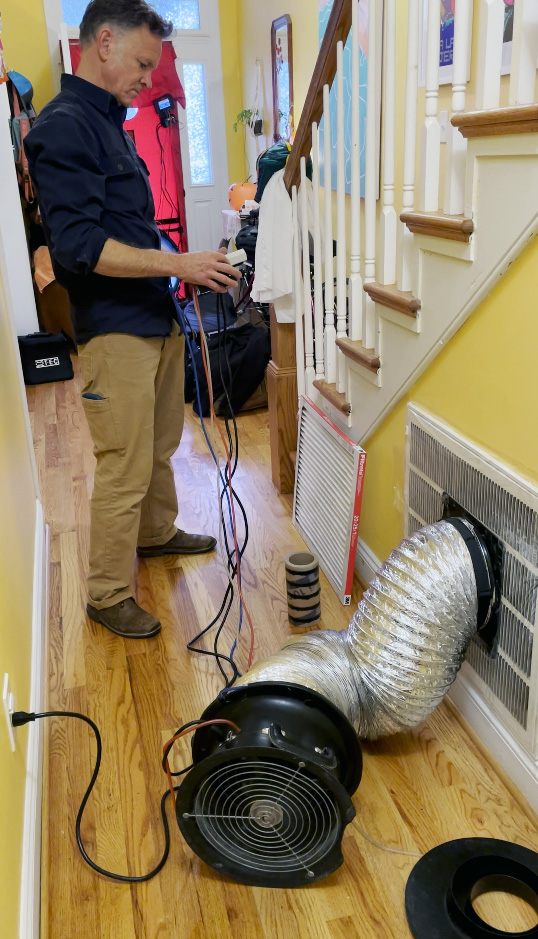
A home energy audit, also called an energy assessment, is a comprehensive evaluation of how your home uses and loses energy. Certified energy auditors use specialized tools — like blower doors, infrared cameras and moisture meters — to detect air leaks, insulation gaps and inefficient appliances. They then give you a detailed report with recommended improvements, from sealing ductwork to upgrading lighting or adding insulation.
Why an energy audit matters:
- Save money on electric bills
One of the biggest benefits of a home energy audit is immediate cost savings. By identifying areas where your home wastes energy — such as drafty windows, poorly sealed doors, or outdated appliances — you can make targeted upgrades that lower your heating, cooling, and electricity bills.. - Increase comfort year-round
Energy inefficiency often leads to uneven temperatures, cold floors or hot upstairs rooms. Fixing insulation or sealing air leaks after an audit helps maintain consistent indoor temperatures and reduces strain on your HVAC system, keeping your home more comfortable throughout the year. - Boost your home’s value
Energy-efficient homes are increasingly attractive to buyers. When you complete an energy audit and make improvements, you can market your home as efficient and eco-friendly — features that often command higher resale value. - Protect the environment
Reducing energy waste means cutting your household’s carbon footprint. A home energy audit helps you use less electricity and fossil fuels, directly contributing to cleaner air and a healthier planet. Small changes, like upgrading to LED lighting or improving insulation, can make a big impact over time.
How to get a home energy audit
Viridiant came recommended by my utility company’s website. Some utility companies even offer rebates or discounts to offset the cost of the audit or the recommended improvements. There is also a federal tax credit for up to $150 for certain home energy audits, which expires on Dec. 31. Before scheduling, make sure your auditor is certified by organizations like the Building Performance Institute or Residential Energy Services Network. Virginia requires auditors to have a residential building energy analyst license.
My home is relatively new — it was completely renovated top to bottom in 2017 by a trusted builder — so I didn’t think there would be major issues with my house, although I was skeptical of how some of the HVAC ductwork was installed in the crawl space. I chose Viridiant’s walk-through audit with a short report, which is a prioritized list of recommendations for improvements. In addition to the walk-through audit, I requested an air duct leakage test and blower door test that was required as part of the leakage test. Viridiant also offers an audit with a long report that includes a detailed breakdown including construction specifications, diagrams, research links and long-term energy-saving strategies.
My day-of home energy audit
For my energy audit, Andrew inspected every nook and cranny of the house, taking pictures, asking questions and pointing out issues along the way. He paid close attention to detail and gave careful consideration to the information I gave him. I even ventured into my crawl space — something I normally hate doing — to check out my heat pump’s air handler and duct work with him.
After the walk through, the fancy equipment came out. First, we sealed off all of the registers and vents for the air duct leakage test that uses a calibrated fan to depressurize the HVAC duct system. He installed a metal frame in my front door to set up the blower door test, which is a diagnostic tool used to measure how airtight a building is by using a large, powerful fan to depressurize the house. As the blower test was running, Andrew used an infrared camera to detect where leakages were occurring in my house.
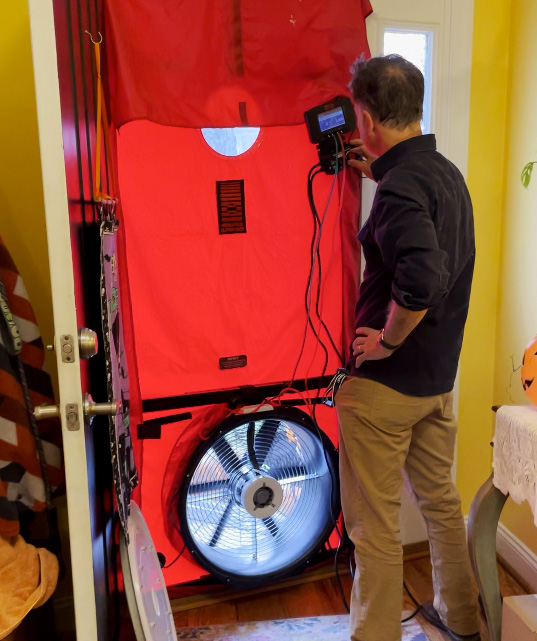
Then there was lots of talk of pascals — a unit to measure pressure — cubic feet per minute, number of air changes per hour, etc., as the different tests were completed. On top of everything, an air quality test measured the amount of particulate matter in my house. I don’t think this much science has ever occurred in my home, but Andrew did a great job making all of the technical stuff understandable and relevant.
Andrew’s energy audit recommendations
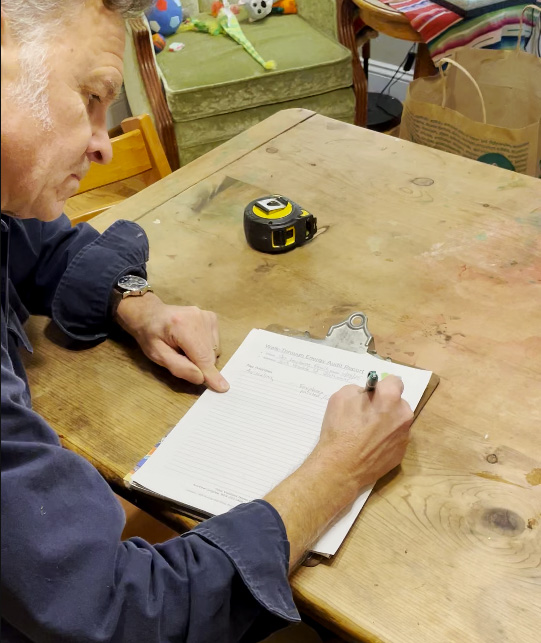
To finish it off, Andrew wrote out a report with a list of top-priority improvements needed for my home’s energy efficiency, then other recommendations with varying degrees of priority. He left me with workable solutions to my home energy needs that I can manage by myself. Here are some of the improvements he recommended:
- Blow additional insulation into the attic.
- Tighten air sealing around baseboards and shoe molding by running a bead of silicone caulk around gaps.
- Clean the coils on my A/C unit. I usually spray off my unit with a hose, but Andrew told me I could remove the cover to remove more debris.
- Tape my air filters in place to minimize the amount of air that sneaks around the air filter
- Install a dehumidifier in my crawlspace instead of blowing conditioned air down there — to better manage moisture while also delivering more air to the rooms where I want it.
- Insulate my hot water pipes with foam sleeves.
- Seal ductwork and areas inside vents with mastic
Take control of your energy use by performing a home energy audit
Now, I feel better equipped to take control of my energy costs and comfort after the energy audit. Whether your goal is to save money, live more sustainably or increase your property’s value, an audit is a simple and effective first step. With expert insights and actionable recommendations, you’ll be on your way to a more efficient — and more comfortable — home.

PREVIOUS
NEXT
Related News

Leave a comment
Your email address will not be published. Required fields are marked *
Leave a Comment