
Front Porch Blog
Part two: Why Dominion Energy’s bad track record on energy efficiency matters for its proposed Chesterfield gas plant

Opponents of the Chesterfield gas plant gather before a Chesterfield County Board of Supervisors meeting. Photo by Jen Lawhorne
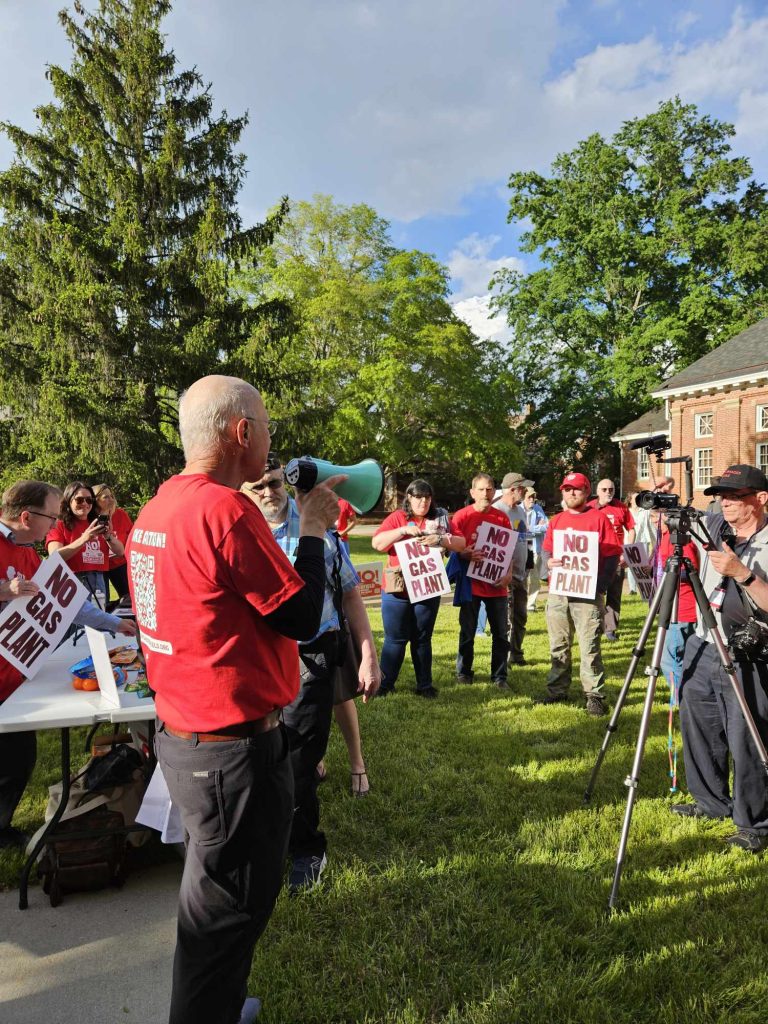
This is the second of two blogs on the proposed methane gas power plant in Chesterfield, which Dominion Energy calls the Chesterfield Energy Reliability Center or CERC. Here we’ll look at Dominion Energy’s failure to meet their energy efficiency requirements and why that’s important, and we’ll show that there is a cleaner and more affordable way for Dominion to produce electricity. In part one we detailed the proposed power plant and highlighted the health risks to the surrounding community if it is built.
“Dominion is doubling down on dirty energy when we should be accelerating the transition to renewables,” said Glen Besa, board chair of Friends of Chesterfield. “This project would lock in harmful emissions and drive up costs for families already struggling with high bills.”
The proposed Chesterfield gas plant, aka CERC
Dominion Energy, the largest power company in Virginia, is proposing a 944-megawatt methane gas peaker plant in Chesterfield County. Peaker plants are designed to operate during times of high energy demand such as during hot summer afternoons or cold winter nights, but they emit higher amounts of pollution for each unit of electricity produced. This proposed facility, known as Chesterfield Energy Reliability Center or CERC, would be at the site of a former coal-fired power plant that had been in operation since the 1950s and close to the Dutch Gap Conservation Area along the James River. The community surrounding the proposed facility is strongly opposed to it, and residents have been standing in opposition for over two years.
Virginia Clean Economy Act, energy efficiency and reliability
In 2020, a landmark piece of legislation went into effect — the Virginia Clean Economy Act. This law lays out a pathway to a low carbon economy by mid-century, requiring Virginia’s two largest electric utilities, Dominion Energy and Appalachian Power Company to retire all of their carbon-emitting power plants in Virginia by 2045. The law also establishes renewable energy and battery energy storage targets for Dominion and APCo, and it requires the two utilities to meet energy efficiency standards.
These required energy efficiency targets ramp up over time and set standards that the utilities must meet on an annual basis. It is left up to the utility to design programs that will benefit their customers and meet the energy efficiency standards, with oversight by state regulators.
Twenty-six states across the U.S. have established energy efficiency targets, and power providers have developed many different programs that drive down electricity demand and customer bills. The VCEA stipulates that, unless there is a “threat to reliability or security of electric service,” Dominion or APCo may not receive a permit to build a new carbon-emitting power plant, such as Dominion’s proposed Chesterfield gas plant, unless it has met its energy efficiency standards. Despite having energy efficiency standards that are lower than many other utilities nationally, the State Corporation Commission found that Dominion did not meet its annual targets.
Because of this, Dominion Energy is attempting to argue that it should receive an exception due to an alleged “threat to reliability.” In trying to establish that there is a threat to grid reliability, Dominion’s proposal to the SCC includes an analysis that shows the utility would be exporting electricity to out-of-state utilities and curtailing battery storage use during a potential period of high demand, like a polar vortex. However, this presents a distorted and unrealistic view of how the utility would behave.
Affordability and alternatives
“This dirty gas plant brings with it enormous costs — $4.5 billion for construction and financing costs and Dominion’s profit. Another $3.5 billion for fuel costs,” said Rachel James, staff attorney for the Southern Environmental Law Center at a press conference before the DEQ informational briefing on Aug. 7.
All of these costs will be paid for by customers not just in Chesterfield County but throughout the entire Dominion service territory. That means that many in Chesterfield and beyond would be paying for this polluting and expensive facility for the rest of their lives!
A better option
But there are alternatives to the Chesterfield gas plant that will allow Dominion to keep the lights on more affordably. Modeling conducted by Applied Economics Clinic showed that a combination of solar, battery storage, wind and energy efficiency could more affordably meet the equivalent energy that the Chesterfield plant would produce.
Additional modeling conducted by IdeaSmiths demonstrated not only that the Chesterfield plant is unnecessary, but that it is not cost-effective for Dominion to build any new gas plants. These experts’ analysis shows Dominion can meet even the highest energy demand growth projections and retire its fleet of carbon-emitting power plants by 2045 — as required by the VCEA — through a variety of new carbon free power sources and significant increases in battery energy storage systems. When considering avoided fuel costs alone, all this would cost less than Dominion’s plans to build an additional 6 gigawatts of polluting gas-fired power generation by mid-century.
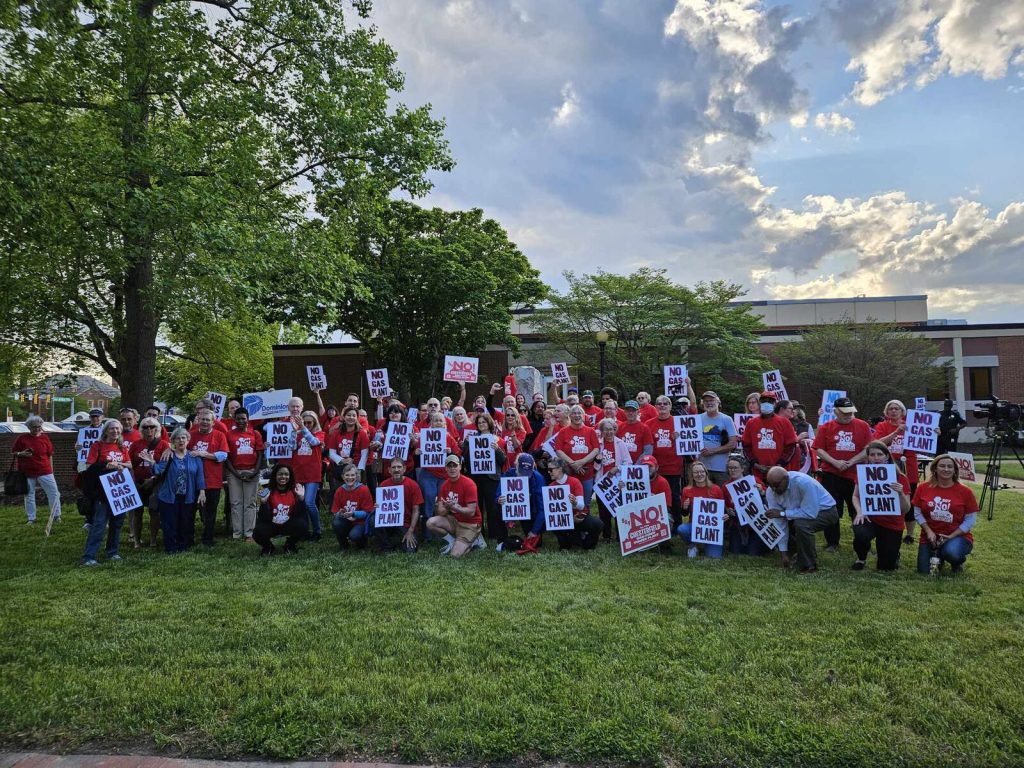
Get involved!
There are two opportunities to stand with the Chesterfield community and stop this shortsighted project. The first is through the Virginia Department of Environmental Quality air permit process. The state has issued a draft air permit. Comments on the draft air permit will be accepted from Aug. 8 through Oct. 23, and the agency will hold a second hearing for the permit from 5-9:30 p.m. on Oct. 8.
DEQ accepts comments via email at AirDivision1@deq.virginia.gov or postal mail addressed to Alison Sinclair; DEQ Piedmont Regional Office, 4949 Cox Rd, Glen Allen, VA 23060. All comments must include the name, address or email address of the person commenting. DEQ also accepts written and oral comments at the public hearing on Wednesday, Oct. 8 at 5 p.m. at SpringHill Suites Chester, 12301 Redwater Creek Road, Chester, VA 23831.

PREVIOUS
NEXT
Related News

Leave a comment
Your email address will not be published. Required fields are marked *
4 responses to “Part two: Why Dominion Energy’s bad track record on energy efficiency matters for its proposed Chesterfield gas plant”
-

Dominion Energy has a bad track record. NO GAS PLANT WITH THIS DODGY COMPANY WHO CARES NOTHING ABOUT THE ENVIRONMENT!
-
No new gas plants!
-
It’s time to get more renewable energy into all areas of Appalachia so that all the coal plants and mines can go dark and that the people of the area can actually have jobs that are healthy and in the light. I know this will be hard, but if someone like Trump can praise the fossil fuelers when he knows nothing about it except the money he can collect, the people of Appalachia will be the victims and Trump has only contempt for the people, particularly the people of Appalachia that he thinks are hicks and “hillbillies (not in a positive way). We all need the gas/coal gone but first, the renewable energy for every home and business.
-
Fossil fuel consumption has wrought extreme damage to the climate and even collapsed multiple eco-systems on a global scale. If this obsolete economic exploitation model persist, the living conditions on earth will become inhospitable for mankind.
Poisoning the environment for short term monitory benefits at expense of the common good must be stopped. Conversion to ecological sound technologies must be made top priority. Otherwise nature will strike back mercilessly!


Leave a Comment