
Front Porch Blog
Y’all don’t hear us

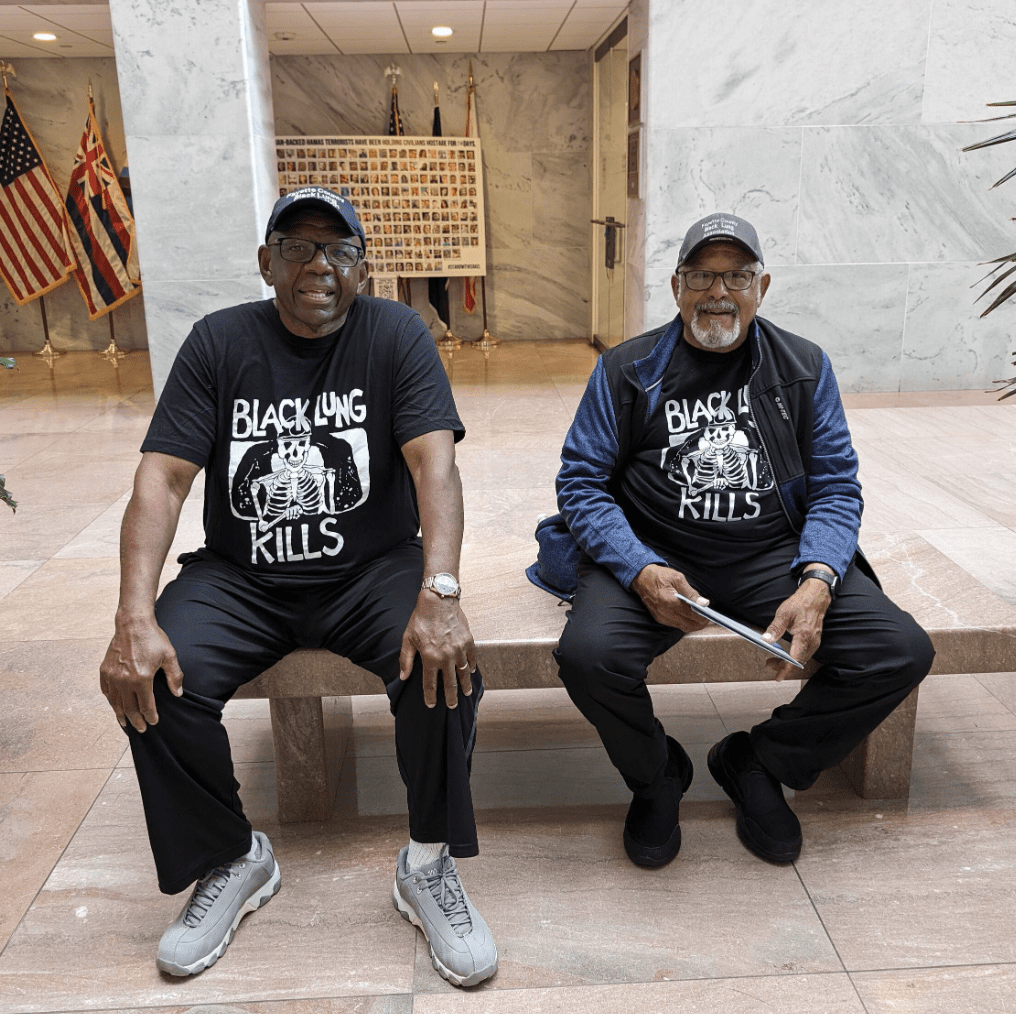
Black Lung Association member Roosevelt Neal and Black Association President Gary Hairston during a 2024 trip to Washington, D.C. to advocate on behalf of miners with black lung disease. Photo by Quenton King.
Miners express frustration with Congress on black lung as courts and regulators delay implementation of dust regulations
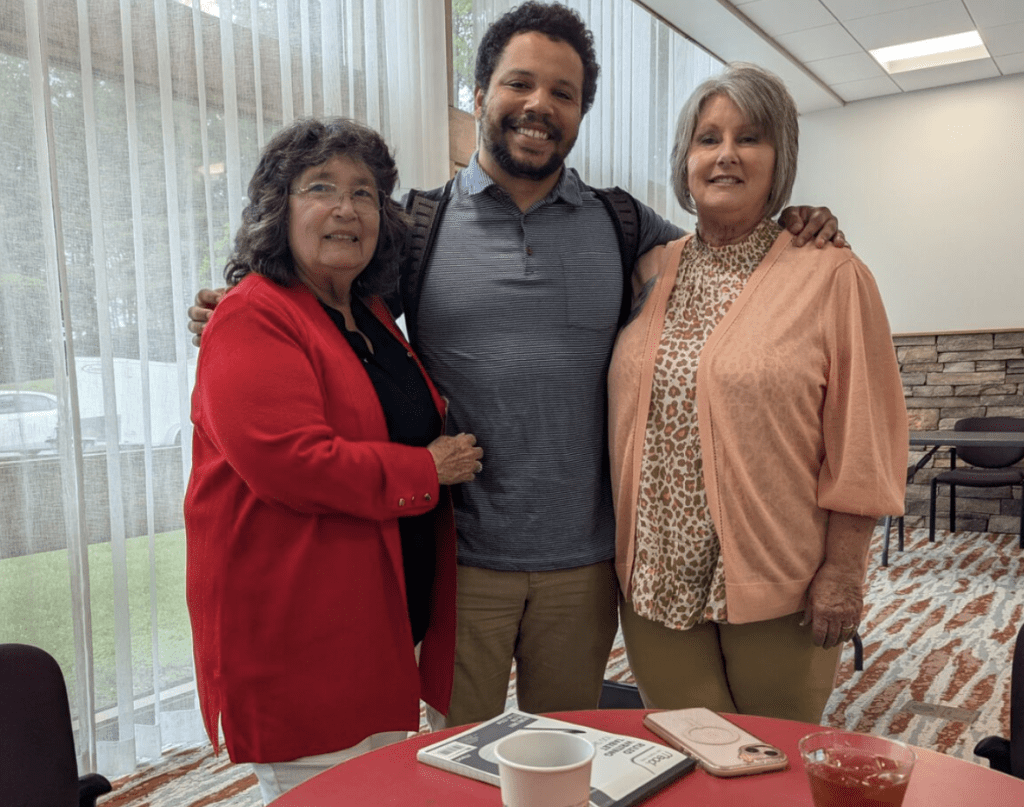
“Y’all don’t hear us. We’re just the peons,” said Roosevelt Neal, of Beckley, in a meeting of the Fayette County Black Lung Association on the evening of August 19. Neal worked 27 years mining coal for 27 years. Like most of the other 30 or so people gathered at the New River Convention Center, Roosevelt Neal has black lung. Neal was speaking to aides to Representative Carol Miller and Senator Shelley Moore Capito, who traveled to Oak Hill to learn what members of the group want from Congress. “She’s supposed to represent the coal miners,” exclaimed Neal, referring to Miller. “She’s supposed to represent the people who are hurting. Not the people who are filthy rich.”
The primary complaint in the room had to do with continued delays in implementing updated regulations that would better protect miners from breathing in silica dust. As Appalachian coal deposits have dwindled over recent decades, miners have had to cut through more and more sandstone rock. This has exposed miners to very high levels of respirable silica dust and caused rates of black lung to rise to epidemic levels, with younger miners being particularly afflicted.
Currently, coal operators can legally require miners to work in twice as much silica dust as workers in any other industry. Under former President Biden, the Mine Safety and Health Administration developed new rules that would give miners the same level of protection as other workers. But under the Trump administration, the implementation date for the rule has been pushed back twice.
The updated silica protections were finalized on Apr. 18, 2024, and were first scheduled to go into effect on Apr. 11, 2025. But the National Mining Association, an industry lobbying group, sued MSHA over the rule before it went into effect, and asked the court to pause its implementation. MSHA could have opposed this request and asked the court to let it move ahead with this stronger protection for miners while the industry’s legal challenge advanced, but it did not. The court granted the industry’s request and paused implementation of the rule. MSHA postponed taking action on the rule until Aug. 18, and then pushed back the implementation date a second time, with miners now being told they will have to wait until Oct. 17 before coal companies must adhere to the new rules.
On July 29, seven Republican members of Congress sent MSHA a letter asking the agency to develop a new, more industry-friendly rule, and describing the agency’s efforts to curb silica exposure as placing “undue and excessive burdens,” and “unwarranted and costly obligations” on mining companies. The letter does not acknowledge the epidemic level of black lung in Central Appalachia, or the fact that the disease is affecting younger miners than in previous generations. The letter was signed by Republican Representatives Tim Walberg of Michigan, Virginia Foxx of North Carolina, Glen Grothman of Wisconsin, Rick Allen of Georgia, Burgess Owens of Utah, Robert Onder of Missouri and Mark Messmer of Indiana.
The Black Lung Association and other advocates are calling on Sen. Capito, Rep. Miller and other members of Congress to speak out against this letter and to put pressure on MSHA to implement the new protections.
The silica standard wasn’t the only topic of conversation during the August 19 meeting. Black Lung Association members also told their personal stories of being affected by black lung disease and of losing loved ones to the epidemic.
“I just buried a good friend of mine about two months ago,” said Roosevelt Neal. “Complicated black lung. Should not have been. This is not a Republican or a Democrat thing. This is a human life thing.”
Some miners expressed a sense of hopelessness after previous efforts to communicate their concerns to members of Congress.
“When a senator is running for reelection, guess who’s standing beside them? Coal miners,” said Gary Hairston, who is president of the National Black Lung Association in addition to being president of the local chapter. “But then once the election’s over, nobody cares about us no more. That’s what hurts. Y’all use us, but then when we need y’all’s help, you ain’t there.”
“When we went to Beckley,” said Roosevelt Neal of a previous meeting with Miller, “She didn’t understand us, but I understood her. It went in one ear and out the other.”
For all the discontent in the room, the conversation was productive and cordial. The aides to Capito and Miller stayed late and listened, and the miners and their loved ones assembled expressed their gratitude to their representative’s and senator’s staff for making the trip.
On a positive note, many of the miners present expressed gratitude to Capito for playing a role in convincing Health and Human Services Secretary Robert Kennedy, Jr., to reinstate a portion of the federal workers who provide free anonymous black lung screenings, and who run a program ensuring that miners with early signs of black lung can continue to work in positions that are not exposed to high levels of dust. This program, called Part 90, ensures that these miners can remain gainfully employed in some aspect of coal mining with much lower dust exposure, rather than losing their jobs because they are no longer able to work in the dustier parts of a mine.
Unfortunately, many NIOSH staff who conduct important mine safety research and advise MSHA on how to update regulations and best practices are still laid off. Before being closed down due to the cuts, this department, based in Pennsylvania and Washington, was working on developing a real-time silica dust monitor that would help ensure the new silica rule could be implemented effectively.
There is still much at stake as the government delays key protections and sidelines research teams, putting lives at stake. With black lung cases rising and key safety programs remaining under threat, miners and advocates will continue to push for the protections that miners deserve.

PREVIOUS
NEXT

Leave a comment
Your email address will not be published. Required fields are marked *
One response to “Y’all don’t hear us”
-

My father died of silicosis induced lung cancer. He was a chemical engineer in several glass bottle factories. He was in his mid seventies, but still a tough illness.
Minimizing exposure is a challenge, but there is no excuse for not trying, more industry friendly regulations…….

Leave a Comment