Front Porch Blog
Part II: How the Trump plan for the federal budget hurts Appalachia

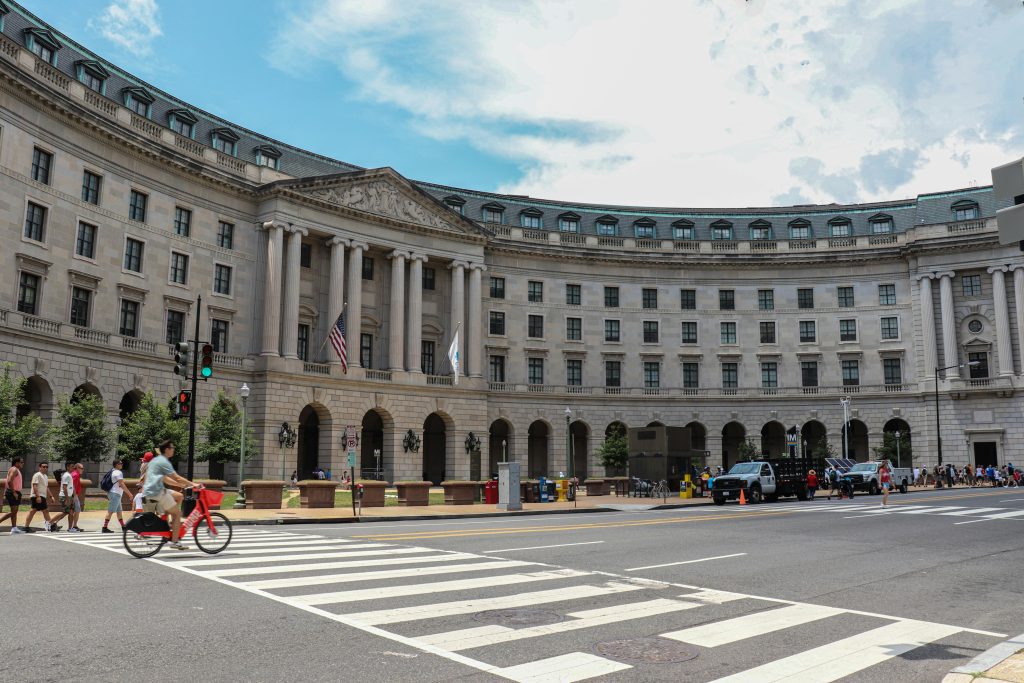
The U.S. Environmental Protection Agency Building. Photo by B-Code Studio
President Donald Trump’s proposed fiscal year 2026 budget includes steep cuts that would have serious consequences for Appalachians and people in coal communities across the country if enacted. The proposal kicks off the congressional funding process for “discretionary” spending known as appropriations, and the final budget could look different by the funding deadline in September.
(Note that this is different from the budget reconciliation bill, “the One Big Beautiful Bill Act,” which relates to “mandatory” spending rather than “discretionary” spending, and only needed 51 votes to pass the Senate. Unlike the reconciliation bill, the annual government funding bill for discretionary spending needs 60 votes to pass in the Senate.)
This is the second of two blogs highlighting some of the ways that the proposed budget would make Appalachians less safe and less financially secure, undercutting economic development and environmental remediation efforts. In this second blog, we focus on broader impacts to Appalachia. Click here to read the first blog in the series, focused on coal mining impacts.
Dismantling the Economic Development Administration
President Trump proposes to eliminate the Economic Development Administration, which would be a severe setback for coal communities across the country as well as other communities working to rebuild their economies. The EDA provides grants and technical assistance to communities to build the necessary public infrastructure that can catalyze private investment, create comprehensive economic development plans to diversify their local economies, and prepare for and recover from the economic impacts of extreme weather that we continue to experience across the region.
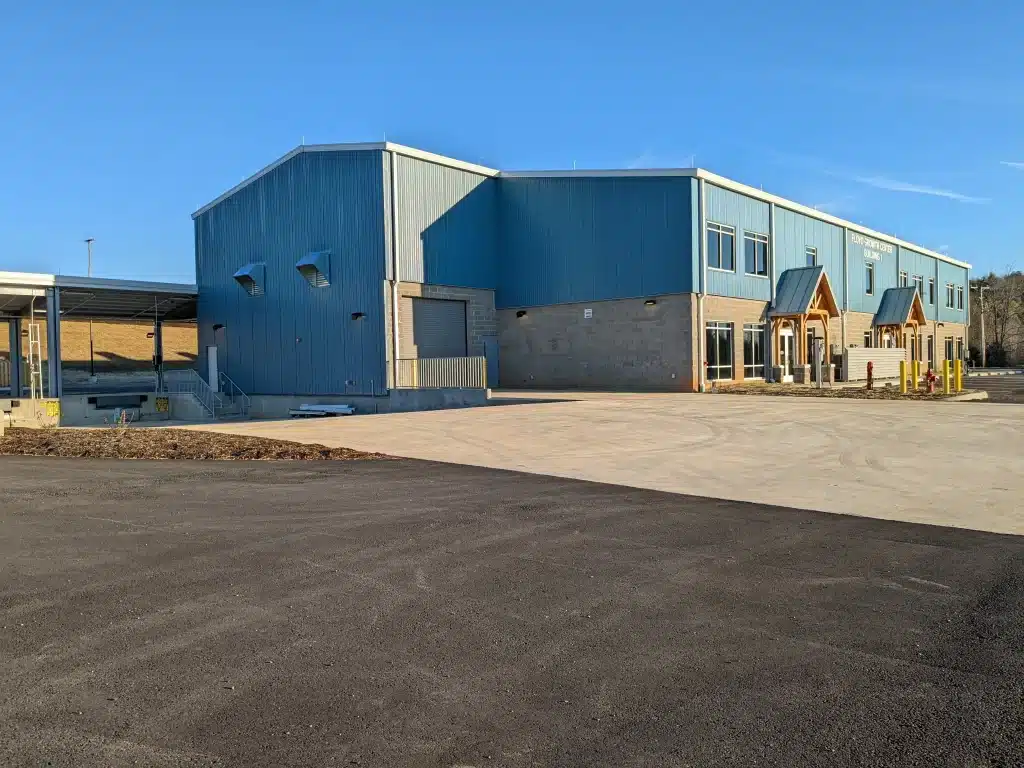
For example, following a series of floods in 2018, Floyd County, Virginia, was awarded a $2.3 million EDA grant to help establish the Floyd Growth Center. The Floyd Growth Center serves as a resilience hub for local residents — providing electricity and shelter when extreme weather impacts the Blue Ridge community — while also providing space for business development and job shadowing opportunities for local high school students.
In 2018, White Sulphur Springs, West Virginia, received a $1.6 million EDA grant to support the development of the West Virginia Great Barrel Company. White Sulphur Springs is a former coal community that experienced a devastating flood in 2016. With the support from EDA, the West Virginia Great Barrel Company surpassed their original employment estimates, increased demand for local businesses and facilitated upgrades to the local wastewater treatment facility. These are just two examples of how EDA’s programs support Appalachian communities — this assistance would be lost entirely if the agency is eliminated.
The EDA has previously enjoyed bipartisan support for its programs that provide federal support for locally driven projects in economically distressed communities across the country. In 2024, Congress reauthorized the EDA for the first time in 20 years through a bipartisan process that increased funding levels for EDA’s grants, expanded allocations for coal communities, created a new Office of Disaster Recovery and Resilience to support long-term economic recovery from disasters, and established a program for clean energy development on former industrial or mine sites, putting damaged land back into productive use.
Eliminating programs that help Americans with their power bills

Two critical programs with broad bipartisan support that help individuals, farmers, and businesses with their power bills would also be zeroed out under the president’s proposed budget — the Low-Income Home Energy Assistance Program and the Rural Energy for America Program.
The administration proposes completely eliminating the LIHEAP, which provides funding to states to help residents with their energy bills. LIHEAP helps 6.7 million low-income people in all 50 states pay for their heating or cooling costs. As we see hotter summers and colder winters with extreme weather events throughout the year, this program has been a lifeline for people in our communities who need help with their bills.
REAP is a grant and loan program for farms and rural small businesses to build renewable energy or energy efficiency projects that reduce their operation costs. REAP funding allows these businesses to lower their power bills and become more energy independent. It has brought more than a billion dollars in investments to Central Appalachia over the last decade. The administration would not obligate any new funding to the program. Some grants would still be available using existing funds from the Inflation Reduction Act, but this sets a worrisome precedent that REAP funding could be completely zeroed out in future years.
Cuts to environmental grant programs
The Environmental Protection Agency enforces the nation’s health and safety laws related to ensuring clean air and clean water. EPA staff are critical workers that respond to environmental catastrophes, test for toxic chemicals, clean up abandoned industrial hazards, and build public water infrastructure. EPA also plays a critical role in reviewing permit applications for infrastructure that can impact people’s water for drinking, recreation and sanitation, as well as conducting research on public health hazards and determining safe exposure levels for chemicals like mercury, lead, arsenic, soot and more.
Unfortunately, the administration proposes slashing the EPA’s budget by 55%. It would decrease the amount of grants given directly to states to remediate environmental issues, decreasing State and Tribal Assistance Grants by $2.6 billion. The proposed cuts include a nearly $13 million decrease to brownfields remediation grants, $38 million decrease for compliance monitoring, $184 million decrease for environmental enforcement, $11 million decrease for indoor air quality management programs, $8 million decrease for wetland protection programs and $64 million decrease in funds to ensure clean water.
We haven’t seen cuts this deep to the EPA’s funding since President Nixon established the agency in 1970.
Deep cuts to the Appalachian Regional Commission
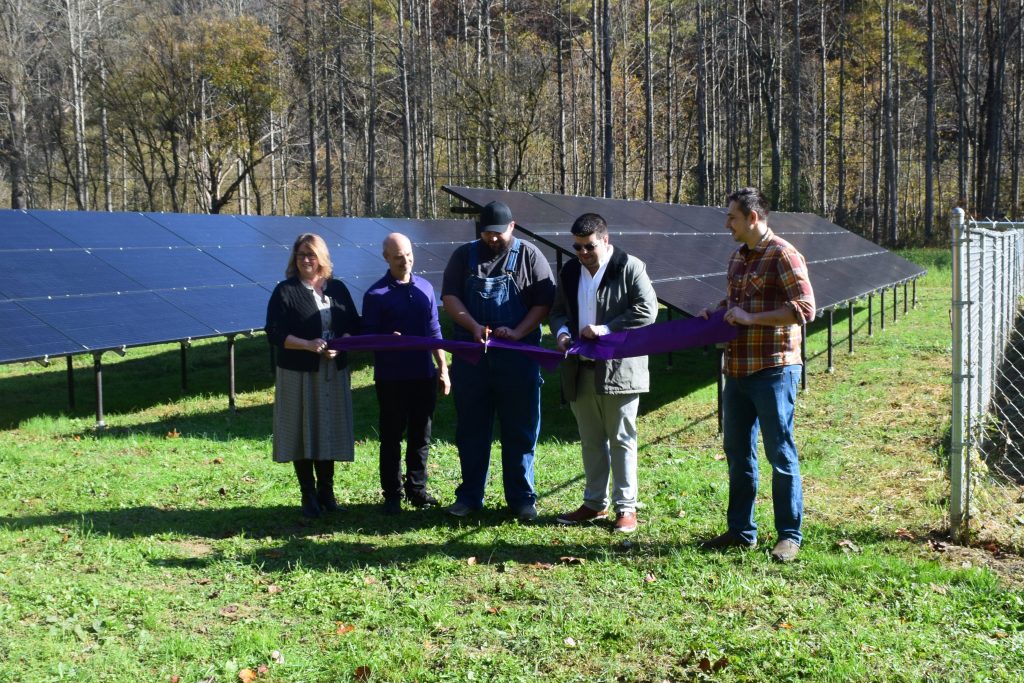
Established by Congress 60 years ago, the Appalachian Regional Commission is dedicated to promoting economic development in partnership with state governments across 423 counties in 13 Appalachian states. ARC programs seek to improve all aspects of life for Appalachians, from infrastructure to workforce development to housing to education. Because the agency is guided by Appalachian governors and the staff work closely with people within the region, ARC’s program priorities better reflect and adapt to the ever-changing needs of this historically underserved region compared to programs that serve broader regions of the country.
ARC’s investments in the region have a clear track record for providing leverage to create jobs, inspire entrepreneurship, and rebuild local economies. For example, the $364.6 million in FY2024 ARC grant funds to Appalachian governments and organizations attracted an additional $593.1 million in other project funding and $5 billion in non-project leveraged private investment. The ARC projects funded during FY2024 will create or retain an estimated 16,073 jobs and provide new skills training to an estimated 39,631 students and workers.
The White House budget proposal would drastically cut funding to the ARC to $14 million in the FY2026 budget bill, down from $200 million in recent years’ budgets. Though some funds remain from the bipartisan Infrastructure Investment and Jobs Act funding and prior years’ appropriations to continue some grant programs, this unprecedented cut to funding for the ARC would result in major reductions to actual benefits delivered to the people of Appalachia.
More than 80 state and local government officials, educational institutions, businesses, churches and nonprofits recently sent a letter asking Congress to maintain the Appalachian Regional Commission’s funding.
What comes next
Congress must pass either a discretionary budget or a continuing resolution by Sept. 30 to keep the federal government from shutting down. The Appropriations Committees are actively drafting and voting on portions of this discretionary budget in July. The full House and Senate will each eventually vote on the portions of the budget and combine it into one FY 2026 funding package.The two chambers will have to agree on a final text before the Sept. 30 deadline. All this means that there is still plenty of time to contact your lawmakers and ask them to maintain critical funding for Appalachia and for communities across the country.
Kevin Zedack and Quenton King contributed to this post.

PREVIOUS
NEXT

Leave a comment
Your email address will not be published. Required fields are marked *
Leave a Comment