

Animal shelter finds the purr-fect solar solution to cutting costs
Rural Kentucky county utilizes several grants to fund solar project
By Lisa Abelar for Resource Rural
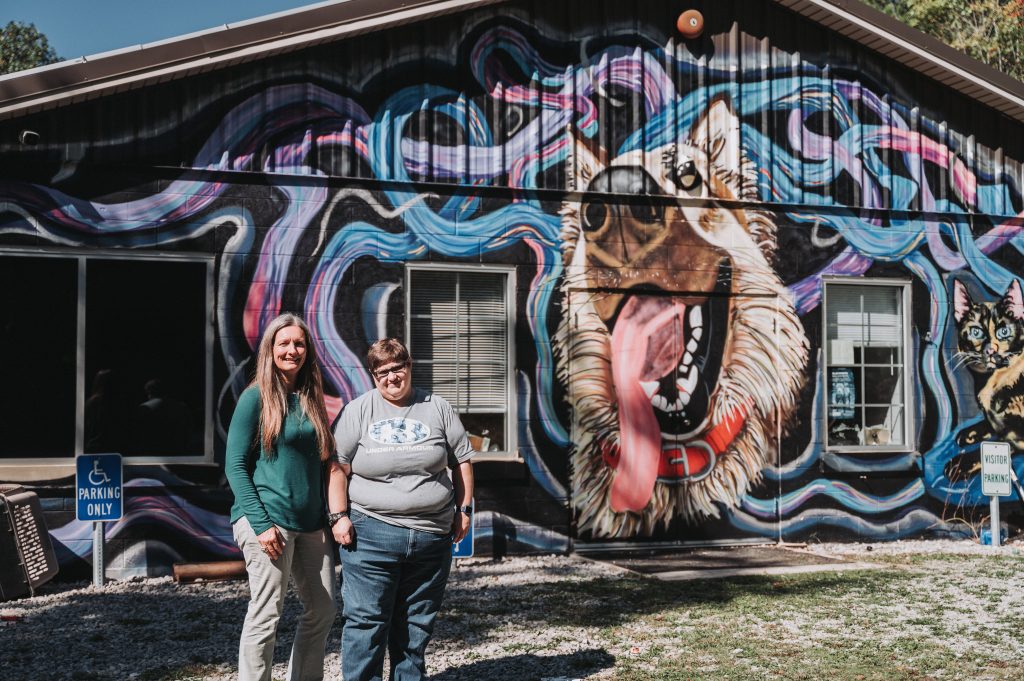
Anna Carey jokes that she might like animals more than people, depending on the person. Her affinity for four-legged companions has kept her involved as special projects manager for the Leslie County Fiscal Court, the region’s municipal government that also manages the community animal shelter.
After experiencing an animal overpopulation boom following the pandemic, the rural shelter enclosed an outdoor slab to create more usable space for the dogs and cats they house. That part of the shelter, as well as the lighting throughout the facility — were ripe for efficiency upgrades. Since the county faces an increasingly tight budget, Carey said it made sense to find ways to save money wherever possible.
When she was approached by the Mountain Association about a grant opportunity that would allow the county to install solar panels on the shelter at a fraction of the full-price cost, and save money on future energy costs, she proceeded without hesitation. Carey worked with them as well as The Nature Conservancy and the Appalachian Solar Finance Fund to secure grant funding that collectively totaled more than $90,000 for the $112,000 project. The Leslie County Fiscal Court only had to contribute $20,000.
The county will also be able to obtain a tax credit from the federal government for this project, thanks to the Inflation Reduction Act, making the final project cost for the county essentially zero.
“It just makes economic sense for the county,” Carey said about the minimal contribution the county would have to make. “It would decrease their bills and we could hook it up to batteries. And it would offer more long-term resiliency.”
“It’s a very clear savings. We’re in the final stages of it and the installer said that he can already see the consumption we need from the power company is going way down,” Carey said, noting that the Mountain Association helped them “basically do everything” throughout the process.
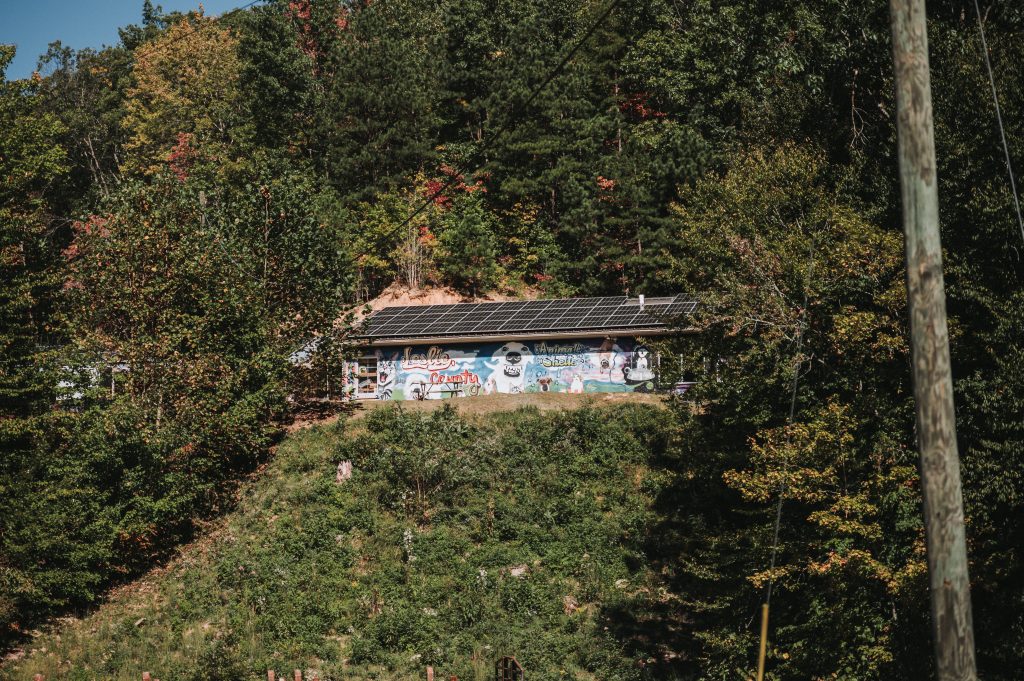
The solar installer programmed the system to switch from grid usage to battery usage during peak periods of energy consumption. With this feature the shelter can avoid being charged higher demand rates from the utility company. The shelter expects to save $5,000 in electricity costs annually.
“That’s super smart,” Carey said. “When they’re charging us the most, we can use the sun.”
Carey says that one of the most gratifying elements of the solar installation is the fact that the county’s financial contribution to the project came from coal severance funds. Those funds are accrued through taxes imposed on coal mining.
Historically Leslie County’s economy was fueled by coal. In a community that once relied so heavily on the coal industry, clean energy can be a touchy subject. Carey thinks that once people see how much money the county saves that it can put into other things for the community that this solar project and any that come in the future will be readily welcomed. It’s also an example of how the region can continue its legacy of energy production and one more way historic coal revenue contributes to its continued energy security today.
She also appreciates that this solar installation was an example of the county testing a new solution. The cost to the county was low, the benefits and savings could be significant, and it could end up being a case study for the county on reducing costs elsewhere at other municipal buildings.
“We’re lucky. I don’t know how we got so lucky,” Carey said of receiving the grant funding. “It’s the fiscal court’s job to be fiscally responsible. So, we’re doing our job. Sometimes it’s that simple.”
Note from Resource Rural: The Inflation Reduction Act of 2022 is a piece of federal legislation that aims to reduce inflation by lowering the cost of prescription medications, investing in domestic energy production and promoting clean energy, among other objectives.
Related Articles
Latest News
More Stories
Halloween Approaches, and Night School Is in Session
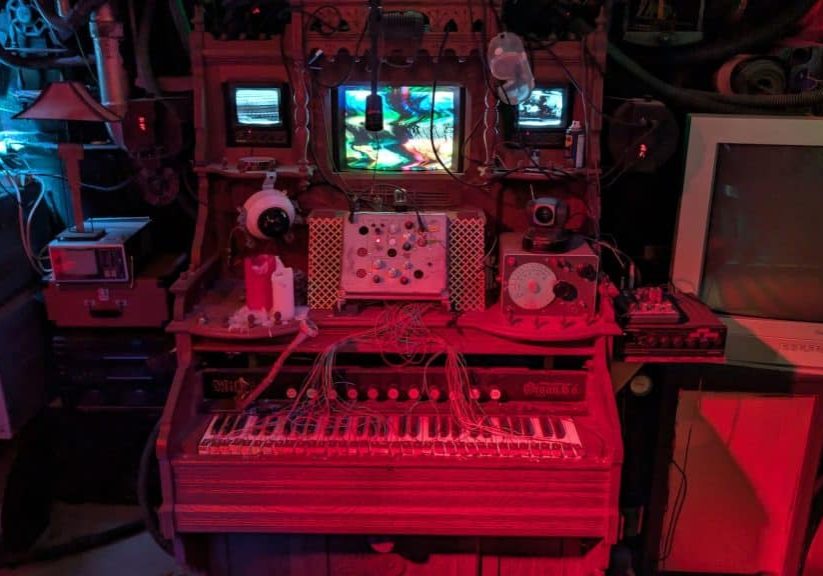
The House of Art in Bluefield, West Virginia, looks like a haunted tower, making it the perfect location for its sixth annual haunt event: Night School. The Night School will be open every Friday and Saturday night through Oct. 31.
‘The Most Perfect Act of Love’
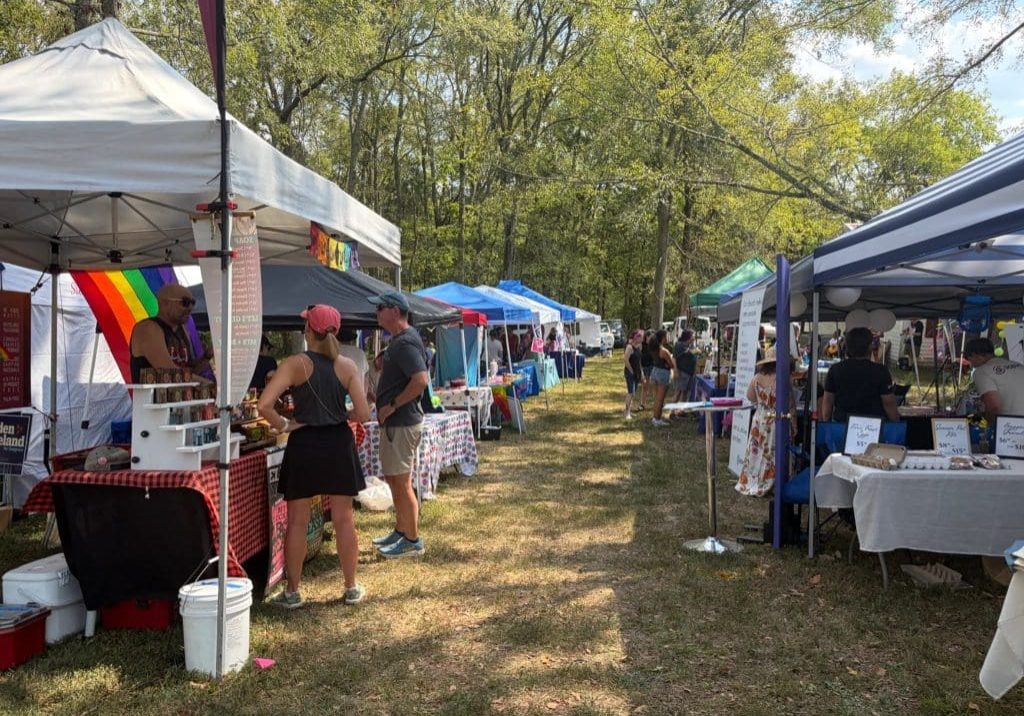
After losing its rural pride celebration, hundreds of people attended the second annual Affirming Sumner Pride celebration on a 24-acre farm dubbed “Fruity Farm” in Bethpage, Sumner County, Tennessee.

Signs of Life
In the Nantahala National Forest, a team of biologists spotted Indiana bats, an endangered species that hasn’t been seen in North Carolina for the last 11 years.

‘First Line of Defense’
During Hurricane Helene and its aftermath, rural fire departments and other first responder hubs played critical roles in keeping their communities safe, even without power and cut off from outside support for days or weeks after the storm. Two years later, plenty of work remains to ensure these hubs have the resources they need to operate day to day and be ready when emergencies or natural disasters strike.

The Rocky Road — and Bridge — to Recovery
Hurricane Helene is estimated to have damaged nearly 7,000 private roads and bridges in Western North Carolina. Two years later, many restoration projects are complete, but the journey hasn’t been easy — and isn’t over for others.
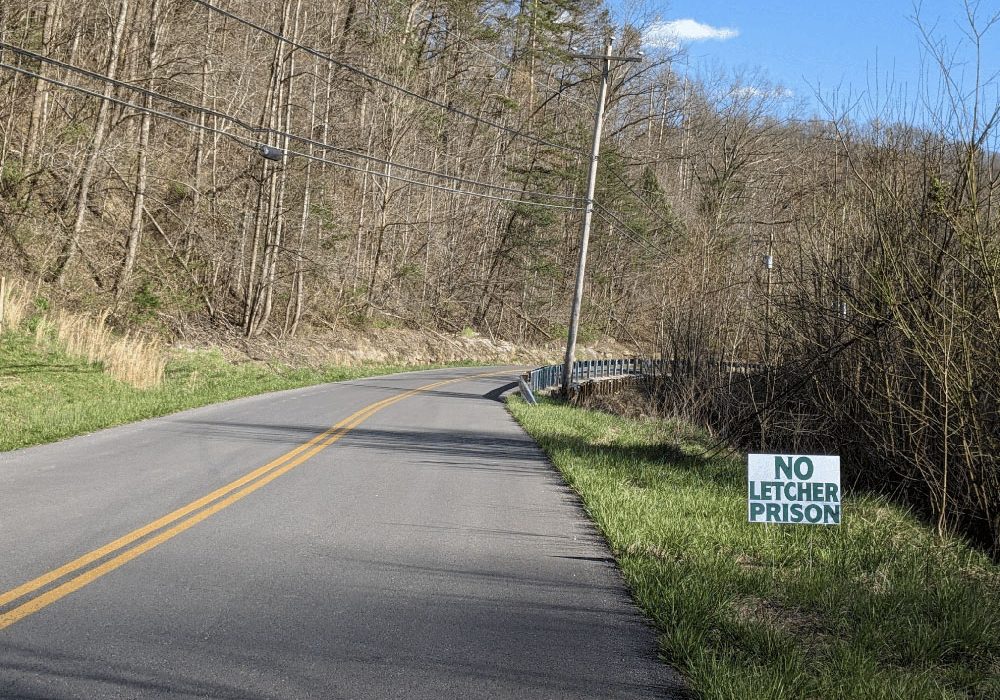
After 20 Years, Letcher County Prison Proposal Is Still Alive, Though Obstacles Remain
A $605 million proposal for a federal prison on a former strip mine site in Letcher County, Kentucky, championed by U.S. Rep. Hal Rogers, refuses to die, despite local opposition, a lack of support from the executive branch and numerous other obstacles.

Leave a comment
Your email address will not be published. Required fields are marked *
Leave a Comment