

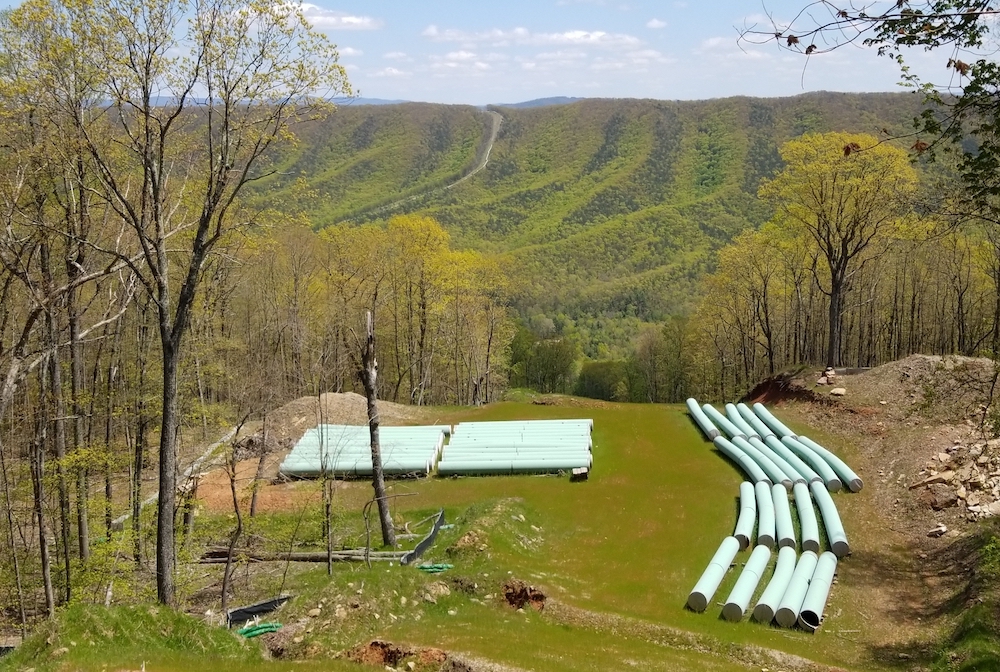
Mountain Valley Pipeline sections and a cleared right-of-way in Craig County, Va., in May 2020. Photo courtesy of Mountain Valley Watch
The DEQ originally denied MVP Southgate’s Clean Water Act permit in August 2020. After MVP appealed the decision, the U.S. Fourth Circuit Court of Appeals in March requested clarification on the denial. The DEQ’s April 29 announcement reaffirms the state’s decision and provides additional reasoning.
The mainline section of the MVP has already racked up more than $2 million in fines in Virginia alone due to hundreds of environmental violations. The proposed extension, dubbed “MVP Southgate,” has been controversial since it was announced. Appalachian Voices, the nonprofit organization that publishes The Appalachian Voice, is among the opponents of MVP Southgate.
“Despite the legal challenges from MVP and over eight months’ time since the first water permit was denied, the mainline MVP project is no closer to being built,” said Appalachian Voices North Carolina Field Coordinator Ridge Graham. “It is promising to see the North Carolina DEQ uphold their authority and stance that the best thing for the state and people of North Carolina is to not permit a pipeline to nowhere.”
During a quarterly earnings call on May 4, lead MVP developer Equitrans Midstream Corp. announced another delay and cost increase for the pipeline. The company now expects the pipeline to cost $6.2 billion with a completion date of summer 2022. Developers originally estimated that the project would be complete by 2018 with a price tag of $3.7 billion.
Equitrans stated the setback was a result of longer permit approval times for waterbody crossings. The company abandoned their pursuit of a one-size-fits-all blanket stream-crossing permit in January after a string of legal challenges from environmental groups. Now, pipeline developers are seeking individual permits for each of the nearly 500 streams and wetlands in the 303-mile fracked gas pipeline’s path in Virginia and West Virginia.
Protests against the fracked-gas pipeline continue.
On May 4, three women completed a 415-mile relay run across the entirety of the Mountain Valley Pipeline’s route. Mercedes Walters, Sarah Hodder and Katie Thompson raised more than $13,000 for the Monacan Indian Nation and the grassroots coalition Protect Our Water, Heritage, Rights. The Mountain Valley Pipeline goes through Monacan ancestral lands and the current homelands of many Monacan people.

From left to right: Sarah Hodder, Mercedes Walters and Katie Thompson pausing on the road near Lindside, West Virginia. Photo by Matthew Pickett / Loud Valley Productions, LLC
“It’s incredible the network they’ve formed amongst themselves all fighting the fight,” Thompson told The Appalachian Voice. “We’ve been running along the course and all of these people know each other and they’ve been their own support system because no one else will be. They’ve been thanking us for taking the time to do this, but they’ve been fighting it for seven years.”
Related Articles
Latest News
More Stories

Halloween Approaches, and Night School Is in Session
The House of Art in Bluefield, West Virginia, looks like a haunted tower, making it the perfect location for its sixth annual haunt event: Night School. The Night School will be open every Friday and Saturday night through Oct. 31.
‘The Most Perfect Act of Love’
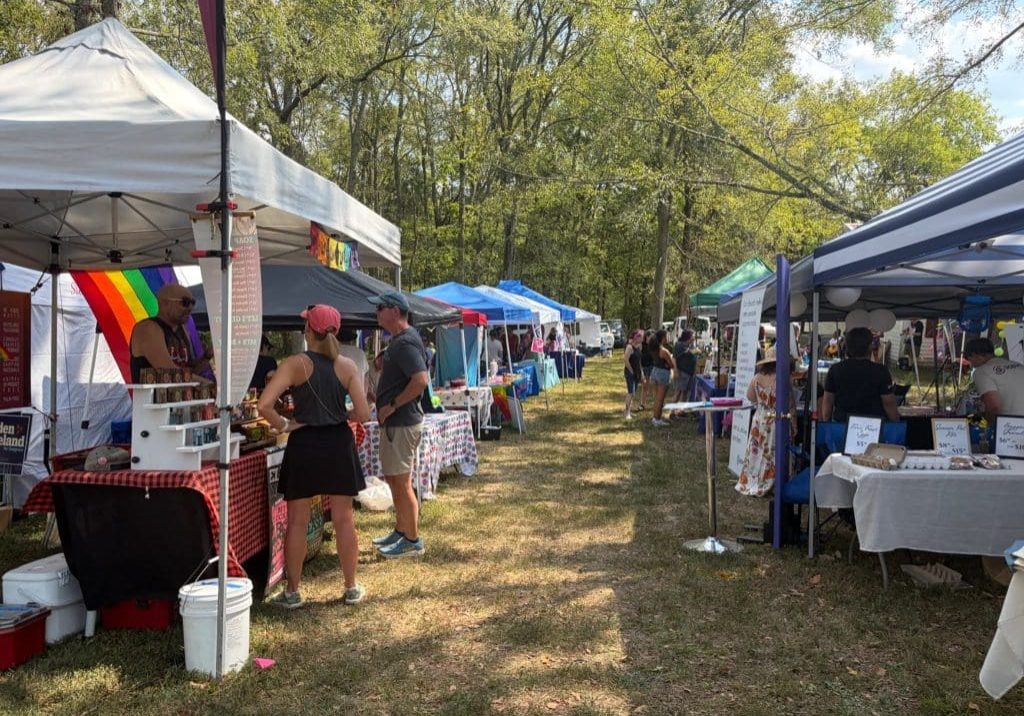
After losing its rural pride celebration, hundreds of people attended the second annual Affirming Sumner Pride celebration on a 24-acre farm dubbed “Fruity Farm” in Bethpage, Sumner County, Tennessee.

Signs of Life
In the Nantahala National Forest, a team of biologists spotted Indiana bats, an endangered species that hasn’t been seen in North Carolina for the last 11 years.

‘First Line of Defense’
During Hurricane Helene and its aftermath, rural fire departments and other first responder hubs played critical roles in keeping their communities safe, even without power and cut off from outside support for days or weeks after the storm. Two years later, plenty of work remains to ensure these hubs have the resources they need to operate day to day and be ready when emergencies or natural disasters strike.

The Rocky Road — and Bridge — to Recovery
Hurricane Helene is estimated to have damaged nearly 7,000 private roads and bridges in Western North Carolina. Two years later, many restoration projects are complete, but the journey hasn’t been easy — and isn’t over for others.
After 20 Years, Letcher County Prison Proposal Is Still Alive, Though Obstacles Remain
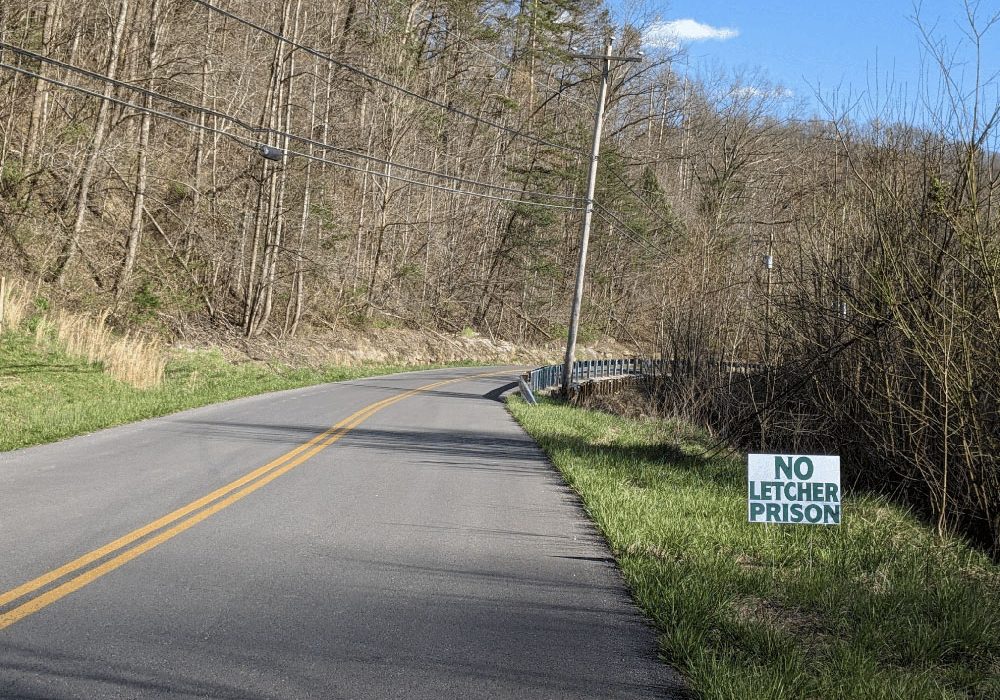
A $605 million proposal for a federal prison on a former strip mine site in Letcher County, Kentucky, championed by U.S. Rep. Hal Rogers, refuses to die, despite local opposition, a lack of support from the executive branch and numerous other obstacles.

Leave a comment
Your email address will not be published. Required fields are marked *
Leave a Comment