

Marvin Winstead
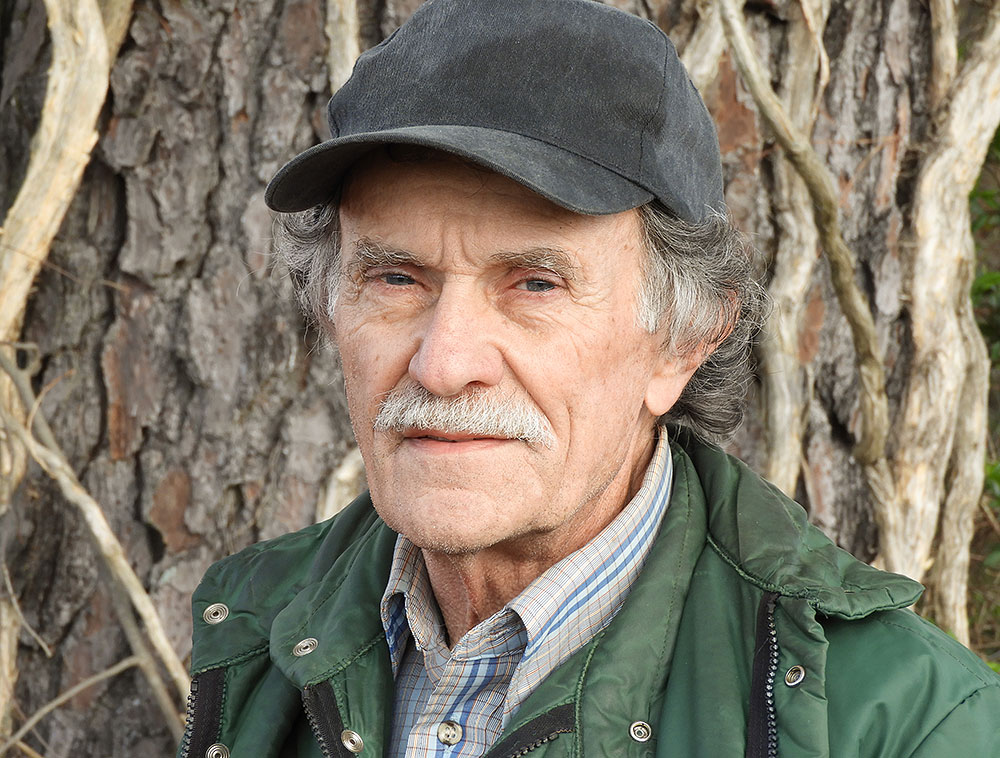
Marvin Winstead has been fighting the Atlantic Coast Pipeline since 2014. Photo by John Manuel
Editor’s Note: The Appalachian Voice first spoke with Marvin in spring 2018. Read that story here.
On his 79-acre farm in Nash County, N.C., self-described environmentalist Marvin Winstead still holds fast in the face of Dominion Energy and Duke Energy’s Atlantic Coast Pipeline as of press time in late January. Pipeline developers are attempting to take 11.57 acres of Marvin’s 39-acre field and permanently widen a 10-foot-wide farm path to 30 feet to serve as an access road.
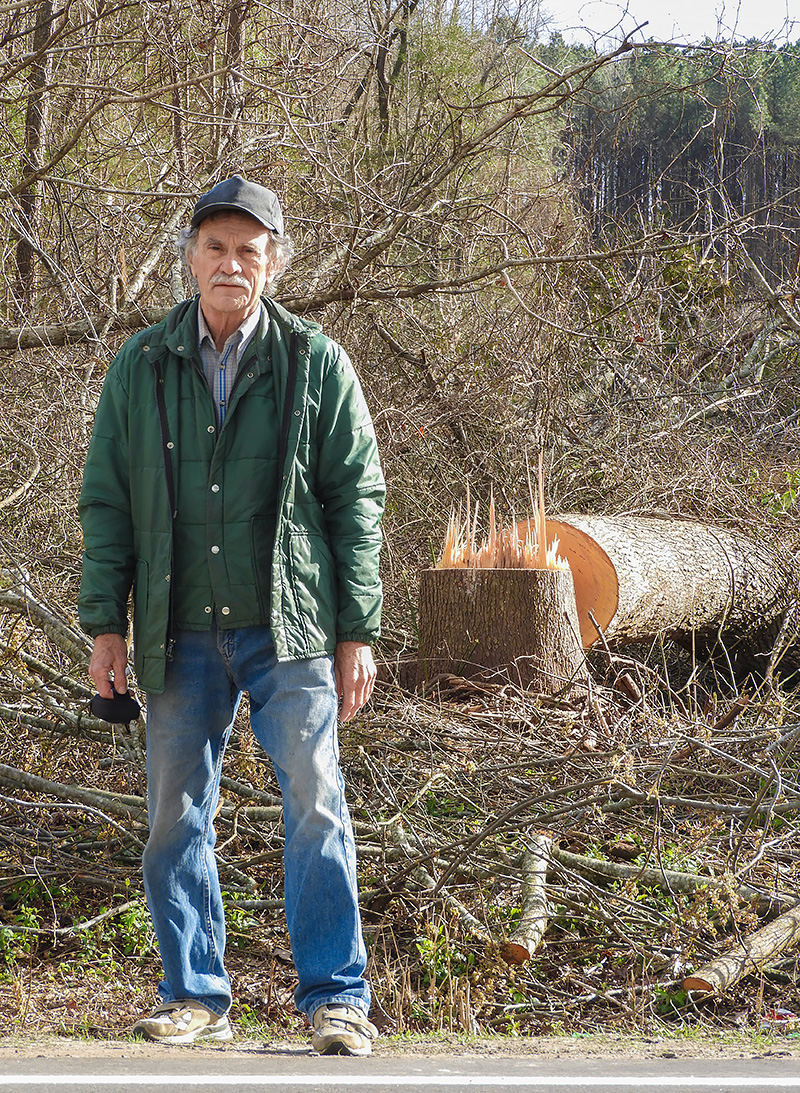
Marvin Winstead stands before trees on his neighbor’s land that were felled for the Atlantic Coast Pipeline. He has gone to court to try and stop pipeline construction on his farm. Photo by John Manuel
“They have done work on both the north end of my adjacent neighbor’s property and the neighbor across the road from me, but they have not on mine,” Marvin says.
Marvin states that pipeline developers have consistently lowballed him in their offers for an easement. But it wouldn’t matter if they offered more.
“This is not about money,” Marvin says. “I’m categorically opposed to fracking — the process, the chemicals, everything.”
It’s been a long fight since Marvin first received a letter from Atlantic Coast developers in May 2014. In January 2018, Atlantic Coast filed a motion against Marvin and several other landowners in North Carolina and Virginia requesting immediate access to their property without landowner compensation. In January 2019, pipeline developers withdrew that motion, possibly due to the project’s other legal problems. The federal court has yet to decide on a separate request from Atlantic Coast developers to allow them to use eminent domain to seize land from Marvin and others.
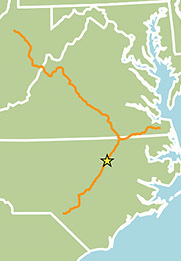
Marvin Winstead’s location in the path of the Atlantic Coast Pipeline.
“I would definitely like for this thing to be over and done with so that I can get back to farming my land myself,” Marvin says. Apart from his environmental concerns about the pipeline, Marvin states that it would grievously affect future crops.
“They’re bringing clay up from six feet down and it’s going to be left at the top of the ground, and crops are not going to grow in those disturbed soil profiles,” he says
“Right now, I can go out there and plant a crop and I can have a reasonable expectation that I’ll have a good crop, a good yield, and can make a profit on the crops I plant,” Marvin says. “With them doing irreparable damage to 30 percent of my cropland, my farm, I’d be lucky to break even.” — By Kevin Ridder
More Stories from People in the Path of Pipelines
Editor’s Note: This article was updated on March 1, 2019, after a federal judge again extended his ruling by 90 days that makes it illegal for Atlantic Coast Pipeline developers to enter Marvin’s land without permission. The ruling is effective through May 31, 2019.
Related Articles
Latest News
More Stories

Halloween Approaches, and Night School Is in Session
The House of Art in Bluefield, West Virginia, looks like a haunted tower, making it the perfect location for its sixth annual haunt event: Night School. The Night School will be open every Friday and Saturday night through Oct. 31.
‘The Most Perfect Act of Love’
After losing its rural pride celebration, hundreds of people attended the second annual Affirming Sumner Pride celebration on a 24-acre farm dubbed “Fruity Farm” in Bethpage, Sumner County, Tennessee.

Signs of Life
In the Nantahala National Forest, a team of biologists spotted Indiana bats, an endangered species that hasn’t been seen in North Carolina for the last 11 years.

‘First Line of Defense’
During Hurricane Helene and its aftermath, rural fire departments and other first responder hubs played critical roles in keeping their communities safe, even without power and cut off from outside support for days or weeks after the storm. Two years later, plenty of work remains to ensure these hubs have the resources they need to operate day to day and be ready when emergencies or natural disasters strike.

The Rocky Road — and Bridge — to Recovery
Hurricane Helene is estimated to have damaged nearly 7,000 private roads and bridges in Western North Carolina. Two years later, many restoration projects are complete, but the journey hasn’t been easy — and isn’t over for others.
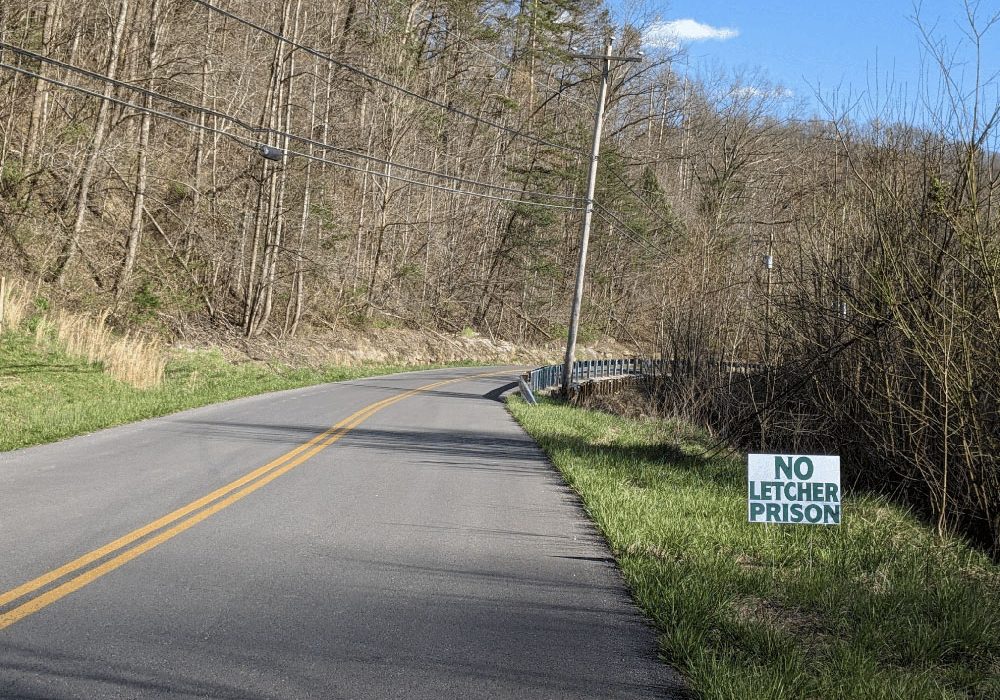
After 20 Years, Letcher County Prison Proposal Is Still Alive, Though Obstacles Remain
A $605 million proposal for a federal prison on a former strip mine site in Letcher County, Kentucky, championed by U.S. Rep. Hal Rogers, refuses to die, despite local opposition, a lack of support from the executive branch and numerous other obstacles.

Leave a comment
Your email address will not be published. Required fields are marked *
Leave a Comment