

Pipeline Basics
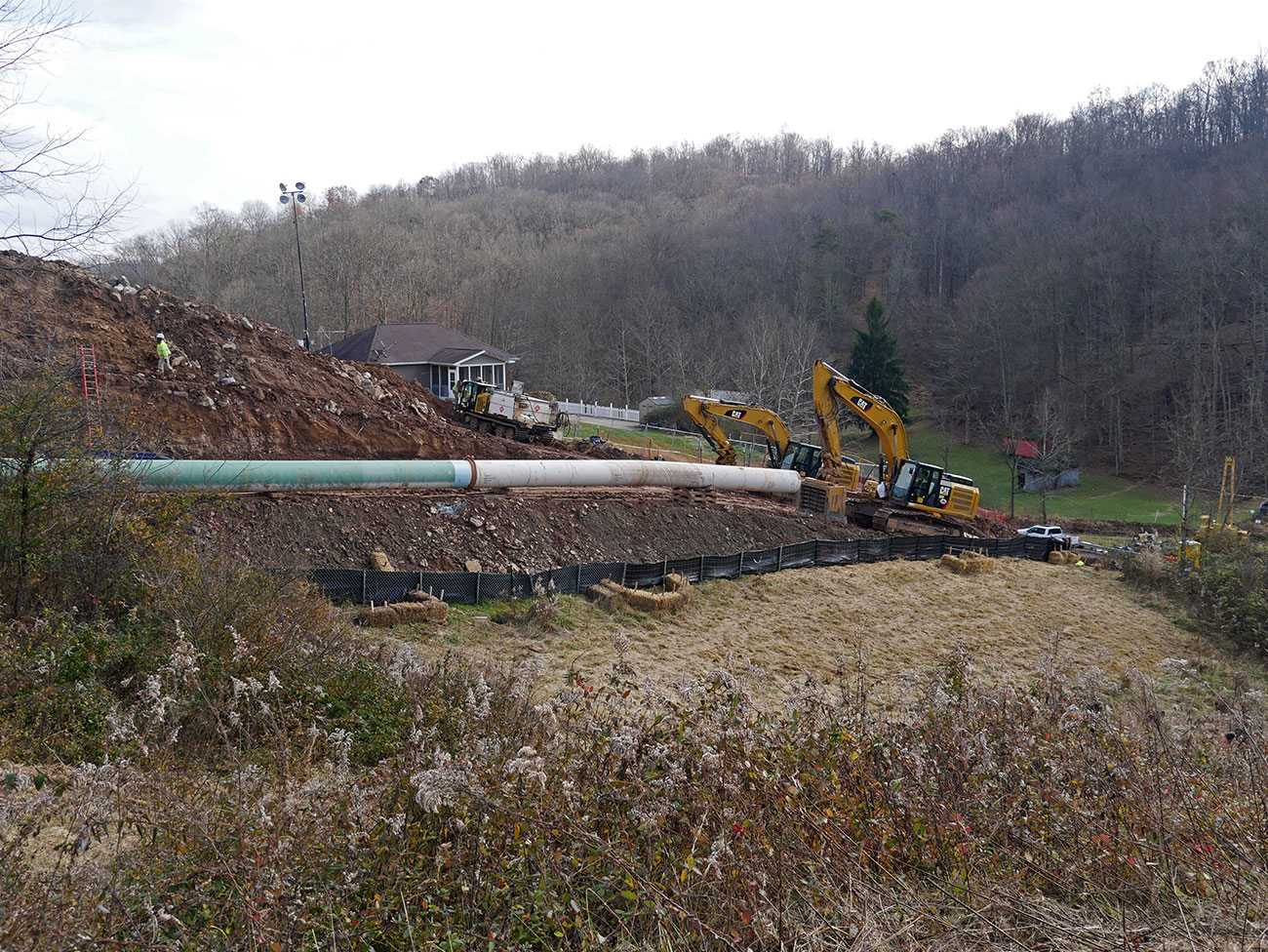
Construction of the Rover Pipeline in December 2017. Photo by Vivian Stockman / Ohio Valley Environmental Coalition
The Regulators
The Federal Energy Regulatory Commission is responsible for reviewing proposals for interstate natural gas pipelines and granting approved projects a “certificate of public convenience and necessity.” Although the agency is independent, it has earned a reputation for rubber-stamping pipelines. State-level agencies take the lead on issuing and enforcing permits under the Clean Water Act and Clean Air Act and monitoring construction activities.
The Regulated
A variety of drilling and transmission companies and electric utilities are behind the build-out of gas pipelines in the Appalachian region. In cases including the Mountain Valley and Atlantic Coast pipelines, joint ventures form limited liability companies to navigate the permitting and regulatory process. The vast majority of the gas transported by the two pipelines is contracted to the companies developing the projects.
Are More Pipelines Needed?
Developers insist that demand for natural gas is outpacing capacity, especially as utilities retire coal plants in favor of gas-fired facilities. But opponents point to research that reveals existing pipeline capacity is underutilized and the industry’s financial incentive to overbuild. As Energy Transfer Partners’ CEO Kelcy Warren told shareholders on a 2015 earnings call, “The pipeline business will overbuild until the end of time.”
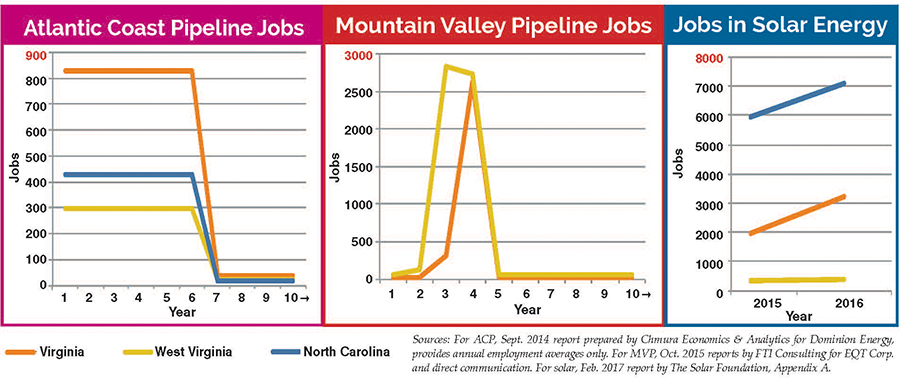
Click to enlarge
Will They Create Jobs?
The prospect of job creation and economic growth are central to pipeline developers’ marketing and lobbying efforts. Direct job creation during construction, however, is short-lived and the economic benefits developers promise often overlook potential social and environmental costs. An industry-backed analysis of the Mariner East’s economic benefits, for example, found a multi-billion dollar impact but did not assess the potential for lost property values or risks to the environment or public safety.
Environmental and Public Health Impacts
Pipeline construction can cause persistent impacts on water quality and wildlife habitat, especially in cases where routes cross rivers and wetlands or mountainous, forested terrain. The environmental impact statements for the Mountain Valley and Atlantic Coast pipelines acknowledge the probability of significant and long-term adverse impacts. According to Physicians for Social Responsibility, communities near gas compressor stations have reported a range of health problems.
Climate Concerns
Despite being touted as a “bridge fuel” to a climate-friendly future, natural gas itself is a potent greenhouse gas and methane leaks at various stages throughout the production and transportation process present a clear threat. Federal regulators have grappled recently with pipelines’ downstream impacts. In March, FERC re-approved a set of projects including the 515-mile Sabal Trail Pipeline that were nearly derailed by a federal court ruling over the commission’s failure to provide a “quantitative estimate” of greenhouse gas emissions, including those from power plants where gas transported by the pipeline will be used.
Related Articles
Latest News
More Stories

Halloween Approaches, and Night School Is in Session
The House of Art in Bluefield, West Virginia, looks like a haunted tower, making it the perfect location for its sixth annual haunt event: Night School. The Night School will be open every Friday and Saturday night through Oct. 31.

‘The Most Perfect Act of Love’
After losing its rural pride celebration, hundreds of people attended the second annual Affirming Sumner Pride celebration on a 24-acre farm dubbed “Fruity Farm” in Bethpage, Sumner County, Tennessee.

Signs of Life
In the Nantahala National Forest, a team of biologists spotted Indiana bats, an endangered species that hasn’t been seen in North Carolina for the last 11 years.

‘First Line of Defense’
During Hurricane Helene and its aftermath, rural fire departments and other first responder hubs played critical roles in keeping their communities safe, even without power and cut off from outside support for days or weeks after the storm. Two years later, plenty of work remains to ensure these hubs have the resources they need to operate day to day and be ready when emergencies or natural disasters strike.

The Rocky Road — and Bridge — to Recovery
Hurricane Helene is estimated to have damaged nearly 7,000 private roads and bridges in Western North Carolina. Two years later, many restoration projects are complete, but the journey hasn’t been easy — and isn’t over for others.

After 20 Years, Letcher County Prison Proposal Is Still Alive, Though Obstacles Remain
A $605 million proposal for a federal prison on a former strip mine site in Letcher County, Kentucky, championed by U.S. Rep. Hal Rogers, refuses to die, despite local opposition, a lack of support from the executive branch and numerous other obstacles.

Leave a comment
Your email address will not be published. Required fields are marked *
Leave a Comment