

Listen Here – Women Writing in Appalachia
Astute observations are not at all unusual in a Survey of American Literature course, usually arising out of lively discussions of what is to be found among the pages of college textbooks. Sandra L. Ballard, a teacher in the English Department at Appalachian State University in Boone, had an insight focused more upon what was not in the text—on the silences, the gaps, the omissions of those weighty volumes.
She was by no means the first to identify this particular deficiency, but she was among the few prepared to do something about it.
It was her observation that regional writers from the Southern Appalachians were not anywhere among the standard anthologies, apparently a reflection of the national attitude toward the unfortunate souls living in these culturally deprived mountains—hicks, hillbillies, hopelessly inbred—and who therefore deserve to be excluded from the canon of mainstream literature.
It seemed inconceivable to her that Thomas Wolfe of Asheville should be deleted from the literary role call, even among the collections that tend to favor dead white males. English departments across the country have overcorrected for that tendency and have become insufferably multicultural, which has opened the door a crack for women writers. Still it seemed to Ballard that mountain women writers were marginalized.
Now if they were invisible, what about African-American and Native American Appalachian women who have consistently turned out excellent literary specimens? And, hey, being dead has to be the ultimate silencing event, and yet the voice of Mother Jones screaming at a bunch of coal miners still rings loud and clear through these mountains. A cacophony of voices such as these could not and should not be buried under a substrata of regional, gender or racial barriers.
Ballard and a collaborator, Patricia L. Hudson, compiled Listen Here: Women Writing in Appalachia, published in 2003 by University of Kentucky Press. The project spanned more than a decade and weighs in at 660 pages. As an introduction to the Introduction, Irene McKinney, West Virginia Poet Laureate, is quoted thus:
I’m a hillbilly, a woman and a poet, and I understood early on that nobody was going to listen to anything I had to say anyway, so I might as well just say what I want to.
Put another way, if you’re just yelling down a rain barrel, you have absolutely nothing to lose.
The problem with digging up regional women writers who never achieved national stature was that many had either gone out of print or were published by small presses with limited print runs. Ballard noticed that those who had a sustained level of reprints were not written up in the New York Times Review of Books as Appalachian women. They had graduated, moved on, gained fame ultimately from the standpoint of being somewhere else.
This was not a lesson she wanted to communicate to her students in Boone. Everyone in the whole world should know all about Lee Smith, Annie Dillard and Barbara Kingsolver. Folks in these parts should at least have some passing knowledge of Wilma Dykeman (who died this past Christmas), Adriana Trigiani, Dorothy Allison and Kathryn Stripling Byer (North Carolina’s poet laureate).
Lurking behind these well-known Appalachian women writers are so many others, great contemporary talents like Denise Giardina (from West Virginia), George Ella Lyon (from Eastern Kentucky), Lou Crabtree (from Southwest Virginia), Jo Carson (from East Tennessee) and Sue Ellen Bridgers (from Western North Carolina).
The anthology contains excerpts from novels, short stories, poems, plays, creative nonfiction and children’s stories of 105 Appalachian women, going back to journalist Anne Newport Royall, the widow of an American Revolutionary war veteran. Ballard writes, “The willingness of individual writers to cross from one genre to another suggests that they are more concerned with exploring their creativity than with publication and recognition.”
To this she adds, “These writers have voices worth hearing. What we have tried to do is create a collection for people who want to listen.”
Since the publication of Listen Here, Ballard has not kicked back with a book and a coffee mug. She came to ASU in 2000 as the second editor of the Appalachian Journal, and she continues to collect regional writings in a quarterly publication that she describes as “an interdisciplinary journal that covers history, literature, sociology, anthropology, geology, biology, natural history as well as pop culture images in movies and documentary films.”
“We publish articles that we think is the best research we can find on the region, and we also accept poetry,” she said. “In part that’s because the previous editor’s philosophy was, like mine, that we think poets can sometimes capture people’s imaginations better than sociologists can. We really believe that political scientists and scholars have important things to say, but poets can say things in a more memorable way that make you want to know more.”
Listen Here can be ordered online from amazon.com. For a peek at the table of contents of the latest issue of Appalachian Journal, go to http://www.appjournal.appstate.edu/toc.html. To order, send a check for $8 for one issue or $24 for a one-year subscription to Appalachian Journal, Belk Library, Appalachian State University, Boone, NC 28608, or call 828-262-4072.
Related Articles
Latest News
More Stories
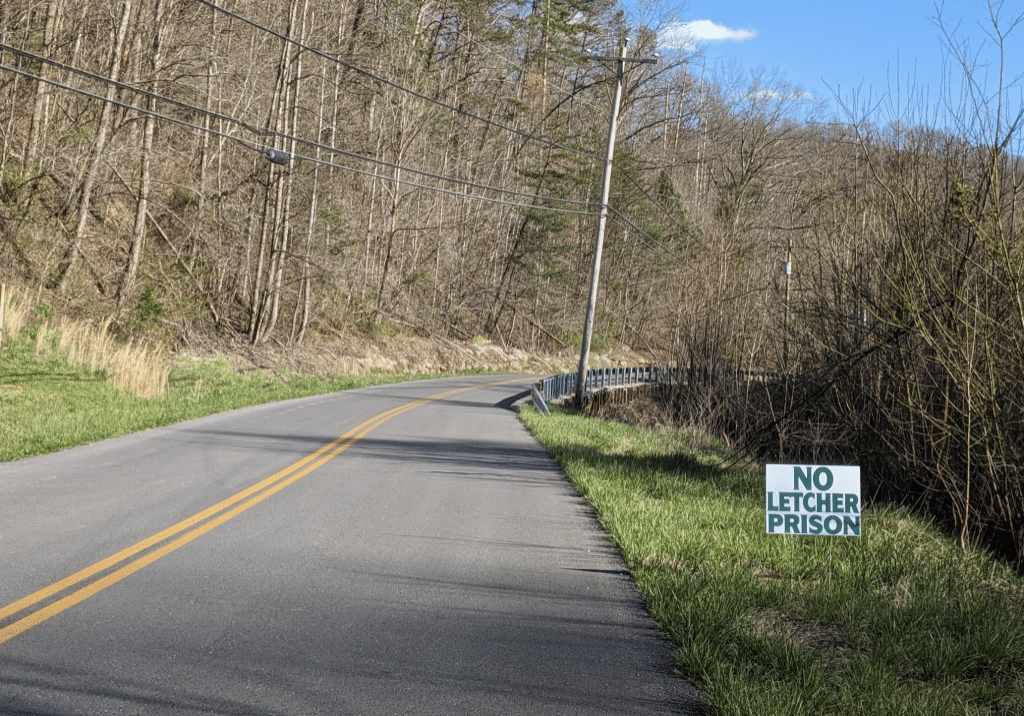
After 20 years, Letcher County prison proposal is still alive, though obstacles remain
A $605 million proposal for a federal prison on a former strip mine site in Letcher County, Kentucky, championed by U.S. Rep. Hal Rogers, refuses to die, despite local opposition, a lack of support from the executive branch and numerous other obstacles.
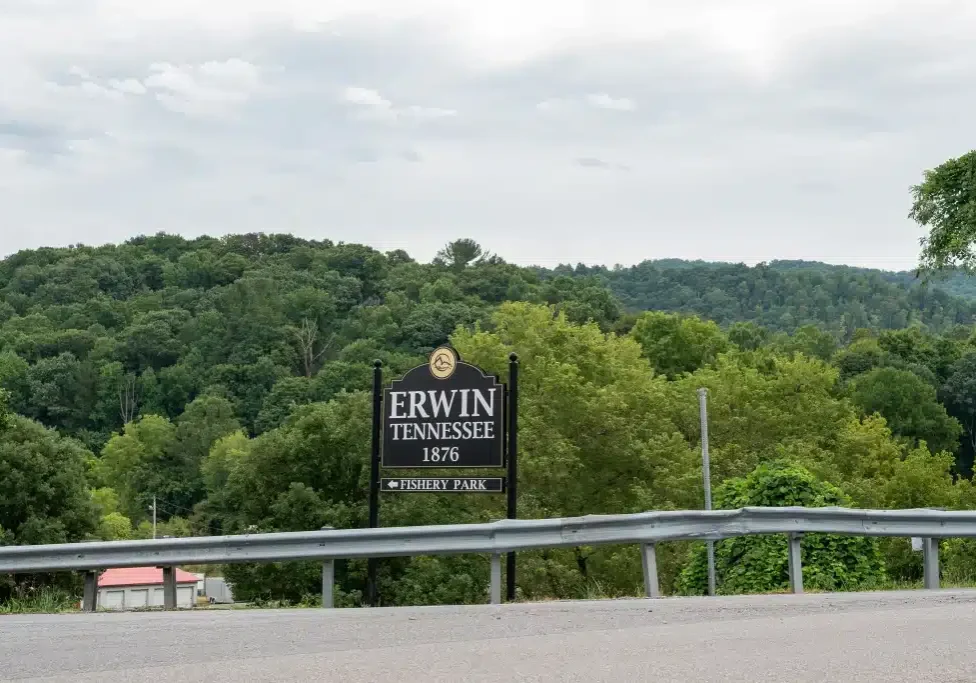
The Washout and Rebuild
For nearly two years, residents of Unicoi County, Tennessee, have had to make do without a hospital after Hurricane Helene destroyed the rural hospital. Ballad Health, which owns the hospital, broke ground on a new location — in another floodplain — in August 2026.
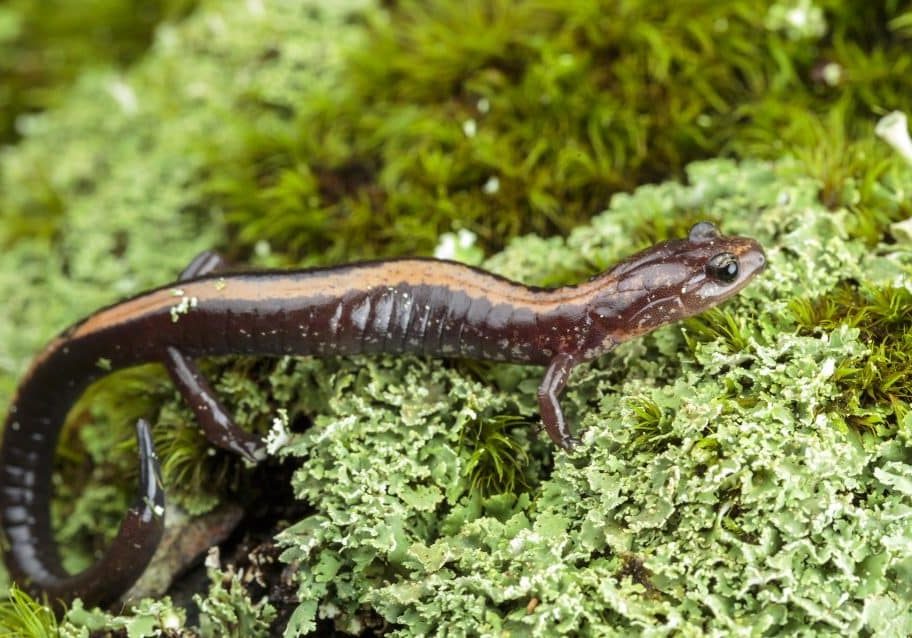
The Shenandoah Salamander
The Shenandoah salamander is a woodland salamander, which has adapted to life at higher elevations away from water. This sparkling rarity lives among the dry leaves, cracked logs, and stony hillocks on the highest peaks of Shenandoah National Park.
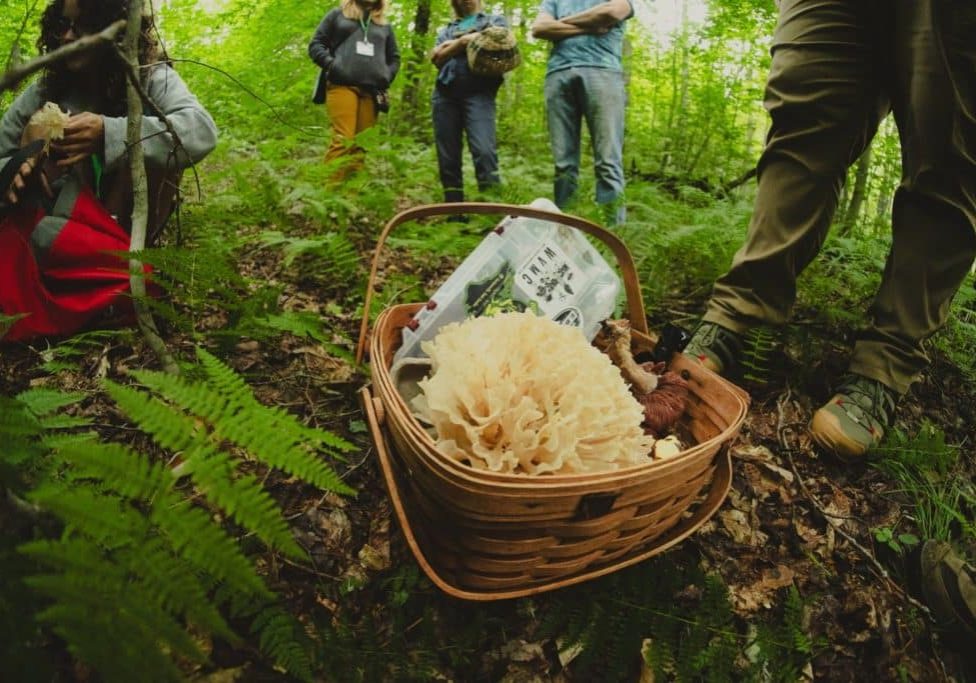
‘Foraging Is a Way of Connecting’
Foraging has experienced a modern resurgence, partly because of social media, online groups, the pandemic and people wanting to connect with nature. It also builds community, whether in person or online.

Colorblind Viewfinders Make Appalachian State Parks More Accessible
Virginia State Parks is the first park system in the nation to have a colorblind viewfinder at each one of its 43 locations — thanks to the dedication of one park ranger. Other states are following suit.
The Future of Film is in West Virginia
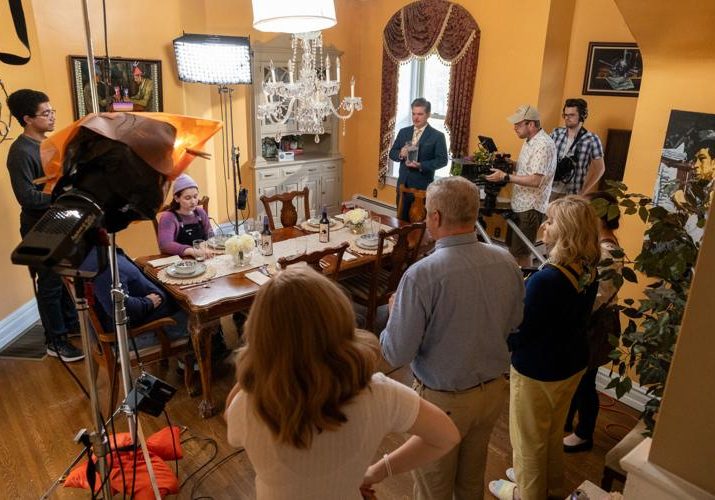
Many well-known TV and film productions have developed out of the Mountain State in years past, but the West Virginia Film Office is looking to the future to continue to grow the film industry.

Leave a comment
Your email address will not be published. Required fields are marked *
Leave a Comment