

The Washout and Rebuild
The loss and future of a hospital in Unicoi County, Tennessee, two years after Hurricane Helene
By Gerald Witt
For nearly two years, residents of Unicoi County, Tennessee, have had to make do without a hospital.
“Some people are still struggling,” says Jimmy Erwin, director of the Unicoi County Emergency Management Agency. He helped to manage the response to Hurricane Helene, which flooded and destroyed Unicoi County Hospital in September 2024.
The lack of a hospital for the past two years has strained emergency medical services, Erwin explains, as people have been calling ambulances for EMS care when they would have otherwise driven themselves to the hospital. Taking an ambulance for routine care means one less ambulance is available for emergencies. The loss of the local hospital is exacerbating healthcare woes for many in the rural Appalachian community.
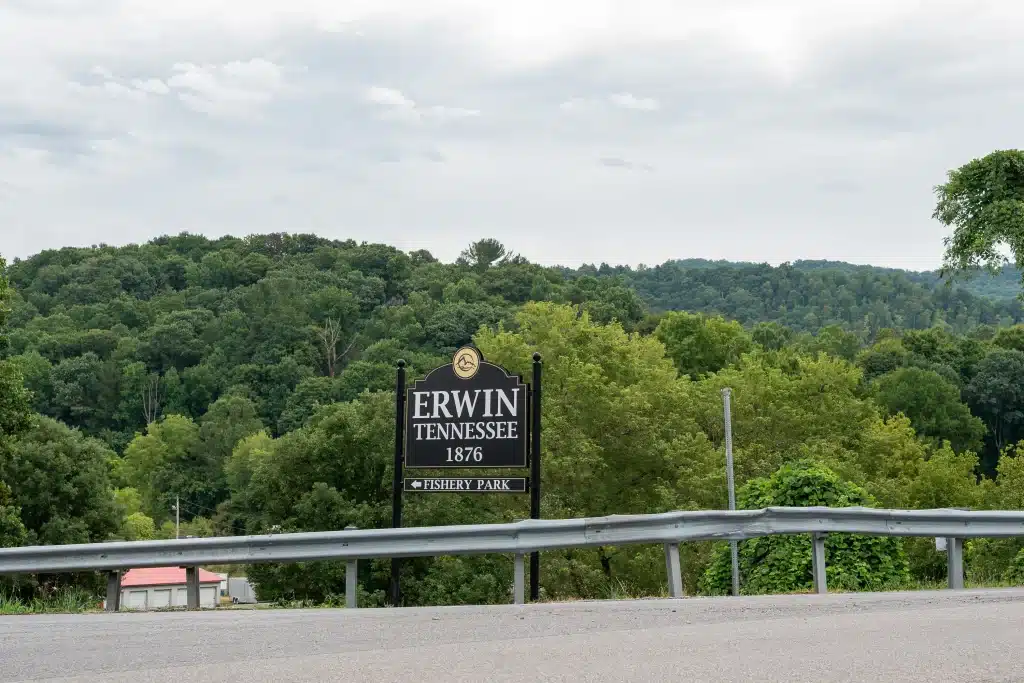
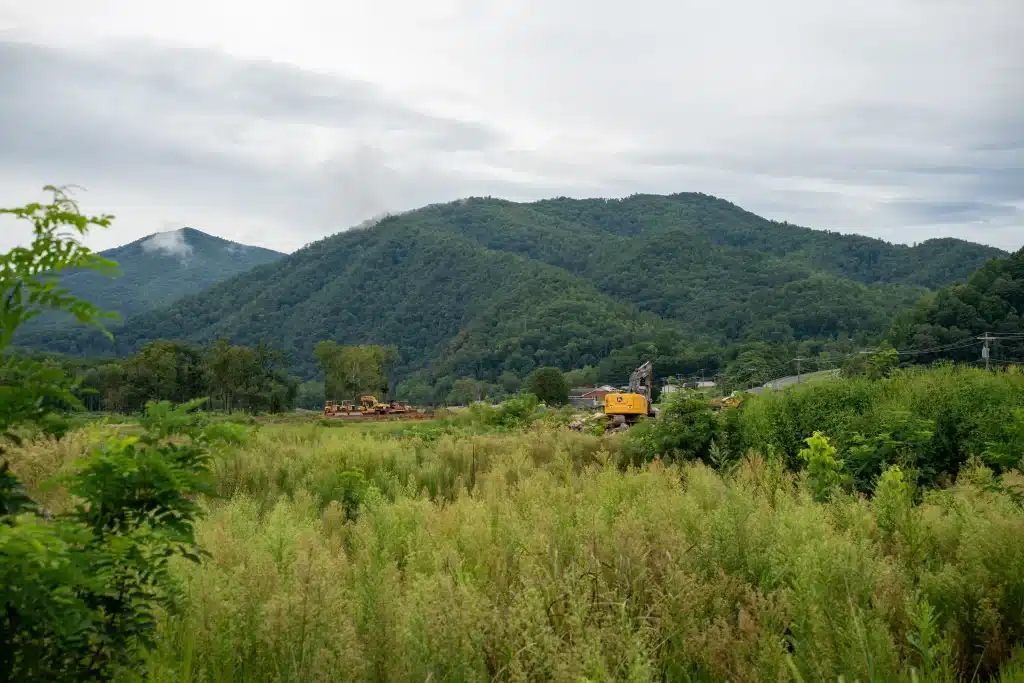
In July, Lisa Carter, vice president of the southern region for Ballad Health, stood on a grassy field surrounded by verdant mountains in the town of Unicoi, where a new hospital will be built on a 500-year floodplain near Interstate 26, behind a Walmart. Ballad broke ground in August. She shared that the rebuild will be a copy of the former Unicoi County Hospital that was near the Nolichucky River in the town of Erwin. The old hospital, also in a 500-year floodplain, had to be evacuated by helicopter.
The Nolichucky is five to ten feet deep through Erwin. Minor flooding happens when the river hits 12 feet. The National Weather Service logged the town’s previous flooding record, in 1901, at 24 feet. Helene rose floodwaters to 33.88 feet, more than two stories above the river’s usual height.
“The flood was devastating,” she says, adding that she hoped the rebuild, expected to cost about $26 million, offers hope for the community.
No hospital can be built overnight. If construction proceeds without a hiccup, Unicoi County and nearby areas must wait up to two more years for a permanent hospital. That also leaves locals seeking care in unfamiliar places.
Erwin shares that some rural residents of Unicoi County may go weeks without contact from the outside world, other than the mail carrier. Many are elderly and only leave home to buy groceries. They live at the north and south ends of the county, on high switchbacks and in valleys, where the landmarks are waterfalls and family cemeteries. A trip to the town of Erwin, population 6,000, may be a big day.
When Erwin had a hospital, people could simply drive over and get checked out. The travel time to the former hospital from the furthest reaches of Unicoi County usually took less than an hour. Some are reluctant to take a longer, unfamiliar trip to hospitals in Johnson City.
“We’ve seen that happen several times,” Erwin says. “They’re having major heart attacks or quit breathing … (someone’s) arm and chest was hurting, but they just didn’t want to go to Johnson City.” Some put off trips for medical care. “They would go tomorrow,” Erwin says.
In a medical emergency, sometimes tomorrow never comes.
Unicoi County: A rural county without a hospital
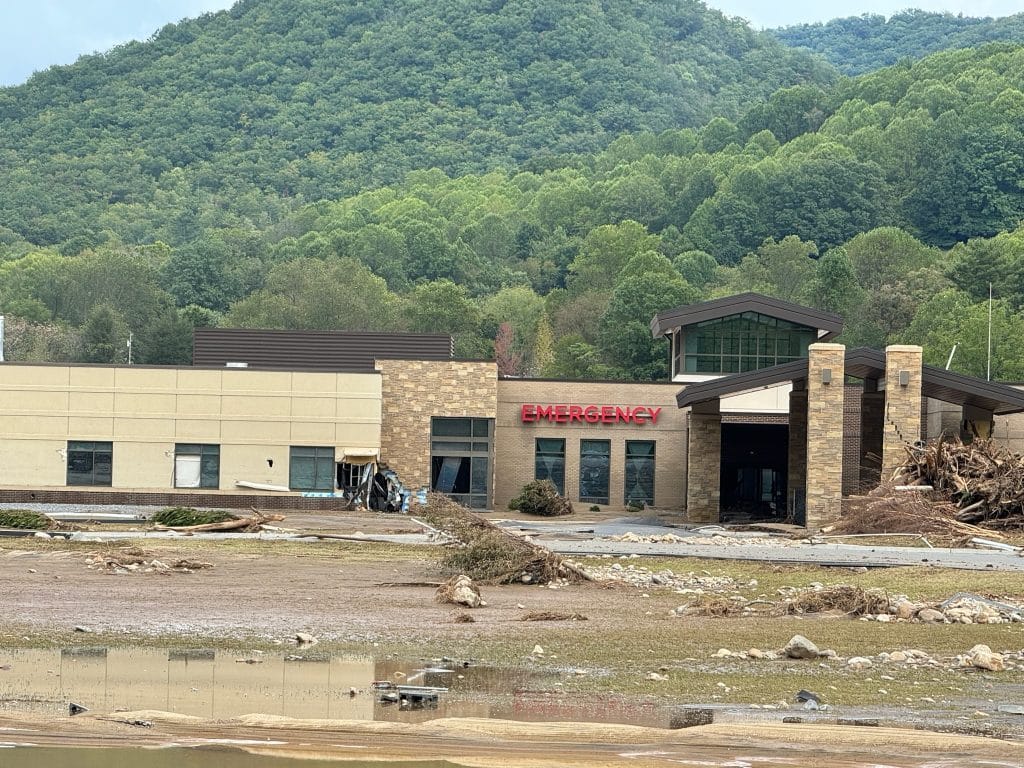
The Nolichucky River in Erwin swells, as all rivers do, with summer storm runoff or steady spring showers. The river pressures its banks sometimes and can lap along Erwin’s greenway as it crosses under Interstate 26 in the middle of town, and along the now-closed Unicoi County Hospital. That’s the hospital, where, for decades, people got stitches, had broken bones set, or were stabilized before an ambulance ride to the level 1 trauma center in Johnson City.
After the hospital was lost, Ballad, which operates the nation’s largest state-sanctioned hospital monopoly in Northeast Tennessee and Southwest Virginia, opened an urgent care facility for minor and moderate treatment. But rural residents of Unicoi County with chronic conditions or major emergencies must travel an hour or more for full hospital care.
“The urgent care has a small ER, which has done really good,” Erwin says. “I’ve used it several times myself, and they see quite a few people, but if anyone comes through with anything major, they go along to the hospital.”
The community has enough needs to justify a hospital.
A 2021 Ballad Health study that included the former 10-bed facility found the area’s top healthcare issues are substance abuse, chronic disease like COPD and diabetes, mental health and access to care. With no hospital in Unicoi County, officials worry medical issues will worsen.
Morgan Scott, regional project & communications coordinator in the Northeast Regional Health Office for the Tennessee Department of Health, explained in a 2025 statement that they expect to “see a tremendous need for additional mental health services, as the long-term trauma caused by the disaster has significantly increased the demand for accessible behavioral health care.”
Broadly, mental health services are overextended in Southern Appalachia, and Unicoi County isn’t an exception. Substance abuse is also rampant.
“Additionally, transportation barriers pose a serious obstacle, especially for elderly residents who often find it difficult to travel to neighboring counties to receive care,” Scott wrote.
Rebuilding when rural hospitals are under threat of closure
“We always believe that, especially in rural areas where it’s a little more remote, emergency care is oftentimes the foremost of importance,” says Eric Deaton, executive vice president and chief operating officer for Ballad Health. “Because, you know, people need quick access to emergency care.”
Ballad, he shares, is committed to Unicoi. “We want to be back here again in the future,” he said. “It’s brought the team closer together, and I think it’s brought our whole hospital, our whole organization, closer because these are our friends and people we really care about.”
That may be refreshing to hear at a time when rural hospitals are under threat of closure nationwide. Becker’s Hospital Review reported in late 2025 that 16 Tennessee hospitals are at risk of closing, with 14 of those at immediate risk of closing in the next 2 to 3 years. Ballad Health, like many hospital chains, receives its share of criticism, but local leaders are grateful that the company is rebuilding in Unicoi.
The region has an ongoing need for trauma care and lacks easy access to treatment for ongoing medical issues such as dialysis, COPD and similar conditions. A 2025 report in Echoes of Appalachia pointed out that “rates of heart disease, cancer, and stroke are significantly higher than national averages. Chronic diseases such as diabetes and obesity are more prevalent, and mental health issues and substance abuse continue to be serious concerns.”
The region as a whole has fewer healthcare providers than the rest of the country. Another report from Ohio University found that how doctors, nurses and others in healthcare interact with their patients in Appalachia tends to lag behind other areas of the country. “Perhaps a focus on training healthcare providers to be more courteous and culturally sensitive in their day-to-day interactions with patients could provide an opportunity to lessen the healthcare access gap that exists in Appalachia,” the report reads.
In Erwin, the urgent care clinic is the town’s only stopgap, but it’s closed at night, unlike a 24/7 hospital. People who need emergency care must take an ambulance to Johnson City. The need for more and better healthcare access is clear across the region.
The day Unicoi County lost its hospital
Initially, Deaton thought maybe Helene would fizzle out at landfall. But the Category 4 hurricane raced from the Florida panhandle on a line toward North Georgia and, improbably, leaned westward, over the ridgeline that splits the Great Smoky Mountains National Park along the Tennessee-North Carolina border. By late Sept. 27 and into the morning of Sept. 28, the storm stalled over East Tennessee and Western North Carolina. Helene rained.
When dawn broke on Sept. 28 in Erwin, the Nolichucky was swollen and running high. The townspeople had seen the river swell, even crest a bridge here or there, but this felt different. Nobody had seen the river this urgent and powerful. It was ugly, unending. And growing. By 8 a.m. the river had widened toward the hospital. Deaton called an evacuation.
“Around 9 a.m., we went to work,” Deaton says. “We worked with fire and rescue to start moving people out. We felt like we needed to go ahead and evacuate the hospital.” Within an hour, water moved onto the property.
The flow became a violent torrent. Riverbanks crumbled. Boulders crashed along the river bottom. Then the Nolichucky rerouted itself from its usual path behind the hospital to directly through it. “It came straight across,” Deaton says. “The velocity was so strong.”
Erwin had not seen flooding like this.
“We’ve had the river get high before, we’ve had the river at the level of the (I-26) bridge before,” says Erwin Mayor Glenn White. “I didn’t think it was a big thing. I thought it’s just a flood, just a flash flood.”
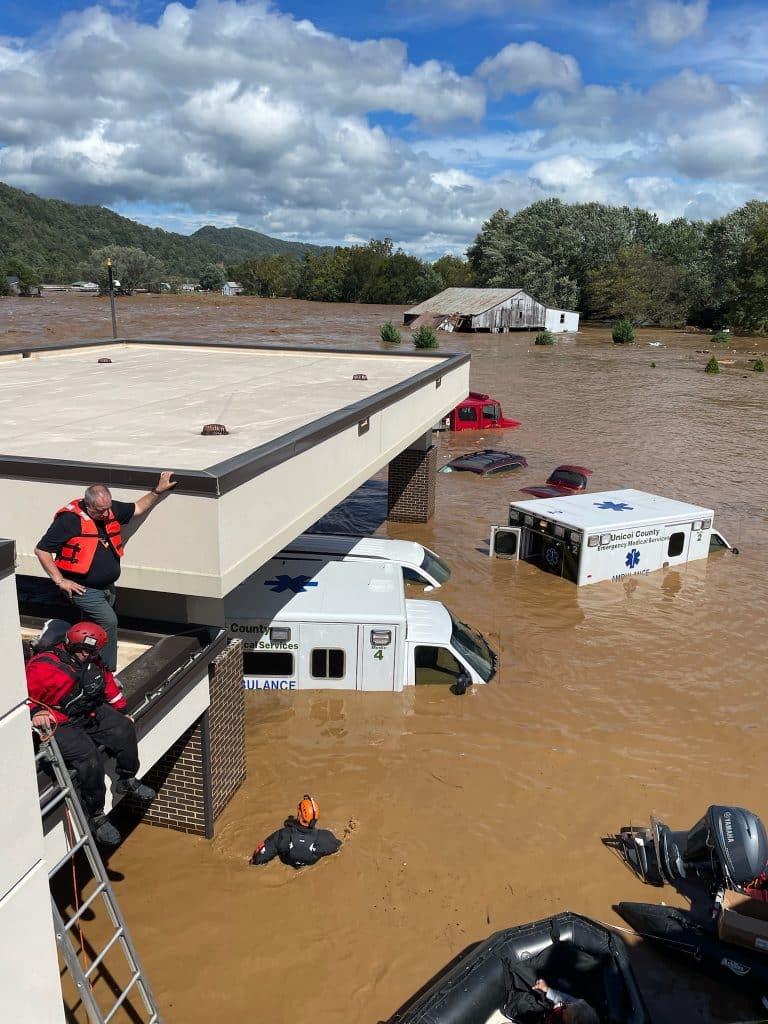
That thought didn’t last long. The rerouted river devoured land far beyond its banks. The brown swirling water carried away pickup trucks like Matchbox cars from the hospital parking lot.
“There was no written plan on what to do,” White says. “We never experienced anything like this.”
At 10 a.m., Deaton called for the remaining patients and staff to climb through a hatch to the hospital roof. By noon, all remaining patients were on the roof, or tied to it.
“I think we had around 12 to 15 patients total, and five of those patients were too heavy to carry to the roof of the hospital,” he says. Those patients were put in life rafts and tethered to the hospital, floating in rising water that excavated nearly everything in its path with an unending 30-foot wave. Winds whipped up to 60 m.p.h., too strong for nearby aircraft to attempt a rescue.
With nowhere left to go, Deaton and the hospital staff ran out of ideas by 1 p.m.
“We got to the point where we couldn’t fly, we couldn’t drive, we couldn’t take a boat,” Deaton says. They thought about strapping on life jackets and braving the floodwaters. Staff couldn’t get the jackets to the hospital roof anyway, and the thought of letting patients loose in the flood was a nonstarter.
“So our team actually stopped and prayed about that because we were so worried about it,” Deaton said. “We didn’t really know what our next step was.”
Ballad, with locations in East Tennessee and Southwest Virginia, has obvious connections to police, ambulance services, fire departments and other similar agencies. But those first responders were doing their own rescue work in their communities. Word spread among agencies that Unicoi County Hospital staff and patients were on the roof, with water still rising. Certain death appeared to be upstream.
Deaton got a call in the early afternoon that offered hope. Pilots from the Virginia State Police could navigate the storm by helicopter. But they could only do light touches on the roof of the hospital — the flooded structure couldn’t bear the full weight of the aircraft. They rescued everyone they could, but some staff remained behind.
Then the Tennessee National Guard brought in Black Hawk helicopters, rotors thumping, and dropped ropes to rescue a final few patients and staff. The Nolichucky had become a murderous, churning bulldozer of water and debris. With water roiling just inches below the roofline, the last hospital staff member was plucked by rescuers on a line into the heavens.
“Not one person was injured, not one patient was injured, during all that. And there were 65 people in total that were rescued that day,” Deaton says.
By 2 p.m., all were safe.
Unicoi County Hospital was gone. But eventually, it will be rebuilt.
Related Articles
Latest News
More Stories

The Shenandoah Salamander
The Shenandoah salamander is a woodland salamander, which has adapted to life at higher elevations away from water. This sparkling rarity lives among the dry leaves, cracked logs, and stony hillocks on the highest peaks of Shenandoah National Park.
‘Foraging Is a Way of Connecting’
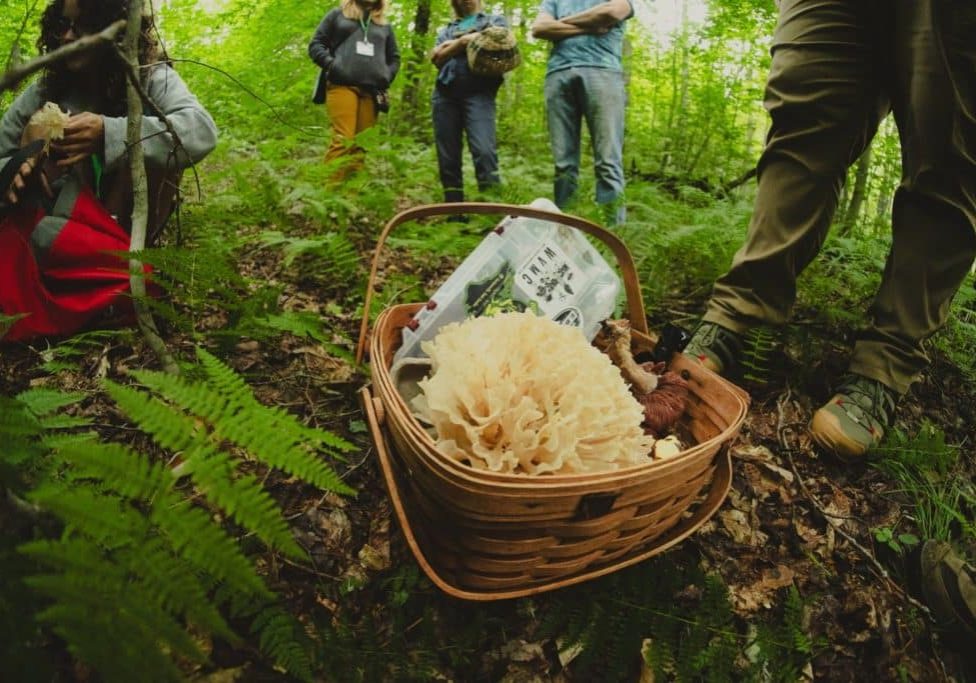
Foraging has experienced a modern resurgence, partly because of social media, online groups, the pandemic and people wanting to connect with nature. It also builds community, whether in person or online.

Colorblind Viewfinders Make Appalachian State Parks More Accessible
Virginia State Parks is the first park system in the nation to have a colorblind viewfinder at each one of its 43 locations — thanks to the dedication of one park ranger. Other states are following suit.

The Future of Film is in West Virginia
Many well-known TV and film productions have developed out of the Mountain State in years past, but the West Virginia Film Office is looking to the future to continue to grow the film industry.

Preserving Firefly Magic
Deep within an undisturbed forest in the Southern Appalachian Mountains, visitors may spot a continuous blue glow unlike anything they have ever seen before. That glow is the blue ghost firefly.
English Language Learning in Appalachia
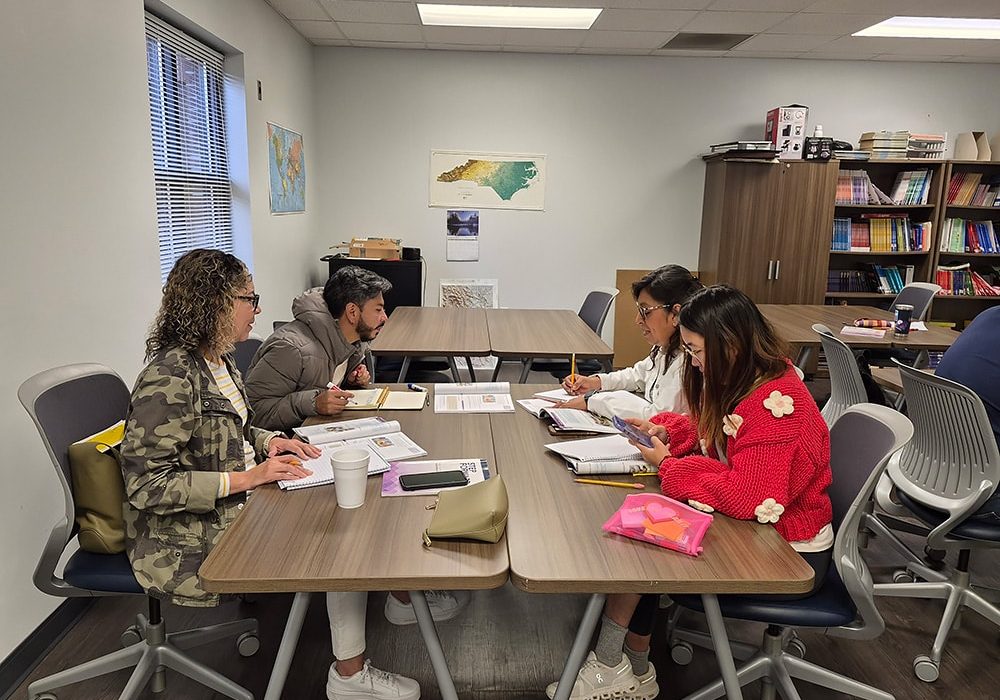
Learning English is always difficult. But current aggressive approaches to immigration policy are creating more barriers for learners and the programs that serve them than ever before in Appalachia and beyond.

Leave a comment
Your email address will not be published. Required fields are marked *
Leave a Comment