

Overdrive: Fossil Fuels in Appalachia
By Molly Moore, Dan Radmacher, Jen Lawhorne and Abby Hassler
Electricity demand is on the rise. For 15 years, the nation’s electricity usage remained fairly steady, but it started increasing around 2022. That upward trend is expected to continue, with some of it displacing other fuels, and some of it driven by new industries. How sharply will electricity demand rise? Who will pay for it? How much of that electricity will come from fossil fuels, renewables or nuclear? How will data centers influence all of the above?
These are huge questions, and the subject of intense debate. Their answers present real consequences for people across Appalachia and the Southeast — and for the future of our air, water and climate. Here, we share snapshots of the trends driving the debate, and explore how these energy issues are affecting our communities — and how people are pushing back.
ENERGY AFFORDABILITY AND METHANE GAS
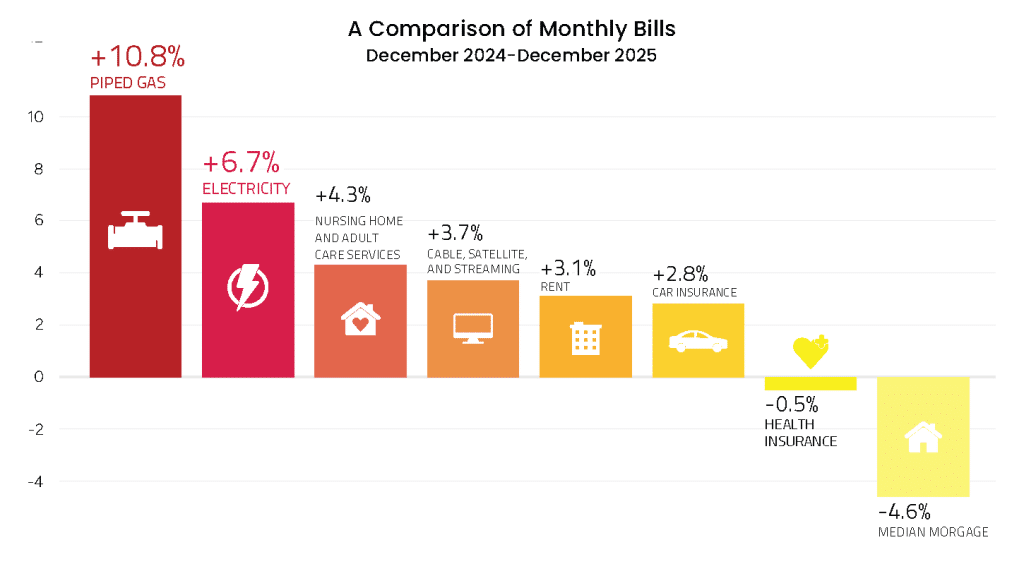
Electric bills and residential gas bills are outpacing inflation, straining wallets at a time when nearly 1 in 3 Americans report struggling to pay their energy bills, according to 2024 U.S. Census Bureau data. So why are residential electric bills going up?
The answer is highly complex, and it looks a little different everywhere, but a recent report by the nonprofit PowerLines highlights four primary factors nationwide:
- Replacement of aging infrastructure
- Costs associated with extreme weather events
- Volatile fuel costs
- Increased demand for electricity*
Usually, when utilities want to raise electric rates for any of these reasons, they first need to get approval from state regulators. Infrastructure might need an upgrade, but is the utility’s plan cost-beneficial for their customers, or does it pad the company’s bottom line too much? Because utilities in the Southeast operate as monopolies — their customers can’t choose their providers — there are checks built into the system that are supposed to prevent price gouging.
*The PowerLines report explains that increased electricity demand is only driving up residential prices in specific circumstances. That’s because some areas, like the Southeast, are seeing sharper growth, but it’s also because decision-makers can design electricity rates to shield residents from paying for grid upgrades and other costs needed for high-load industrial customers like data centers.
Fuel costs contribute to higher electricity bills
Electricity costs and the reasons behind them can vary greatly.
As a public power provider, the Tennessee Valley Authority distributes electricity through local power companies, charging the ninth-lowest rates in the country. But Tennessee is one of the top five states in the country for residential energy use, due in part to poor energy efficiency and building standards. So while TVA’s rates are relatively low compared to neighboring utilities, household electric bills are near the national average.
Swings in gas, coal and oil prices can lead to both unexpectedly high bills — like when TVA’s fuel costs rose 66% between February and March — and temporary drops. Fuel costs make up a portion of the total bill.
New River Light and Power, an entity run by Appalachian State University that serves the university and the town of Boone, North Carolina, raised bills 24% in March. NRLP has a contract to buy energy through a company that sources most of its energy from a gas plant in Kings Mountain, North Carolina. This gas plant also saw volatile market conditions for fuel costs, and the purchased power costs for NRLP increased by $2.3 million, which was passed on to customers.
Electric bills for customers of Appalachian Power Company, which serves parts of West Virginia and Southwest Virginia, rose 48% between 2021 and 2025, far outpacing the post-pandemic inflation surge. In a report, advocacy group Clean Virginia cited more than a dozen reasons for ApCo’s high costs, including overreliance on coal and gas, increasing transmission costs and regulatory systems that push too much of the cost onto residents.
Mountain Valley Pipeline wants to add huge compressor station
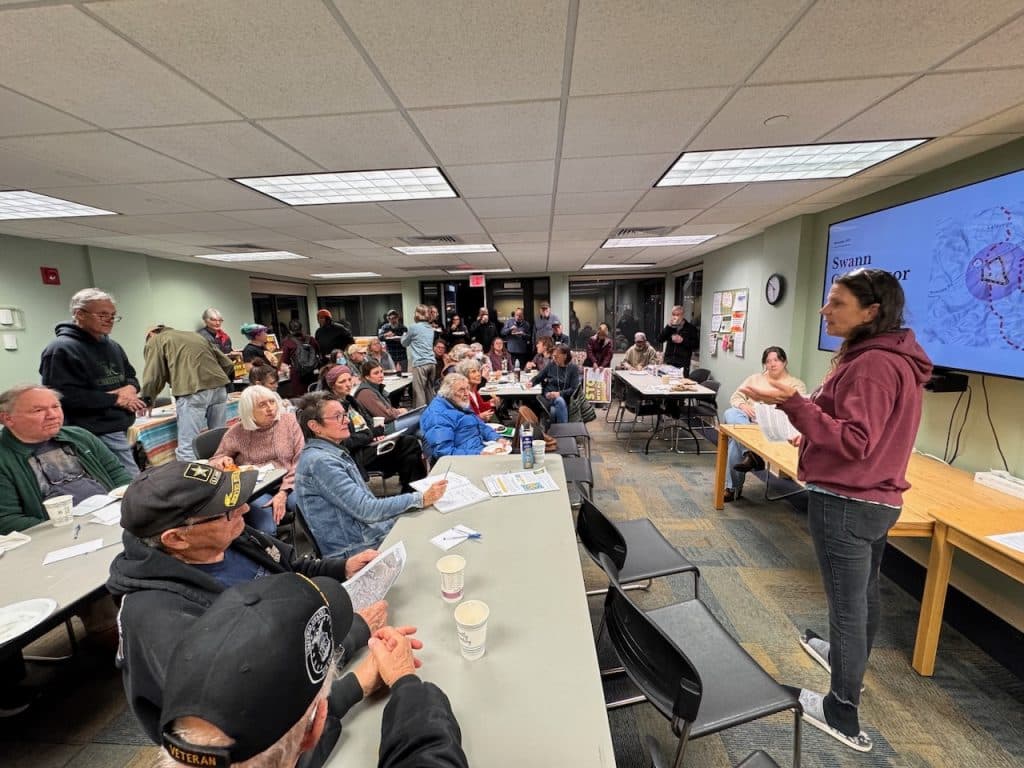
Operators of the Mountain Valley Pipeline are proposing to expand the pipeline’s capacity with a project called MVP Boost. It would upgrade three compressor stations in West Virginia and build a huge new compressor station in Elliston, Virginia. Elliston’s Swann Compressor Station would be enormous, the largest capacity station on the East Coast with 136,900 horsepower.
Crystal Mello, an organizer for the Protect Our Water, Heritage, Rights Coalition — who spearheaded much of the opposition to MVP’s construction in Montgomery County, Virginia — is gearing up for another fight.
She has organized community meetings to inform local residents who are concerned about noise, light and air pollution from the compressor station, as well as the dangers of higher volumes of gas flowing through the pipeline.
“Not only am I in a blast zone, but now you’re going to poison me?” asks Penny Artis, who lives on the pipeline’s path and less than a mile from the proposed compressor station.
Parallel pipelines, parallel problems
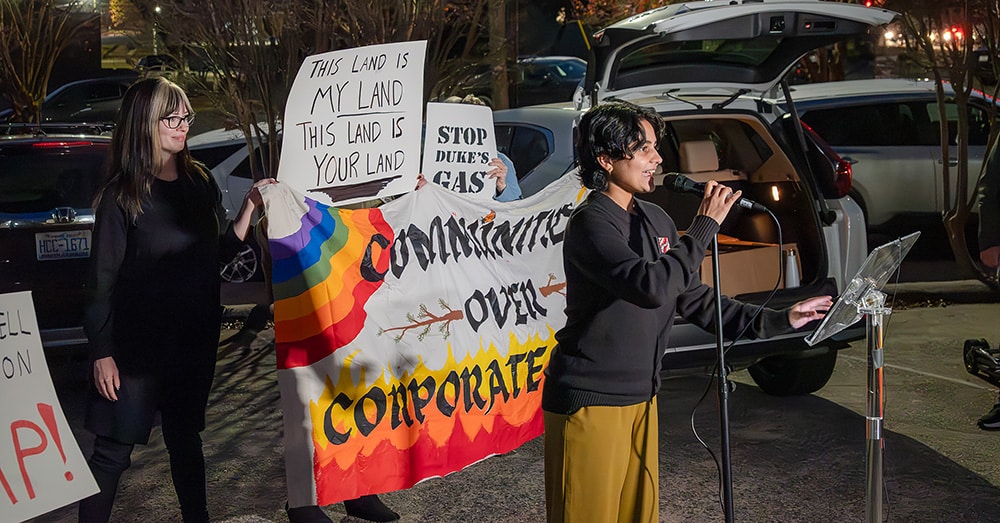
The Southeast Supply Enhancement Project and Mountain Valley Pipeline’s Southgate extension pipelines threaten communities and the environment in Southern Virginia and North Carolina. The 31-mile Southgate and 54.8-mile SSEP would both begin in Pittsylvania County, Virginia. Southgate would end in Rockingham County, North Carolina, while the interstate SSEP would cut through Rockingham, Guilford, Forsyth and Davidson counties, where six local governments have passed resolutions opposing the project or raising concerns about it.
Most of the SSEP’s new pipe would be laid near or alongside existing Transco pipelines, and parts of the project follow a route similar to MVP Southgate. Residents in impacted counties are deeply concerned about the co-location of multiple high-pressure, large-diameter pipelines and the impacts on air and water quality, safety, property values and electric bills.
Both pipelines have received state and federal construction permits. Appalachian Voices, the publisher of this paper, is part of three lawsuits challenging MVP Southgate’s federal and state permits. The nonprofit is also part of legal challenges to two federal authorizations for SSEP.
THE HIGH COSTS OF COAL
Dollars Utilities Lost Burning Coal Instead of Cheaper Options, 2015-2025*
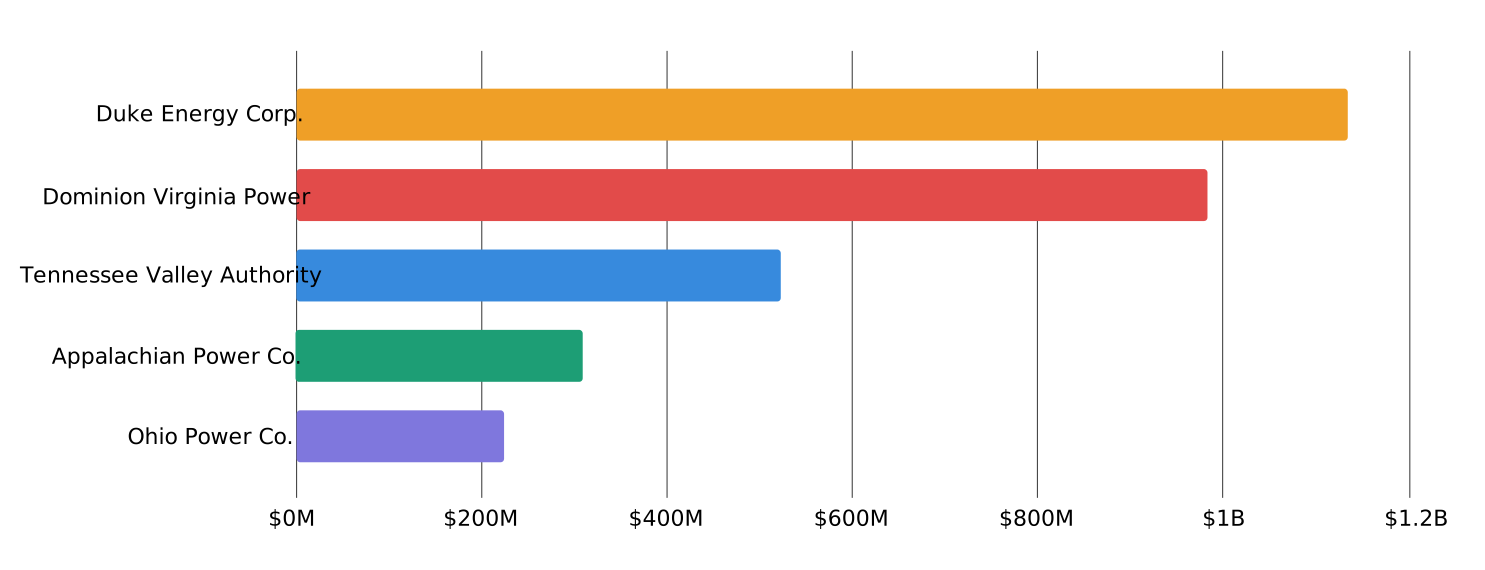
Utilities spent nearly $18.5 billion dollars more than necessary between 2015 and 2023 by choosing to burn coal for electricity when there were cheaper alternatives available, according to an analysis by the think tank RMI. Most of this extra cost was passed to customers.
In the past, coal was king. But for years, it’s been more expensive than solar, wind and even methane gas when it comes to generating electricity. The grid works differently across the country and region, but usually, grid operators choose to run the most affordable energy option available. So why are customers being charged a premium for coal when cheaper options are available at the same time?
Power companies like Dominion Energy can preschedule their old, polluting coal plants to run instead of more affordable options already on the grid — and most regulators nationwide have allowed them to pass those higher costs to customers. To lower bills and decrease pollution, Virginia passed a law in early 2026 that directs state regulators to hold utilities — instead of their customers — accountable for these decisions.
Appalachian Voices championed this bill, and other states can follow suit.
The Trump administration is attempting to prolong the use of coal power. In February, the Department of Energy announced $175 million to “extend the useful life” of six coal-fired power plants in Kentucky, North Carolina, Ohio and West Virginia. These include the John E. Amos power plant.
In April, the president invoked war powers to free up federal dollars for specific electric grid and fossil fuel projects, including coal mines and power plants.
DATA CENTERS & ENERGY DEMAND
U.S Data Center Electricity Forecasts
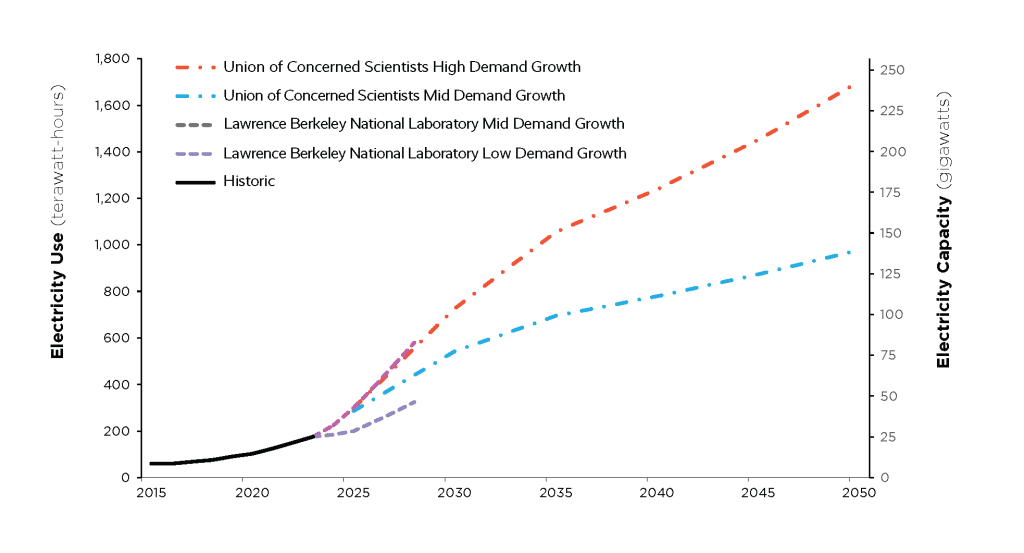
Electricity demand is rising as more households and businesses switch to electric heating and transportation, along with industrial processes and manufacturing. The biggest wildcard? Large-scale data centers. There are wide-ranging estimates of how much power the facilities will demand.
Utilities point to sky-high electricity demand forecasts to justify building new, polluting methane gas power generation, branded as “natural gas.” But when forecasting energy demand 10 years into the future, utility companies overestimate future demand by 17% on average, according to a report by the think tank RMI.
Overbuilding could be happening now. Data center developers apply for electricity service in multiple utility areas, even when they only plan to build one project. There aren’t enough semiconductor chips to meet the projected demand, and new technology could improve efficiency. Local resistance is also halting some projects.
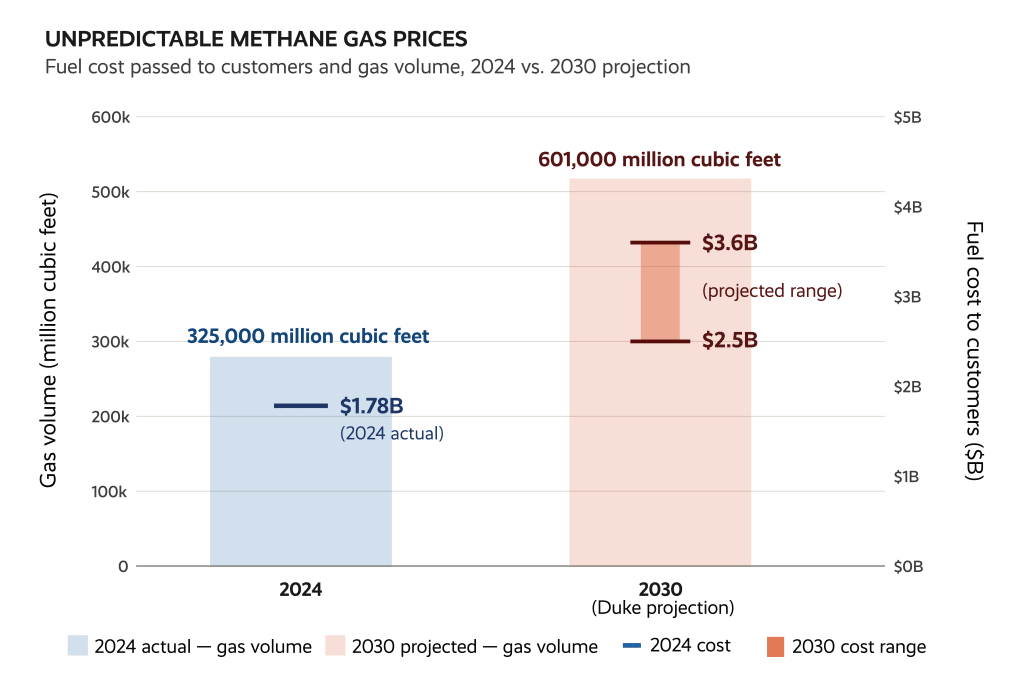
Despite these uncertainties, utilities and private methane gas companies want to build power plants now, using high-end demand forecasts as justification. Duke Energy is asking North Carolina regulators to approve 9.6 gigawatts of new gas by 2033 and 12.4 GW by 2040. Between 3.5 to 6.3 GW of that is linked to data centers, not replacing retiring coal units. At the same time, the company is asking to increase residential rates by 18%.
“Power companies are incentivized to exaggerate demand and potentially overbuild power plants and other infrastructure because it’s good for their shareholders, but we risk paying for unnecessary electricity infrastructure for decades,” says Appalachian Voices State Energy Policy Director Peter Anderson.
Plus, methane gas isn’t the only way to power the grid. Virginia has the highest concentration of large-scale data centers in the world, and state law requires carbon-emitting power plants to retire by 2045. Recent modeling shows multiple paths to meeting electricity demand without fossil fuels by 2045. When taking fuel costs into account, these carbon-free scenarios were cheaper than utility plans that included new gas-fired power plants.
Some data centers seek to skip grid interconnection by building their own methane gas power plants on site. Data centers would bear power generation costs, but communities would face increased air and water pollution. Cornell University found the rush to build new gas-fired generation for data centers could have about the same impact as 10 million more cars on the road.
Large-scale data centers also present their own environmental problems — they can consume vast amounts of water, and backup diesel generators increase air pollution. When data centers keep old coal plants running or help justify a new methane gas power plant, local air quality suffers. Communities are pushing back by opposing data centers outright or demanding robust community benefits, pollution controls, and other accountability and transparency measures.
Reducing data centers’ impact on the grid
Virginia, home to 35% of the world’s hyperscale data centers, passed a law in 2026 that requires utilities to design demand flexibility programs for high-load customers like data centers. Participants would adjust their energy use during the hours of the year when electricity demand is at its peak to reduce the need for new power generation and other expensive infrastructure. Appalachian Voices, publisher of this newspaper, supported this bill and is advocating for additional guardrails on data center development.
Data center and power plant proposal deeply alarms residents of Tucker County, West Virginia
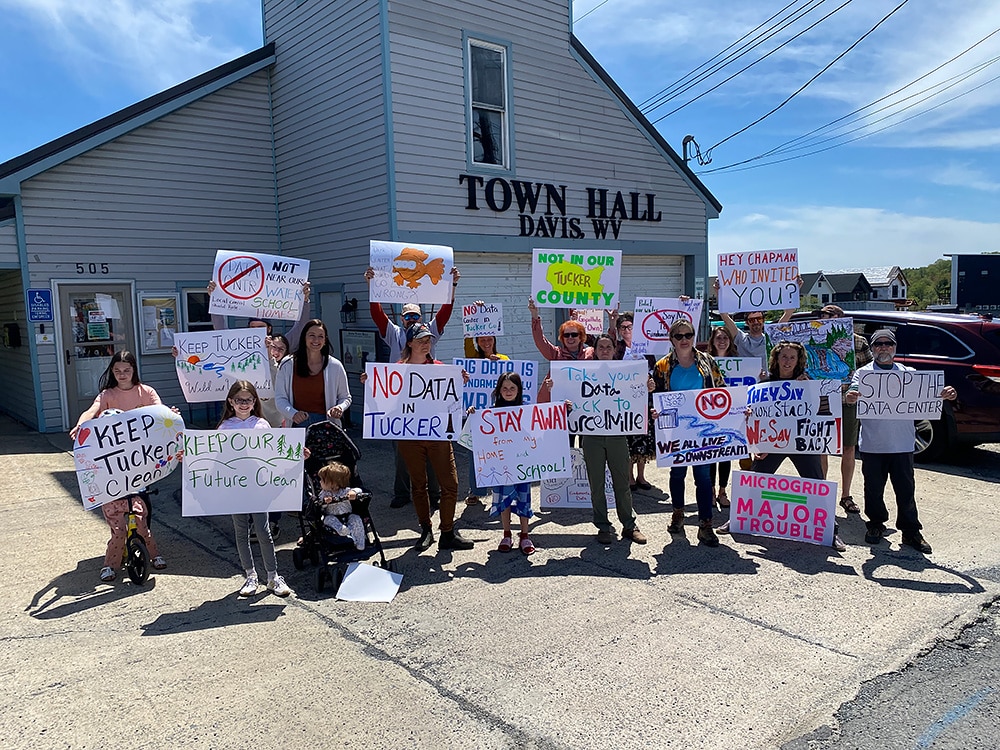
Tucker County, West Virginia, is a remote hot spot for outdoor tourism year-round — with ample options for skiing, mountain biking, hiking, birding and other activities. But a proposed data center complex of more than 10,000 acres, along with a methane gas plant to power it, has residents worried about the future of their paradise.
They formed Tucker United to oppose the massive power plant and data complex proposed by Fundamental Data. Developers told the Wall Street Journal it would be “among the largest data center campuses in the world.”
“This isn’t just a fight about a power plant and data center complex,” says Nikki Forrester, director of communications for Tucker United. “It’s a fight for our health, for our economy, for our clean air and water, and for our quality of life. This is a fight for our future.”
Tucker United and other groups appealed the West Virginia Department of Environmental Protection’s approval of the project’s air pollution permits. As of press time, the case is ongoing. Fundamental Data is represented by Roger Hanshaw, who is also speaker of the West Virginia House of Delegates, which passed a bill in 2025 to limit public input on data center development.
More Stories
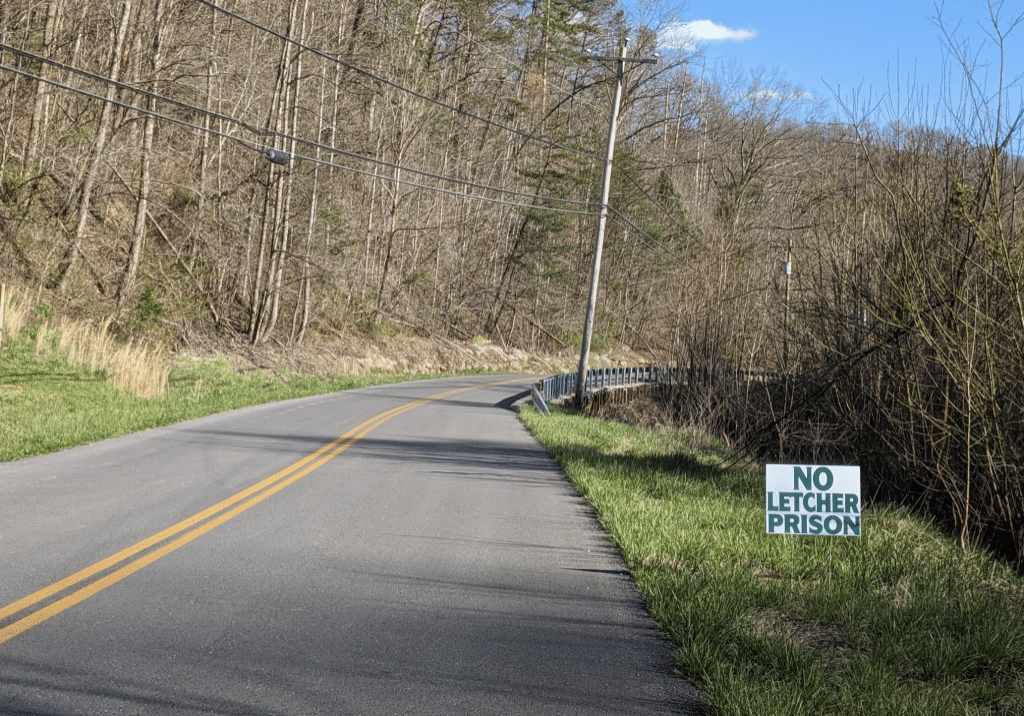
After 20 years, Letcher County prison proposal is still alive, though obstacles remain
A $605 million proposal for a federal prison on a former strip mine site in Letcher County, Kentucky, championed by U.S. Rep. Hal Rogers, refuses to die, despite local opposition, a lack of support from the executive branch and numerous other obstacles.
The Washout and Rebuild
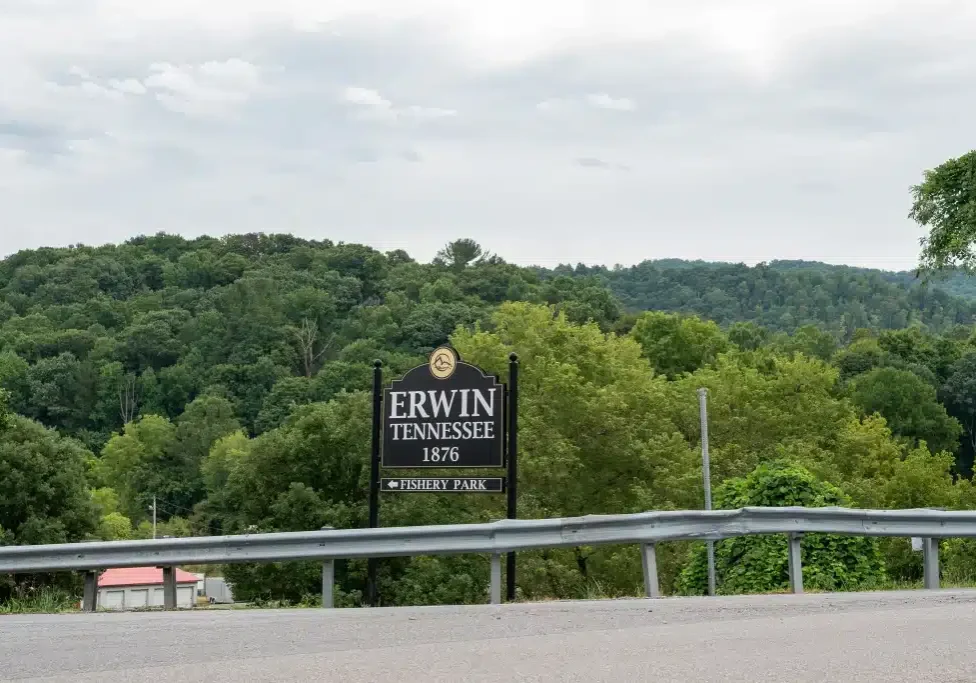
For nearly two years, residents of Unicoi County, Tennessee, have had to make do without a hospital after Hurricane Helene destroyed the rural hospital. Ballad Health, which owns the hospital, broke ground on a new location — in another floodplain — in August 2026.

The Shenandoah Salamander
The Shenandoah salamander is a woodland salamander, which has adapted to life at higher elevations away from water. This sparkling rarity lives among the dry leaves, cracked logs, and stony hillocks on the highest peaks of Shenandoah National Park.

‘Foraging Is a Way of Connecting’
Foraging has experienced a modern resurgence, partly because of social media, online groups, the pandemic and people wanting to connect with nature. It also builds community, whether in person or online.

Colorblind Viewfinders Make Appalachian State Parks More Accessible
Virginia State Parks is the first park system in the nation to have a colorblind viewfinder at each one of its 43 locations — thanks to the dedication of one park ranger. Other states are following suit.

The Future of Film is in West Virginia
Many well-known TV and film productions have developed out of the Mountain State in years past, but the West Virginia Film Office is looking to the future to continue to grow the film industry.

Leave a comment
Your email address will not be published. Required fields are marked *
Leave a Comment