

East Tennessee Nonprofit Welcomes First-Time Homebuyers Into Affordable, Energy-Efficient Home

Shawn O’Brien and Nicole Yacura knew they wanted to move to Knoxville, Tennessee, but needed to find the right home. After touring 12 houses with their real estate agent, they couldn’t get one off their minds: Candora House.
“We saw four houses after this [one],” said O’Brien. “I didn’t really think about them. I liked this house the first time I saw it.”
Candora House is the nickname for the city’s third solar home built by the local nonprofit SEEED, which stands for Socially Equal Energy Efficient Development, through its Green Construction Program. According to SEEED, the home is net positive, or “built to produce more energy than it consumes annually,” and part of the nonprofit’s larger mission to build “energy-efficient, affordable housing that not only supports the environment but also empowers the local community.”
“We’re in the works to do seven more houses [like the Candora House],” said JD Jackson, SEEED’s chief operating officer, at a ribbon-cutting ceremony for the home. “We’re thinking of ways to push the envelope, to make these houses as energy efficient as possible, and to help the environment, not to hurt the environment.”
SEEED’s vision is to build healthy and regenerative communities where all can thrive, focusing on sustainability, personal development and equity. Through its Green Construction Program, SEEED pays young people in Knoxville to learn sustainable construction skills by working on each of their energy-efficient home projects.
“It feels like part of the bigger plan,” said Jerome Johnson, co-founder and project manager of the Green Construction Program at SEEED. The bigger plan, Johnson explained, is “fulfilling our purpose.”
“The Earth doesn’t have hands or feet; we do. We use our hands and feet to do the things that it can’t,” he continued.
O’Brien and Yacura’s new three-bedroom, two-bath home features a 16-panel solar array with battery storage, an electric vehicle charging station and 2×6 advanced wood framing on its exterior walls to boost insulation. The house also has low-energy LED lighting, energy-efficient appliances and a high-efficiency heat pump water heater, which is projected to save the homeowners $600 annually. Additionally, contractors used a new kind of low-carbon concrete for the driveway, which contains 31% less carbon dioxide than standard mixes.
“I work in civil engineering in the energy industry,” said O’Brien. “I’m happy I can support a project that’s going for net zero.”

The home was made possible thanks to monetary and technical support from Oak Ridge National Laboratory, Aslan Foundation, CEMEX/Ready-Mix USA and UT-Battelle. To inform future projects, the homeowners will share energy savings data with SEEED and key partners.
Kashif Nawaz, section head for building technologies research at ORNL, said the home serves as “an excellent framework to really improve the technology on a smaller scale, which eventually can be deployed on a much larger scale.”
“We’ve just got to do this about a million more times, and I think we’ll be making a dent,” remarked UT-Battelle CEO and ORNL Director Stephen Streiffer.
The momentum for demand for these homes is growing. While SEEED waited months for buyers for their first two homes, the nonprofit sold “Candora House” before the building was complete, which Jackson calls “divine intervention.”
“They never owned a home before,” said Jackson. “That’s what we look for: low-to-moderate income families, first-time buyers. They were just so delighted to get into the house. And they appreciate it.”
Access to affordable housing in the United States is an important issue, shared Streiffer.
“The fact that we’re contributing to this [house] that it is built with modern technology that incorporates cool features — and will be a good house to live in, an easy house to live in, and an affordable house to live in— is just great to see,” said Streiffer.
Related Articles
Latest News
More Stories
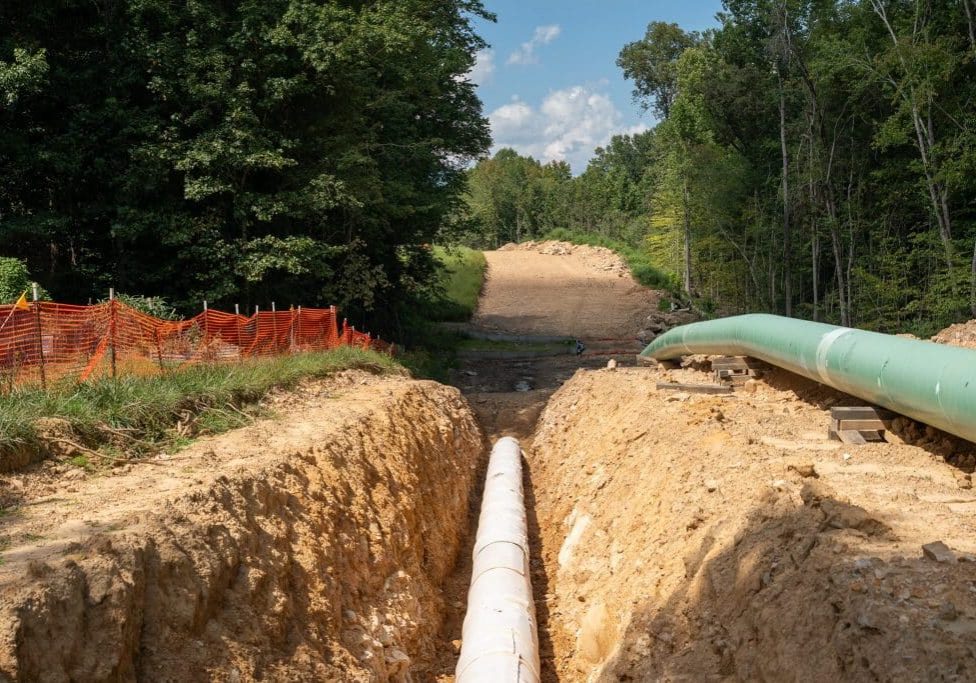
Ridgeline Pipeline Construction Impacts in Rural East Tennessee
Neighbors share about noise, unpredictable construction schedules and other disruptions due to methane gas pipeline construction in East Tennessee. The 122-mile Ridgeline Expansion Project, constructed and owned by East Tennessee Natural Gas, a subsidiary of Enbridge, a multibillion-dollar Canadian fossil fuel company, went into service Nov. 1.

Neighbors Help Neighbors
A photo essay that celebrates the volunteer spirit of the grassroots group Hurricane Helene WNC and speaks to the resourcefulness, collaboration and hard work embodied by thousands and thousands of volunteers, first responders and aid workers across the region after Hurricane Helene.

Halloween Approaches, and Night School Is in Session
The House of Art in Bluefield, West Virginia, looks like a haunted tower, making it the perfect location for its sixth annual haunt event: Night School. The Night School will be open every Friday and Saturday night through Oct. 31.

‘The Most Perfect Act of Love’
Hundreds of people attended the second annual Affirming Sumner Pride celebration on a 24-acre farm dubbed “Fruity Farm” in Bethpage, Sumner County, Tennessee.

Signs of Life: Endangered Bats Found in Nantahala for First Time in More Than a Decade
In the Nantahala National Forest, a team of biologists spotted Indiana bats, an endangered species that hasn’t been seen in North Carolina for the last 11 years.

‘First Line of Defense’
During Hurricane Helene and its aftermath, rural fire departments and other first responder hubs played critical roles in keeping their communities safe, even without power and cut off from outside support for days or weeks after the storm. Two years later, plenty of work remains to ensure these hubs have the resources they need to operate day to day and be ready when emergencies or natural disasters strike.

Leave a comment
Your email address will not be published. Required fields are marked *
Leave a Comment