

In February, the U.S. Forest Service released its draft 15-year plan and draft environmental impact statement for the Nantahala and Pisgah national forests in North Carolina. A 90-day public comment period runs from Feb. 14 to May 14.
This is the first time that the agency has allowed public participation during the planning stages of a forest management plan. The process began in 2012. Public feedback was robust and at times contentious, and the Forest Service extended their timeline to incorporate comments from individuals and groups.
The plan is divided into four alternatives, one being the status quo. Each strikes a different balance between recreational options, logging, preserving cultural resources and protecting species and water quality. For example, the alternatives set aside different places and overall acreage for wilderness preservation and for logging, and have different goals for trail and road construction and maintenance.
Two of the three new proposed alternatives increase the acreage deemed suitable for timber harvest, but deeper analysis was not available at press time.
View the plan at fs.usda.gov/goto/nfsnc/nprevision. Appalachian Voices will publish further analysis of the plan this spring at appvoices.org/blog.
U.S. Forest Service Public Meetings
March 10, 5:30-8:30 pm:
Foothills Conference Center, Morganton, N.C.
March 12, 5:30-8:30 pm:
NC Arboretum Education Center, Asheville, N.C. (Parking fee is waived.)
March 16, 5:30-8:30 pm:
Brevard Library, Brevard, N.C.
March 19, 5:30-8:30 pm:
Brasstown Community Center, Brasstown, N.C.
March 24, 5:30-8:30 pm:
First Presbyterian Church, Franklin, N.C.
March 26, 5:30-8:30 pm:
Bentley Fellowship Hall, Mars Hill, N.C.
Related Articles
Latest News
More Stories

Signs of Life
In the Nantahala National Forest, a team of biologists spotted Indiana bats, an endangered species that hasn’t been seen in North Carolina for the last 11 years.

‘First Line of Defense’
During Hurricane Helene and its aftermath, rural fire departments and other first responder hubs played critical roles in keeping their communities safe, even without power and cut off from outside support for days or weeks after the storm. Two years later, plenty of work remains to ensure these hubs have the resources they need to operate day to day and be ready when emergencies or natural disasters strike.

The Rocky Road — and Bridge — to Recovery
Hurricane Helene is estimated to have damaged nearly 7,000 private roads and bridges in Western North Carolina. Two years later, many restoration projects are complete, but the journey hasn’t been easy — and isn’t over for others.

After 20 Years, Letcher County Prison Proposal Is Still Alive, Though Obstacles Remain
A $605 million proposal for a federal prison on a former strip mine site in Letcher County, Kentucky, championed by U.S. Rep. Hal Rogers, refuses to die, despite local opposition, a lack of support from the executive branch and numerous other obstacles.
The Washout and Rebuild
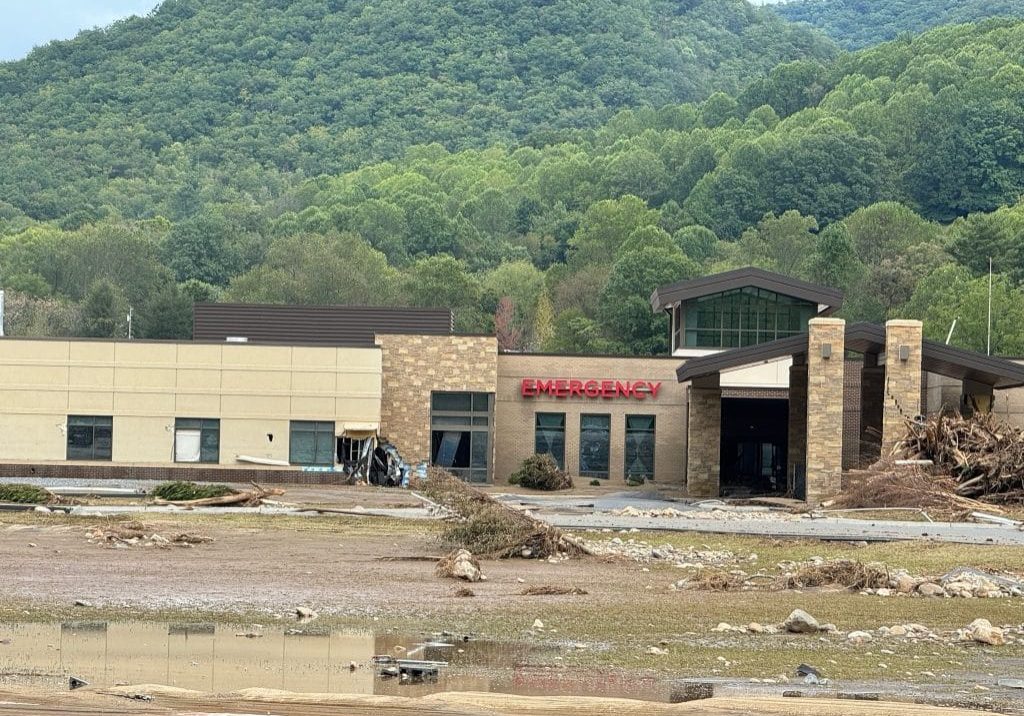
For nearly two years, residents of Unicoi County, Tennessee, have had to make do without a hospital after Hurricane Helene destroyed the rural hospital. Ballad Health, which owns the hospital, broke ground on a new location — in another floodplain — in August 2026.

The Shenandoah Salamander
The Shenandoah salamander is a woodland salamander, which has adapted to life at higher elevations away from water. This sparkling rarity lives among the dry leaves, cracked logs, and stony hillocks on the highest peaks of Shenandoah National Park.

Leave a comment
Your email address will not be published. Required fields are marked *
Leave a Comment