

Seneca Rogers

Seneca Rogers in front of Arches Grove United Church of Christ. MVP Southgate was originally slated to cut through the church’s cemetery. Photo by Kevin Ridder
When Mountain Valley Pipeline Southgate disclosed their proposed route in spring 2018, the fracked-gas line was to cut directly across the cemetery of Arches Grove United Church of Christ in Alamance County, N.C. The church has been a part of the community since 1872 and in its current location since 1963.
In November, pipeline developers altered the route to bypass Arches Grove by about half a mile. Seneca Rogers, chair of the church’s trustee board and a lifelong Alamance County resident, partially attributes this to the church body’s activism against the pipeline in attending meetings and putting up signs. Seneca himself has traveled to speak about Southgate at several churches in the community and at a county commissioners meeting.
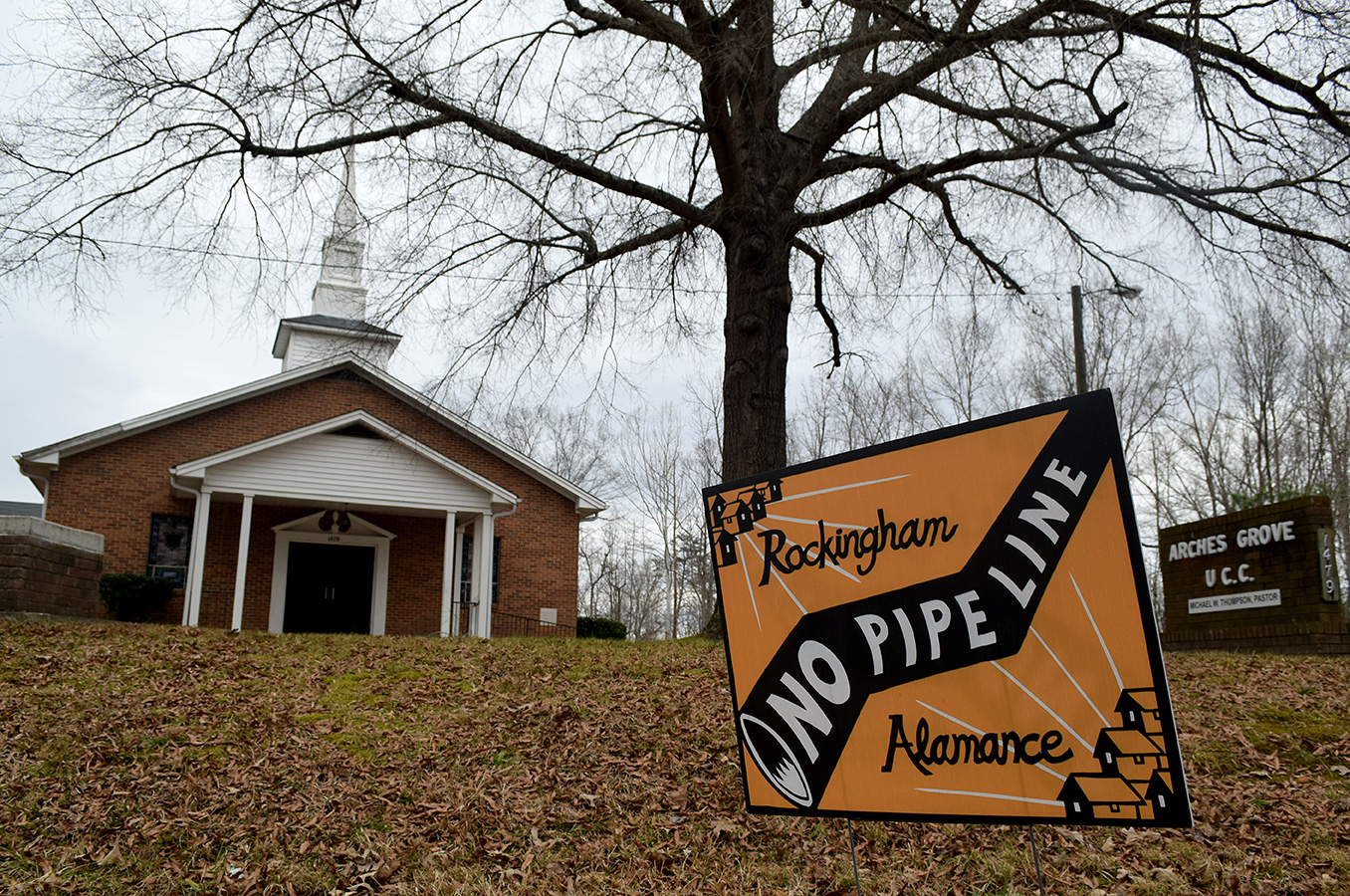
Members of the Arches Grove United Church of Christ have fought MVP Southgate for months. Photo by Kevin Ridder
Seneca describes poor communication on Southgate’s part, noting that when he was initially trying to find out if the pipeline would affect Arches Grove, Southgate representatives told him they would call him back — but never did. Seneca found out about the pipeline crossing the cemetery at Southgate’s June 2018 public meeting.
A Southgate representative at the meeting recorded Seneca’s contact information and told him that somebody would get in touch; just like before, Seneca never heard back. He only found out about the route’s change when the Haw River Assembly, a local environmental nonprofit organization, sent him the updated map in January. Regardless, Seneca still can’t believe that that the proposed route made it as far as it did.
“I think they’re just a company who’s not from this area at all, and they’re going to sit up there where they’re from and not be affected by it, so they don’t really care,” he says.
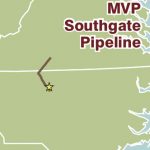
Arches Grove United Church of Christ’s location near the path of MVP Southgate.
Seneca still worries that Southgate might change its path again. Even if the pipeline didn’t cross the cemetery, a right-of-way nearby could still limit any future growth of the church or put the structure in danger in the event of an explosion.
“We are just one individual church, but we are also a part of the church body as a whole, and we’re a part of this community,” Seneca says. “So anybody out here that’s close to us that’s going to be affected with it, anybody in Alamance County, we want to still stand with them in opposition to the pipeline.” — By Kevin Ridder
Related Articles
Latest News
More Stories
Neighbors Help Neighbors
A photo essay that celebrates the volunteer spirit of the grassroots group Hurricane Helene WNC and speaks to the resourcefulness, collaboration and hard work embodied by thousands and thousands of volunteers, first responders and aid workers across the region after Hurricane Helene.

Halloween Approaches, and Night School Is in Session
The House of Art in Bluefield, West Virginia, looks like a haunted tower, making it the perfect location for its sixth annual haunt event: Night School. The Night School will be open every Friday and Saturday night through Oct. 31.
‘The Most Perfect Act of Love’
Hundreds of people attended the second annual Affirming Sumner Pride celebration on a 24-acre farm dubbed “Fruity Farm” in Bethpage, Sumner County, Tennessee.

Signs of Life: Endangered Bats Found in Nantahala for First Time in More Than a Decade
In the Nantahala National Forest, a team of biologists spotted Indiana bats, an endangered species that hasn’t been seen in North Carolina for the last 11 years.
‘First Line of Defense’
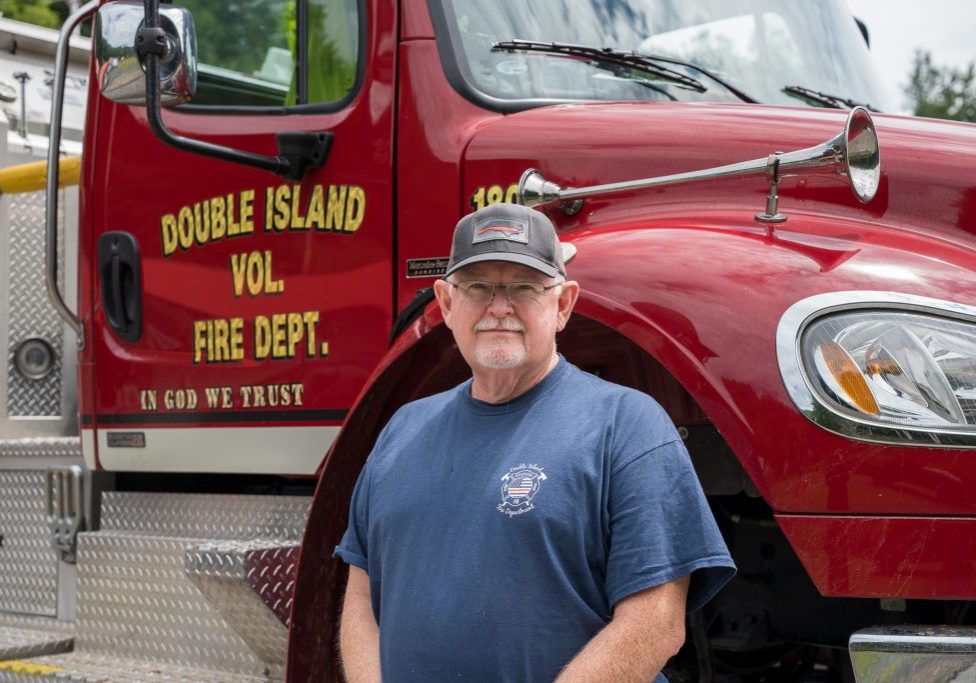
During Hurricane Helene and its aftermath, rural fire departments and other first responder hubs played critical roles in keeping their communities safe, even without power and cut off from outside support for days or weeks after the storm. Two years later, plenty of work remains to ensure these hubs have the resources they need to operate day to day and be ready when emergencies or natural disasters strike.
The Rocky Road — and Bridge — to Recovery
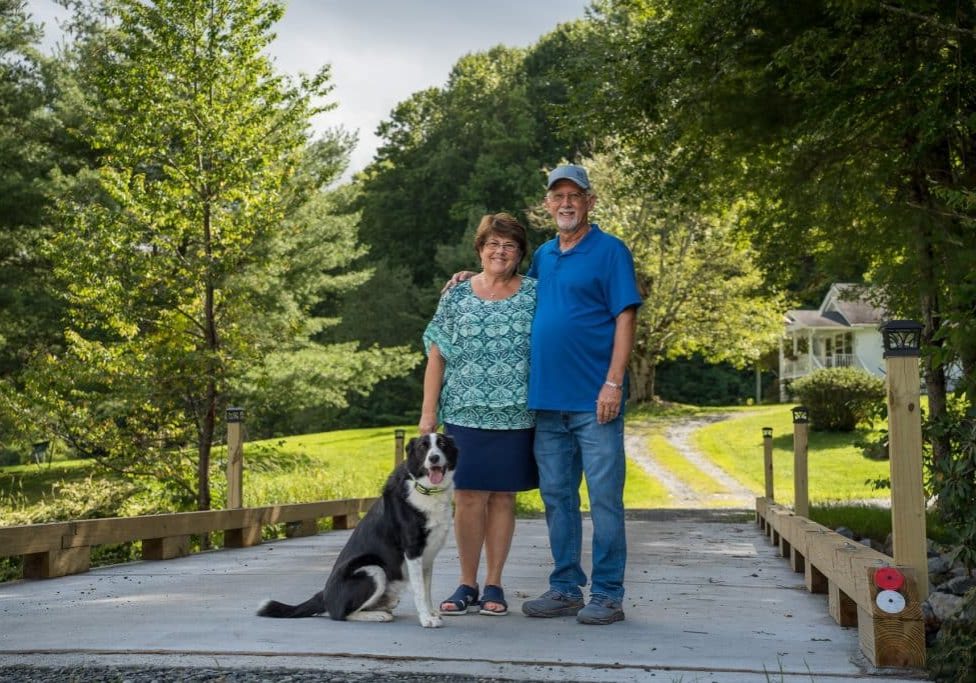
Hurricane Helene is estimated to have damaged nearly 7,000 private roads and bridges in Western North Carolina. Two years later, many restoration projects are complete, but the journey hasn’t been easy — and isn’t over for others.

Leave a comment
Your email address will not be published. Required fields are marked *
Leave a Comment