

Appalachian Voices welcomes new faces to team
A Growing Team in Norton

Matt Hepler, an expert on water issues in coal mining areas, has joined our team as a Water Quality Scientist and Community Organizer. He spent two years in the Geography masters program at Appalachian State University, where he focused on Hydrology. Afterward, Matt worked for five years with Southern Appalachian Mountain Stewards, where he lead the grassroots organization’s water program and helped to develop litigation strategies against coal companies.
A Virginia native, Matt currently lives in Washington County, Va. He is a hiker and square dance caller, and loves spending time on the rivers of Central Appalachia.
We’re also thrilled to welcome Terran Young, a 2017 Highlander Appalachian Transition Fellow who will be working with us in collaboration with Southern Appalachian Mountains Stewards and Livelihoods Knowledge Exchange Network.

Terran will be focusing on a continuation of Who Owns Appalachia, a project started in the late ‘70s that researches land ownership in Appalachia. Terran is studying to become a Master Herbalist and is also a writer/producer for Spaceman Productions. She is originally from Wise County, Va., but grew up in Middletown, Ohio.
Terran and Matt are both based in our Norton, Va., office.
Welcoming a New Board Member
We’re proud to welcome Christopher Scotton — CEO and novelist — to the Appalachian Voices Board of Directors.
“Now more than ever, our environment, and indeed our fundamental right to live safely and with dignity, is under threat by those who pursue fossil fuel extraction at any cost,” he says. “Americans of conscience are beginning to unite in the face of this threat, and I joined the Appalachian Voices Board to lend my own voice to the growing cacophony of folks standing shoulder-to-shoulder and shouting ‘enough!’”
Christopher grew up in the then-undeveloped countryside outside of Washington, D.C. In college, he fell in love with the music and the beauty of Appalachia, and his debut novel, The Secret Wisdom of the Earth, is set in a fictionalized eastern Kentucky town.

“The important work of Appalachian Voices has impact far beyond this region we all love so well—I’m excited to help the AV team fulfill its mission,” he says.
Christopher currently lives near Washington, D.C., where he is president and CEO of a software company.
Related Articles
Latest News
More Stories

Halloween Approaches, and Night School Is in Session
The House of Art in Bluefield, West Virginia, looks like a haunted tower, making it the perfect location for its sixth annual haunt event: Night School. The Night School will be open every Friday and Saturday night through Oct. 31.

‘The Most Perfect Act of Love’
After losing its rural pride celebration, hundreds of people attended the second annual Affirming Sumner Pride celebration on a 24-acre farm dubbed “Fruity Farm” in Bethpage, Sumner County, Tennessee.

Signs of Life
In the Nantahala National Forest, a team of biologists spotted Indiana bats, an endangered species that hasn’t been seen in North Carolina for the last 11 years.

‘First Line of Defense’
During Hurricane Helene and its aftermath, rural fire departments and other first responder hubs played critical roles in keeping their communities safe, even without power and cut off from outside support for days or weeks after the storm. Two years later, plenty of work remains to ensure these hubs have the resources they need to operate day to day and be ready when emergencies or natural disasters strike.

The Rocky Road — and Bridge — to Recovery
Hurricane Helene is estimated to have damaged nearly 7,000 private roads and bridges in Western North Carolina. Two years later, many restoration projects are complete, but the journey hasn’t been easy — and isn’t over for others.
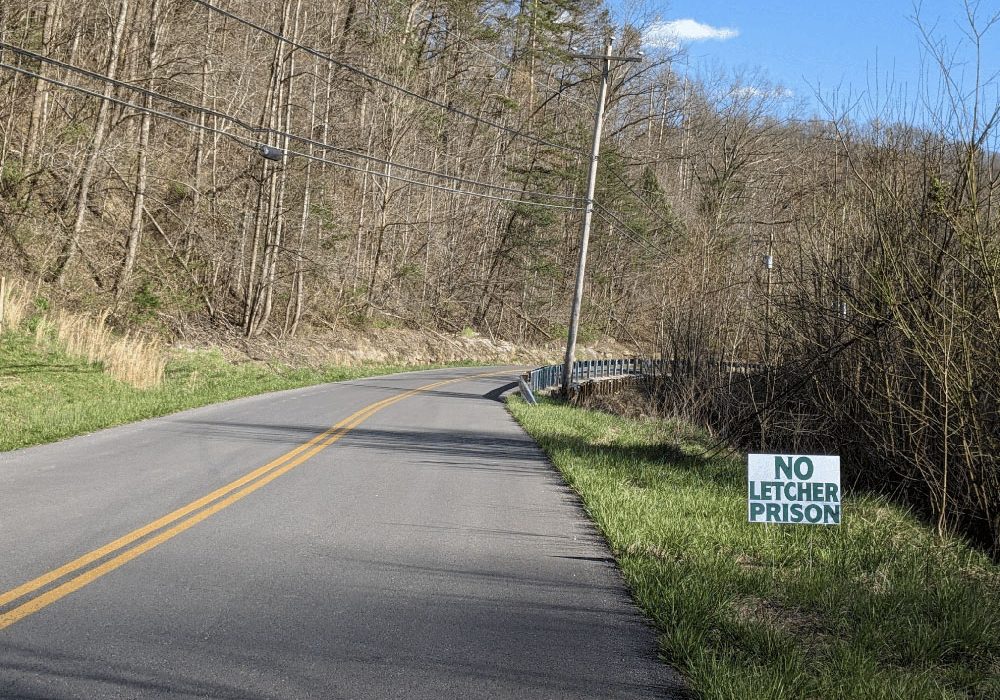
After 20 Years, Letcher County Prison Proposal Is Still Alive, Though Obstacles Remain
A $605 million proposal for a federal prison on a former strip mine site in Letcher County, Kentucky, championed by U.S. Rep. Hal Rogers, refuses to die, despite local opposition, a lack of support from the executive branch and numerous other obstacles.

Leave a comment
Your email address will not be published. Required fields are marked *
Leave a Comment