

By Elizabeth E. Payne
New studies raise challenges about the financial harm of two natural gas pipeline projects proposed for West Virginia, Virginia and North Carolina — the Mountain Valley and Atlantic Coast Pipelines.
A study released in May by Key-Log Economics LLC estimated that the Mountain Valley Pipeline would cost local communities more than $8 billion. The study was commissioned by The POWHR Coalition (Protect Our Water, Heritage, Rights), an alliance of citizen groups from eight Virginia and West Virginia counties along the pipeline’s proposed route.
The study’s authors calculated one-time and annual costs to the eight-county region from lost property values and taxes, and decreased natural beauty and quality-of-life that would result in fewer people moving to or visiting the area.
According to the U.S. Energy Information Administration, the capacity to generate power from natural gas is expanding rapidly, particularly around major shale plays. In the mid-Atlantic, Virginia is projected to have the greatest increase in capacity over the next two years.
In another study, the Institute for Energy Economics and Financial Analysis concluded that pipelines from the Marcellus and Utica shale beneath Ohio, New York, Pennsylvania and West Virginia — the source for both proposed pipelines — are being overbuilt.
The study also concludes that the Federal Energy Regulatory Commission “facilitates [this] overbuilding” and that much of the cost of construction would likely be passed on to ratepayers.
“None of the economic interests within the natural gas industry have any incentive to seriously consider whether alternatives to natural gas — energy efficiency, renewable energy or other forms of power generation — may be cheaper,” write the authors of the report.
Environmental advocates and homeowners along the routes continue to voice concerns about the harm the pipelines are likely to cause if constructed. Most recently, the Blue Ridge Parkway Foundation announced its opposition to the construction of both pipelines, each of which are projected to cross the parkway. And the Board of Supervisors of Augusta County, Va., also asked FERC to reject the current route of the Atlantic Coast Pipeline.
Related Articles
Latest News
More Stories
Neighbors Help Neighbors
A photo essay that celebrates the volunteer spirit of the grassroots group Hurricane Helene WNC and speaks to the resourcefulness, collaboration and hard work embodied by thousands and thousands of volunteers, first responders and aid workers across the region after Hurricane Helene.

Halloween Approaches, and Night School Is in Session
The House of Art in Bluefield, West Virginia, looks like a haunted tower, making it the perfect location for its sixth annual haunt event: Night School. The Night School will be open every Friday and Saturday night through Oct. 31.
‘The Most Perfect Act of Love’
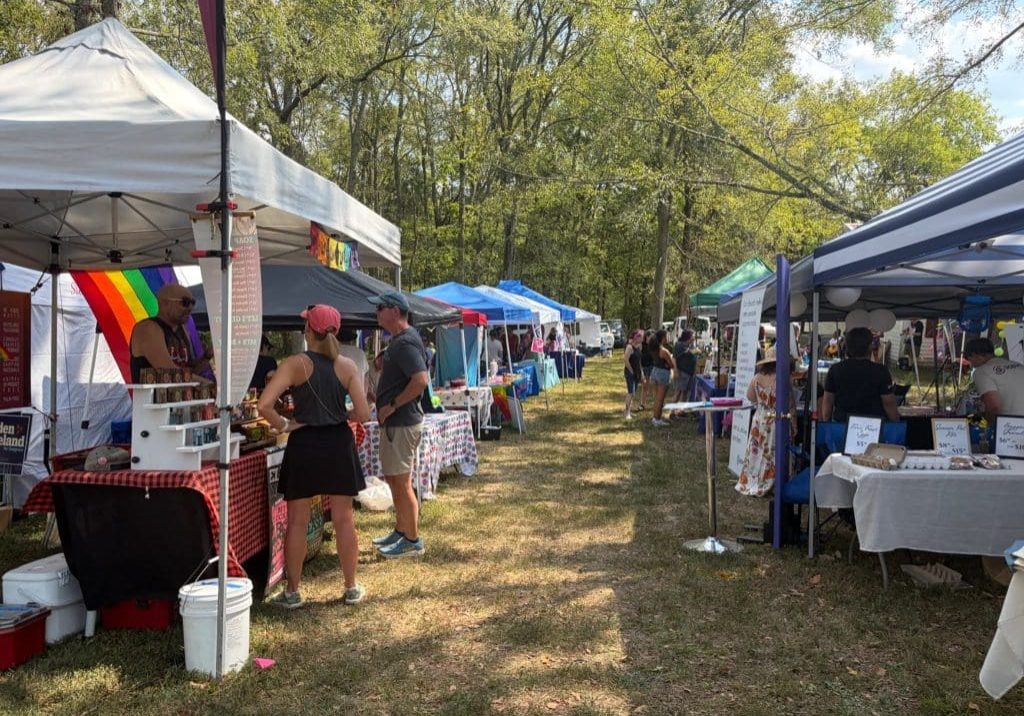
Hundreds of people attended the second annual Affirming Sumner Pride celebration on a 24-acre farm dubbed “Fruity Farm” in Bethpage, Sumner County, Tennessee.

Signs of Life: Endangered Bats Found in Nantahala for First Time in More Than a Decade
In the Nantahala National Forest, a team of biologists spotted Indiana bats, an endangered species that hasn’t been seen in North Carolina for the last 11 years.

‘First Line of Defense’
During Hurricane Helene and its aftermath, rural fire departments and other first responder hubs played critical roles in keeping their communities safe, even without power and cut off from outside support for days or weeks after the storm. Two years later, plenty of work remains to ensure these hubs have the resources they need to operate day to day and be ready when emergencies or natural disasters strike.

The Rocky Road — and Bridge — to Recovery
Hurricane Helene is estimated to have damaged nearly 7,000 private roads and bridges in Western North Carolina. Two years later, many restoration projects are complete, but the journey hasn’t been easy — and isn’t over for others.

Leave a comment
Your email address will not be published. Required fields are marked *
2 responses to “Recent Studies Question the Economic Benefit of Pipelines”
-

Hi Mary,
Thanks for your comment. The potential environmental risks associated with the proposed pipeline projects are indeed significant and include: an increased release of methane gas (a harmful greenhouse gas) and other forms of air pollution, water and noise pollution, and damage to endangered species and habitats along the routes.
More specifically, information about the risks of methane gas is available from the EPA (https://www3.epa.gov/climatechange/ghgemissions/gases/ch4.html), and the Cow Knob and Cheat Mountain salamanders are good examples of endangered species that could be harmed (in fact, the ACP had to revise its route to avoid them: https://www.biologicaldiversity.org/news/press_releases/2016/acp-01-21-2016.html).
You can also find more information about these risks on our website (https://appvoices.org/fracking/) and in a recent longer article on the pipelines (https://appvoices.org/2016/04/19/natural-gas-infrastructure/).
And for updates on the environmental review process for the ACP, you can visit the Dominion Pipeline Monitoring Coalition (http://pipelineupdate.org/environmental-review/).
I hope that helps and good luck with your project. Thanks so much for your comment,
Elizabeth -
Hi Elizabeth,
Wouldn’t it be great if you can also let know the environmental hazards associated with it? I am writing about it.
Thanks,
Mary


Leave a Comment