

Energy Efficiency Offers Promise of Lower Electric Bills
By Brian Sewell
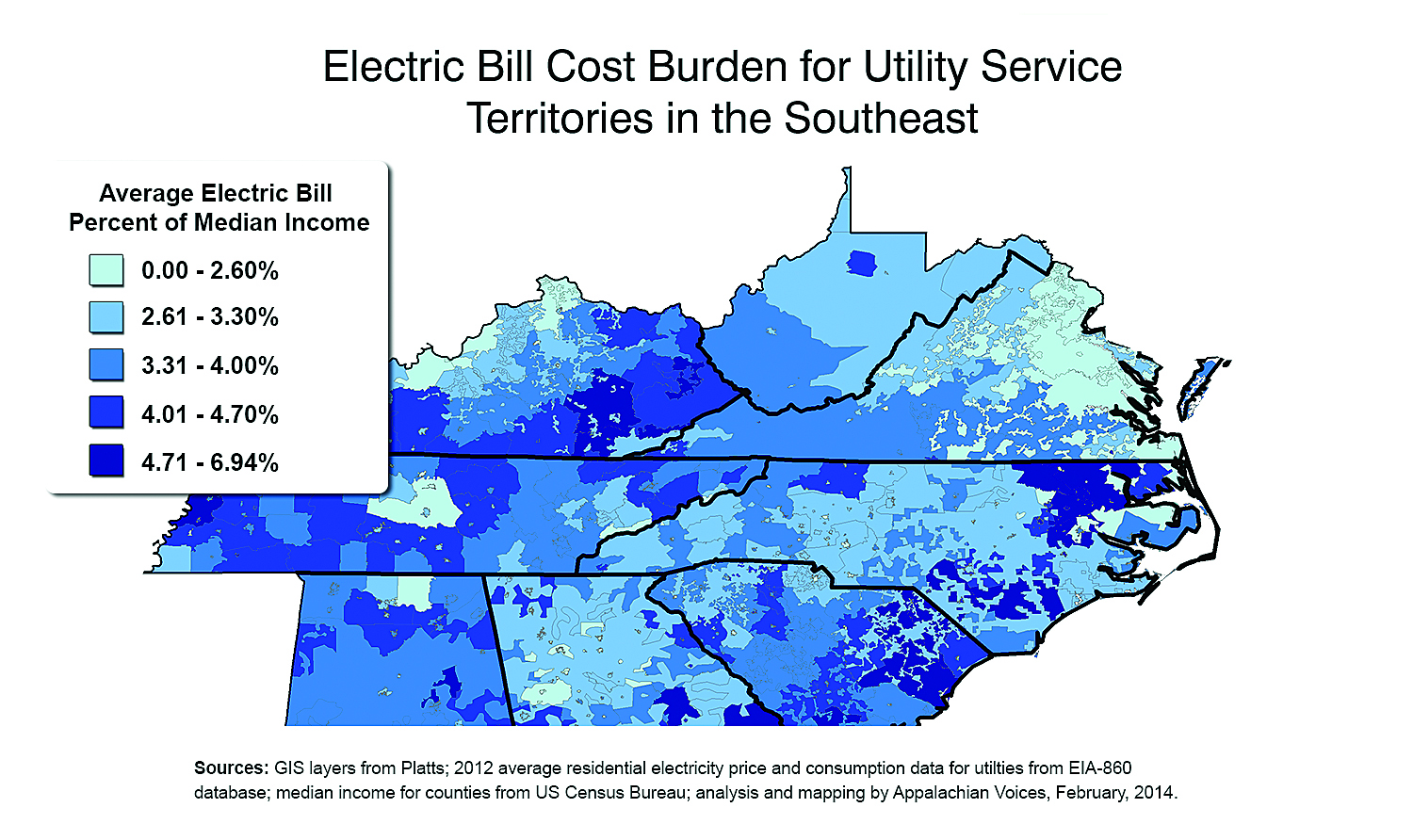
Even as residential energy efficiency improves, the impact of home energy costs on low-income families in the Southeast has become more severe since the turn of the century, according to a report by Appalachian Voices.
The report, titled “Poverty and the Burden of Electricity Costs in the Southeast,” found that in 2001 the average southern family spent an estimated $1,500 on energy. By 2009, average energy costs had increased to more than $2,000.
“As the U.S. marks the 50th anniversary of the War on Poverty, it’s clear we have a long way to go to truly move the region’s most disadvantaged communities forward, and electric utilities should play a key role in making that happen,” says McIlmoil.
The report claims that rising energy costs can be alleviated if utilities offer their residential customers “on-bill” financing loan programs to make their homes more energy efficient. These programs, which have been successful in states including South Carolina and Kentucky, allow the homeowner to repay a loan over time through installments on their electric bill, while saving money in the short term as they use less electricity.
The American Council for an Energy-Efficient Economy also emphasizes the role energy efficiency plays in reducing electricity demand and overall consumption. As recently as the 1990s, electricity sales in the U.S. were growing more than 2 percent annually, but according to the ACEEE, energy efficiency programs and policies have helped reverse that trend over the last decade.
Despite the proven benefits of energy efficiency, however, many power providers across the southeastern United States do not offer efficiency financing options, and upfront costs to make efficiency improvements remain a significant barrier to low-income families.
A small percentage of utilities in the Southeast, particularly large investor-owned utilities, offer comprehensive loan programs. But according to McIlmoil, only one out of eight residents in the region has access to financing for home energy efficiency.
Appalachian Voices, the organization that publishes The Appalachian Voice, initiated its Energy Savings for Appalachia program in 2013 to shepherd the development of on-bill loan programs through rural electric membership cooperatives while building a broad movement to expand and promote the benefits of energy efficiency.
Learn more at appvoices.org/saveenergy
Related Articles
Latest News
More Stories

Halloween Approaches, and Night School Is in Session
The House of Art in Bluefield, West Virginia, looks like a haunted tower, making it the perfect location for its sixth annual haunt event: Night School. The Night School will be open every Friday and Saturday night through Oct. 31.

‘The Most Perfect Act of Love’
After losing its rural pride celebration, hundreds of people attended the second annual Affirming Sumner Pride celebration on a 24-acre farm dubbed “Fruity Farm” in Bethpage, Sumner County, Tennessee.

Signs of Life
In the Nantahala National Forest, a team of biologists spotted Indiana bats, an endangered species that hasn’t been seen in North Carolina for the last 11 years.

‘First Line of Defense’
During Hurricane Helene and its aftermath, rural fire departments and other first responder hubs played critical roles in keeping their communities safe, even without power and cut off from outside support for days or weeks after the storm. Two years later, plenty of work remains to ensure these hubs have the resources they need to operate day to day and be ready when emergencies or natural disasters strike.

The Rocky Road — and Bridge — to Recovery
Hurricane Helene is estimated to have damaged nearly 7,000 private roads and bridges in Western North Carolina. Two years later, many restoration projects are complete, but the journey hasn’t been easy — and isn’t over for others.

After 20 Years, Letcher County Prison Proposal Is Still Alive, Though Obstacles Remain
A $605 million proposal for a federal prison on a former strip mine site in Letcher County, Kentucky, championed by U.S. Rep. Hal Rogers, refuses to die, despite local opposition, a lack of support from the executive branch and numerous other obstacles.

Leave a comment
Your email address will not be published. Required fields are marked *
Leave a Comment