

Dewayne Barton: Building Opportunity in West Asheville
By Kimber Ray

Photo by Rainer Doosf
Dewayne Barton isn’t only referring to nature when he talks about changing the way people relate to their environment. “Just like we polluted a stream or a river, we also polluted communities, and [restoring communities] has to be a part of the solution or it’s not right,” he says.
As an artist and the co-founder and co-director of the community development organization Green Opportunities, Barton is devoted to bridging the gap between culture and sustainability in Asheville, N.C. With his business partner and fellow environmental activist Dan Leroy, Barton provides residents from Asheville’s low-income neighborhoods with green-collar job training and placement. Program areas include green construction, clean energy, sustainable agriculture and culinary services, as well as academic and life skills support.
“I really feel the environment’s got a way of bringing different people together, almost like music,” Barton comments. “You bring people together to solve a common issue, but then also to restore relationships, and build trust, and reconnect people to each other and the planet.”
Barton was driven to work toward environmental justice by accounts of blighted natural resources — including pollution in some areas that was so grave people couldn’t even drink their tap water. He explains how that awareness woke him up to the need for a movement because “a lot of people, specifically people from the African American community, don’t pay a lot of attention to this stuff.” To spread his message, Barton began using found materials to create art with social justice themes.
However, Barton recognized that for the low-income residents of West Asheville, there was a shortage of organized efforts to improve the community — a shortage that would need to be addressed before change could occur. He joined efforts to engage residents around local projects and, with his wife Safi Mahaba, created the Burton Street Community Peace Garden, a space for cultivating food and art.
As he witnessed the surge of the environmental movement over the past decade, Barton set his sights on longer-term prospects for his community. After realizing there was currently no green job training program in the city, Barton teamed with Dan Leroy to form Green Opportunities. In the five years since the founding of GO, the program has trained more than 500 community members.
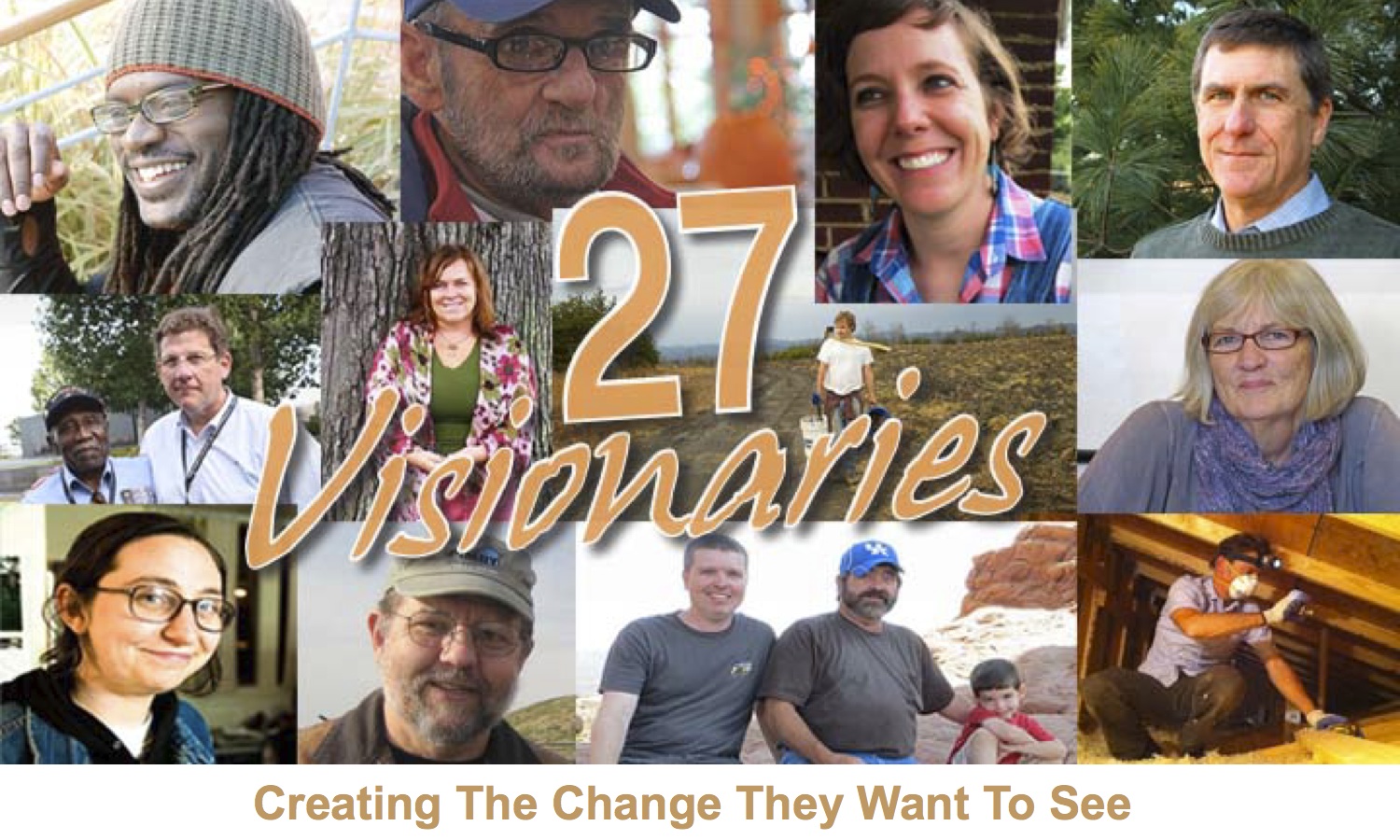
27 Visionaries
READ THEIR STORIES
Although there have been challenges with invigorating a community that’s endured longstanding disconnection and disadvantage, it’s this aspect of GO that also makes Barton the most proud. “My work’s important because it benefits everybody,” he says. “It’s designed to benefit the poor and the rich, and the animals and the trees, and the mountains and the sky.”
To learn more, visit greenopportunities.org
Related Articles
Latest News
More Stories

Neighbors Help Neighbors
A photo essay that celebrates the volunteer spirit of the grassroots group Hurricane Helene WNC and speaks to the resourcefulness, collaboration and hard work embodied by thousands and thousands of volunteers, first responders and aid workers across the region after Hurricane Helene.

Halloween Approaches, and Night School Is in Session
The House of Art in Bluefield, West Virginia, looks like a haunted tower, making it the perfect location for its sixth annual haunt event: Night School. The Night School will be open every Friday and Saturday night through Oct. 31.

‘The Most Perfect Act of Love’
Hundreds of people attended the second annual Affirming Sumner Pride celebration on a 24-acre farm dubbed “Fruity Farm” in Bethpage, Sumner County, Tennessee.

Signs of Life: Endangered Bats Found in Nantahala for First Time in More Than a Decade
In the Nantahala National Forest, a team of biologists spotted Indiana bats, an endangered species that hasn’t been seen in North Carolina for the last 11 years.

‘First Line of Defense’
During Hurricane Helene and its aftermath, rural fire departments and other first responder hubs played critical roles in keeping their communities safe, even without power and cut off from outside support for days or weeks after the storm. Two years later, plenty of work remains to ensure these hubs have the resources they need to operate day to day and be ready when emergencies or natural disasters strike.

The Rocky Road — and Bridge — to Recovery
Hurricane Helene is estimated to have damaged nearly 7,000 private roads and bridges in Western North Carolina. Two years later, many restoration projects are complete, but the journey hasn’t been easy — and isn’t over for others.

Leave a comment
Your email address will not be published. Required fields are marked *
Leave a Comment