

In Search of the Pileated Woodpecker
Both the sight and sound of a pileated woodpecker are unforgettable. The call of the bird has always struck me as jungle-like, sounding more like a chattering monkey than a chirping bird. Most folks who spend any amount of time outdoors will probably recognize the sound, even if they cannot identify the source. Its exotic voice is matched by its tropical-like size and plumage. The woodpecker has a vivid red crest, and is about the size of a small hen. These characteristics are more suggestive of colorful tropical birds than those we usually encounter here in the mid-latitudes, which makes the pileated woodpecker stand out from the flock.
Bird of War
The pileated woodpecker is often heard but rarely seen. For many years, I have been entertained by a raucous one near my home, but had never been able to actually catch sight of it. Such a situation is not unusual, because despite its loud mouth, the bird is actually shy and difficult to approach. In addition to its voice, the pileated woodpecker can be remarkably noisy as it drums on trees in search of insects and to signal its territory. The dead, hollow trees that it prefers to work on often echo and resonate its hammering, sounding quite literally like a drum. Its call and drumming are especially noticeable in winter when the forest is mostly quiet with little foliage to muffle sounds.
Being the largest woodpecker in North America, the pileated woodpecker is eye-catching with its contrasting black, white, and red feathers. Male birds have an additional swath of red feathers as a “mustache.” Its appearance impressed pre-Columbian southeastern Indians, as evidenced by their artifacts carved with images of the bird, including one particularly striking shell gorget with an engraved representation of four pileated woodpeckers. Archaeologists speculate that the bird played a significant role in their belief system, because its red crest was reminiscent of a scalped head and thus had some sort of symbolic connection with warfare. I suspect that the bird was also associated with war because its drumming may have sounded similar to the Indian custom of beating drums as they went into battle.
The term “pileated” comes from its Latin species name Dryocopus pileatus meaning “capped” or “crowned,” a reference to its red crest. The Greek-origin words drys, meaning “tree,” and kopis, meaning “dagger,” refer to the woodpecker’s primary activity- drilling holes in trees.
Despite its common name, the word “peck” does not adequately describe what the bird does to a tree; “excavate” is a better word. The holes can be quite impressive rectangular excavations, several inches wide and up to a foot long. Besides searching for insects, the pileated woodpecker digs into trees in order to construct roosting holes. Pileated woodpeckers excavate their own nesting cavities too, with the male bird incubating the eggs at night and the female taking over during the day.
Thrives on decay
Although the pileated woodpecker feeds on a variety of nuts and berries, insects are its primary food source, especially ants. It uses its long, sticky tongue to reach into ant colonies located in rotting logs and dead trees. This food preference is related to the bird’s habitat, i.e. mature forests with a significant amount of decaying timber.
Wooded areas near streams attract pileated woodpeckers because the humid environment hastens the deterioration of dead trees. The bird is territorial, commanding an area as large as 175 acres, depending on the characteristics of the forest. A high, closed tree canopy with an abundant number of decaying trunks is an ideal habitat.
Pileated woodpeckers are prevalent throughout eastern North America and forested areas of the West. Considering the degradation of mature forests, its relative abundance is somewhat surprising. John James Audubon noted in 1842 that “Even now, when several species of our birds are becoming rare…the pileated woodpecker is every where to be found in the wild woods, although scarce and shy in the peopled districts.” Yet today, when seemingly the entire continent is a “peopled district,” the pileated woodpecker has adapted, and escaped the extinction of similar birds such as the ivory-billed woodpecker and the Carolina parakeet.
The pileated woodpecker near my home finally revealed himself, but in an unexpected way. I had always looked for him above my head in the trees. Early one morning along the edge of the woods, I suddenly came upon him on the ground, uncharacteristically silent and digging into a log so rotten that it was almost sawdust. But I hardly had a glimpse before he exploded with a “cuk-cuk-cuk-cuk-cuk” and dived deeper into the forest. The elusiveness of the bird made the sight of it somewhat sacred; and for a moment I shared the awe of that Indian who carved the bird’s image over 500 years ago.
Related Articles
Latest News
More Stories

Signs of Life
In the Nantahala National Forest, a team of biologists spotted Indiana bats, an endangered species that hasn’t been seen in North Carolina for the last 11 years.

‘First Line of Defense’
During Hurricane Helene and its aftermath, rural fire departments and other first responder hubs played critical roles in keeping their communities safe, even without power and cut off from outside support for days or weeks after the storm. Two years later, plenty of work remains to ensure these hubs have the resources they need to operate day to day and be ready when emergencies or natural disasters strike.

The Rocky Road — and Bridge — to Recovery
Hurricane Helene is estimated to have damaged nearly 7,000 private roads and bridges in Western North Carolina. Two years later, many restoration projects are complete, but the journey hasn’t been easy — and isn’t over for others.
After 20 Years, Letcher County Prison Proposal Is Still Alive, Though Obstacles Remain
A $605 million proposal for a federal prison on a former strip mine site in Letcher County, Kentucky, championed by U.S. Rep. Hal Rogers, refuses to die, despite local opposition, a lack of support from the executive branch and numerous other obstacles.

The Washout and Rebuild
For nearly two years, residents of Unicoi County, Tennessee, have had to make do without a hospital after Hurricane Helene destroyed the rural hospital. Ballad Health, which owns the hospital, broke ground on a new location — in another floodplain — in August 2026.
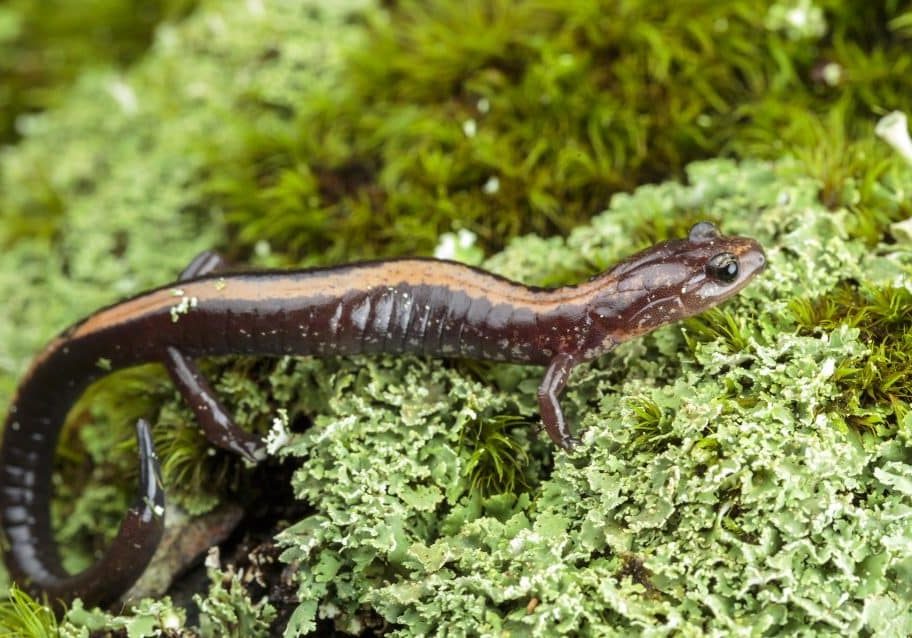
The Shenandoah Salamander
The Shenandoah salamander is a woodland salamander, which has adapted to life at higher elevations away from water. This sparkling rarity lives among the dry leaves, cracked logs, and stony hillocks on the highest peaks of Shenandoah National Park.

Leave a comment
Your email address will not be published. Required fields are marked *
One response to “In Search of the Pileated Woodpecker”
-

Question: What was the native name of the Pileated Woodpecker, in the Monacan or Manahoac (Siouan) languages of Virginia?

Leave a Comment