

Faith community’s stewardship is inspiring
A couple of years ago a question posed by the Christian community was, “What would Jesus drive?” Well, if he were making that decision in our 2008 world, there’s a good chance he’d drive a Toyota Prius or another variety of hybrid.
At least that’s what I deduced at the recent Conference on Faith, Spirituality, and Environmental Stewardship held at Catawba College in Salisbury, North Carolina. There were a total of 13 hybrids to be seen out of perhaps 80 cars, 11 Prii and two Honda Insights.
And who would Jesus’ favorite sports figure be? Clearly Yoggi Berra. To provide just a few quotes heard at the conference, “The future isn’t what it used to be,” or, “Feels like dejavu all over again.” And there’s always, “When you reach a fork in the road, take it.” Philosophical, and to the point.
When Catawba College Environmental Studies professor John Wear first conceived of the conference, he had no idea it would attract over 200 participants, let alone a baker’s dozen hybrids. As an environmentalist who showed up to see how my environmental organization of identification, Appalachian Voices, could cooperate with people who go to church every Sunday or the synagogue every Saturday, I was overwhelmed. These folks are serious about protecting creation. From global warming. From coal-fired power plants. From toxic soil washed into the lower Ninth Ward in New Orleans.
Are they really “tree huggers?” Like one religious leader said when asked in less than a complementary way, “Well yea, what are you, a ‘puppy kicker’?”
And the widespread and comprehensive knowledge of the technical details of complex environmental issues is clearly evident in the faith community, in no way different from the more secular leadership of Appalachian Voices, the Sierra Club, and other organizations.
Politically, I am convinced that the creation care community has a built in advantage over other environmental types. They span the spectrum politically, whereas most of my colleagues are Democrats.
This may seem trivial, but it has proven otherwise. The Interfaith Power and Light organization (no it’s not a utility) is a major force in energy conservation and in their opposition to coal-fired power plants. These are the major battles for IPL as their overarching issue is Climate Change. They have played a major role in pushing for the current global warming legislation in the US Senate.
Appalachian Voices has recently added two leaders of the creation care community to its board. I met an African gentleman at the conference who I am planning to take on a tour, along with his seminary students, of the West Virginia coalfields to see the ravages of mountaintop removal. Will Samuel be the next member of the faith community to join the AppVoices board? Stay tuned…
For more information see:
www.centerfortheenvironment.org/
www.theregenerationproject.org/
Related Articles
Latest News
More Stories

Signs of Life
In the Nantahala National Forest, a team of biologists spotted Indiana bats, an endangered species that hasn’t been seen in North Carolina for the last 11 years.

‘First Line of Defense’
During Hurricane Helene and its aftermath, rural fire departments and other first responder hubs played critical roles in keeping their communities safe, even without power and cut off from outside support for days or weeks after the storm. Two years later, plenty of work remains to ensure these hubs have the resources they need to operate day to day and be ready when emergencies or natural disasters strike.

The Rocky Road — and Bridge — to Recovery
Hurricane Helene is estimated to have damaged nearly 7,000 private roads and bridges in Western North Carolina. Two years later, many restoration projects are complete, but the journey hasn’t been easy — and isn’t over for others.
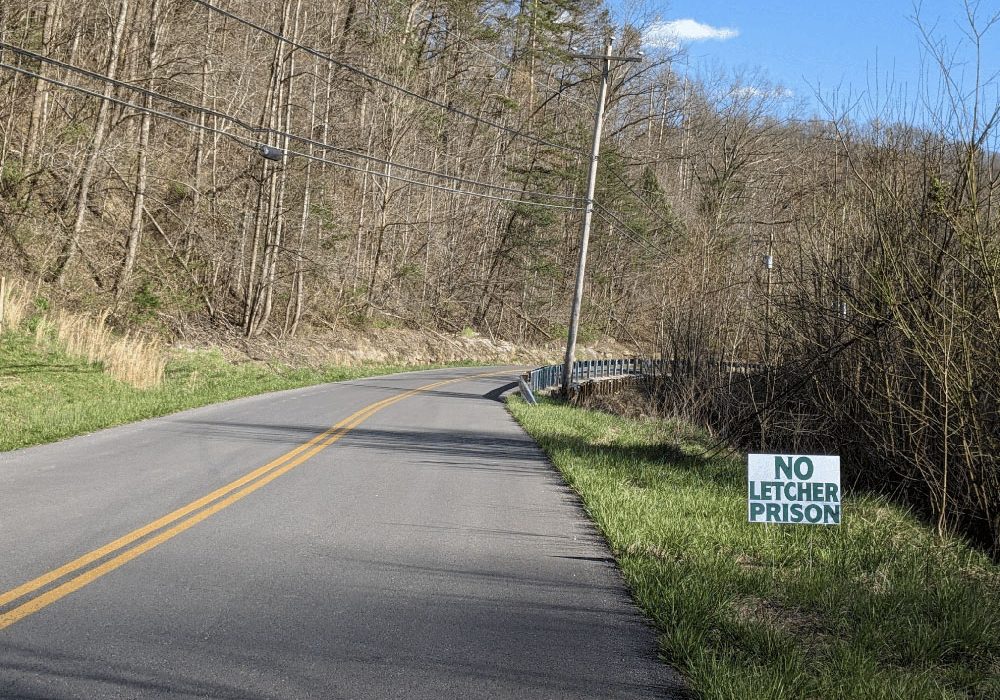
After 20 Years, Letcher County Prison Proposal Is Still Alive, Though Obstacles Remain
A $605 million proposal for a federal prison on a former strip mine site in Letcher County, Kentucky, championed by U.S. Rep. Hal Rogers, refuses to die, despite local opposition, a lack of support from the executive branch and numerous other obstacles.
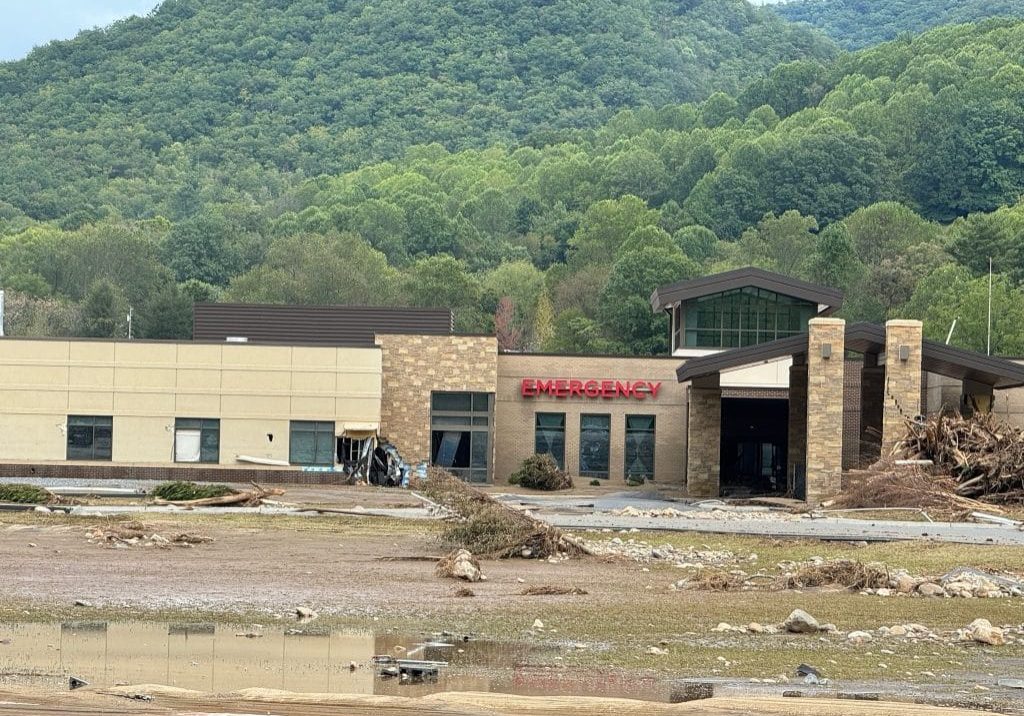
The Washout and Rebuild
For nearly two years, residents of Unicoi County, Tennessee, have had to make do without a hospital after Hurricane Helene destroyed the rural hospital. Ballad Health, which owns the hospital, broke ground on a new location — in another floodplain — in August 2026.

The Shenandoah Salamander
The Shenandoah salamander is a woodland salamander, which has adapted to life at higher elevations away from water. This sparkling rarity lives among the dry leaves, cracked logs, and stony hillocks on the highest peaks of Shenandoah National Park.

Leave a comment
Your email address will not be published. Required fields are marked *
Leave a Comment