

International Groups Hear Coal Delegation
Aiming to build alliances throughout the world and call attention to their experiences with mountaintop removal as a form of coal mining, The Coalfield Delegation – a group of seven organizations representing the voices of the dispossessed in Appalachia – told their stories to the United Nations Commission on Sustainable Development meeting in May.
The group contends that strip mining and mountaintop removal destroys natural resources and habitat, and is a highly polluting non-renewable source of energy.
“They got what they came for,” said Jeffrey Barber, the delegation’s political strategist and executive director of the Integrated Strategies Forum in Rockville, MD. Union leaders and members of the youth delegation were friendly toward the Delegation, as were indigenous nongovernmental organizations from all over the world, he said. Several well-established international organizations also took notice, one already making moves toward working with the Delegation.
“They have an important message about the problems that coal mining gives, problems that are too often not factored into the evaluation of coal use, and that are often overlooked because the affected people and nature often have no voice in the global debate,” said Gunnar Boye Olesen, co-secretariat for the International Network for Sustainable Energy, based in Denmark.
“It definitely raised awareness, especially among non-governmental organizations. With government, I think they were noticing. Certainly the U.S. government did. They were nervous, because a film crew had been hired to follow around the Delegation. I think they were nervous they were being set up for a trap and would be embarrassed,” Barber said.
This year’s meeting with the Commission was the first of a two-part endeavor. It focused on reviewing progress on issues concerning energy for sustainable development, industrial development, air pollution and atmospheric problems, and global climate change. Next year’s meeting will concentrate on establishing policies in each area.
On behalf of the U.S. Delegation to the meeting, William Armbruster, a spokesperson for the U.S. Department of State’s Oceans, Environment and Science Bureau, said, “Our goal is to promote energies that are as clean as possible – those that damage the environment the least. According to some group or another, nothing is completely clean. There’s a relatively free market of ideas. Some have louder voices than others, but everybody has a chance to express their point of view.
“All presentations will be given due consideration. We’re looking at all forms of energy: renewable, conservation, nuclear, and coal is among those.”
Quoting Sir Winston Churchill, Armbruster said, “You can always count on Americans to do the right thing – after they’ve tried everything else.”
The Coalfield Delegation could work with INFORSE and other nongovernmental organizations (NGOs) on their position on global renewable energy proposals and priorities, such as the limitations for coal mining and the environmental requirements for coal mining to let their story be more widely known, Olesen said.
INFORSE is established on three continents: Europe, Africa, and Asia. Members in Poland, Spain and to some extent Germany work on somewhat similar issues as The Coalfield Delegation, Olesen said.
The Northern Alliance for Sustainability based in Amsterdam, and Citizens United for Renewable Energy, which is located in Germany but also has a branch in Argentina, articulated similar concerns to the Delegation’s, Owens said. “The trick right now is to figure out ways to work with them,” he said.
“We don’t want them to write our policy paper, we want openness, transparency, and participation as well as to formulate our NGO Major Group Discussion Paper to present next year. We need to meet locally and come up with some language,” he said.
Related Articles
Latest News
More Stories

Halloween Approaches, and Night School Is in Session
The House of Art in Bluefield, West Virginia, looks like a haunted tower, making it the perfect location for its sixth annual haunt event: Night School. The Night School will be open every Friday and Saturday night through Oct. 31.

‘The Most Perfect Act of Love’
After losing its rural pride celebration, hundreds of people attended the second annual Affirming Sumner Pride celebration on a 24-acre farm dubbed “Fruity Farm” in Bethpage, Sumner County, Tennessee.

Signs of Life
In the Nantahala National Forest, a team of biologists spotted Indiana bats, an endangered species that hasn’t been seen in North Carolina for the last 11 years.

‘First Line of Defense’
During Hurricane Helene and its aftermath, rural fire departments and other first responder hubs played critical roles in keeping their communities safe, even without power and cut off from outside support for days or weeks after the storm. Two years later, plenty of work remains to ensure these hubs have the resources they need to operate day to day and be ready when emergencies or natural disasters strike.

The Rocky Road — and Bridge — to Recovery
Hurricane Helene is estimated to have damaged nearly 7,000 private roads and bridges in Western North Carolina. Two years later, many restoration projects are complete, but the journey hasn’t been easy — and isn’t over for others.
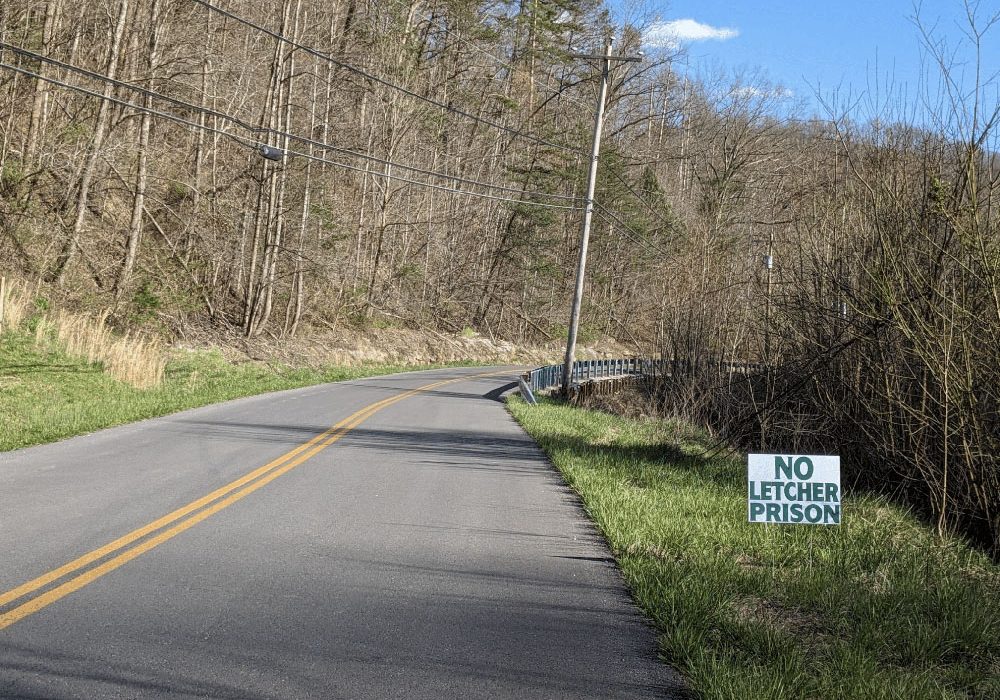
After 20 Years, Letcher County Prison Proposal Is Still Alive, Though Obstacles Remain
A $605 million proposal for a federal prison on a former strip mine site in Letcher County, Kentucky, championed by U.S. Rep. Hal Rogers, refuses to die, despite local opposition, a lack of support from the executive branch and numerous other obstacles.

Leave a comment
Your email address will not be published. Required fields are marked *
Leave a Comment