

How We Talk Can Be As Important As the Problems We Talk About
By Kathy Mattea
Kathy Mattea is a Grammy-Award winning country singer and songwriter whose most recent album, “Coal” was inspired by the Sago Mine Disaster of 2006. See www.mattea.com.
I have come to believe that the future of Appalachia’s environment is directly related to the level of discourse we are able to have about the unique challenges faced there. Having become somewhat more educated in the past year about the various agendas, I have come to the conclusion that in order to get to a real solution, something tangible and workable, we must first take our focus away from the “problem” and begin to look at HOW we discuss the situation, even through the sense of urgency we may have.
Over and over I ask myself, “Do you want to be ‘right’, or do you want to add something of real value to this dialogue?”
My “inner diva” wants to be a podium-pounder.
My ego wants to be a hero.
I have an urge to jump in there and DO something. My greater challenge is to sit still and let my action rise up from a place of deep stillness.
Make no mistake about it: I have strong opinions about my beloved mountains, and the people who live there. I have moments when I want to throw a chair through the window of my office. But deep down, I can find no part of me that believes that adding one more strident voice to the din is ultimately going to be of service here.
What do we say when the laws themselves are unjust? How do we stand and give voice to the powerless without adding violence to violence? It is a razor’s edge, the difference between force and violence. But I believe that when I stand up and say “I can’t let you do this to me any more,” it is a gift not just to myself, but one that ripples in every direction.
Related Articles
Latest News
More Stories

Neighbors Help Neighbors
A photo essay that celebrates the volunteer spirit of the grassroots group Hurricane Helene WNC and speaks to the resourcefulness, collaboration and hard work embodied by thousands and thousands of volunteers, first responders and aid workers across the region after Hurricane Helene.

Halloween Approaches, and Night School Is in Session
The House of Art in Bluefield, West Virginia, looks like a haunted tower, making it the perfect location for its sixth annual haunt event: Night School. The Night School will be open every Friday and Saturday night through Oct. 31.

‘The Most Perfect Act of Love’
Hundreds of people attended the second annual Affirming Sumner Pride celebration on a 24-acre farm dubbed “Fruity Farm” in Bethpage, Sumner County, Tennessee.

Signs of Life: Endangered Bats Found in Nantahala for First Time in More Than a Decade
In the Nantahala National Forest, a team of biologists spotted Indiana bats, an endangered species that hasn’t been seen in North Carolina for the last 11 years.

‘First Line of Defense’
During Hurricane Helene and its aftermath, rural fire departments and other first responder hubs played critical roles in keeping their communities safe, even without power and cut off from outside support for days or weeks after the storm. Two years later, plenty of work remains to ensure these hubs have the resources they need to operate day to day and be ready when emergencies or natural disasters strike.
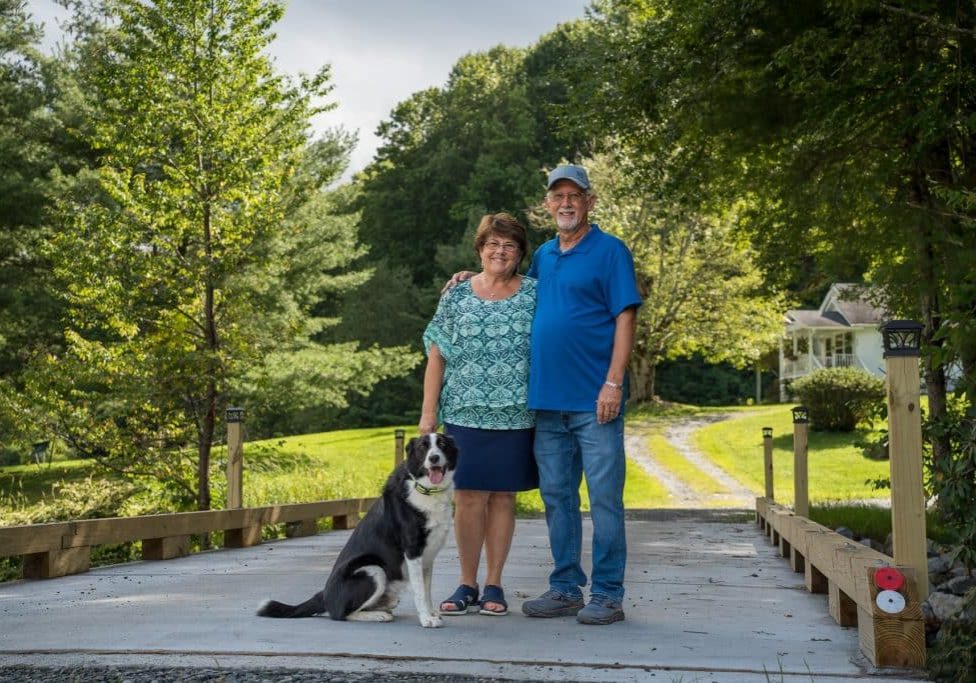
The Rocky Road — and Bridge — to Recovery
Hurricane Helene is estimated to have damaged nearly 7,000 private roads and bridges in Western North Carolina. Two years later, many restoration projects are complete, but the journey hasn’t been easy — and isn’t over for others.

Leave a comment
Your email address will not be published. Required fields are marked *
Leave a Comment