

English Language Learning in Appalachia
New and persistent challenges for students and programs
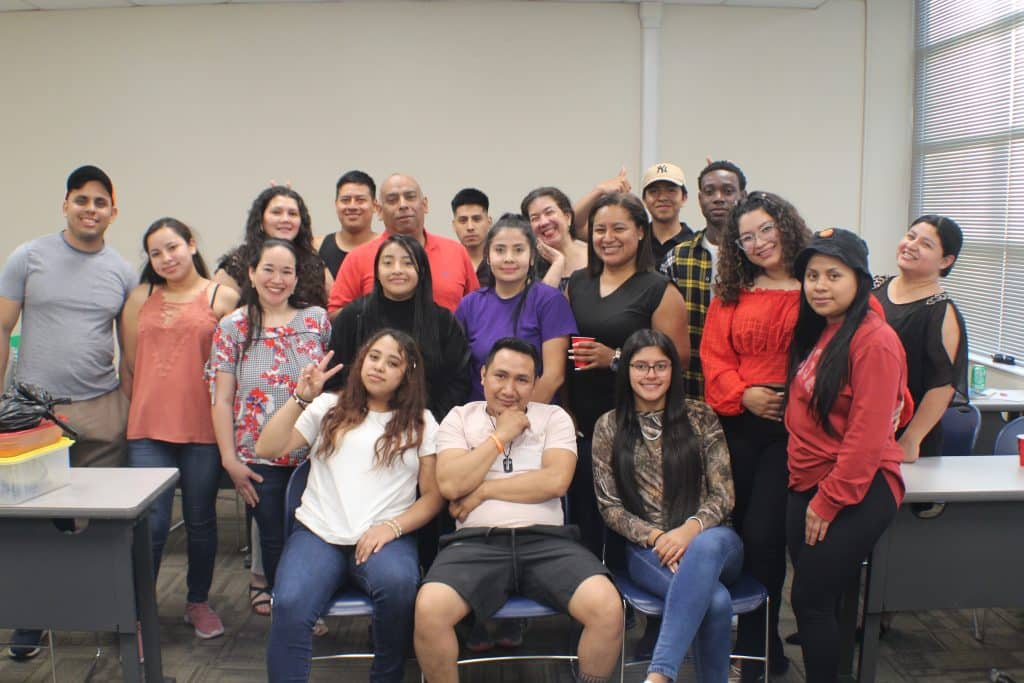
For over a year, Nestor Pineda, a 35-year-old man from Honduras, has been taking English-language classes at Centro Hispano de East TN, a nonprofit organization serving the Latino community in Knoxville, Tennessee.
Speaking English fluently could open up more economic and social opportunities for him, and he views his time in the country as his chance to learn as much as possible, work hard and eventually return home.
And Pineda’s time is precious. Each minute he spends here is another one away from his 5-year-old son in Honduras. He believes he has to make sacrifices now to “build a better future” for his family.
“I’m a person that is simply here to just work, and I’m not dangerous,” Pineda says in Spanish through a translator. “I’m simply here to take advantage of the opportunities in this country and be able to safely return back home.”
Pineda is one of millions of English language learners across the United States. Learning a language is always difficult. But current aggressive approaches to immigration policy are creating more barriers for learners and the programs that serve them than ever before.
English language learning in Appalachia
There is little doubt that English is the de facto language of the U.S. Its usage generally permeates most of everyday life — from public schools to television shows to trips to the grocery store. Yet, until the president’s March 2025 executive order, it was never designated the country’s official language.
For those who wish to learn or improve English proficiency, learning avenues vary greatly depending on age, immigration status and other factors.
Public schools are federally mandated to provide translation services and language-learning support to K-12 students, including English as a second language programs, where progress is measured by standardized tests or assessments.
Learning or improving English proficiency as an adult isn’t as straightforward.
Adults may enroll in programs at community colleges or universities, take classes at community-based organizations or faith institutions, participate in workplace or vocational English programs, or self-study with online resources or services.
‘You should already know it’
Numerous misconceptions about adult learners of English persist, including the belief that they don’t want to learn or that they don’t need classes in the first place.
“It’s just like, ‘Oh, you moved here. You should already know it,’” says Lauren Fidler, college and career readiness coordinator at Southwestern Community College in Sylva, North Carolina.
For adults in the U.S., learning English becomes more difficult when navigating a complex immigration system, working full-time, juggling family responsibilities, accessing reliable transportation, struggling economically and simply lacking awareness of available services or programs.
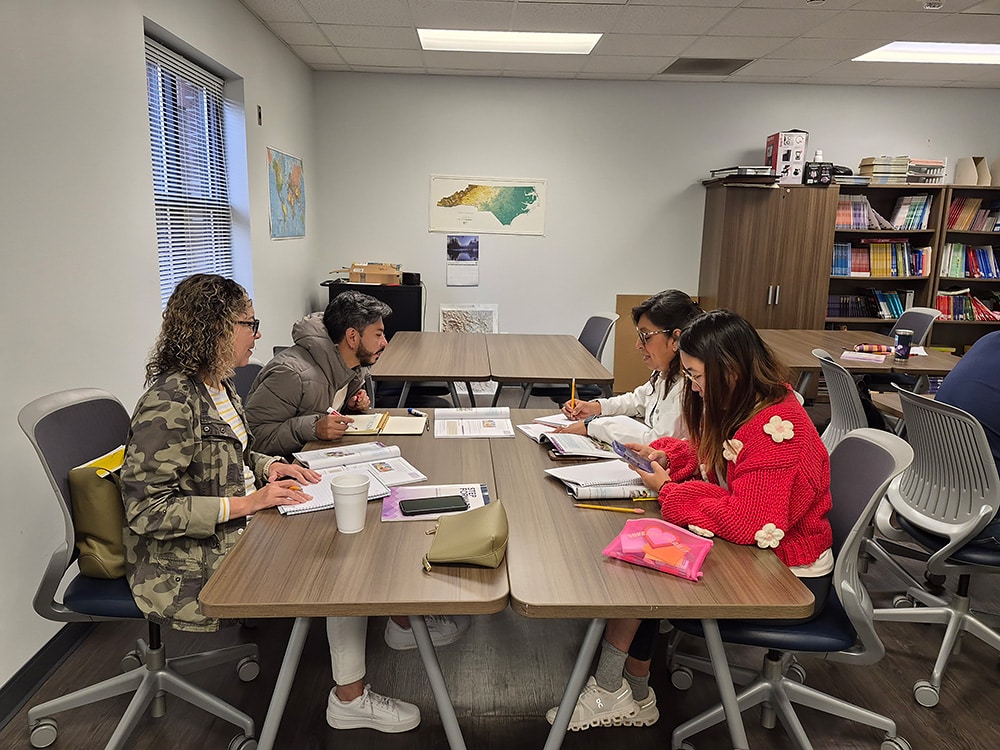
“Learning English as an adult takes courage and persistence, and even small progress is something to be proud of,” says Ana Paola, a 28-year-old learner from Mexico who takes classes at Blue Ridge Community College in Western North Carolina. “It takes time, patience and effort. There are moments of frustration, especially when you don’t understand everything or can’t express yourself the way you want. However, with discipline and consistency, it is possible to achieve your goals.”
Patricia Kozera, who is from Peru, studied English in school and earned an associate’s degree in accounting in the U.S., but she says, “the fast-paced nature of my life prevented me from truly mastering the language.”
Kozera also takes English classes at Blue Ridge Community College, calling this the best decision she could have made.
“It is a wonderful opportunity to interact with others who face similar challenges,” Kozera says. “Through constant practice and learning, I am realizing that communication is an essential tool for improving not only my own life but the lives of my loved ones as well.”
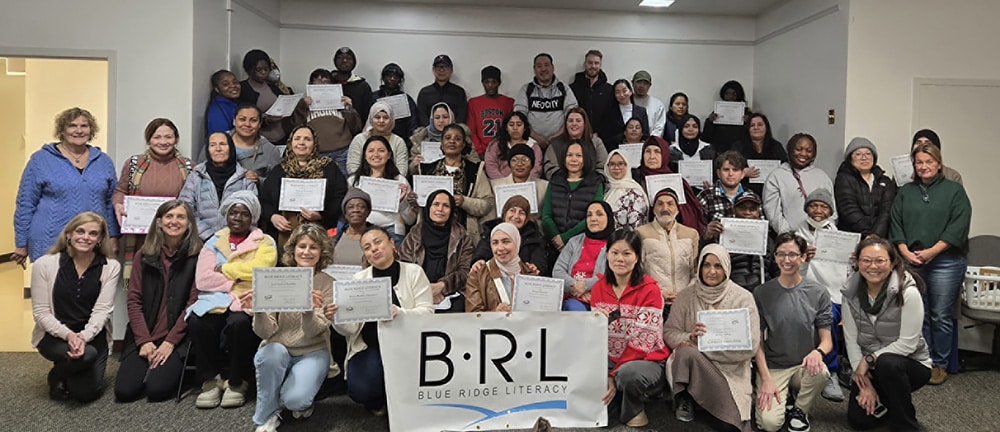
Similarly, Diana Medina, a 38-year-old woman from Honduras living in Roanoke, Virginia, used to rely on her husband for translation help. Now, she takes English classes at Blue Ridge Literacy, a community-based literacy organization, and spends about two hours each day studying. Her ultimate goal is to learn enough to retrain as a nurse, a role she held in her home country.
“Our learners are part of the fabric of the community and should be understood and included as such,” says Ahoo Salem, executive director of Blue Ridge Literacy in Roanoke, Virginia.
Tearful classrooms
“There was a lot of fear throughout this year,” says Fidler about the impact of immigration policy on the classroom.
During fall 2025, three of Fatima Gindeel’s students began skipping classes and eventually told her they wouldn’t be able to attend anymore due to fears of deportation.
“I told them that their safety was more important to me than anything else, even though, at the end of the day, I really wanted them to be in classes and provide them with the support they needed,” says Gindeel, who teaches at the Adult Learning Center at Monongalia County Technical Education Center in Morgantown, West Virginia.
Similarly, Rubí Flores Reyes, adult education coordinator at Centro Hispano, says, “It makes it hard for me to push for everyone to come to class when there’s a risk — there’s a big risk coming here.”
For Reyes, it’s hard not to worry about her students when they miss a class or she doesn’t see them for a while.
“I’ve had my clients disappear — people that I used to see all the time,” she says.
Melanie, an elementary school ESL teacher, works in East Tennessee, where many students’ families are being impacted by mass deportations. She requested anonymity to protect her students’ identities.
“I can’t think of a time I’ve ever had to leave a classroom crying, and that’s happened to me four times this school year,” she says.
Moments stick with her: During a lesson, a kindergartener clutched a photo of her dad, who was recently deported, and cried silently. A former student told her, “I love this song. My dad played it a lot for me until, you know, I don’t really understand what happened, but he’s gone.”
She explains that while kids are resilient, it’s hard to predict long-term learning impacts, but overall, she’s had far more kids crying in her classroom than usual.
“And crying kids usually don’t result in good language learning,” she adds.
Right now, she’s weaving in little moments of joy into the classroom: One-minute dance parties. Outdoor classroom time. Spanish lunch on Fridays.
Precarious future ahead
“All of these [immigration and refugee policy] shifts happening are making short- and long-term planning nearly impossible for many of our learners,” says Ahoo Salem of Blue Ridge Literacy.
In recent years, refugees from Afghanistan have made up the largest population of the over 500 learners each year at the nonprofit. This population, among other refugees, has faced significant challenges and uncertainty after the Trump administration halted the U.S. refugee resettlement program in early 2025 and later set a historically low cap on admissions, in addition to other obstacles for people seeking lawful permanent residence.
Students from Haiti, primarily on Temporary Protected Status, were the nonprofit’s second-largest population, which is no longer the case due to ongoing attempts to eliminate TPS for Haitian immigrants.
Recalling a recent conversation with a TPS student, Salem says, “I was speaking with her, checking in on how she was doing, and she said, ‘Well, today, I am documented. Yesterday, it seemed maybe I wasn’t. Tomorrow, we’ll see how it’s going to work.’”
Related Articles
Latest News


Leave a comment
Your email address will not be published. Required fields are marked *
Leave a Comment