

Coalition Stopped Mining on the Edge of the Monongahela National Forest — for Now
Jeff Eisenbeiss has lived on a 168-acre farm in northern Greenbrier County, West Virginia, since 1996. He bought it from the third-generation owner whose grandfather had purchased the property in 1872. The property, which borders the Monongahela National Forest, features several native trout streams, and Eisenbeiss is very attentive to water quality issues on his farm.
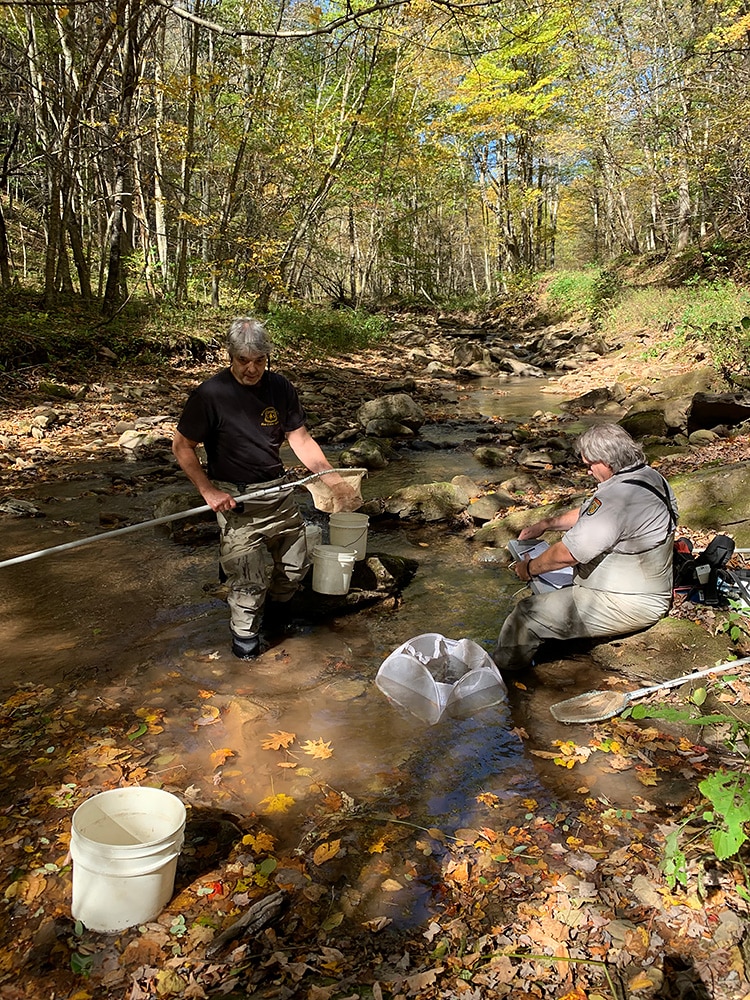
Biologists assessed one of the streams in October 2021. The biologists measured the acidity and conductivity of the stream, and took DNA samples from the native trout.
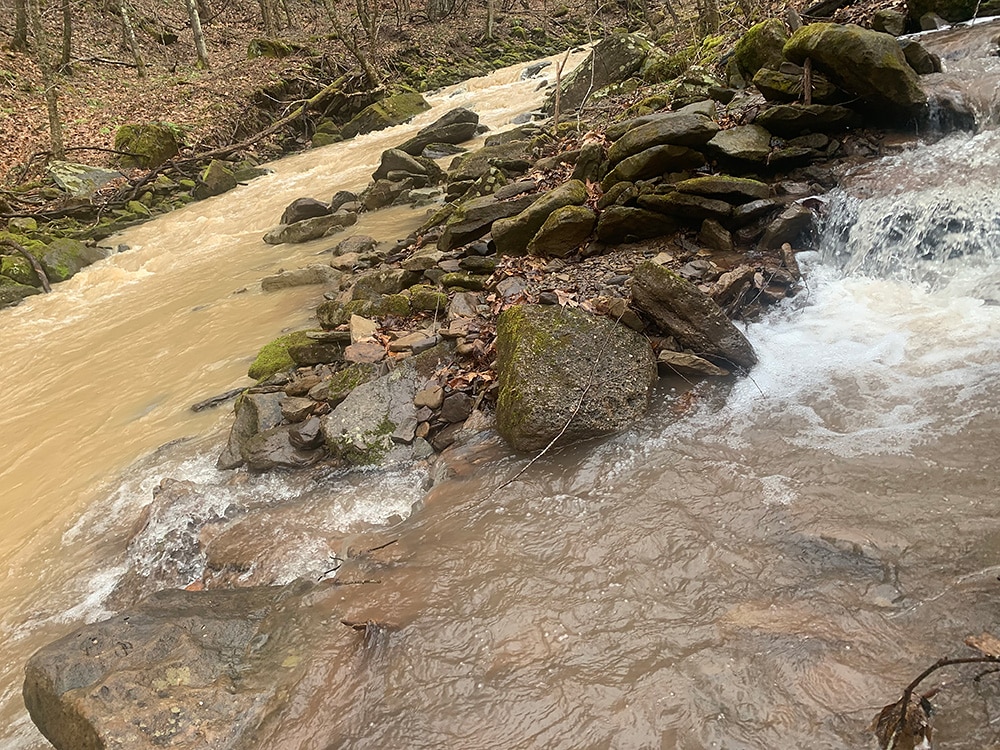
“It was a model trout stream; the pH was perfect,” Eisenbeiss says. But that changed later that year. “I came back from volunteering at Snowshoe [Resort] one day, and the trout stream was so muddy. I’d never seen it look so bad.”
The next day, the explosions started.
That’s how Eisenbeiss learned a new coal mine was operating above his property. He also discovered that South Fork Coal Company, which operated the Rocky Run Surface Mine and several others next to the Monongahela National Forest, was using a haul road through the national forest to transport coal to a railroad facility about 20 miles away in Rupert, West Virginia.
“The haul road is literally on the saddle of two different watersheds,” Eisenbeiss says. “It’s either draining into the South Fork of the Cherry or into the Greenbrier.”
The huge coal-hauling trucks that ran daily along this road dislodged dirt and rocks that end up in nearby streams, causing sedimentation and harming habitat for endangered species like the candy darter and freshwater mussels. They also leaked oil and other pollutants, and coal dust blown from the trucks adds to the pollution.
The candy darter was declared endangered in 2018, and the South Fork of Cherry River is among the remaining critical habitat that federal agencies have designated to protect the colorful fish.
A coalition is born
As Eisenbeiss witnessed how the mining activity was impacting his streams and nearby rivers, he looped in Rick Webb from the Allegheny-Blue Ridge Alliance, an environmental group initially established to fight the Atlantic Coast Pipeline. Webb brought in Andrew Young, a law student who later joined ABRA after completing his degree.
Young and Webb researched the issue, sending Freedom of Information Act requests to federal and state agencies and digging into the 1977 Surface Mining Control and Reclamation Act, or SMCRA, which sets strict limits on mining activity, including hauling coal, in Eastern national forests.
“We figured out that what they were doing wasn’t legal,” Young says. “We realized that we couldn’t do this ourselves. Once we realized we had something, it became about getting the right crew together.”
They reached out to Willie Dodson, coal impacts program manager at Appalachian Voices, the nonprofit that produces this publication. Eisenbeiss is a member of the West Virginia Highlands Conservancy, which also got involved. Other organizations soon got on board, including the Center for Biological Diversity, Appalachian Mountain Advocates, the Greenbrier River Watershed Association and others.
The Don’t Mine the Mon coalition was born.
“It wasn’t hard to get a coalition together,” Dodson says. “This was happening in the middle of an exceptional area of West Virginia along the edge of the Monongahela, with highland ridges and swift mountain streams. The peaks top out above 4,000 feet, hosting some of the southernmost stands of red spruce forest. Cranberry Wilderness is nearby.
“The people of Richwood, West Virginia, just downstream, get their drinking water from the North Fork of the Cherry River. The town is actively working to develop its tourism economy, taking advantage of what this tremendous area has to offer. It is a destination for anglers, boaters, birders and hikers. Protecting this place from mining — especially illegal incursions into the Mon — was a no-brainer.”
The coalition’s goal was to shut down the haul road, known as Haulroad #2, and to stop the mines from polluting the Laurel Creek and South Fork of the Cherry River watersheds. The conservation groups filed lawsuits against the U.S. Forest Service, the U.S. Fish and Wildlife Service and South Fork Coal Company, and intervened in administrative proceedings where possible. The campaign got a national boost in April 2025, when American Rivers included the Cherry/Gauley river watershed on its annual list of Most Endangered Rivers due to the impacts of South Fork’s mining.
“We put together a comprehensive list of South Fork’s violations and made sure that made it into the record,” Young says. “All of us were trying to submit evidence of how egregious everything was to the court. We wanted the court to see that they were wildly out of compliance. It was an outlaw operation.”
A beneficial mistake
When South Fork initially applied to the West Virginia Department of Environmental Protection for a permit for the haul road in 2013, the application materials included a notarized map of the road that specifically stated no part of the haul road would cross national forest land.
“We can’t say whether this was a lie or a mistake, but if it was a mistake, it was a very beneficial one for the company,” Dodson says.
In Young’s study of the surface mining law, he found that it limited coal mining activity within national forests like the Monongahela unless a company had “valid existing rights” — a legal term indicating that a mining operation predated the national forest designation of the affected land.
“The way they went about it, they got to mine for five years they otherwise wouldn’t have been able to,” Young says, referring to the company’s sworn statement that they would not cross the national forest.
South Fork applied to the Forest Service for a special road-use authorization for the haul road in 2020. Despite the company’s lack of valid existing rights and ongoing damage to the forest caused by heavy equipment, the Forest Service approved the permit.
While continuing to pursue lawsuits and administrative actions, the coalition also sent a letter to Sharon Buccino, the head of the Office of Surface Mining Reclamation and Enforcement at the time, asking her to shut down the haul road. In the waning days of the Biden administration, Buccino did just that, issuing a cessation order barring South Fork from using the road unless it could prove it had valid existing rights.
But that decision was reversed under the new administration after South Fork Coal appealed. The Department of the Interior’s Office of Hearings and Appeals granted the company’s request without notifying the public or interested parties like the coalition members.
Months later, OSMRE issued a determination that South Fork Coal did have “valid existing rights” that predated the passage of SMCRA to operate a coal haul road within the national forest — even though the company was founded in 2011, 34 years after that law passed.
‘Obviously, South Fork was done’
It turned out, however, that South Fork was in dire financial trouble. The company declared Chapter 11 bankruptcy in February 2025. Chapter 11 bankruptcies allow companies to restructure and eliminate some debt in hopes of continuing to operate.
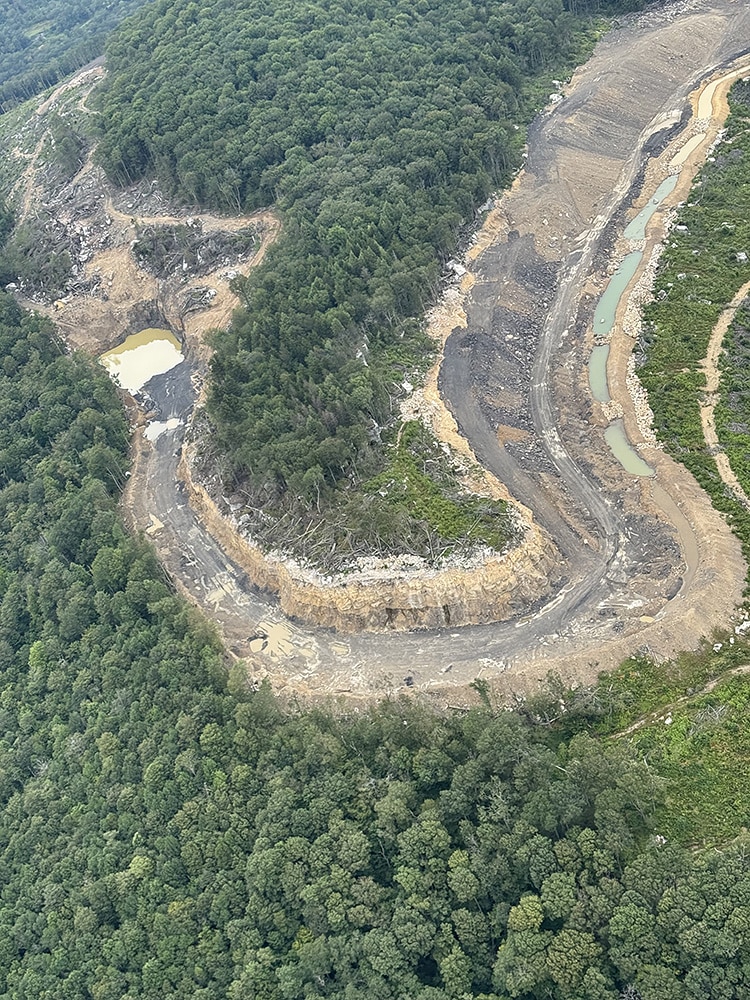
But in August, a month after OSMRE made its valid existing rights determination, the company said it would liquidate rather than restructure.
According to Young, the decision to liquidate was made when South Fork’s sale to another company fell through after the bankruptcy court found that neither the “valid existing rights” determination nor the authorization to use the Forest Service road was transferable.
In August and September 2025, the defunct company, which had laid off all its workers, was hit with multiple citations and cessation orders from the West Virginia Department of Environmental Protection for mine cleanup and pollution violations.
Around the same time, South Fork lost the Forest Service authorization to use Haulroad #2 after missing an annual permit filing deadline.
The coalition celebrated and asked to dismiss their remaining legal cases.
“Obviously, South Fork was done,” Young says.
Mining had stopped. Huge trucks were no longer rumbling through the national forest, wrecking the road and dropping sediment into the area’s pristine trout streams. Eisenbeiss started to see his land recover.
“Since the haul road has shut down, the creek is starting to heal,” he says. “We’re keeping our fingers crossed that they can’t open this thing back up. We’ll see what happens.”
Ongoing threats
Even though South Fork Coal is functionally shut down, the threat to nearby watersheds and the Monongahela National Forest remains, and the fate of the land torn apart by the mining is uncertain. Enforcement orders issued by DEP have continued to mount in 2026.
West Virginia Highlands Conservancy Director Olivia Miller has been seeking to meet with DEP to discuss the agency’s expectations and plans for South Fork Coal Company’s now-abandoned mines. After no response for months, a DEP representative notified Miller in April that a new company had submitted applications for the transfer of South Fork’s permits.
DEP did not respond to multiple requests for comment from The Appalachian Voice for this article. Neither did the Forest Service or the Office of Surface Mining Reclamation and Enforcement.
Young worries that this new company could try to steamroll through the mining process on the Rocky Run permit before the coalition could stop it with court challenges.
But even if no new mining takes place, other concerns remain. Idled mines that haven’t been properly restored can cause many problems — sedimentation from run-off, rock slides, increased acid mine drainage if treatment systems aren’t maintained, and more.
“The other fear is that it’s just going to sit up there for 30 years before anything happens,” Young says. “Things will get exponentially worse.”
“Long-term, we’d love to see that land restored in some way and maybe acquired by the national forest,” says Miller. “This is some of the highest-elevation spruce forest left in the state. The Rocky Run Surface Mine just goes round and round it, leaving a little stand of red spruce up there just trying to hold on.”
Ideally, restoration wouldn’t just be good for the land, the watershed and the nearby communities.
“When a coal company gets a mining permit, they are agreeing to restore the land afterwards,” says Appalachian Voices’ Dodson. “But when an operator like South Fork runs roughshod to get the coal out, then lays off their workers before reclamation is done, they are not only hurting the environment, but they are betraying a commitment they made to their employees. The ideal outcome here would be for those laid-off workers to be re-employed reclaiming this land to the highest possible standards.”
There are other threats to the Monongahela and other national forests. During a recent presentation, Dodson discussed three executive orders signed by President Donald Trump during his first few months in office that encourage coal mining and other energy production on public lands.
This year, Trump signed more orders to keep coal plants operating, even when the energy they produce is more expensive than other options, and to encourage the Department of Defense to sign contracts to get power from coal-fired plants. Federal law still greatly restricts mining operations within the boundaries of a national forest, but the South Fork Coal case shows the loopholes the coal industry could exploit to avoid some of these restrictions.
“It’s alarming that this is the direction we’re going,” Dodson says. “But any attempts to mine or haul coal in the Monongahela National Forest are going to get a whole lot of fight out of us.”
Editor’s note (July 23, 2026): In late May, the West Virginia Department of Environmental Protection gave two recently incorporated companies — Clearco Processing Corporation and Aurevo Resources Inc. — “advanced approval” to take over South Fork Coal Company’s permits for the operations near the Monongahela National Forest. The Don’t Mine the Mon coalition filed a complaint and public comment objecting to that decision, and also warned both companies of potential lawsuits over illegal mining practices.
Related Articles
Latest News
More Stories

Halloween Approaches, and Night School Is in Session
The House of Art in Bluefield, West Virginia, looks like a haunted tower, making it the perfect location for its sixth annual haunt event: Night School. The Night School will be open every Friday and Saturday night through Oct. 31.
‘The Most Perfect Act of Love’
After losing its rural pride celebration, hundreds of people attended the second annual Affirming Sumner Pride celebration on a 24-acre farm dubbed “Fruity Farm” in Bethpage, Sumner County, Tennessee.

Signs of Life
In the Nantahala National Forest, a team of biologists spotted Indiana bats, an endangered species that hasn’t been seen in North Carolina for the last 11 years.
‘First Line of Defense’
During Hurricane Helene and its aftermath, rural fire departments and other first responder hubs played critical roles in keeping their communities safe, even without power and cut off from outside support for days or weeks after the storm. Two years later, plenty of work remains to ensure these hubs have the resources they need to operate day to day and be ready when emergencies or natural disasters strike.
The Rocky Road — and Bridge — to Recovery
Hurricane Helene is estimated to have damaged nearly 7,000 private roads and bridges in Western North Carolina. Two years later, many restoration projects are complete, but the journey hasn’t been easy — and isn’t over for others.
After 20 Years, Letcher County Prison Proposal Is Still Alive, Though Obstacles Remain
A $605 million proposal for a federal prison on a former strip mine site in Letcher County, Kentucky, championed by U.S. Rep. Hal Rogers, refuses to die, despite local opposition, a lack of support from the executive branch and numerous other obstacles.

Leave a comment
Your email address will not be published. Required fields are marked *
Leave a Comment