

Solar Beekeeping Expands Regionally
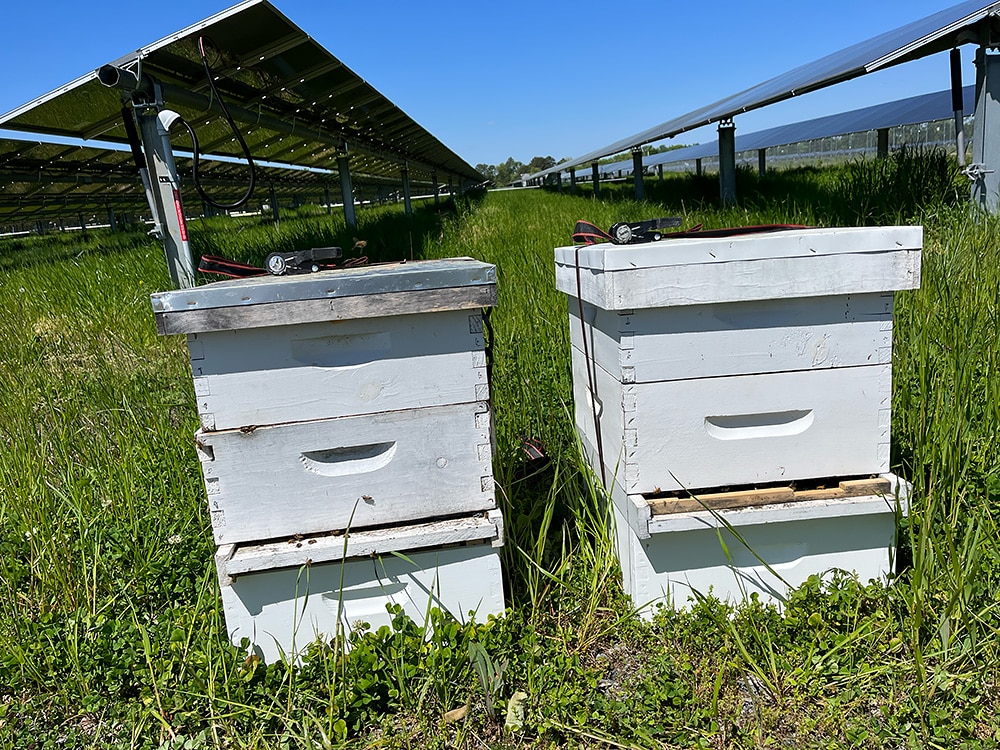
Fields of solar panels are starting to bloom with new life, as energy developers pair solar power with beekeeping in a sweet twist on clean energy.
By planting pollinator-friendly habitats beneath solar arrays, these sites are becoming productive sanctuaries where honeybees thrive, honey flows, and solar energy generation continues to hum along.
Pairing solar energy with agricultural practices is called agrivoltaics, or apivoltaics when specifically referencing beekeeping. These practices help maximize land use by offering a smart, dual solution to two pressing challenges. It addresses the need for clean energy and the rapid loss of pollinator habitat, while boosting economic opportunities for local beekeepers and landowners.
Solar arrays can be designed with enough space and height to accommodate hives, allowing beekeepers to place them under panels. Planting native, non-invasive vegetation like black-eyed Susans, bee balm and clover under panels supports bees, monarch butterflies and other pollinators.
The deep-rooted native plants also prevent soil erosion, reduce the need for constant mowing and improve soil health by boosting soil diversity, increasing organic matter and enriching soil structure. Heavy machinery and site grading during solar farm construction can cause soil compaction, and planting vegetation helps break up and aerate the soil.
Richard Fell, professor emeritus of entomology at Virginia Tech, sees potential with solar beekeeping in maintaining the agricultural use of the land.
“We have a huge problem in the decline of bee and insect populations,” he says. “There’s benefits in increasing the number of plants and creating habitat for insects … utilizing the land around solar panels with beekeeping is an excellent idea.”
Solar beekeeping can boost rural economies by providing multiple income streams and creating new local opportunities. Landowners hosting solar projects can earn money from solar lease partnerships and generate revenue from honey and beeswax products like candles and salves, all while providing beekeepers with a place to maintain their hives.
Allison Wickham, owner of Siller Pollinator Company based in Charlottesville, Virginia, believes that agrivoltaics is the best way to get rural communities on board with large-scale solar projects.
“When we create economic opportunities for surrounding communities, inject food into local food systems, create agricultural jobs for communities and create clean domestic energy, then it starts to look good,” she says.
Wickham’s company began operating as a hive management operation, working with homeowners and businesses to offer professional beekeeping services like hive installation, maintenance and honey harvesting without requiring clients to handle bees directly. Her work then transitioned to contracting with solar companies after some places started championing the location of pollinator habitats on solar installations.
Virginia’s Smart Pollinator program encourages utilities and land managers to convert single-use land like rights-of-way and solar sites into mixed-use habitats that support bees, butterflies and other pollinators. Albemarle County, which surrounds Charlottesville, requires ground-mounted solar projects over two acres to earn “Gold Certification” through the state’s pollinator program.
Other localities in Virginia have similar programs, and solar beekeeping is growing in the state at both small and large scales. Dominion Energy’s 13-acre Black Bear solar farm in Dillwyn, Virginia, houses four honeybee hives — home to roughly 180,000 bees that pollinate wildflowers and crops within a five-mile radius. At Crystal Hill Solar Farm by Urban Grid, 10 hives with about 500,000 bees produce honey and support pollinator health alongside an installation that generates 65 megawatts of solar energy.
Wickham wants solar beekeeping to be more than what she calls “tokenized” agrivoltaics.
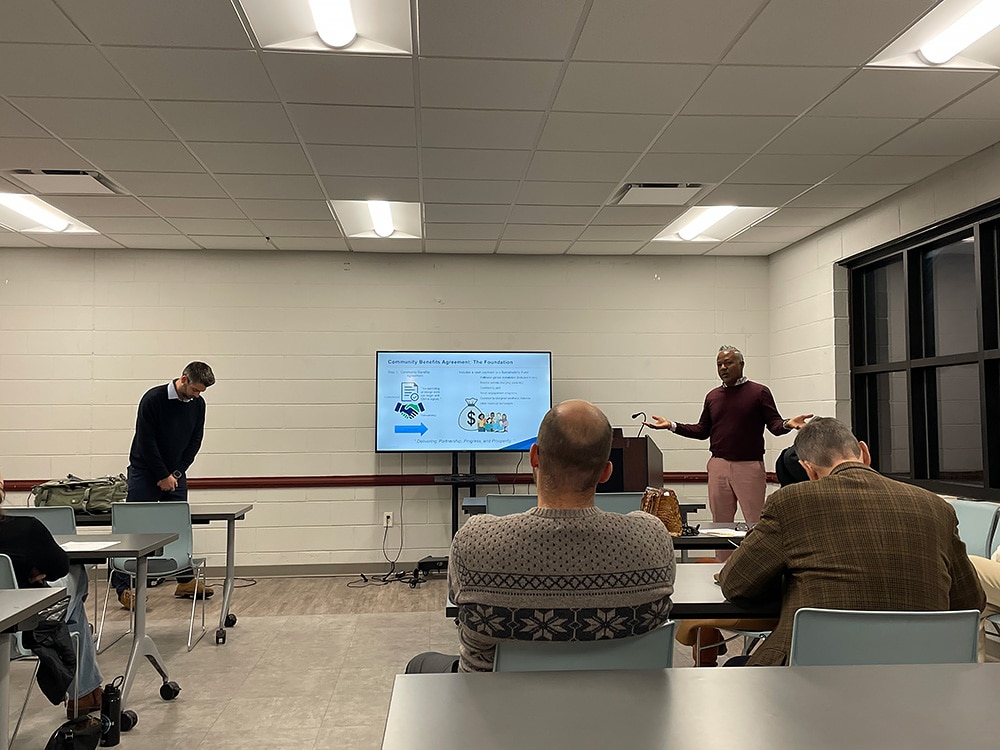
The city of Richmond, Virginia, is converting a capped landfill in the city’s East End into a solar meadow with 15 acres of a pollinator garden and 5 megawatts of solar generation. The project is expected to be in operation by the end of 2027.
“Some people think you are going to stick two hives out [in a solar field] and call it farming,” she says, adding that it’s important for solar companies to partner with full-time professional beekeepers to run a true production program on sites.
To promote beekeeping, Siller Pollinator Company hosts “Solar Bee Camp” — a hands-on, two-day agrivoltaics workshop where participants dig into soil health, erosion and native plants, and suit up to work hives. Wickham takes participants to different solar beekeeping operations in the area, one at King Family Vineyard in Crozet and the other at Thistlerock Meadery, where she serves as apiary director.
Thistlerock, which started as a regenerative flower farm, touts itself as the first net-zero meadery in the country, with a 52-kilowatt ground array and a 30-kilowatt rooftop array on its barn to power the meadery’s production and tasting room operations. The meadery, where Wickham manages bee colonies using natural beekeeping practices entirely free of chemical treatments, will have 100 hives under its management this summer.
John Kluge, one of Thistlerock’s owners, shares that the meadery was conceived as an attempt to prove that a business could be built in the right relationship with the land and to provide a model that others can replicate.
“For rural communities in Appalachia and Central Virginia, there’s also a real economic opportunity,” Kluge writes in an email. “Solar beekeeping creates a new revenue stream that doesn’t require displacing agriculture, and it connects energy infrastructure to local food systems in a way that makes both more resilient.”
Kluge explains that the most exciting opportunity with his work lies in combining the energy transition with ecological restoration. Citing Appalachia’s history of shouldering the burden for the country’s energy needs for generations, he explains, “There’s something deeply meaningful about the possibility that the next energy chapter here could also be a chapter of land healing and community renewal.”
Related Articles
Latest News
More Stories

Halloween Approaches, and Night School Is in Session
The House of Art in Bluefield, West Virginia, looks like a haunted tower, making it the perfect location for its sixth annual haunt event: Night School. The Night School will be open every Friday and Saturday night through Oct. 31.
‘The Most Perfect Act of Love’
After losing its rural pride celebration, hundreds of people attended the second annual Affirming Sumner Pride celebration on a 24-acre farm dubbed “Fruity Farm” in Bethpage, Sumner County, Tennessee.

Signs of Life
In the Nantahala National Forest, a team of biologists spotted Indiana bats, an endangered species that hasn’t been seen in North Carolina for the last 11 years.

‘First Line of Defense’
During Hurricane Helene and its aftermath, rural fire departments and other first responder hubs played critical roles in keeping their communities safe, even without power and cut off from outside support for days or weeks after the storm. Two years later, plenty of work remains to ensure these hubs have the resources they need to operate day to day and be ready when emergencies or natural disasters strike.

The Rocky Road — and Bridge — to Recovery
Hurricane Helene is estimated to have damaged nearly 7,000 private roads and bridges in Western North Carolina. Two years later, many restoration projects are complete, but the journey hasn’t been easy — and isn’t over for others.

After 20 Years, Letcher County Prison Proposal Is Still Alive, Though Obstacles Remain
A $605 million proposal for a federal prison on a former strip mine site in Letcher County, Kentucky, championed by U.S. Rep. Hal Rogers, refuses to die, despite local opposition, a lack of support from the executive branch and numerous other obstacles.

Leave a comment
Your email address will not be published. Required fields are marked *
Leave a Comment