

‘The Speed of These Processes is Not Survivable’
A year and a half after Hurricane Helene, many survivors are still left in housing limbo due to bureaucratic hurdles and financial challenges
A year and a half after Hurricane Helene, many survivors are still struggling to secure stable housing because of delayed federal funding, financial challenges and bureaucratic red tape.
In Asheville, North Carolina, Heather Laine Talley and her family lived in eight different places before settling in with her mother. Families are stuck in campers and RVs in Johnson County, Tennessee. Others, like Amalia Yosefa, a single mother, were approved for federal housing assistance — but only after dealing with months of frustration and uncertainty.
“People can’t move — people can’t restore housing, because they don’t have enough resources to be able to do that,” Talley says, highlighting her own situation. “We’re sort of in limbo.”
Common pain points with federal disaster aid
Disaster aid programs offered through the Federal Emergency Management Agency and other government offices are not designed to “make people whole,” but rather serve as a “safety net,” coming into play after insurance and after “personal resources have been expended,” explains Andrew Rumbach, senior fellow at the Urban Institute, a nonpartisan think tank.
Common pain points for those seeking federal aid include difficulty accessing or providing required documentation, spending too much time filling out multiple applications across various programs, navigating unclear rules, and receiving funding too late to be helpful, according to Rumbach.
Programs are meant to move slowly to prevent fraud, but former Homeland Security Secretary Kristi Noem imposed an unprecedented layer of extra scrutiny that created a $17 billion backlog in federal aid, later worsened by two government shutdowns. When people are trying to get back on their feet after Helene, the snail-paced, opaque process can feel maddening.
Talley says, “The speed of these processes is not survivable.”
‘The choices are impossible’
Talley’s East Asheville home sits across the street from the Swannanoa River. Her residence was not destroyed, but many of her neighbors’ houses on the other side of the road were washed downriver. One neighbor died. An elderly couple had to move away because their flood insurance payout barely covered the loss of their belongings, much less the cost of rebuilding their home.
Talley’s family will not return to their home for many reasons, including the trauma of what they experienced there. The road leading to their home is still severely damaged, and public infrastructure in her neighborhood remains shaky.
“I don’t know anybody who’s been able to survive without a major, major supportive effort by somebody in their family,” says Talley. “Everybody I know who’s housed that has been displaced is only housed by way of someone in their family.”
Talley and her partner purchased their home in 2012 — a far less costly housing market than it is today. That has been “a really rude awakening,” she says.
“When we realized we couldn’t go back to our house, we started to look around and see what our options were,” Talley says. “And my partner turns to me at that point and said, ‘Babe, we’re priced out. We can’t afford to live here anymore.’ ”
They have been approved through FEMA’s Hazard Mitigation Grant Program, which gives homeowners the option to sell their properties to local governments at pre-storm values. Local governments can then develop the property in ways that will reduce future storm losses. The program, like other FEMA programs, has faced significant delays.
While they wait, Talley and her partner continue paying a mortgage on a house they don’t live in to avoid foreclosure, which would ruin their credit and hurt their chances of being approved for future loans or rental applications.
“The choices are impossible,” Talley says. “And all of that is exacerbated because these processes are so slow.”
‘A little paranoid and not fully at ease’
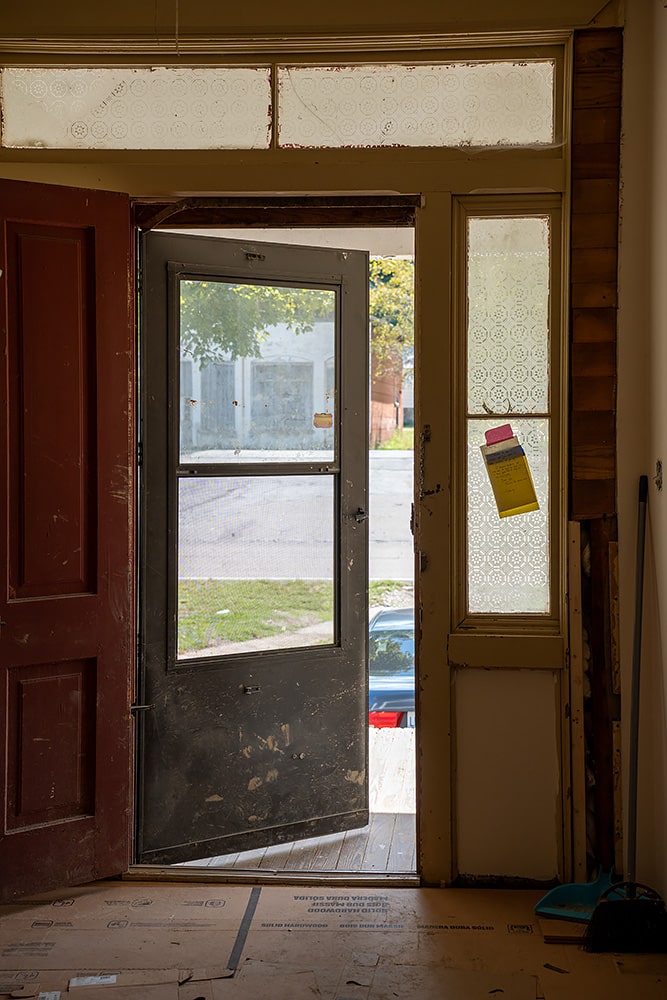
In Fleetwood, North Carolina, floodwaters severely damaged Amalia Yosefa’s basement, which houses her son’s bedroom and her art studio — her primary livelihood.
Yosefa and her son continued to live there for about a year until it became clear that it was no longer safe to remain given septic tank damage, a leaking roof and a power surge that fried most of her appliances. They’re now living with a family friend 45 minutes away.
To help repair her home, she applied for the state-operated Renew NC Single-Family Housing Program, which prioritizes low-to-moderate income families with children, seniors or people with disabilities. Renew NC is funded by a $1.4 billion disaster recovery grant from the U.S. Department of Housing and Urban Development.
As of press time, there were 3,063 active applications in various stages of the process and 43 homes had been completed. During an April 20 meeting, Stephanie McGarrah of the N.C. Department of Commerce reported that there were “insufficient funds” to serve every eligible applicant.
In the meantime, Yosefa’s insurance company canceled her coverage because her home repairs were taking too long, so she has been unable to secure a home equity line of credit, a loan borrowed against a home’s value that requires homeowners’ insurance.
The biggest blow came in December 2025, when she received a letter stating that she had to repay the nearly $7,000 she had received in FEMA assistance due to a “duplication of benefits gap,” which had to be resolved before her application could move forward. She had received this money for repairs but had to use it to keep her family afloat.
“I had 30 days,” she says.
Yosefa raised the money through an online fundraiser set up by a friend. But due to the holiday break and difficulty reaching the Renew NC staff, her payment was a day late. Her case was closed.
“I didn’t know what was going on,” Yosefa says. “I kept trying to get a hold of people.”
After months of uncertainty and a lack of communication, she was finally able to appeal the process. In March, she was finally approved.
“I’m still a little paranoid and not fully at ease yet, but this is as far as we’ve gotten in this process so far — so I’m optimistic,” Yosefa says.
FEMA Act of 2025
“In a big disaster, 90% of the money that gets spent is coming from our tax dollars, through the federal government or state governments, and then back to us,” says Andrew Rumbach of the Urban Institute. “And so these programs and how they operate matter a lot.”
Rumbach shares that there are plenty of ideas on “how to make some of these processes less painful, while also not opening them up to massive, potential issues with waste and abuse that are broadly supported across both sides of the aisle.”
One recent piece of bipartisan legislation introduced in the U.S. House of Representatives is the Fixing Emergency Management for Americans Act of 2025, or FEMA Act. Some commonsense changes outlined in the act include using a single application for all federal disaster aid programs, increasing flexibility in how funds can be spent, and ensuring that rural and economically distressed areas get the help they need. The bill has not yet been called for a vote.
Related Articles
Latest News
More Stories

Halloween Approaches, and Night School Is in Session
The House of Art in Bluefield, West Virginia, looks like a haunted tower, making it the perfect location for its sixth annual haunt event: Night School. The Night School will be open every Friday and Saturday night through Oct. 31.
‘The Most Perfect Act of Love’
After losing its rural pride celebration, hundreds of people attended the second annual Affirming Sumner Pride celebration on a 24-acre farm dubbed “Fruity Farm” in Bethpage, Sumner County, Tennessee.

Signs of Life
In the Nantahala National Forest, a team of biologists spotted Indiana bats, an endangered species that hasn’t been seen in North Carolina for the last 11 years.

‘First Line of Defense’
During Hurricane Helene and its aftermath, rural fire departments and other first responder hubs played critical roles in keeping their communities safe, even without power and cut off from outside support for days or weeks after the storm. Two years later, plenty of work remains to ensure these hubs have the resources they need to operate day to day and be ready when emergencies or natural disasters strike.

The Rocky Road — and Bridge — to Recovery
Hurricane Helene is estimated to have damaged nearly 7,000 private roads and bridges in Western North Carolina. Two years later, many restoration projects are complete, but the journey hasn’t been easy — and isn’t over for others.
After 20 Years, Letcher County Prison Proposal Is Still Alive, Though Obstacles Remain
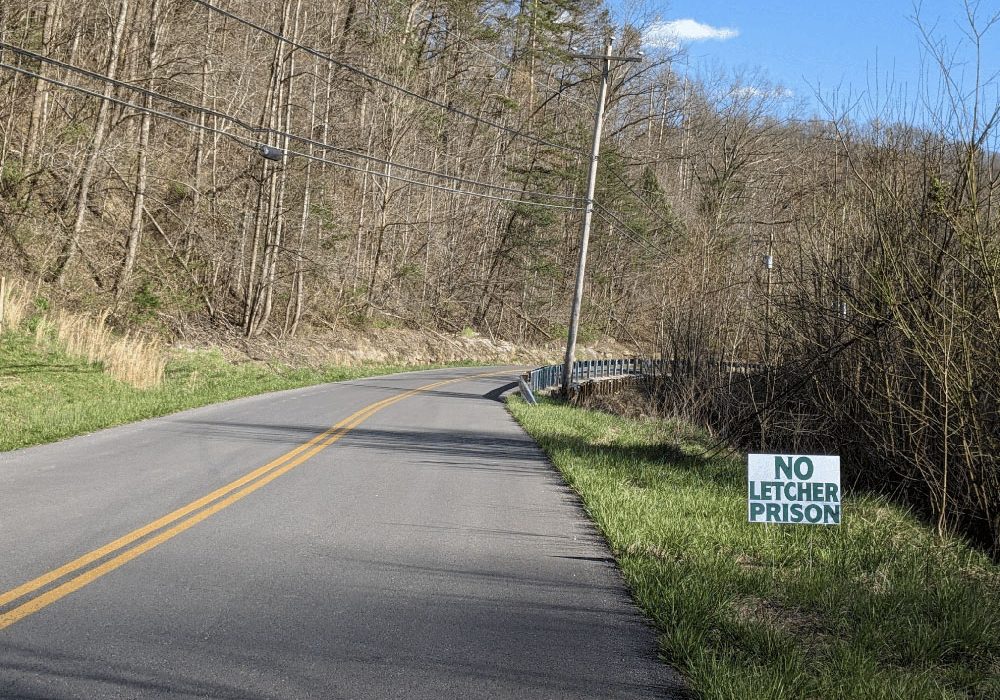
A $605 million proposal for a federal prison on a former strip mine site in Letcher County, Kentucky, championed by U.S. Rep. Hal Rogers, refuses to die, despite local opposition, a lack of support from the executive branch and numerous other obstacles.

Leave a comment
Your email address will not be published. Required fields are marked *
Leave a Comment