

Blackjewel and Revelation Energy Coal Bankruptcy Raises Concerns for Workers and Mine Cleanup
Editor’s note: This post was updated from the print edition on Aug. 7, 2019
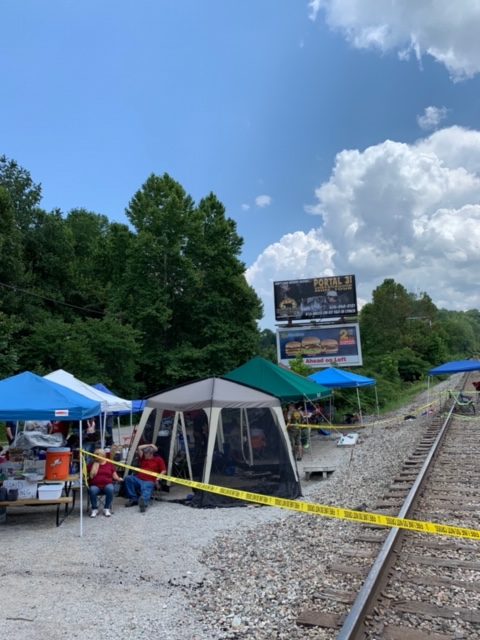
Miners and their supporters block the train tracks in Harlan County, Ky., on July 31. Photo by Caleb Gore
The companies employed about 500 miners in Virginia, about 600 in Kentucky, about 30 in West Virginia, and none in Tennessee during 2018, according to the U.S. Mine Safety and Health Administration. They also employed about 700 miners at two large Wyoming mines that were passed to Hoops following the Alpha Natural Resources bankruptcy restructuring in 2015.
It’s difficult to assess the potential impact of this bankruptcy on mine reclamation in the region. Staff at Appalachian Voices, the nonprofit organization that publishes this newspaper, have determined that the companies are responsible for roughly 13,000 acres of unreclaimed mine land in Kentucky, Virginia and West Virginia, a number that is likely to rise as the analysis continues. In all three states, taxpayers could potentially be on the hook for mine cleanup costs if the companies cannot find another buyer for the properties.
On July 29, five Blackjewel miners blocked train tracks in Harlan County, Ky., to stop the companies coal trains from moving forward.
“We want answers, we want our money, we want paid,” miner Bobby Sexton told WFPL. “We’re gonna make a stand.”
The contingent grew to dozens of miners and their supporters, who set up a camp complete with cook stations and kids toys. Several organizations are accepting donations for affected families in Kentucky and Virginia.
The protest continued into its second week as news emerged about Blackjewel’s bankruptcy auction and hearing. A federal district judge agreed on Aug. 6 to a sale of some of the company’s assets, though the deal awaits federal approval.
“That won’t pay off all of the wages that are due, but it’ll be a good downpayment,” labor attorney Sam Petsonk with legal advocacy organization Mountain State Justice told Ohio Valley ReSource. “So additional wages and penalties damages that are owed to the workers will have to come through further litigation.”
Also in July, Blackhawk Mining filed for Chapter 11 bankruptcy. The company operates 10 mining complexes in Kentucky, West Virginia and Indiana.
— By Erin Savage
Related Articles
Latest News
More Stories

Signs of Life
In the Nantahala National Forest, a team of biologists spotted Indiana bats, an endangered species that hasn’t been seen in North Carolina for the last 11 years.

‘First Line of Defense’
During Hurricane Helene and its aftermath, rural fire departments and other first responder hubs played critical roles in keeping their communities safe, even without power and cut off from outside support for days or weeks after the storm. Two years later, plenty of work remains to ensure these hubs have the resources they need to operate day to day and be ready when emergencies or natural disasters strike.

The Rocky Road — and Bridge — to Recovery
Hurricane Helene is estimated to have damaged nearly 7,000 private roads and bridges in Western North Carolina. Two years later, many restoration projects are complete, but the journey hasn’t been easy — and isn’t over for others.

After 20 Years, Letcher County Prison Proposal Is Still Alive, Though Obstacles Remain
A $605 million proposal for a federal prison on a former strip mine site in Letcher County, Kentucky, championed by U.S. Rep. Hal Rogers, refuses to die, despite local opposition, a lack of support from the executive branch and numerous other obstacles.
The Washout and Rebuild
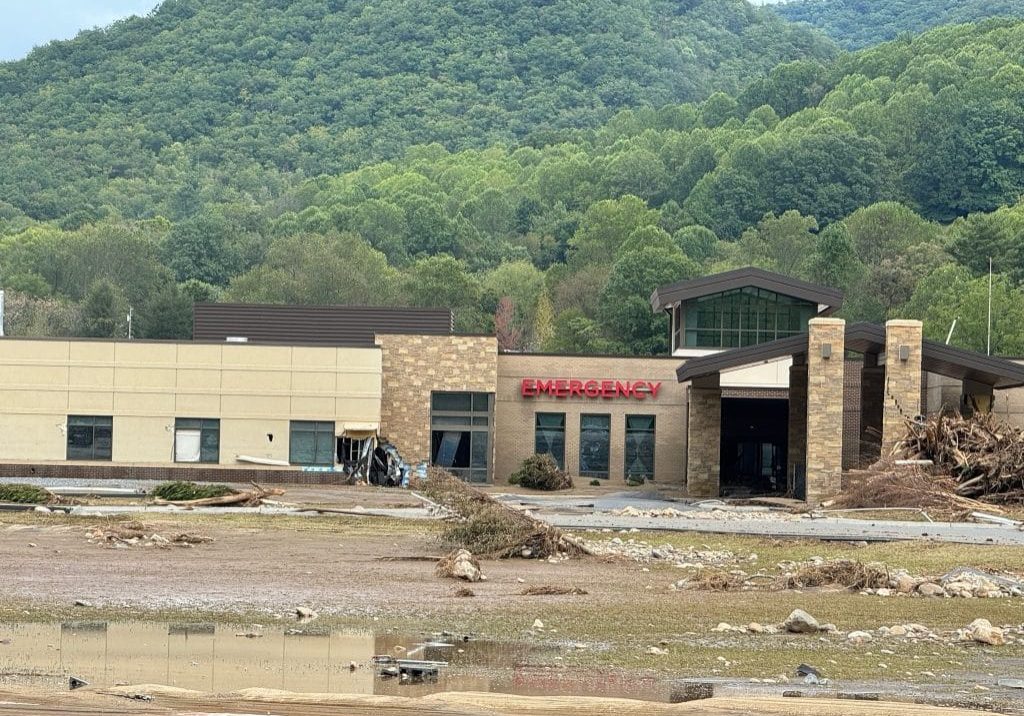
For nearly two years, residents of Unicoi County, Tennessee, have had to make do without a hospital after Hurricane Helene destroyed the rural hospital. Ballad Health, which owns the hospital, broke ground on a new location — in another floodplain — in August 2026.

The Shenandoah Salamander
The Shenandoah salamander is a woodland salamander, which has adapted to life at higher elevations away from water. This sparkling rarity lives among the dry leaves, cracked logs, and stony hillocks on the highest peaks of Shenandoah National Park.

Leave a comment
Your email address will not be published. Required fields are marked *
Leave a Comment