

Carolyn Reilly
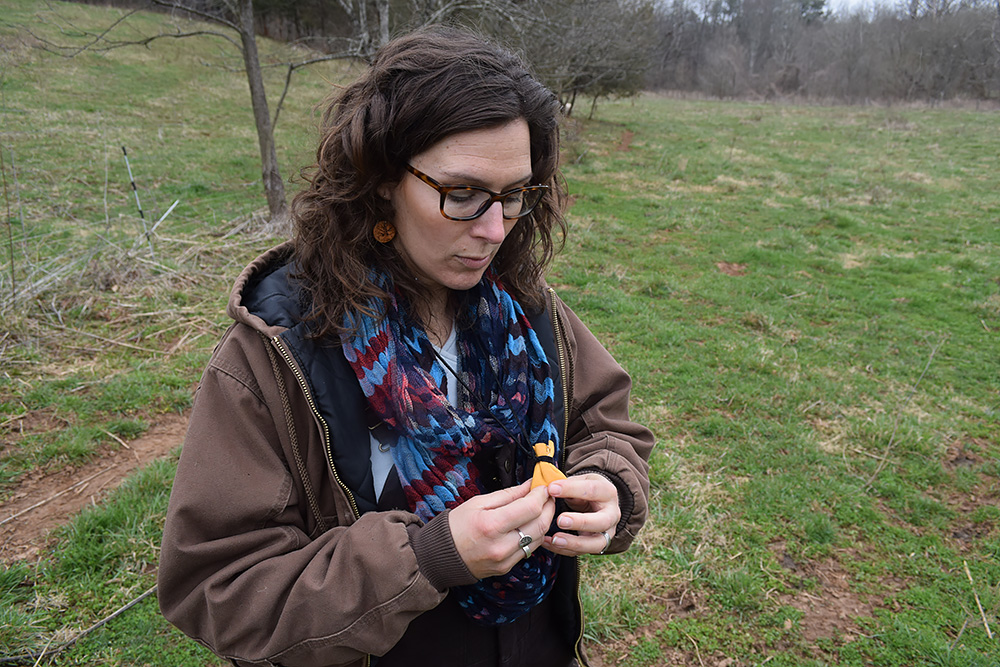
Carolyn wears a pouch of earth from the Standing Rock water protectors’ camp around her neck to remind herself of the strength of the land. Photo by Kevin Ridder
It’s unusual for Carolyn Reilly to be at her 58-acre family farm all winter. With early March being a quiet time of year, she would have liked to leave the farm in the hands of her parents for a few days to take a trip with her husband and kids. But with the constant threat of Mountain Valley Pipeline land surveyors showing up unannounced and unwanted on their property, Carolyn fears to leave for even a short time.
“We’re pretty much held hostage of our own accord because we want to be watchdogging, watching our land,” she says.
“They don’t come down the drive,” Carolyn says. “They come through the woods, crossing the creek. … They just show up and start doing it.”
Carolyn, her husband Ian and her parents Betty and Dave co-own Four Corners Farm in Rocky Mount, Va. After living in Florida for most of their lives, Carolyn and Ian became tired of their unfulfilling jobs. So in 2010, they sold many of their possessions and lived in a camper with their four children for six months before settling on their new home and starting their community-focused organic farm with Carolyn’s parents.
The land holds a special place in the family’s hearts — three of the Reilly children were baptized in the creek behind their home.
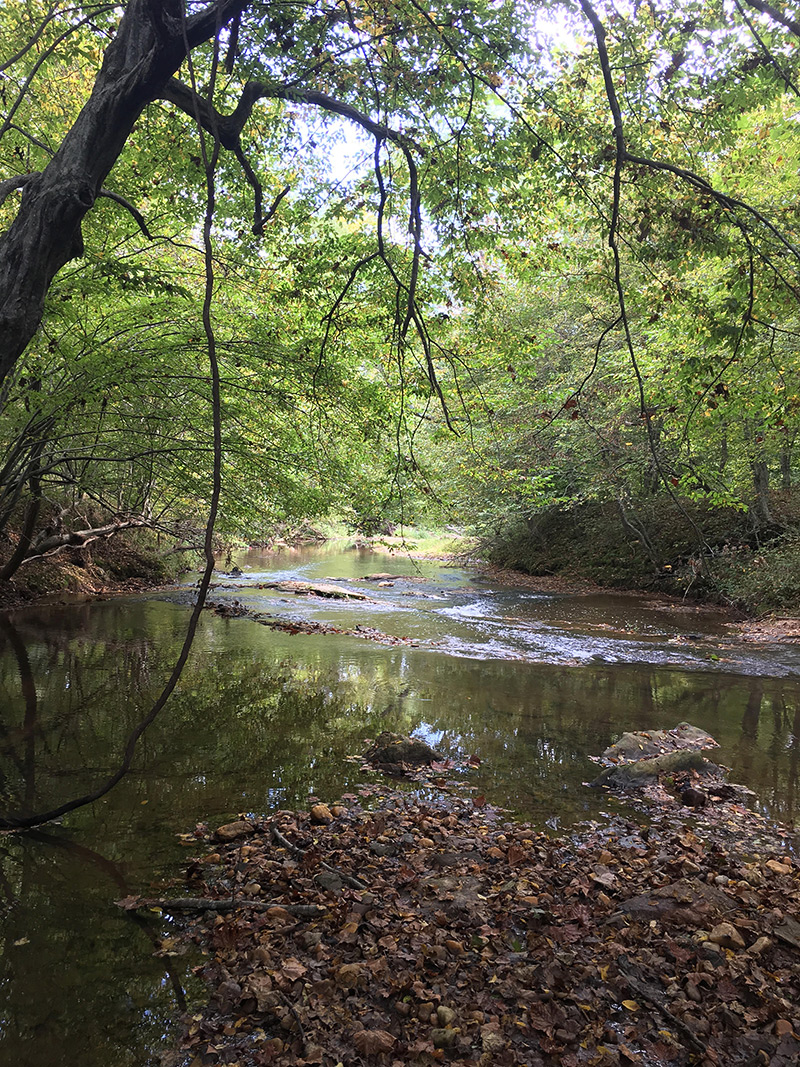
Workers plan to bury a pipeline under this creek behind the Reillys’ home. Photo by Carolyn Reilly
“We used to teach classes here,” Carolyn says. “We had skill-sharing things and monthly dinners building community and relationships around local food.”
In the fall of 2014, they received a phone call from land agents representing Mountain Valley Pipeline, LLC, informing the Reillys of their plan to bury a 42-inch fracked-gas pipeline in the family’s creek and cut a quarter-mile swath through prime pasture 800 feet from the house.
When the company offered $50,000 for the pipeline’s right-of-way, the family refused.
“How does that offset the loss of property value for trying to sell?” Carolyn asks. “We still have a mortgage. It felt insulting.”
Instead, Carolyn became heavily involved with Bold Alliance, a nationwide nonprofit organization that advocates against fossil fuel projects.
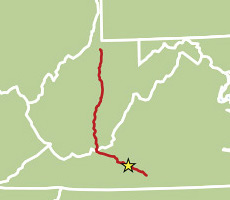
The Reillys’ location in the path of the Mountain Valley Pipeline.
“I’ve been working and trying to organize folks to get information and feel empowered by that knowledge,” she says. “That’s become a big focus for our family, and for me in the last three years, and it’s taken me away from our first reason of why we moved here.”
On March 2, a federal judge ruled that Mountain Valley Pipeline can seize 300 people’s land, including the Reillys’, through eminent domain.
“They’re spending all this money now just tearing things up near communities and homes,” Carolyn says. “And there is no say in any of it for the people who will have to deal with it and live next to it.” — By Kevin Ridder
UPDATE: On April 19, three tree-sits were established by self-described “young Virginians” at Four Corners Farm. In a statement, Ian Reilly said, “Launching Little Teel Crossing is an act of protection for our family’s home, land and water. This farm has been free from chemicals for decades. As farmers seeking to renew the land, we intend to keep it that way.” Read more from Friends of Nelson here.
Related Articles
Latest News
More Stories
Neighbors Help Neighbors
A photo essay that celebrates the volunteer spirit of the grassroots group Hurricane Helene WNC and speaks to the resourcefulness, collaboration and hard work embodied by thousands and thousands of volunteers, first responders and aid workers across the region after Hurricane Helene.

Halloween Approaches, and Night School Is in Session
The House of Art in Bluefield, West Virginia, looks like a haunted tower, making it the perfect location for its sixth annual haunt event: Night School. The Night School will be open every Friday and Saturday night through Oct. 31.
‘The Most Perfect Act of Love’
Hundreds of people attended the second annual Affirming Sumner Pride celebration on a 24-acre farm dubbed “Fruity Farm” in Bethpage, Sumner County, Tennessee.

Signs of Life: Endangered Bats Found in Nantahala for First Time in More Than a Decade
In the Nantahala National Forest, a team of biologists spotted Indiana bats, an endangered species that hasn’t been seen in North Carolina for the last 11 years.

‘First Line of Defense’
During Hurricane Helene and its aftermath, rural fire departments and other first responder hubs played critical roles in keeping their communities safe, even without power and cut off from outside support for days or weeks after the storm. Two years later, plenty of work remains to ensure these hubs have the resources they need to operate day to day and be ready when emergencies or natural disasters strike.

The Rocky Road — and Bridge — to Recovery
Hurricane Helene is estimated to have damaged nearly 7,000 private roads and bridges in Western North Carolina. Two years later, many restoration projects are complete, but the journey hasn’t been easy — and isn’t over for others.

Leave a comment
Your email address will not be published. Required fields are marked *
One response to “Carolyn Reilly”
-

“We are at a crossroads. We can continue on the path we have been on, in this nation that privileges profit over people and land; or we can unite as citizens with a common cause — the health and wealth of the Earth that sustains us. If we cannot commit to this kind of fundamental shift in our relationship to people and place, then democracy becomes another myth perpetuated by those in power who care only about themselves.
[…]
The time has come for acts of reverence and restraint on behalf of the Earth. We have arrived at the Hour of Land.” From Terry Tempest Williams book Hour of the Land. As a land owner in Virginia, just across the continental divide from Bent Mt. and up the mountain west of Franlin Co., VA, I would be devastated if my land was destroyed by MVP. I Stand with Red, Nutty, and The Teel Crossing!

Leave a Comment