

Charlie Jackson: Bringing Farms to Market
By Peter Boucher
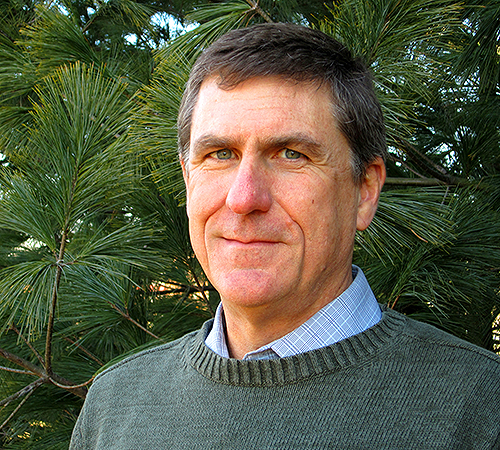
Photo courtesy of Charlie Jackson
Charlie Jackson found a simple answer to the complex problems of regional agriculture. He founded the Appalachian Sustainable Agriculture Project in 1995 to create new markets for mountain farmers who had lost their cash crop. Tobacco had sustained farms for nearly half a century, but in the late ‘90s, farms were rapidly losing income as a federal support program for the crop was discontinued. Jackson and his colleagues decided to build local demand for these farms by writing and distributing a local food guide to link consumers to area farmers.
The idea caught on faster than Jackson and his colleagues imagined. They rapidly grew from distributing 5,000 copies of their guide in the first printing to 100,000 annually. These sustainable, local markets empowered consumers as well as farmers, by giving interested shoppers an alternative to mainstream agriculture. As Jackson says, ASAP strives to “transform the food system” by connecting “residents to the farmers that grow their food.”
Jackson has a knack for bringing people together. In 2002, he called together a meeting of representatives of regional farmers markets. While the farmers initially saw each other as competitors, he was able to organize them into the Mountain Tailgate Market Association, which allows local markets to collaborate with each other. He also feels blessed to have brought together the ASAP team. “I think of my role as one of providing the space for really smart, passionate people to be excellent at what they do,” Jackson says.
27 Visionaries
READ THEIR STORIES

Jackson leads with a balance of managerial skills and a contemplative ability to see the big picture. “I’m the one who has the responsibility to reflect, to contextualize what we do,” he says, emphasizing that building an organization includes a lot of “starts and stops … testing and experimenting with ideas.” He has a lot of faith in the next generation to collaborate over the conservation issues that he holds close to heart.
To learn more, visit asapconnections.org
Related Articles
Latest News
More Stories

Halloween Approaches, and Night School Is in Session
The House of Art in Bluefield, West Virginia, looks like a haunted tower, making it the perfect location for its sixth annual haunt event: Night School. The Night School will be open every Friday and Saturday night through Oct. 31.

‘The Most Perfect Act of Love’
After losing its rural pride celebration, hundreds of people attended the second annual Affirming Sumner Pride celebration on a 24-acre farm dubbed “Fruity Farm” in Bethpage, Sumner County, Tennessee.

Signs of Life
In the Nantahala National Forest, a team of biologists spotted Indiana bats, an endangered species that hasn’t been seen in North Carolina for the last 11 years.

‘First Line of Defense’
During Hurricane Helene and its aftermath, rural fire departments and other first responder hubs played critical roles in keeping their communities safe, even without power and cut off from outside support for days or weeks after the storm. Two years later, plenty of work remains to ensure these hubs have the resources they need to operate day to day and be ready when emergencies or natural disasters strike.

The Rocky Road — and Bridge — to Recovery
Hurricane Helene is estimated to have damaged nearly 7,000 private roads and bridges in Western North Carolina. Two years later, many restoration projects are complete, but the journey hasn’t been easy — and isn’t over for others.

After 20 Years, Letcher County Prison Proposal Is Still Alive, Though Obstacles Remain
A $605 million proposal for a federal prison on a former strip mine site in Letcher County, Kentucky, championed by U.S. Rep. Hal Rogers, refuses to die, despite local opposition, a lack of support from the executive branch and numerous other obstacles.

Leave a comment
Your email address will not be published. Required fields are marked *
Leave a Comment