

Environmental Education in Giles County
It’s often been said that a good example is at the heart of a good education.
That being true, imagine what students on the New River in southwestern Virginia are learning about morality, science, economics and law, thanks to American Electric Power Co and the Giles county government.
By recklessly building a dump for toxic coal fly ash from a power plant in one of the loveliest recreational areas of the New River, AEP and Giles county are telling students:
• Morality is irrelevant – Sure, the Bible tells us not to rob the poor. (See Proverbs 22:22) But that just applies to the red kettles at Christmas. If low-income people in Giles have their water supply poisoned and their fishing destroyed so that one of America’s richest utilities can get just a little richer, is that the same thing?
• Science can be ignored — True, fisheries biologists from nearby Virginia Tech strongly warn that dumping fly ash next to the river is “likely to have negative effects.” True, recent EPA risk assessments have found that protective measures are needed at “coal combustion waste facilities.” But the current state of regulations means that AEP and the county can use loopholes to ignore them.
• Wealth over health – Everybody knows when a few people figure out a way to make some money, the mere idea of poisoning their neighbors isn’t much of a deterrent. Public health, clean water, eco-tourism, or just good fishin’ – why should that stand in the way of county officials and utility companies making a buck? Only the rule of law can check this lack of morality.
• Look for loopholes — Environmental law exists to protect corporations. While the law was originally intended, at least in spirit, to protect public health and the environment, loopholes in the law are where the big companies make a killing.
Fortunately, this abysmal educational experience may have a flip side, since a small number of Giles residents are trying to save their river.
By taking a stand and asking the courts to empanel a special grand jury, the Concerned Citizens for Giles County have shown civic courage the face of ecological barbarism.
And that is the example we all need as part of our education.
Appalachian Voice wants to hear from you! Write [email protected] Please include a phone number where we can reach you. Don’t forget, you can also contribute on our web site at www.AppalachianVoices.org.
Letters to the Editor
Bulletin to King Coal
The governor and the West Virginia Coal Association sound pathetic when crying about judges enforcing federal mining regulations and environmental organizations being eligible for a Kroger’s fundraising program for charities.
Bulletin to West Virginia Gov. Joe Manchin, Friends of Coal, West Virginia Coal Association, Bill Raney, Chris Hamilton: The days of threatening and intimidating those who don’t bow down to King Coal are over. This is the 21st century. Modern technological communication methods have exposed your silly intimidation tactics. The only folks who fear you are the dwindling few who yet buy your old lies and propaganda.
Here is an example of how silly you look: You say coal is important to our national security, yet you ship millions of tons of it to foreign countries, including those that are not our best friends.
There are many other examples of this type of imbecility, but not enough space here to print them, so I’ll close with just one more. The state of West Virginia doesn’t have the resources to research and develop carbon sequestration, nor coal to liquids. If you continue to promote that boondoggle, have the coal companies pay for it. Stop stealing from the people of West Virginia.
Bo Webb
Naoma, W.Va.
Poor development destroys landscapes
Here in Western North Carolina the mountain landscape is being destroyed not for coal mining but for residential development. I have established a landslide advisory website to focus attention on the safety issues of building homes and resorts on unstable ground.
As you know it is difficult to argue viewsheds and the environment, but safety and legal issues cannot easily be dismissed. Some of those issues are posted on my website wncsos.com under Western North Carolina Property Alerts. I hope that this information will help your efforts to save our mountains. Thank you.
Lynne Vogel
Mars Hill, NC
Enjoyed Hatfield feature
Just found an old copy at our favorite coffee shop, Lost Savant. Really enjoyed the feature on Sid Hatfield. The West Virginia/ Kentucky stories of the Hatfield’s and McCoys in the Appalachian Country over the years are fascinating.
Carla and I have trekked though the Pikeville and Matewan area several times, and being in show business are always excited the feud is always billed “Hatfield’s and McCoy” My clan were the winners.
Best regards
Ted Hatfield
Director – Film Marketing
Regal Entertainment Group
Knoxville, TN 37918
Related Articles
Latest News
More Stories

Neighbors Help Neighbors
A photo essay that celebrates the volunteer spirit of the grassroots group Hurricane Helene WNC and speaks to the resourcefulness, collaboration and hard work embodied by thousands and thousands of volunteers, first responders and aid workers across the region after Hurricane Helene.

Halloween Approaches, and Night School Is in Session
The House of Art in Bluefield, West Virginia, looks like a haunted tower, making it the perfect location for its sixth annual haunt event: Night School. The Night School will be open every Friday and Saturday night through Oct. 31.

‘The Most Perfect Act of Love’
Hundreds of people attended the second annual Affirming Sumner Pride celebration on a 24-acre farm dubbed “Fruity Farm” in Bethpage, Sumner County, Tennessee.

Signs of Life: Endangered Bats Found in Nantahala for First Time in More Than a Decade
In the Nantahala National Forest, a team of biologists spotted Indiana bats, an endangered species that hasn’t been seen in North Carolina for the last 11 years.

‘First Line of Defense’
During Hurricane Helene and its aftermath, rural fire departments and other first responder hubs played critical roles in keeping their communities safe, even without power and cut off from outside support for days or weeks after the storm. Two years later, plenty of work remains to ensure these hubs have the resources they need to operate day to day and be ready when emergencies or natural disasters strike.
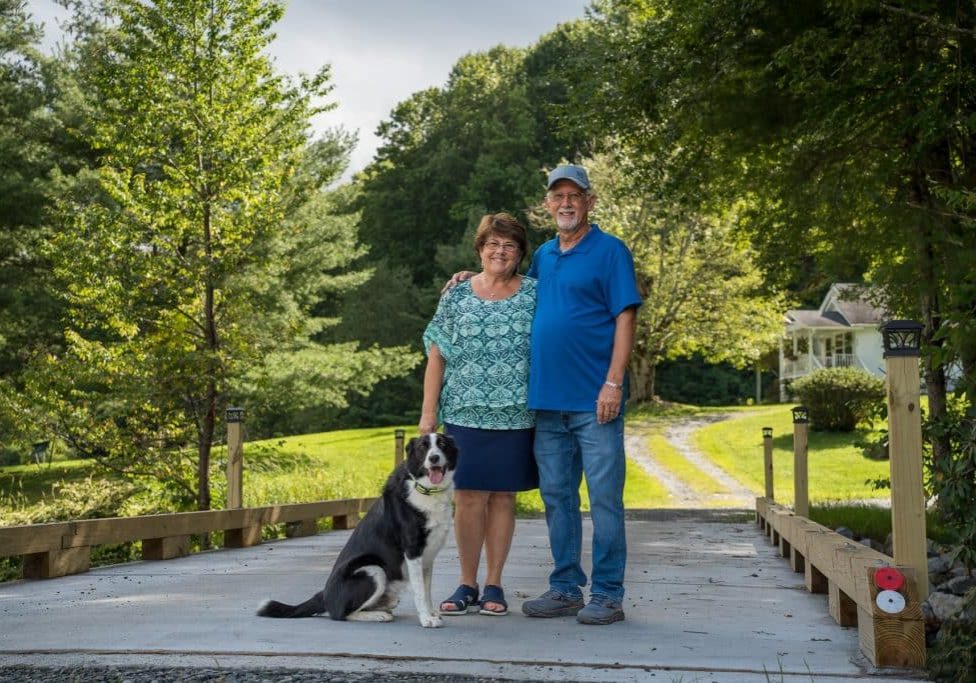
The Rocky Road — and Bridge — to Recovery
Hurricane Helene is estimated to have damaged nearly 7,000 private roads and bridges in Western North Carolina. Two years later, many restoration projects are complete, but the journey hasn’t been easy — and isn’t over for others.

Leave a comment
Your email address will not be published. Required fields are marked *
Leave a Comment