

You can’t help but fall in love with The Cascades – or that special person who accompanied you on the two-mile hike getting there.
The natural beauty of Little Stony Creek is so terrifically tantalizing that even folks who don’t like to hike will want to make this journey.
First, there’s the music. It’s a symphony, played by the rushing waters of Little Stony Creek, slapping the sides of gray boulders and swirling into tiny pools.
And then?
Welcome to the waterfall.
The Cascades is a 66-foot beauty that folks have been photographing for more than a century.
In the late 1800s, tourists roaming the New River Valley – especially ones going to the nearby hotel at Mountain Lake – called the attraction “Little Stony Falls.” At that time, visitors reached the remote waterfall by wagon and, then, by walking.
Today, the Cascades are part of the Jefferson National Forest.
Located near Pembroke, the falls drop like a bridal veil and fan into a pool perfect for taking a dip.
The Cascades look like a beautiful painting come to life. The waterfall makes a large midair drop. Then it splashes and spreads, fanning into a dazzling display on a sloping rock wall. Evergreens fragrance the ultra-clean air, dampened by light mist.
This landmark could hardly disappoint any waterfall seeker, any hiker – or any photographer, beginner to pro.
Hikers, actually, have a choice to get there with two trails running through the woods. Both originate from the parking lot of the Cascades Recreation Area.
The easy road follows a Jeep trail running along a ridge overlooking Little Stony Creek. This is an easy-to-follow path with a few moderate elevation climbs. But, it is not nearly as scenic as another well-developed hiking trail leading upstream and following close to the edge of the creek.
In places, the lower trail crosses the creek on wooden footbridges made of hand-hewn logs. The creek-side path also passes countless water ruffles, chutes and whirlpools on sometimes slippery moss-covered boulders.
Be careful, it is easy to burn up a whole roll of film – simply taking pictures of the creek before making it to the star attraction.
Crowds at the Cascades can be common on weekends. The falls are popular with students at local colleges, young lovers and families.
A wooden platform, overlooking the falls, provides a natural spot to click a camera – or steal a kiss.
It’s been said that hiking to The Cascades is a ritual for all Virginia Tech students at nearby Blacksburg.
Still, it should also be required that all Virginia lovers see these shiny waters.
It’s a given they’ll want to return again and again.
Joe Tennis is the author of “Southwest Virginia Crossroads: An Almanac of Place Names and Places to See” (The Overmountain Press).
Related Articles
Latest News
More Stories

Neighbors Help Neighbors
A photo essay that celebrates the volunteer spirit of the grassroots group Hurricane Helene WNC and speaks to the resourcefulness, collaboration and hard work embodied by thousands and thousands of volunteers, first responders and aid workers across the region after Hurricane Helene.

Halloween Approaches, and Night School Is in Session
The House of Art in Bluefield, West Virginia, looks like a haunted tower, making it the perfect location for its sixth annual haunt event: Night School. The Night School will be open every Friday and Saturday night through Oct. 31.

‘The Most Perfect Act of Love’
Hundreds of people attended the second annual Affirming Sumner Pride celebration on a 24-acre farm dubbed “Fruity Farm” in Bethpage, Sumner County, Tennessee.

Signs of Life: Endangered Bats Found in Nantahala for First Time in More Than a Decade
In the Nantahala National Forest, a team of biologists spotted Indiana bats, an endangered species that hasn’t been seen in North Carolina for the last 11 years.

‘First Line of Defense’
During Hurricane Helene and its aftermath, rural fire departments and other first responder hubs played critical roles in keeping their communities safe, even without power and cut off from outside support for days or weeks after the storm. Two years later, plenty of work remains to ensure these hubs have the resources they need to operate day to day and be ready when emergencies or natural disasters strike.
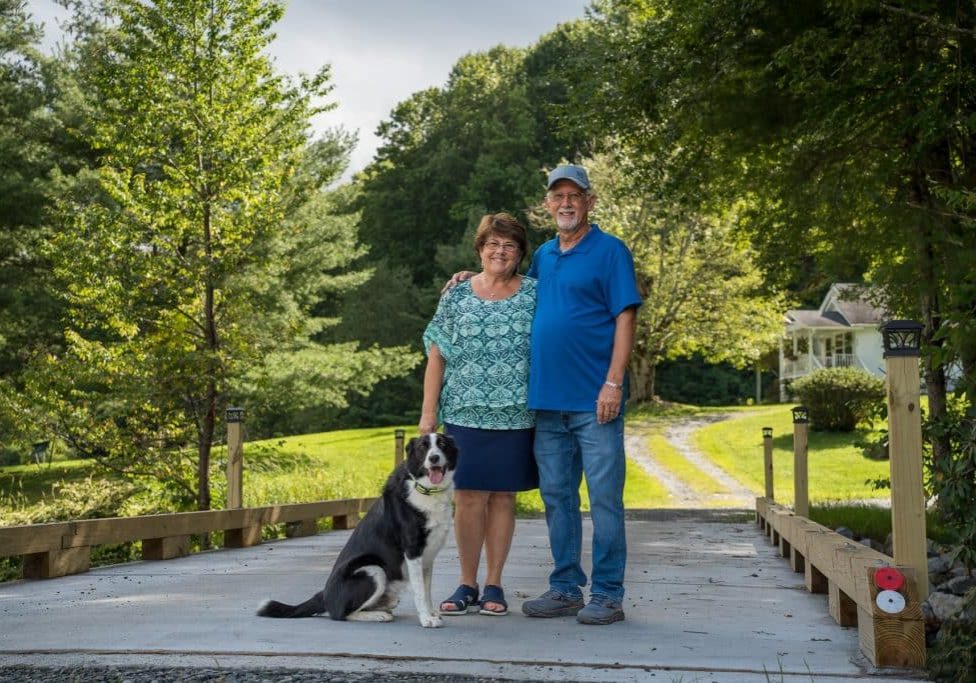
The Rocky Road — and Bridge — to Recovery
Hurricane Helene is estimated to have damaged nearly 7,000 private roads and bridges in Western North Carolina. Two years later, many restoration projects are complete, but the journey hasn’t been easy — and isn’t over for others.

Leave a comment
Your email address will not be published. Required fields are marked *
Leave a Comment