

Moving Mountains
Willie Nelson’s stage manager once called the country music legend “the king of the common man,” so it’s no surprise that Nelson has thrown his support behind a new album entitled Moving Mountains: Voices of Appalachia Rise Up Against Mountaintop Removal. The album features musicians from across Appalachia who have come together to help their neighbors suffering from mountaintop removal coal mining.
This type of coal mining involves blasting off the tops of mountains and dumping the leftover rock into valleys below. Throughout Appalachia’s coalfields, individuals, families and entire communities are being driven off their land by flooding, landslides and pollution from mountaintop removal. All the proceeds from Moving Mountains will benefit efforts to safeguard these communities.
The CD presents original songs inspired by the people and places of rural Appalachia devastated by mountaintop removal, and performers include singer/songwriter Andrew McKnight, venerable fiddler Vasser Clements, songwriter and occasional West Virginia Public Radio host Kate Long, and Appalachian Voices’ own associate executive director, Mary Anne Hitt.
Hitt says, “I wrote this song (The Most Beautiful Place in the World) because music is such a powerful way to connect with people, and the story of mountaintop removal needs to be told. I grew up in east Tennessee and I love the southern mountains, so I’m honored to be part of such an outstanding project that will help tackle the biggest environmental and human rights catastrophe Appalachia has ever seen.”
“This project has been a labor of love from the start,” says musician Jen Osha, who compiled the album. The musicians, recording engineers, and record producers who joined together to make Moving Mountains possible donated every aspect of the album, from performances to production.
“It inspires me to see that so many musicians donated their work, so that they could use music as activists used it during the Great Depression, during the Civil Rights Movement. Not just to pay the bills…to inspire and create change,” says Osha.
Osha, who lives in West Virginia, continues, “In the last year and a half, there have been a lot of difficult events in the coalfields. But what I saw was that people hung on to this music. It was something hopeful in a pretty dark time.”
In addition to thirteen original songs, the CD also features interviews with coalfield residents, including Judy Bonds, a coalminer’s daughter who won the world’s biggest environmental award, the Goldman Prize, in 2003 for her efforts to protect coalfield communities from mountaintop removal.
Michael DeLalla, president of Falling Mountain Music, was more than happy to release the album on his label. “I was immediately intrigued. Here was a group of people motivated to produce music that could have a positive effect on a dire situation, instead of music that was produced only to fit a marketable formula. These are the projects that Falling Mountain loves to support.”
You can join Willie Nelson in supporting the communities of the coalfields by buying a copy of Moving Mountains today. Proceeds from sales of Moving Mountains will go to nonprofit organizations helping mining communities threatened or destroyed by mountaintop removal, including Appalachian Voices, Coal River Mountain
Watch and the Ohio Valley Environmental Coalition.
To purchase the album, contact Falling Mountain Music, www.fallingmountain.com, or Appalachian Voices, www.appvoices.org or 1-877-APP-VOICE.
Related Articles
Latest News
More Stories

Signs of Life
In the Nantahala National Forest, a team of biologists spotted Indiana bats, an endangered species that hasn’t been seen in North Carolina for the last 11 years.

‘First Line of Defense’
During Hurricane Helene and its aftermath, rural fire departments and other first responder hubs played critical roles in keeping their communities safe, even without power and cut off from outside support for days or weeks after the storm. Two years later, plenty of work remains to ensure these hubs have the resources they need to operate day to day and be ready when emergencies or natural disasters strike.

The Rocky Road — and Bridge — to Recovery
Hurricane Helene is estimated to have damaged nearly 7,000 private roads and bridges in Western North Carolina. Two years later, many restoration projects are complete, but the journey hasn’t been easy — and isn’t over for others.

After 20 Years, Letcher County Prison Proposal Is Still Alive, Though Obstacles Remain
A $605 million proposal for a federal prison on a former strip mine site in Letcher County, Kentucky, championed by U.S. Rep. Hal Rogers, refuses to die, despite local opposition, a lack of support from the executive branch and numerous other obstacles.
The Washout and Rebuild
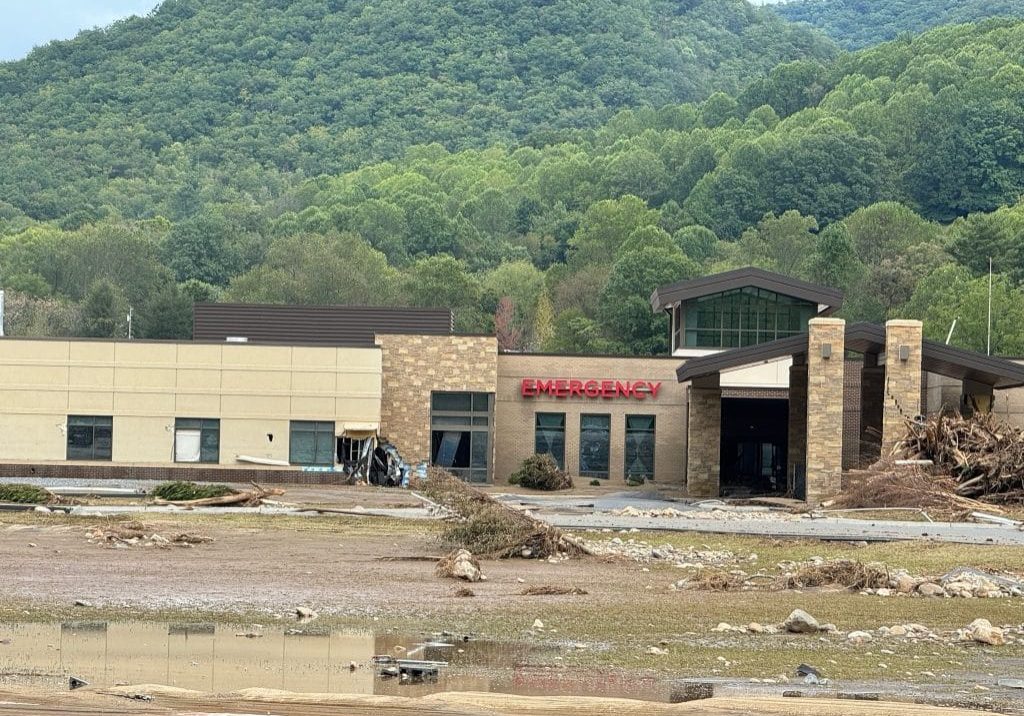
For nearly two years, residents of Unicoi County, Tennessee, have had to make do without a hospital after Hurricane Helene destroyed the rural hospital. Ballad Health, which owns the hospital, broke ground on a new location — in another floodplain — in August 2026.

The Shenandoah Salamander
The Shenandoah salamander is a woodland salamander, which has adapted to life at higher elevations away from water. This sparkling rarity lives among the dry leaves, cracked logs, and stony hillocks on the highest peaks of Shenandoah National Park.

Leave a comment
Your email address will not be published. Required fields are marked *
Leave a Comment