

Appalachia’s Funkiest Fungi
By Jimmy Davidson and Kayla Masterman
Mushrooms are kind of weird, right? They’re not plants, and they’re not animals, though they are more closely related to animals than plants. They sit in a kingdom all their own — the fungi kingdom.

A mushroom is actually the fruiting body of a generally much-larger organism made up of mycelium — a network of threadlike cells that live in a medium like soil or wood. These threads exchange nutrients and help break down organic material in the process. Mushrooms form to drop spores so the fungi can reproduce. While often unseen or overlooked, fungi are an essential component of virtually every terrestrial ecosystem.
The southern Appalachians are an incredibly biodiverse region, and fungi are a substantial part of that mix. The Smokies All-Taxa Biodiversity Inventory has identified 3,988 species of fungi just in Great Smoky Mountains National Park. Scientists have estimated the actual tally could be as high as 20,000 species.
We’ve selected 10 of the weirdest of the weird fungi. Hopefully you can find and appreciate some of these beautiful and fascinating local residents in your neck of the woods.
NOTE: Never consume a mushroom (or anything else you find in the wild) that you haven’t confidently identified with an expert!
Stalked Puffball-in-Aspic Calostoma cinnabarinum
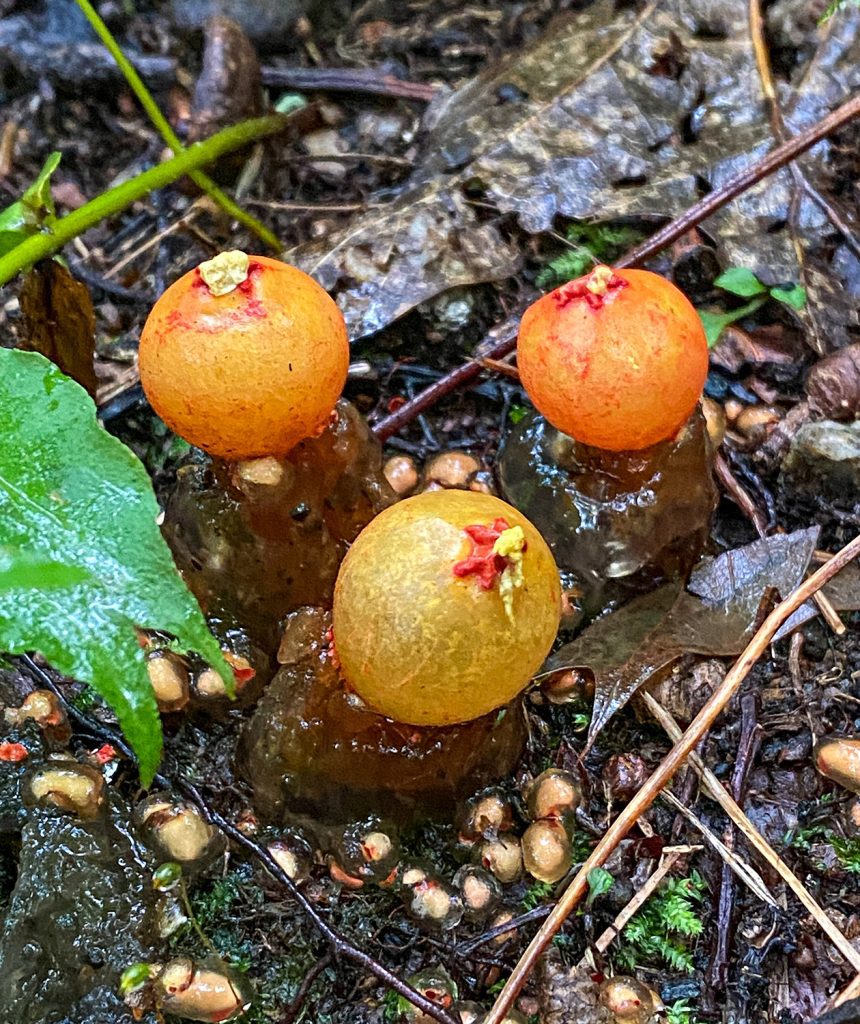
Stalked puffball-in-aspic are some of the strangest-looking fungi in the Appalachian forest. Typically found in summer and fall in moist woods, they initially grow underground, but then they emerge as they mature. Their fruiting bodies have bright reddish-orange spore sacs on the ends of whitish stalks, and their heads are covered in a jelly-like “aspic” substance that is thought to help protect the spores from insects and keep them moist while developing. The Latin name Calostoma means “beautiful mouth,” after the openings at the tops of the spore sacs that look like red alien lips.
These fungi form symbiotic relationships with oak trees, exchanging nutrients with the tree roots through their underground mycelium.
The species ranges from Massachusetts to Florida, but is most commonly found in the Appalachian Mountains, occurring with more frequency at higher elevations. There are some reports of consumption for traditional folk medicine use, but in general, they are considered inedible.
Lion’s Mane Hericium erinaceus
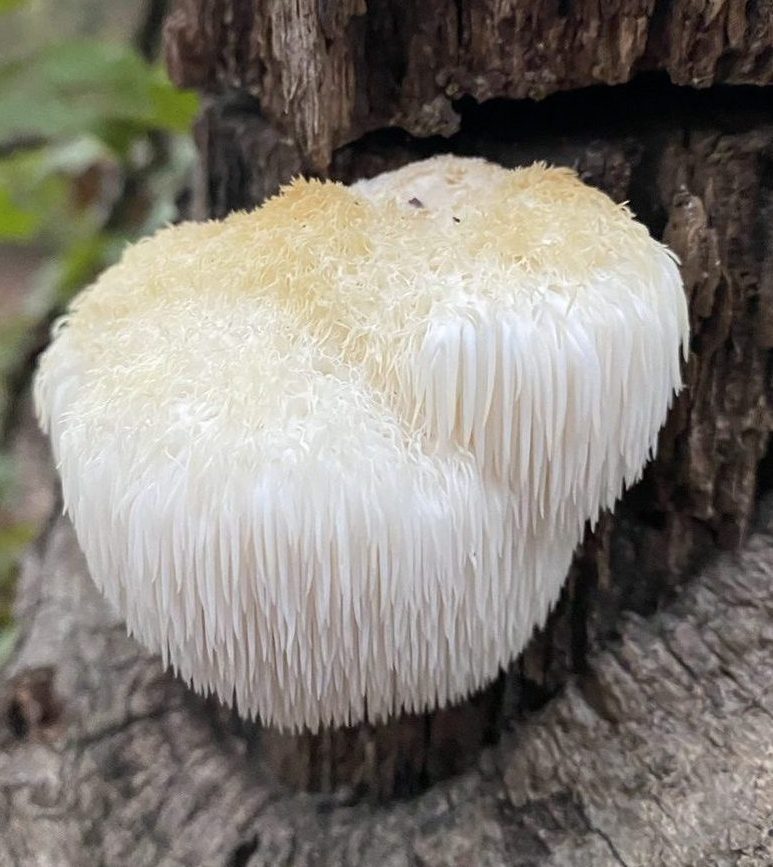
Lion’s mane (Hericium erinaceus) is one of the more well-known mushrooms, thanks to its choice edibility and growing presence in supermarkets. Lion’s mane appears as fuzzy or hairy white blobs, growing on the sides of living or dead trees. Many people like to eat them, often substituting them for crab meat, though others find them slightly bitter.
Like its equally interesting cousins, bear’s head tooth (Hericium americanum) and coral tooth fungus (Hericium coralloides), lion’s mane is also well-known for its bioactive compounds that have potential medicinal benefits. Researchers have found these compounds can stimulate nerve growth factor synthesis, potentially supporting cognitive function, which could be important for mitigating diseases like Alzheimer’s or Parkinson’s. Studies also suggest potential in treating gastrointestinal disorders such as gastritis and inflammatory bowel diseases, and in fighting gastric and colorectal cancers.
Bleeding Tooth Fungus Hydnellum peckii

Common names for this fungus either evoke disgust and fear (bleeding tooth, devil’s tooth) or pleasantness and deliciousness (strawberries and cream). However, it is not considered palatable, due to its acrid taste and rough texture. Its main claim to fame is its strange appearance, with a white to pinkish cap exuding bright red droplets, resembling a “bleeding” surface. It also has shaggy “teeth,” or basidia, underneath the velvety cap that are specialized structures for producing spores.
In his original description of the fungus, American mycologist Howard J. Banker wrote, “odor of hickory nuts, strong.” The fungus is often found under conifers in acidic soils, and its mycelium sometimes extends beyond the site of the fruiting bodies, as far as 11 feet away. It is a rare find in Appalachia, but quite striking if you are lucky enough to come across a fresh one.
Green Elfcup Chlorociboria aeruginascens
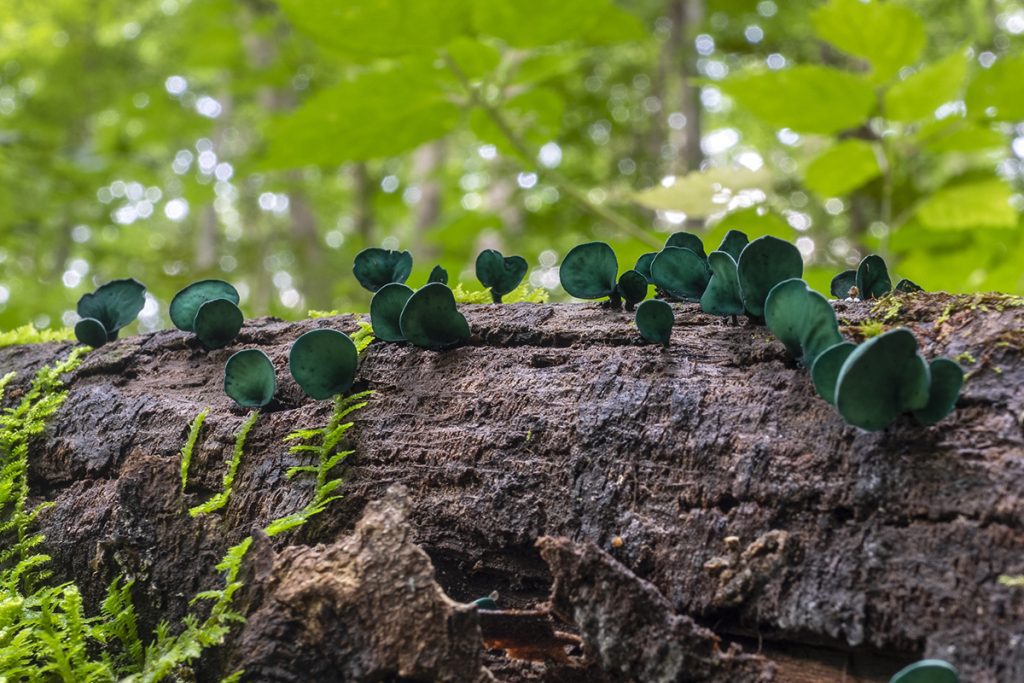
The fruiting bodies of the green elfcup are are small and easy to miss at just 1 to 5 millimeters in diameter, but you may have seen one of the distinctive features of this fungus — its mycelium stains the wood it colonizes (often oak) a vivid blue-green or teal color that is rarely found in nature.
Most green in nature comes from chlorophyll, which is unstable and breaks down. This makes the stained wood from Chlorociboria one of the few long-lasting, non-plant-based green materials in the wild. Even among fungi, most pigmentation is brown, orange, red or purple, making this color genuinely unique.
The staining is due to a pigment called xylindein, which is incredibly stable, both chemically and in light exposure. Xylindein-stained wood has been prized for centuries in decorative wood work. Because xylindein is stable and naturally derived, researchers are exploring its use in organic solar cells, natural dyes and eco-friendly wood stains.
Violet Coral Fungus Clavaria zollingeri
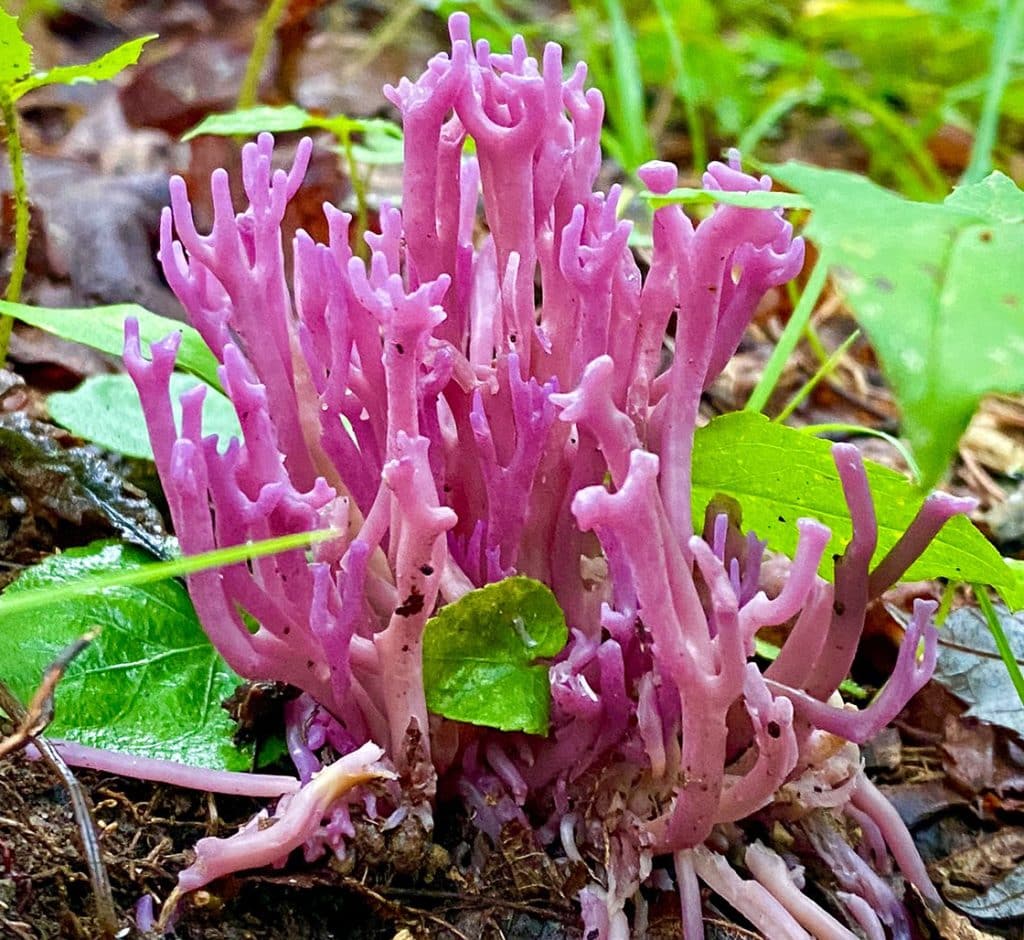
The violet coral fungus is a rare fungus found in wooded areas and grasslands of the Appalachian region. Its vivid purple branches resemble coral and can reach nearly 4 inches tall. It is often located near mossy areas and hardwood trees. Though eye-catching, it’s best for admiring, not eating. Notably, this fungus contains lectins, which can cause certain cells, like white blood cells, to stick together. Scientists use lectins in medical tests and research due to this ability.
Ecologically, the violet coral fungus plays an important role by breaking down dead plant matter, helping to recycle nutrients in the forest. Delicate and otherworldly, this unique fungus quietly helps keep ecosystems healthy.
Dead Man’s Fingers Xylaria polymorpha
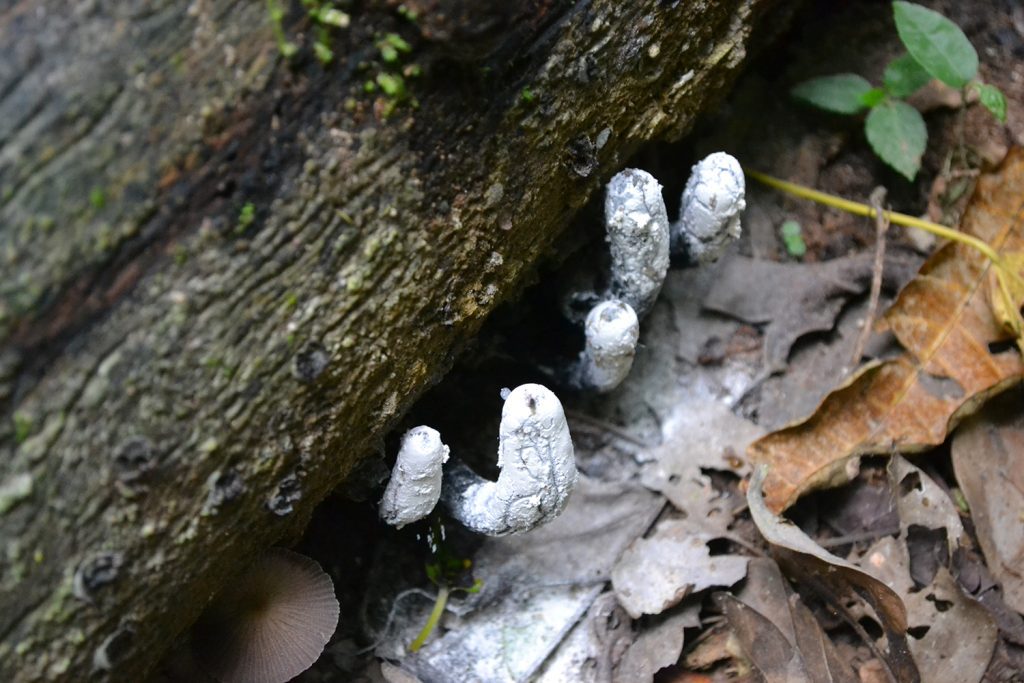
Xylaria polymorpha gets its name “dead man’s fingers” from its eerie, finger-like fruiting bodies that rise around 1 to 3 inches tall. When fully developed, it can be found poking up through moss, leaf litter or at the base of dead trees and shrubs, resembling a zombie-like hand reaching up from under the ground. This fungus can be found on buried deadwood of broadleaved trees, particularly beech trees and stumps. By breaking down the wood it inhabits, it leaves behind a nutrient-rich material that other creatures like insects can eat.
In springtime, immature Xylaria often develop a whitish to bluish coating made up of asexual spores that help them spread and colonize decaying wood. As they mature, Xylaria also produce sexual spores as they continue to break down dead trees and recycle forest nutrients.
Hemlock Varnish Shelf Ganoderma tsugae
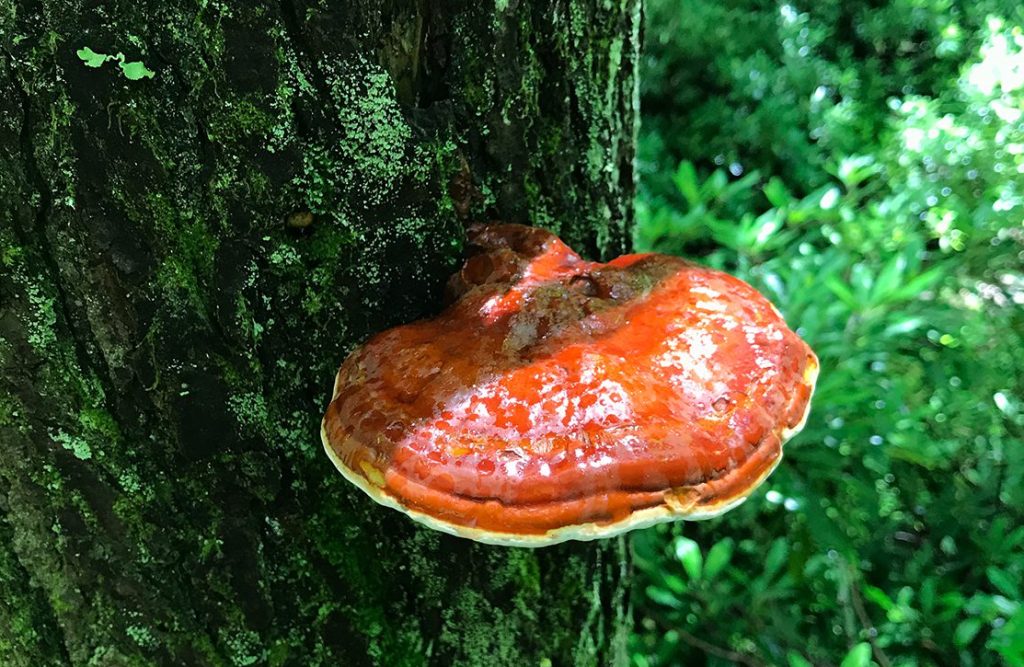
Commonly known as hemlock reishi or lingzhi, hemlock varnish shelf are shiny, fan-shaped fungi popular among herbalists and closely related to the Asian reishi mushroom, Ganoderma lucidum. Found from May through November, hemlock varnish shelf mushrooms typically grow on dead or dying Eastern hemlock trees, of which there are an increased number thanks to the invasion of the woolly adelgid insect. In Chinese, “lingzhi” translates to “spiritual mushroom” or “divine mushroom,” reflecting its traditional medicinal use. In Japanese, reishi means “ten-thousand-year mushroom,” highlighting its association with longevity and healing.
Native to the Appalachian Mountains and commonly found, these mushrooms are treasured for their medicinal properties. Their coloring ranges from red to reddish-brown or orange and has a distinct gradient across the cap. The reishi mushroom is valued for its potential health benefits, including supporting the immune system, enhancing cognitive function, decreasing inflammation and even supporting cancer treatment. However, it should be used sparingly, and doses depend on factors such as age and weight.
Eastern American Jack O’Lantern Omphalotus illudens

Woe to anyone who mistakes these beautiful orange mushrooms for chanterelles. The latter are a prized edible, but eating jack o’lantern mushrooms can make you violently ill, thanks to their toxicity. Symptoms can last for up to two days and sometimes require hospitalization. The main way to distinguish the two species is that jack o’lanterns are generally larger at maturity and have true, blade-like gills, whereas chanterelles have false gills — but never eat a mushroom you haven’t confidently identified with an expert.
Some of the toxins in jack o’lanterns that aren’t great for your digestive system show promise for use in anti-cancer drugs.
The mushrooms are generally found in shaded areas from June to November and typically grow in clusters on the trunks, stumps and roots of decaying hardwoods, especially oak trees.
Jack o’lantern mushrooms are also bioluminescent — when seen in pitch dark, they emit an eerie greenish glow.
Lobster Mushroom Hypomyces lactifluorum
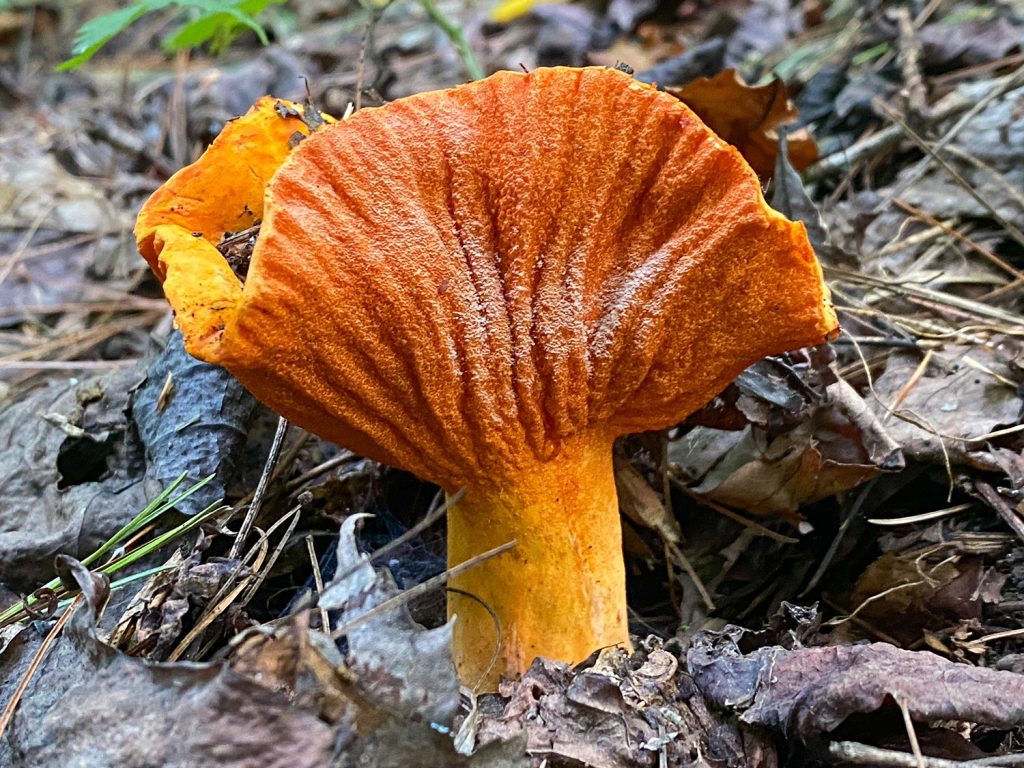
Don’t let the name fool you, lobster mushrooms aren’t true mushrooms. They are a result of a parasitic fungus, Hypomyces lactifluorum, that infects mushrooms like Russula or Lactarius, transforming them into a bright orange, seafood-scented edible alternative to shellfish.
Found in temperate conifer forests in late summer and fall, the lobster mushroom gets its name from its orange and reddish color that resembles the shell of a lobster crustacean. Not only is the coloring similar, but so is the taste! This incredible transformation in the appearance, texture and flavor of the host mushroom makes it a fascinating edible shapeshifter.
As always, don’t consume a mushroom if you aren’t 100% certain that it is safe. And if you are new to lobster mushrooms, use caution — as with shellfish, some people experience allergic reactions to them.
Fluted Bird’s Nest Fungus Cyathus striatus
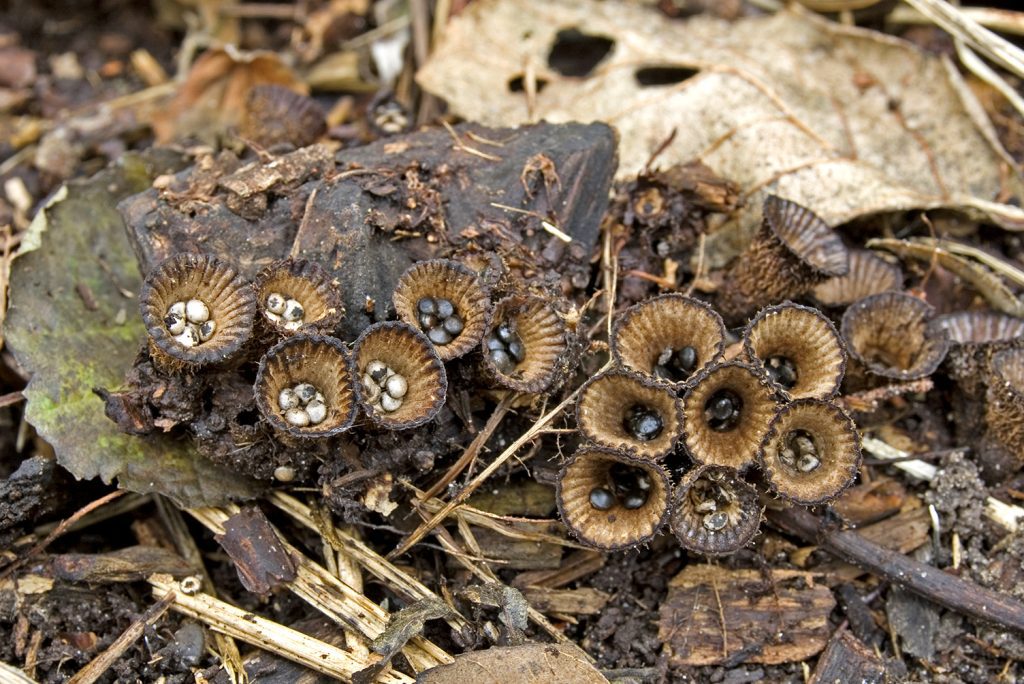
Bird’s nest fungus gets its name from its unique look: cup-shaped structures that contain spore-filled sacs called peridioles, resembling nests full of eggs. The outer layer has a very efficient way of spending a rainy day. When raindrops fall into the cup, the peridioles, or “eggs,” eject out and travel several feet. The force of the launch breaks open the “eggs” and releases an adhesive cord that can attach to nearby wood, where it can reproduce.
These fungi are commonly found from late summer to fall in areas with woody debris and can even be found in backyard gardens. Although they are not poisonous and are not regarded as dangerous to plants, animals or people, they are considered inedible. Bird’s nest fungi are not to be mistaken for devil’s urn (Urnula craterium), which has a larger cup-like shape and appears in early spring.
Related Articles
Latest News




Leave a comment
Your email address will not be published. Required fields are marked *
One response to “Appalachia’s Funkiest Fungi”
-

“We’ve selected 10 of the weirdest of the weird fungi”.
Thank you! i’m hiking the AT this spring and I need a manageable list of fungi to look for. Your list is perfect!

Leave a Comment