

Exposed: Mountaintop Removal Coal Mining
Nearly 650 mountaintop removal coal mining sites scar the landscape of central Appalachia. Neighboring communities experience greater levels of air and water pollution and suffer from higher rates of illness than similar communities located further away, says Dr. Michael Hendryx, a professor of applied health science at Indiana University who has contributed to more than 30 studies on the subject.
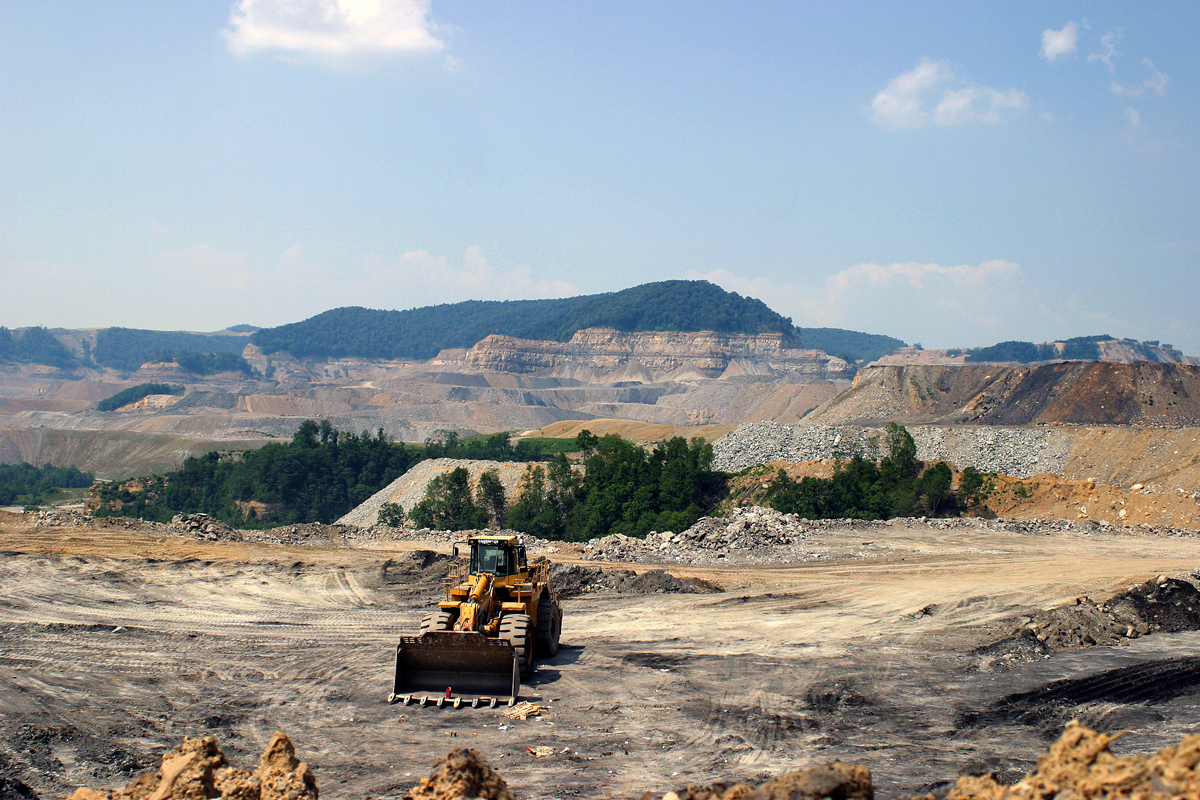
The destruction of mountaintop removal coal mining at a Roaring Fork Headwaters site in Wise County, Va. Photo by Matt Wasson, Appalachian Voices
Toxic heavy metals present in coal, such as arsenic, mercury and lead, are found in every stage of mining waste. As heavy machinery and explosives remove forests — gouging deep into the land in order to access underlying coal seams — a mixture of rock dust and chemical residue left from the explosives fills the air. A recent air quality study near mountaintop removal mining sites, co-authored by Hendryx, found that even in a controlled lab environment, this dust “can cause cancerous changes to human lung tissue,” a finding that had previously been suggested by health data in nearby impacted communities.
Once removed, rock and soil “overburden” is dumped into nearby valleys, and has buried more than 2,000 miles of Appalachian streams. The water that trickles through the base of these “valley fills” is laden with heavy metals, dissolved salts and other toxic substances, contaminating ground and surface water.
To discuss these issues, join our upcoming webinar discussion with a panel of experts this February.
Visit appvoices.org/webinars.
Streams polluted by mining waste correspond to increased rates of cancer mortality nearby, even after accounting for factors such as smoking and poverty, according to a 2010 study co-authored by Hendryx and Than Hitt, a biologist for the U.S. Geological Survey.
Damage persists even after mining ends. The unearthed coal is transported to nearby processing facilities, separated from soil and rock, then crushed into smaller chunks. This creates tons of additional dust, which includes particulate matter, sulfur dioxide and nitrous oxides that contribute to acid rain and respiratory illnesses as well as cancer. Afterwards, the coal is washed using chemicals known to cause cancer and heart and lung damage.
After washing the coal, the leftover waste — called slurry— is disposed of either in open-air, unlined ponds, or injected underground. A multitude of studies have found that the same contaminants present in mining runoff and slurry turn up in drinking water.
Related Articles
Latest News
More Stories

Halloween Approaches, and Night School Is in Session
The House of Art in Bluefield, West Virginia, looks like a haunted tower, making it the perfect location for its sixth annual haunt event: Night School. The Night School will be open every Friday and Saturday night through Oct. 31.

‘The Most Perfect Act of Love’
After losing its rural pride celebration, hundreds of people attended the second annual Affirming Sumner Pride celebration on a 24-acre farm dubbed “Fruity Farm” in Bethpage, Sumner County, Tennessee.

Signs of Life
In the Nantahala National Forest, a team of biologists spotted Indiana bats, an endangered species that hasn’t been seen in North Carolina for the last 11 years.

‘First Line of Defense’
During Hurricane Helene and its aftermath, rural fire departments and other first responder hubs played critical roles in keeping their communities safe, even without power and cut off from outside support for days or weeks after the storm. Two years later, plenty of work remains to ensure these hubs have the resources they need to operate day to day and be ready when emergencies or natural disasters strike.

The Rocky Road — and Bridge — to Recovery
Hurricane Helene is estimated to have damaged nearly 7,000 private roads and bridges in Western North Carolina. Two years later, many restoration projects are complete, but the journey hasn’t been easy — and isn’t over for others.

After 20 Years, Letcher County Prison Proposal Is Still Alive, Though Obstacles Remain
A $605 million proposal for a federal prison on a former strip mine site in Letcher County, Kentucky, championed by U.S. Rep. Hal Rogers, refuses to die, despite local opposition, a lack of support from the executive branch and numerous other obstacles.

Leave a comment
Your email address will not be published. Required fields are marked *
Leave a Comment