

Review by Jillian Randel
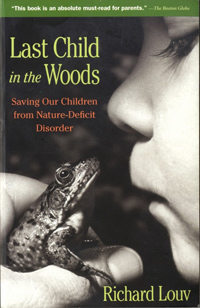
Increased outdoor playtime translates to higher levels of creativity, better critical thinking skills and a greater sense of confidence for today’s children, Richard Louv poses in his book, Last Child in the Woods: Saving Our Children From Nature-Deficit Disorder.
According to Louv, children have lost their connection to the earth. Direct experience has been cut off by machines, and children now experience higher rates of depression and anxiety. Concentration and learning problems manifest through conditions such as ADD and ADHD (Attention Deficit Disorder and Attention Deficit Hyperactivity Disorder).
Louv introduces the term “nature deficit disorder” in reference to the lack of time spent outside – for children to run wild and free.
What does nature do for us and why is it so important? Stress reduction, greater physical health, a deeper sense of spirit, more creativity and a sense of play are not skills that can be learned in the type of hands-off environment found in classrooms today.
Inventiveness and imagination of nearly all creative people is rooted in early experiences of nature, argues Louv, stressing that unstructured time outside is vital to our children’s development.
“Passion is lifted from the earth itself by the muddy hands of the young,” writes Louv. “It travels along grass-stained sleeves to the heart. If we are going to save environmentalism, we must also save an endangered indicator species: the child in nature.”
Louv offers an intelligent commentary on the situation of today’s children and the future we are creating for them through the practices that we teach. By allowing children to get outside and play, we are fostering a wealth of knowledge and skills they would otherwise miss.
Last Child in the Woods is the seventh book for Louv, who is also founder of the Children and Nature Network. Visit childrenandnature.org for more information on his movement.
Last Child in the Woods: Saving Our Children From Nature-Deficit Disorder; Richard Louv, 2005, $14.95
Related Articles
Latest News
More Stories
Neighbors Help Neighbors
A photo essay that celebrates the volunteer spirit of the grassroots group Hurricane Helene WNC and speaks to the resourcefulness, collaboration and hard work embodied by thousands and thousands of volunteers, first responders and aid workers across the region after Hurricane Helene.

Halloween Approaches, and Night School Is in Session
The House of Art in Bluefield, West Virginia, looks like a haunted tower, making it the perfect location for its sixth annual haunt event: Night School. The Night School will be open every Friday and Saturday night through Oct. 31.
‘The Most Perfect Act of Love’
Hundreds of people attended the second annual Affirming Sumner Pride celebration on a 24-acre farm dubbed “Fruity Farm” in Bethpage, Sumner County, Tennessee.
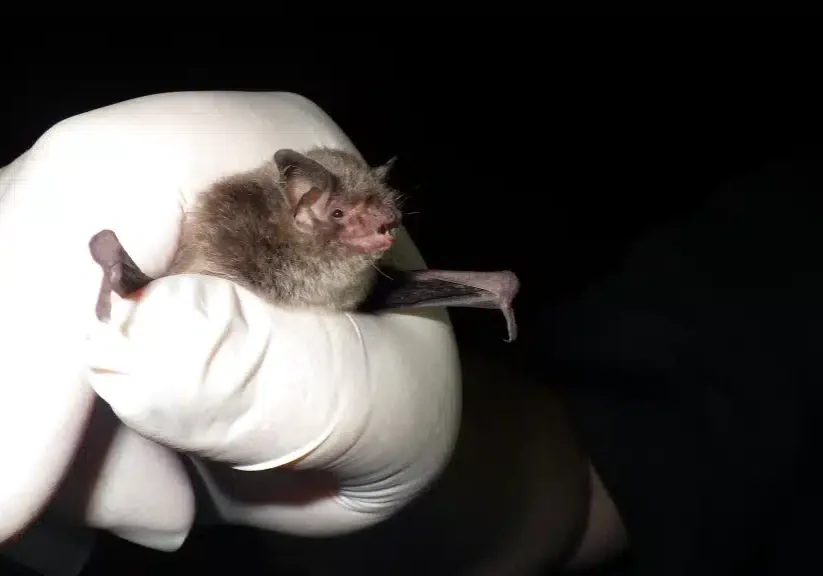
Signs of Life: Endangered Bats Found in Nantahala for First Time in More Than a Decade
In the Nantahala National Forest, a team of biologists spotted Indiana bats, an endangered species that hasn’t been seen in North Carolina for the last 11 years.

‘First Line of Defense’
During Hurricane Helene and its aftermath, rural fire departments and other first responder hubs played critical roles in keeping their communities safe, even without power and cut off from outside support for days or weeks after the storm. Two years later, plenty of work remains to ensure these hubs have the resources they need to operate day to day and be ready when emergencies or natural disasters strike.
The Rocky Road — and Bridge — to Recovery
Hurricane Helene is estimated to have damaged nearly 7,000 private roads and bridges in Western North Carolina. Two years later, many restoration projects are complete, but the journey hasn’t been easy — and isn’t over for others.

Leave a comment
Your email address will not be published. Required fields are marked *
Leave a Comment