
Miners and Advocates Push for Better Black Lung Benefits and Protections
By Annie Jane Cotten and Rance Garrison
On a rainy May afternoon, nearly 20 members of the Southwest Virginia Black Lung Association Chapter II gathered in Big Stone Gap to discuss the black lung crisis, which has been rising among Appalachia’s coal miners, often at younger ages.

The Black Lung Association provides a support network for miners and their families who have been impacted by black lung disease, with a focus on securing more robust protections, health care and compensation for affected workers. At the May meeting, members discussed how potential further reductions to federal mine safety agencies could affect those currently working in the mines.
When a miner is diagnosed and is approved by the Department of Labor for the black lung program — a complicated process involving doctors and lawyers — they and their dependents are entitled to medical and financial benefits. But these benefits have not kept pace with rising inflation.
Despite their limitations, these funds are a vital lifeline to miners and their families struggling to pay the bills.
“If we did not have that money, that 1,100 and some dollars, we would not be able to survive. There’s no way,” says Vonda Robinson, vice president of the National Black Lung Association, whose family receives benefits because her husband has black lung disease.
Benefit levels are currently tied to the federal employee pay scale rather than the real cost of living, which often means benefits don’t keep up with inflation. Inflation rose by 8% in 2022, but the annual benefits increase the following January was only 4%.
Miners and advocates have repeatedly lobbied Congress for legislation, such as the Black Lung Benefits Improvement Act, that would tie benefit levels to cost of living adjustments annually. The bill has been introduced multiple times since 2014, but despite widespread public support from coalfield communities, it has not yet been enacted into law.
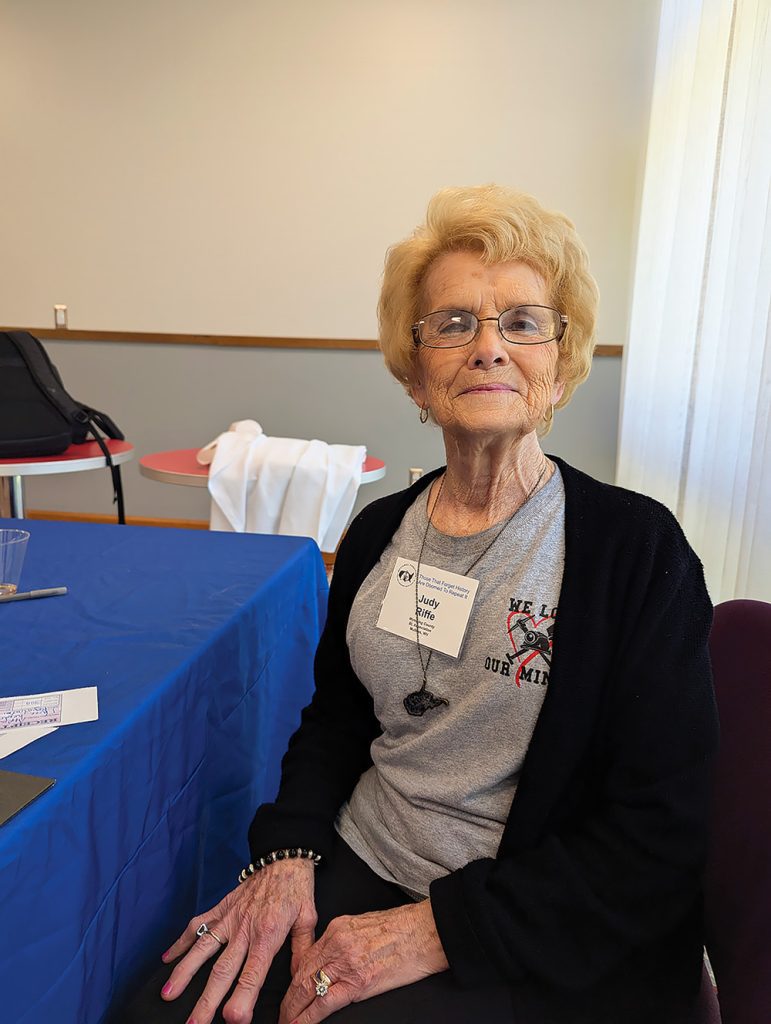
According to Judy Riffe, a miner’s widow and a member of the Wyoming County Black Lung Association in West Virginia, it’s critical to pass the legislation not only for retired miners who have been diagnosed with black lung, but also for young miners who are still working, even after a diagnosis.
“They know they can’t survive on the current benefits,” Riffe says. “They have families to raise. So they keep working for as long as they can, even when it hurts them.”
This year, local governments in Kentucky, Ohio, Pennsylvania, Virginia and West Virginia have passed resolutions calling on Congress to raise black lung benefit levels and tie them to inflation. Appalachian Voices, the publisher of this newspaper, and regional Black Lung Associations have followed the lead of Appalachian Citizens’ Law Center and other community leaders in introducing these resolutions.
So far, these resolutions have received warm receptions by county boards and other local government leaders, and more are expected.
Related Articles
Latest News


Leave a comment
Your email address will not be published. Required fields are marked *
Leave a Comment