

Arc of Appalachia launches campaign to purchase and protect 1,336 acres in Nicholas County, West Virginia
Over the years, West Virginia’s land and waterways have been polluted and misused by coal companies and other environmentally destructive industries.
“West Virginia is a really special place,” says Dave Bassage, New River Gorge program coordinator at New River Conservancy, a regional conservation organization. “It has shown itself to be incredibly resilient to all the extractive demands that various industries have had over the years.”
Conservation organizations work hard to protect as many natural spaces as they can, including one Ohio-based nonprofit that recently launched a campaign to preserve more than 1,000 acres in the state, including riverbank along the Gauley River.
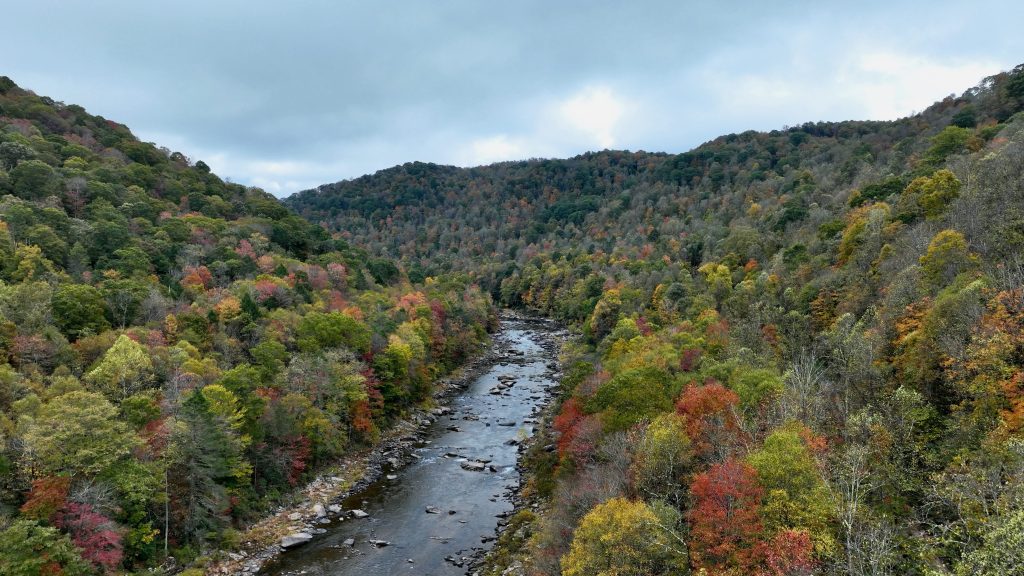
How to save 5 miles on the Gauley River
For over 30 years, Arc of Appalachia, a nonprofit land conservancy headquartered in Highland County, Ohio, has been dedicated to protecting and preserving natural regions in Appalachian Ohio. Their work also involves hosting nature workshops and stewarding 90 miles of public trails in the state. In recent years, the nonprofit has expanded its efforts into Eastern Kentucky and, now, West Virginia.
“What we are here to do is save natural communities,” says Director Nancy Stranahan.
Right now, the nonprofit is campaigning to purchase and protect 1,336 acres in Nicholas County, West Virginia, including 5 miles along the Gauley River and 1 mile of Big Beaver Creek. According to the nonprofit, the campaign “seeks to protect and enhance the water quality of a river renowned for its high scenic, recreational and biological values.” The property is upstream of Summersville Lake, the largest manmade lake in the state, and the “Beast of the East” section of the Gauley River, which is well-known for whitewater rafting.
“I’m hoping that we can bring our education and our guided hikes down there so that we can open it up for special events,” Stranahan says. The land is surrounded by private property and will be closed to the public, except for volunteer workdays and other events.
Arc of Appalachia is looking to raise over $3.6 million to acquire permanent protection of the property. A nonprofit partner is currently holding some parcels of the property while Arc of Appalachia continues its fundraising efforts. As of publication, the nonprofit has raised more than $2.3 million.
“This [area] is surrounded by properties that are smaller,” Stranahan says. Previously, the property was set for commercial development, with 10% of the ridgetop land cleared for future cabins. “It really is the last chance for this property — to keep it a large hunk and not get it separated and cut up and to keep it as a forest.”
This particular stretch of the Gauley River has seen increased development in recent years, explains Bassage of New River Conservancy. He says that it’s “wonderful” and a “big sigh of relief” that “responsible conservation” efforts are being undertaken to preserve part of a waterway that he loves dearly.
“Frankly, the Gauley River is why I stayed in West Virginia for all these years,” says Bassage, who is originally from Ohio. “It’s a magical place to paddle, and it’s a very diverse ecosystem. And that needs to be protected as we’re starting to see those developments come in.”
Earlier this year, American Rivers, a national conservation organization, named the Gauley River watershed as one of America’s Most Endangered Rivers due to pollution from coal strip mining by South Fork Coal Company in the Cherry River watershed, a key tributary to the Gauley.
South Fork Coal Company has a long history of environmental infractions, including discharging metals into streams at rates as high as nine times the legal limit, and operating an illegal coal-hauling road through the Monongahela National Forest. The road was shut down earlier this year. In August, South Fork Coal Company – which declared bankruptcy in February — announced it would not continue its coal mining operations or find a buyer for its mines. Appalachian Voices, the nonprofit that produces this publication, has been involved in litigation against the company and advocacy for the Cherry River and the Monongahela National Forest alongside West Virginia Highlands Conservancy and the Allegheny-Blue Ridge Alliance.

Future of conservation in West Virginia
“West Virginia is based on its waterways,” says Mike Jones, conservation manager of West Virginia Rivers Coalition. “We have literally tens of thousands of streams. Several hundred named rivers. These waters are habitat to endemic and endangered species like the hellbender and candy darters. They also provide pure, clean water that ultimately becomes drinking water.”
He highlights that West Virginia waterways are also the “heartbeat” of the state’s growing outdoor recreation economy.
“Anything that we can do to keep these waters clean, pure, cool, shaded is a good thing,” Jones continues. “We all benefit from it. We’re going to benefit from the ability to go hiking along it, fishing in it, hunting in the areas. We benefit from the economic boom that outdoor recreation has become.”
Jones is involved in a campaign to protect 16 waterways in the Monongahela National Forest under the National Wild and Scenic River designation. According to Jones, 9% of the people in the country can trace their drinking water back to this forest.
“We just think it would be something really positive to bring to this state to get permanent designation and permanent protections for these headwaters,” Jones says.
Looking ahead, Bassage is concerned about the current political landscape and how deregulation will affect environmental conservation, but he is heartened by community and advocacy pushback in the state.
“There are a number of really vibrant organizations that are working actively to care for land conservation in the state,” Bassage says about West Virginia Rivers Coalition, West Virginia Land Trust and other organizations. “Sometimes when you have something to push against, it makes people step up to the plate and dig in harder. And I’m seeing that a lot.”
Visit Arc of Appalachia’s campaign page to learn more about “Saving Five Miles on the Gauley River.” Additionally, volunteers created a campaign film featuring wildlife from the area, and an independent songwriter and environmental activist, Jenny Morgan, created “The Gauley River Song.” Listen to it here.
Related Articles
Latest News
More Stories
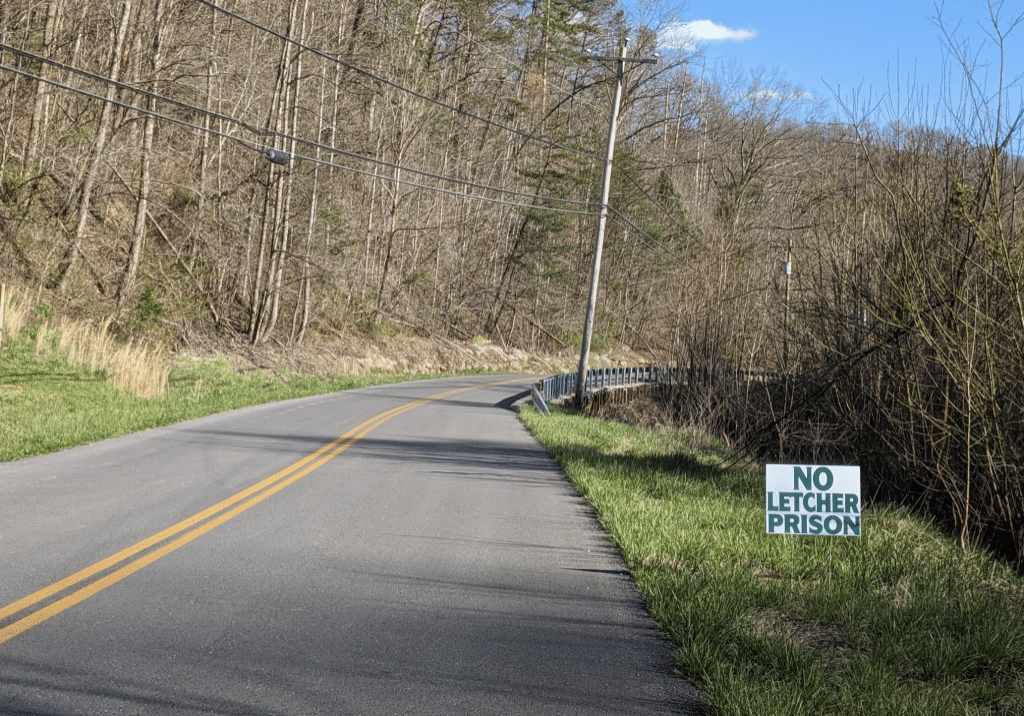
After 20 years, Letcher County prison proposal is still alive, though obstacles remain
A $605 million proposal for a federal prison on a former strip mine site in Letcher County, Kentucky, championed by U.S. Rep. Hal Rogers, refuses to die, despite local opposition, a lack of support from the executive branch and numerous other obstacles.
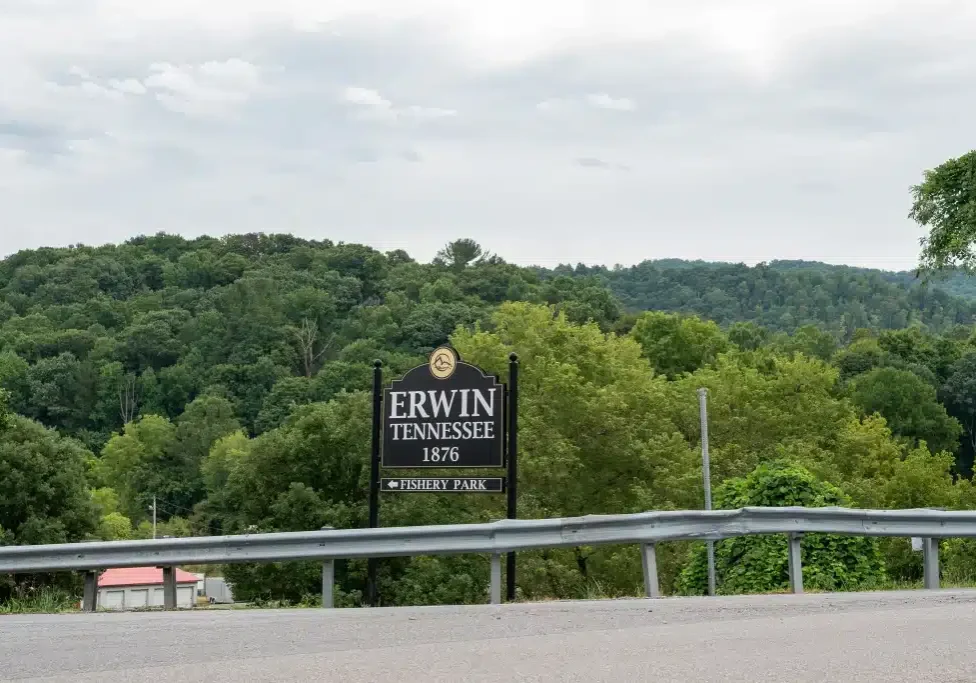
The Washout and Rebuild
For nearly two years, residents of Unicoi County, Tennessee, have had to make do without a hospital after Hurricane Helene destroyed the rural hospital. Ballad Health, which owns the hospital, broke ground on a new location — in another floodplain — in August 2026.

The Shenandoah Salamander
The Shenandoah salamander is a woodland salamander, which has adapted to life at higher elevations away from water. This sparkling rarity lives among the dry leaves, cracked logs, and stony hillocks on the highest peaks of Shenandoah National Park.
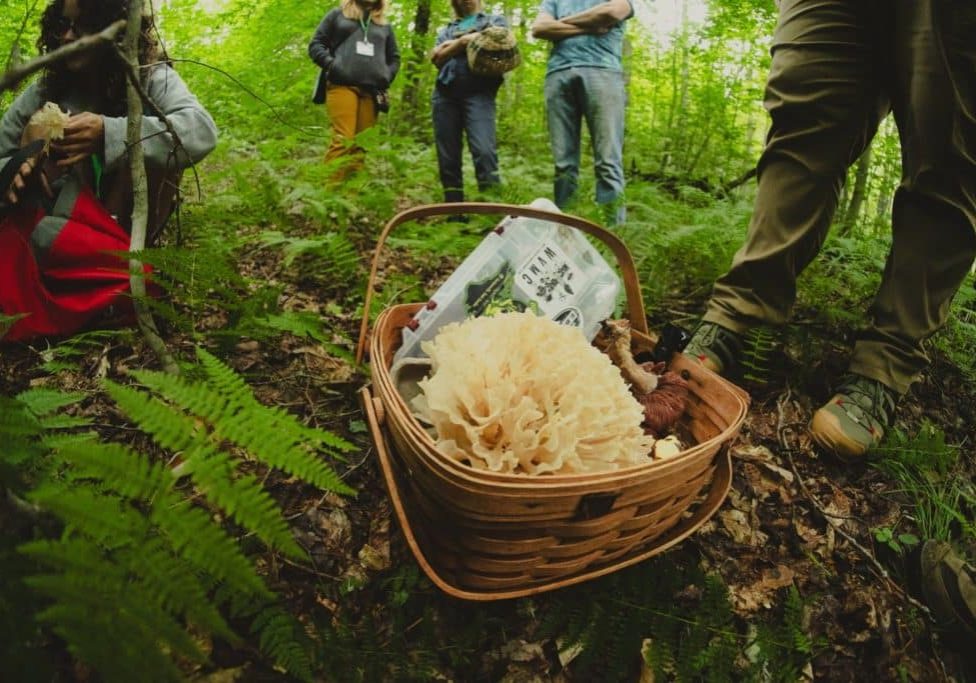
‘Foraging Is a Way of Connecting’
Foraging has experienced a modern resurgence, partly because of social media, online groups, the pandemic and people wanting to connect with nature. It also builds community, whether in person or online.

Colorblind Viewfinders Make Appalachian State Parks More Accessible
Virginia State Parks is the first park system in the nation to have a colorblind viewfinder at each one of its 43 locations — thanks to the dedication of one park ranger. Other states are following suit.
The Future of Film is in West Virginia
Many well-known TV and film productions have developed out of the Mountain State in years past, but the West Virginia Film Office is looking to the future to continue to grow the film industry.

Leave a comment
Your email address will not be published. Required fields are marked *
Leave a Comment