
Rule Change Would Gut the Clean Water Act
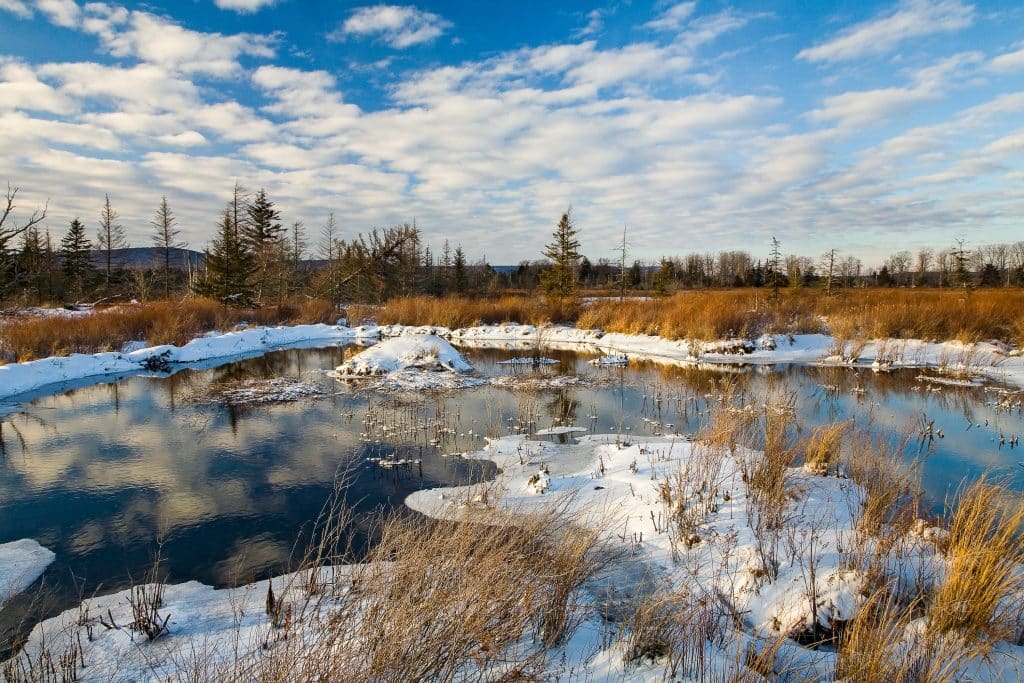
The Trump administration has proposed a rule change that could drastically limit the scope of the Clean Water Act. The change would redefine the “waters of the United States,” or WOTUS, in a way that would eliminate protections for most wetlands across the nation.
“It’s pretty concerning,” says Autumn Crowe, deputy director of WV Rivers. “We’re still wrapping our head around all the implications. But the more I learn, the more concerned I get.”
The rule change could strip protections from 80 to 90% of previously protected wetlands, according to Ben Prater, director of Defenders of Wildlife’s Southeast Program, making it one of the most profound weakening of the Clean Water Act since its passage.
River on Fire Prompts Passage of the Clean Water Act
In 1969, Time Magazine published dramatic photos of the Cuyahoga River on fire. The fire was one of many that occurred in Cleveland, Ohio, as a result of high levels of pollution in the river. At the time, the nation’s waterways were used as dumping grounds for all manner of pollutants, from industrial chemicals to raw sewage.
The images sparked widespread outrage, and that outrage led to the passage of the Clean Water Act in 1972. The act placed limits on new discharges of pollutants into waterways and set goals for cleaning up already polluted waterways. More than 50 years later, the Clean Water Act remains a foundational environmental law.
The protections of the Clean Water Act apply only to “navigable waters,” which Congress, in the original language of the bill, defined as “waters of the United States” or “WOTUS.” For years, this vague definition has been a source of confusion, with each new presidential administration issuing regulations specifying which waters were covered and which weren’t.
In 2006, the Supreme Court weighed in on the question in the case Rapanos v. United States. The five-justice majority was split on what test to use to determine if waters or wetlands qualified as WOTUS. Four of the justices signed on to an opinion written by Justice Antonin Scalia, arguing that WOTUS should apply only to waters or wetlands with a “continuous surface connection” to “relatively permanent standing or flowing bodies of water.”
However, Justice Anthony Kennedy proposed a somewhat broader definition, arguing that WOTUS should include waters and wetlands with a “significant nexus” to waters that are or could be made navigable. Because there wasn’t a majority agreement as to the proper test to use, lower courts could pick and choose which of these two tests to use, resulting in different determinations in different areas.
In 2023, the Supreme Court again had a chance to weigh in on the definition of WOTUS in the case Sackett v. EPA — and this time, there was consensus. Building off of Scalia’s opinion in Rapanos, the majority held that WOTUS includes waters and wetlands with a “continuous surface connection” to “traditional interstate navigable waters.”
‘Everything is on the Chopping Block’
The new definition of WOTUS proposed by the EPA and Army Corps of Engineers is an attempt to clarify the Supreme Court’s decision in Sackett. The proposed rule goes further in limiting protected waters, stating that waterways would qualify as WOTUS only if they contain surface water throughout the “wet season.”
“They’re changing definitions, and those definitions aren’t based on science at all,” Crowe says. “They’re not based on the actual hydrology of the features. They’re using vague definitions and coming up with new terms like ‘wet season’ that aren’t defined. This is not based on any scientific approach. This bedrock law has protected our water resources for decades, but now everything is on the chopping block.”
The most significant impact of this requirement is that many wetlands and tributaries could no longer receive protection under the Clean Water Act.
“No matter how we define waterway or wetland by law, they’re still ecologically important for stream and water quality health,” Prater says. “Continuing to strip protection and federal oversight will only result in more damage to those precious waterways. It will hurt biodiversity and threaten local fisheries and recreation economies.”
Upstream tributaries — even those that do not flow year-round — contribute to downstream water quality.
“The proposed rule would make it legal to dump pollutants into or destroy some intermittent tributaries, resulting in worsened water quality downstream,” says Jennifer Imm, UCLA Public Service Law Fellow for Appalachian Voices, the organization that produces this publication. “This will make conditions worse for species that live in downstream habitats, as well as people who depend on these downstream waterways for drinking water or recreation.”
She notes that the rule changes could also increase flood risks.
“Filling in upstream waterways could alter the flow of water, potentially resulting in greater flooding risks for downstream communities,” Imm says. “Additionally, since wetlands act as natural filtration systems and floodwater storage areas, removing their protections would make water quality even worse and further increase the probability of dangerous flooding events.”
The impacts from the change could be even more severe in Appalachia because of the geology of the region. Many parts of Appalachia feature karst topography — where a predominance of limestone, which can be dissolved by acidic water, leads to many caves, sinkholes and underground streams.
“One of the things we’re very concerned about regionally is this idea of the seasonality of surface water,” Prater says. “Wetlands and floodplains in the Southeast are disconnected on the surface — they’re connected by groundwater and seeps. A lot of our wetlands are small and have already experienced degradation. This change will harm smaller, more disconnected wetlands that are essential for recharging and cleaning groundwater and providing habitat for a variety of species.”
Crowe agrees.
“In Appalachia, we have a lot of isolated wetlands,” she says. “We also have a lot of karst regions. We have a lot of subsurface flow. One of the provisions would sever Clean Water Act jurisdiction if a stream goes subsurface. We have some iconic rivers that go subsurface, including the headwaters of the Elk River and the Lost River.”
‘None of This is Based on Science’
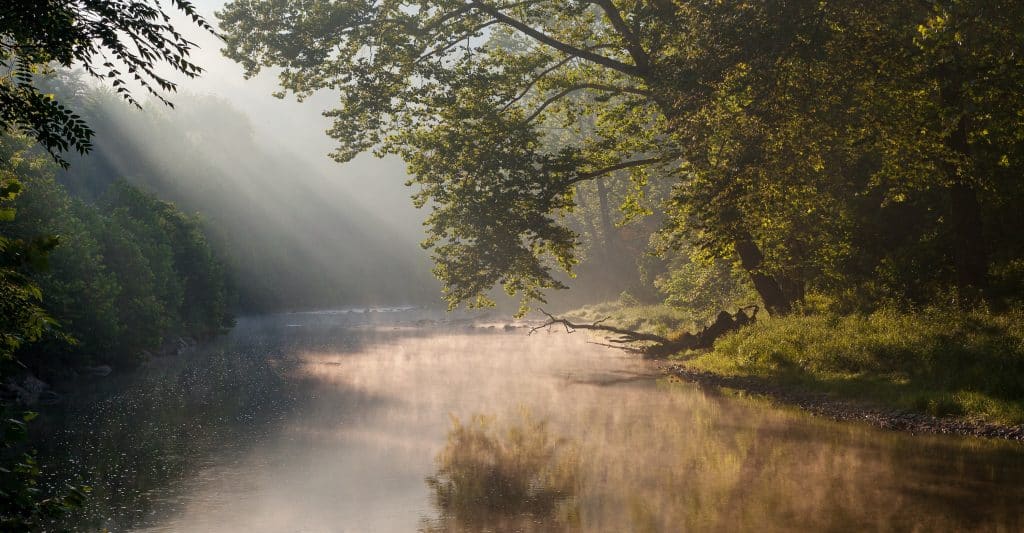
Limiting protection for subsurface water doesn’t make scientific sense, according to Crowe.
“It’s a connected system,” she says. “Surface water is connected to groundwater. You can’t exclude one without impacting the other. None of this is based on science.”
The rule change could make it far easier to pollute wetlands and other waterways.
“The implications of losing protections is something I’m also still trying to wrap my head around,” Crowe says.
Crowe explains that federal water quality standards wouldn’t apply to unprotected streams. Unprotected streams wouldn’t be placed on a state’s impaired stream list — which helps the state identify waters that are too polluted for things like fishing or drinking water and helps state and federal regulators develop plans that restrict the total amount of a particular pollutant allowed into a waterway. “
“It’s not just the loss of protection under the Clean Water Act, but everything that would come with that — pollution-control budgets, improvement plans,” she adds. “A stream could be polluted, but there would be no controls in place to get it back on the road to recovery.”
Prater agrees that restoration efforts could be harmed.
“We need more restoration of our waterways,” he says. “But this rule may disincentivize or make it more challenging to do restoration work.”
Some members of Congress have expressed alarm over the rule change.
“The new Waters of the United States rule is a deeply unfortunate step toward polluting and destroying Virginia’s and our nation’s wetlands — which mitigate flood risk, improve water quality and support our local economies, especially in Southwest Virginia,” says U.S. Sen. Tim Kaine, D-Va. “This is yet another example of what we’ve seen from the Trump administration all along: a callous disregard for our natural environment and a desire to obliterate landmark environmental laws and regulations. Instead, we should work on a durable solution that protects our nation’s streams, wetlands and waterways, and provides certainty to farmers, ranchers and local economies.”
The impacts of the rule are likely to be felt the most in states that don’t have their own state-level water quality standards, as well as in states where state-level protections apply only to those waters also covered by the Clean Water Act. This includes several Central Appalachian states: Kentucky, North Carolina, Tennessee and West Virginia. Virginia has robust water quality rules in place.
Tennessee had broader protections, but rolled them back last year in response to the Sackett decision. Kentucky’s legislature also voted to restrict protections in response to Sackett. Gov. Andy Beshear vetoed the measure, but the legislature overrode his veto.
“Kentuckians deserve a government that protects one of the commonwealth’s most abundant natural resources,” Beshear wrote in his veto message. “Failing to protect all water sources in Kentucky will result in pollution, sickness and more dangerous flooding,”
“This puts a lot of pressure on state and local governments to figure out ways to protect their waterways,” Prater says. “This change will have different impacts in different states, but water is a resource that isn’t confined to a single state. It has to be considered at that national scale.”
Related Articles
Latest News


Leave a comment
Your email address will not be published. Required fields are marked *
One response to “Rule Change Would Gut the Clean Water Act”
-

We want the EPA to protect human and non-human health.

Leave a Comment