
Creating New Appalachian Monuments
Monuments Across Appalachian Virginia Is ‘Expanding the Idea of What a Monument Can Be’
Rocky Mount, Virginia, is getting a new Civil War monument — but this one is different from most across the state. This statue will honor and recognize 70 Black soldiers from the community who fought for the Union. It is one of nine monuments that are part of the Monuments Across Appalachian Virginia project.
“Monuments are a statement of power and presence in public spaces,” says Lauren Trice, MAAV project coordinator. “We wanted these monuments to represent undertold stories and bring attention to things that have been ignored.”
MAAV is a three-year project funded by a $3 million grant provided by the Mellon Foundation and hosted by Virginia Tech. It features nine monuments that explore different forms and a variety of the region’s stories. The monuments take a variety of forms: traditional statues, a children’s book, an album and a music festival, a quilt and more.
“Launched in 2020 as a $250 million initiative — and doubled in 2023 to $500 million — the Monuments Project supports efforts to express, elevate, and preserve the stories of those who have been overlooked and explores how we might foster a more complete telling of who we are as a nation,” according to the Mellon Foundation webpage.
“I come from an art background,” says Sarah Plummer, a Virginia Tech post-doctoral associate who leads the project’s monument audit team. “I’m excited about nontraditional monuments, about expanding the idea of what a monument can be.”
‘The most significant thing I’ve done in my career’
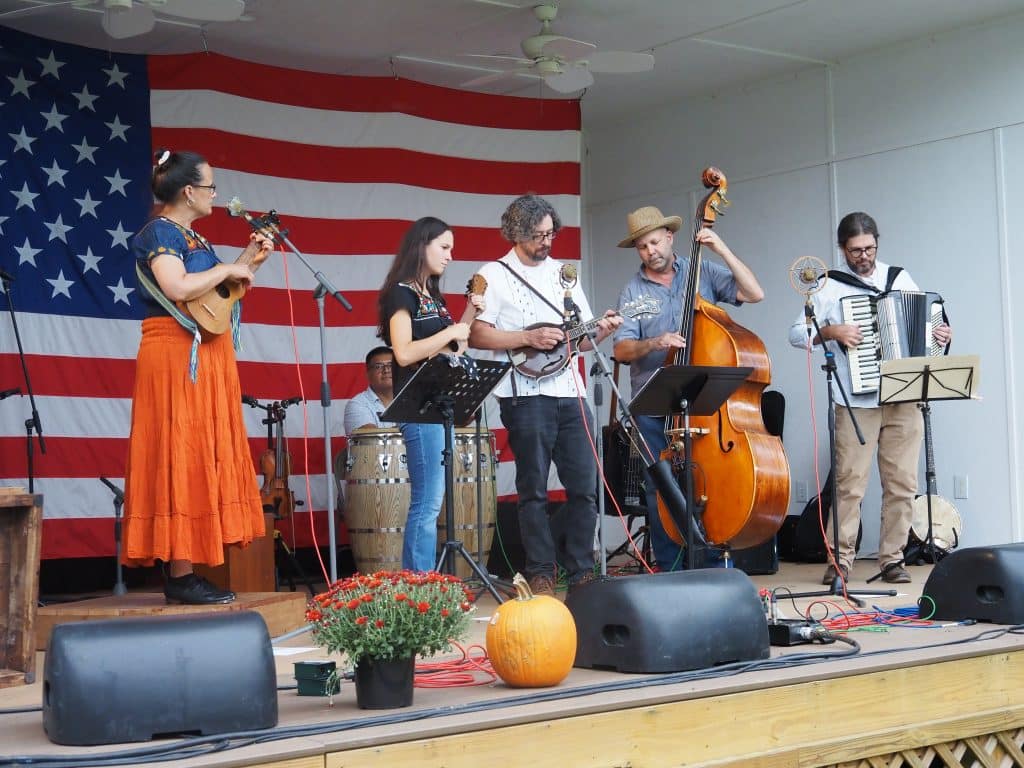
In Luray, Virginia, a monument to the Hispanic heritage of many of the town’s residents takes the shape of Montañitas (“Little Mountains”) Reimagined, a music festival that organizers hope will be an annual event, along with an album of “Mexilachian” music produced by the local musical group the Lua Project. There’s also an educational curriculum for schoolchildren.
The Lua Project’s Estela Diaz Knott grew up in Luray with Amy Azano, director of the Virginia Tech Center for Rural Education. Their parents kept them updated on what both women were doing after they grew up and moved away — and kept urging them to reconnect.
“My mom kept me abreast of what Estela was doing, and I invited them to perform at a rural education summit,” says Azano.
The Lua Project grew out of Knott’s desire to create a new style of music that married both sides of her heritage. Knott’s mother is from Mexico — the first Mexican to live in Luray, according to Knott. Her father is White. They married in 1967, shortly after the Loving v. Virginia Supreme Court ruling legalized interracial marriages.
When Knott was young, her mother would host community fiestas, first in their church basement, and later, when the gatherings grew larger, at the local Veterans of Foreign Wars post.
“My mother realized that to make it easier on her children, who were biracial and bicultural, it was really important to educate people about our cultural heritage and traditions,” Knott says. “Her point throughout her life was that people are afraid of what they don’t understand.”
When Azano reached out to her about the MAAV project, “I started to think about, what if we brought that back?”
The idea didn’t come right away.
“When I read through [the MAAV application], I didn’t know,” Knott says. “It’s a monument? What can we do? I’m not a visual artist, I’m a musician. Amy explained that they’re trying to redefine and reimagine what monuments can look like, and she reminded me of the fiestas.”
For the Lua Project, Estela liked to write songs based on the experiences of people around her. She wondered if that could become a type of monument.
“What if we did some interviews and took some oral histories of people in the Shenandoah Valley, and those would inspire some songs?” she says. “We ended up with a whole album and performed those songs at the festival in Luray.”
That festival, like her mother’s community fiestas, was held at the VFW, which served as the community partner for the project.
“Back then, there was a lot of change going on,” Knott says. “There was a lot of racism at the time. With the VFW, you’re talking about veterans who traveled all over the world. They were a lot more accepting than others, especially at the time.”
Azano praised the VFW, too. The first festival was held in September 2024 in the run-up to the presidential election.
“The VFW were wonderful partners throughout all of this,” she says. “We had concerns about the election and the atmosphere. They just said, ‘We’ve got you. You’re safe here, and we’re going to make this work.’”
The festival attracted around 200 people. It was a celebration of Latine Appalachian culture with art, food and music. The Lua Project performed the entirety of the Los Appalachianos album.
“That festival was for me the most significant thing I’ve done in my career as an education scholar,” Azano says. “It was so meaningful to do something at home and feel accepted and invited into that space with people who knew you back when. For both of us, it was a real homecoming of sorts.”
“We always wanted to find projects that told stories that pushed at the boundaries that we in Appalachia often find ourselves in about what Appalachia is — only certain kinds of art, only White, Scots-Irish culture,” says Plummer, the Virginia Tech post-doctoral associate. “We wanted to focus on stories that had been denied or excluded from traditional archives or histories.”
‘Untaught and untold’
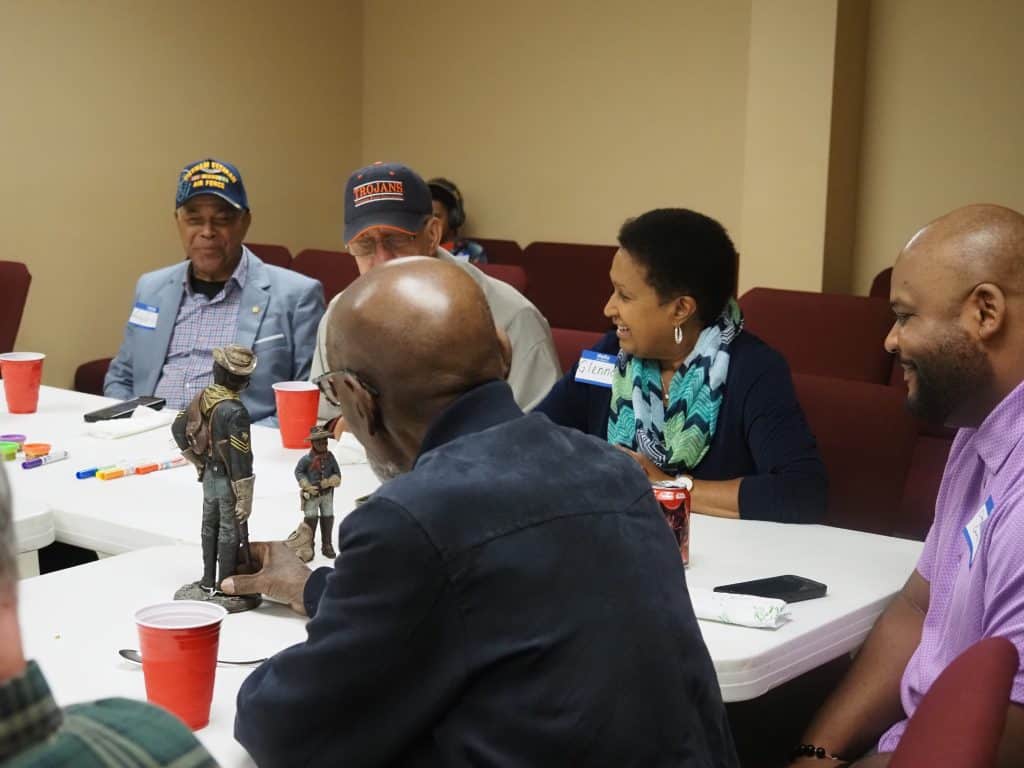
In January 2026, members of the Raising the Shade project will unveil the Rocky Mount monument, the culmination of an 18-month effort to research the 70 Black men from the rural Virginia town who signed up to fight in the Union Army during the Civil War and to engage with the community about their history.
“We knew that this was information that has been untaught and untold,” says Glenna Moore, spokesperson for the MAAV project, Raising the Shade. “I’m 73 years old and the Virginia history book that I was taught from had no mention of the U.S. Colored Troops.”
Community engagement in the project planning process was vital for Eric Anspaugh, president of the Franklin County branch of the NAACP.
“Education: That’s been the real key,” he says. “We worked at that in a number of ways. We’ve engaged with probably close to 50 groups and organizations — social, religious, for-profit, nonprofit — where we’ve made presentations.”
The team hosted a community listening session at Harvester Performance Center that included the two sculptors working on the project. Another event at Franklin County’s W.E. Skelton 4H Educational Conference Center included keynote sessions and workshops.
The full title of the project is “Raising the Shade, Franklin County 1850-1910.”
“That time frame is important,” Anspaugh says. “It captures what we know historically about the time leading up to and during the Civil War, and that first bit of reconstruction.”
They worked with Plummer to find out what they could about the soldiers and their fates.
“The most wonderful thing we did that will survive this is the research done on each soldier,” Moore says. “That was just awesome. Sarah Plummer took this project to heart. She and some of her students were very helpful in doing the research. They were able to get pension records for most of the soldiers.”
The histories for each soldier are on the project’s website.
Only one of the soldiers who survived the war returned to Franklin County, Corporal George Holland. Census records from 1870 show him living on a Rocky Mount farm with a wife and three children. By 1880, his family had grown to eight children. In the 1910 Census, they were living on the same farm. Six children and nine grandchildren lived with them.
“This research confronted us with what life was like before and after the Civil War for these men,” Plummer says. “It was a glimpse of this time period that we don’t always get unless it’s in a sanitized or distant way. Seeing what life was like for the more average African-American man trying to make a living after the war was surprising and challenging for students.”
The statue that will be unveiled in January will be one of less than two dozen across the nation memorializing Black Union soldiers, according to Moore. As in many places, Confederate monuments have been topics of discussion in Franklin County.
“We’re actively trying to have our Confederate statue on the courthouse lawn moved to a more appropriate place,” Moore says. She says the High Street Cemetery, where Blacks historically could not be buried, is under consideration.
“We were very intentional in communicating that this project is not a tit for tat,” Moore says. “It is not intended to be that at all. The story is a monument in itself, but we just felt that a visible, tangible monument was necessary to put an exclamation point on it. If not for those 200,000-plus Black soldiers, the Union might not have been the winner.”
The bronze sculpture by Paul DiPasquale and Rick Weaver will be unveiled at the historic First Baptist Church on Jan. 18 at 3 p.m., with a reception at the Harvester Performance Center to follow. The First Baptist Church was built in 1899 by African Americans in Rocky Mount and is being renovated as a community center. It will include information about the 70 soldiers, in addition to providing the permanent location for the statue.
The powwow is the monument
Another project is called the Yesáh Community House, but faculty coordinator Jessica Hernandez says the building, while important, isn’t the actual monument for the Monacan Indian Nation.
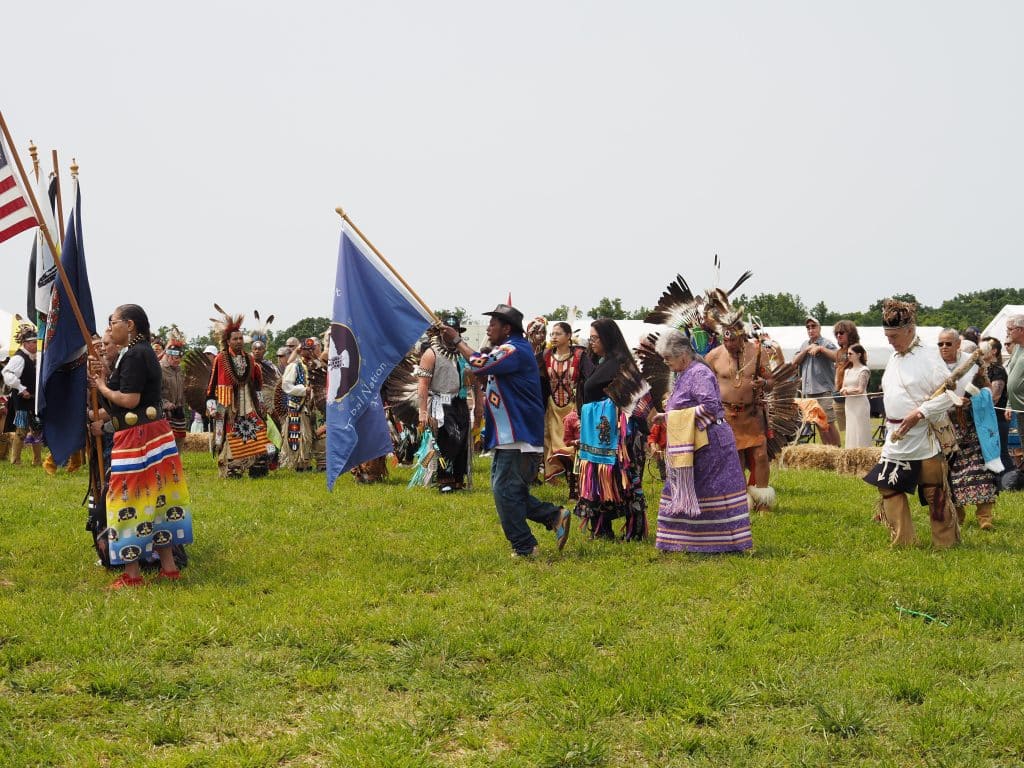
“The monument in this project isn’t the actual structure, it’s the powwow,” she says. “It’s them finally practicing their culture on their land.”
The Monacan Indian Nation has been hosting an annual powwow — a two-day celebration of Monacan culture and history with storytelling, song and dance — for 30 years. But with long-sought federal recognition of the tribe in 2018, the tribe was able to purchase the 1,300-acre Laurel Cliff property in Amherst County, Virginia.
“For the Monacan people, this project will serve to elevate and preserve our oral histories — traditionally shared through storytelling, song and dance to ensure that nothing more is lost for future Monacans,” collaborators wrote on the project website.
“This is an extremely important project for the Monacan Indian Nation,” Hernandez says. “It’s a way for them to set up a foundation on their land. It’s a turning point. When we did the inauguration, one of the elders mentioned that this was a dream 30 years in the making.”
The 33rd annual Monacan Indian Nation Powwow will be held on June 6 and 7, 2026.
“The work that we do has been rewarding and meaningful and difficult,” Plummer says. “It’s both exhausting and makes you ready to do more.”
The other Monuments Across Appalachian Virginia projects include:
- 23/54 Project: Celebrating Black Appalachian Community: The project honors 23 parents who stood up for their 54 children’s education in a legal case that was a precursor to the Brown v. Board of Education lawsuit that ended legal segregation in the United States. The Pulaski County, Virginia, monument is a community quilt.
- Labor in Motion: Honoring the Voices that Shaped the Coalfields: A monument in Pound, Virginia, to pay tribute to the region’s labor history. The monument, supported by Appalachian Voices, which produces this publication, will include a pocket park with a stage and a recognition of the town’s coalfield labor history.
- Forest Botanicals Region Living Monument: A living monument and sanctuary at High Knob near Norton, Virginia, to celebrate “the cultural, historical, medicinal and economic importance [of] Appalachian forest botanicals.”
- Green Pastures: A Sacred Place for African Americans in Appalachia: The Green Pastures Recreation Area in Alleghany County, Virginia, was built in the 1930s for African Americans to use because the nearby Douthat State Park did not allow Black people. The monuments project included the development of a children’s book about the park.
- Yesá:sahį Language and Sacred Places Project: This project to revitalize the language spoken by Monacan, Tutelo and Saponi Tribes takes the form of a digital exhibit that features Yesá stories, art and traditional ecological knowledge.
- The Travelers Inn: Black Appalachian History in Bluefield: This project seeks to uplift Black Appalachian history, including the Travelers Inn, a historic lodge in Bluefield, West Virginia, that was listed in the “Negro Travelers Green Book,” which helped Blacks find accommodations in the Jim Crow-era South.
Related Articles
Latest News


Leave a comment
Your email address will not be published. Required fields are marked *
2 responses to “Creating New Appalachian Monuments”
-

This is all very hopeful; i like the expanded and creative definition of what a monument can be.
-
Looks like DEI is alive and strong in Virginia


Leave a Comment