
Feeling Powerless on Their Own Property
Landowners, neighbors and community advocates push back against a massive methane gas pipeline buildout in Tennessee
Amy Sexton’s mother is one of 29 individuals and organizations that went to court over eminent domain proceedings related to the Ridgeline Expansion Project, a 122-mile-long methane gas pipeline in Tennessee.
Enbridge, a multibillion-dollar Canadian fossil fuel company, is contracted to build and own the pipeline, which is intended to deliver gas to the Tennessee Valley Authority’s proposed new Kingston Gas Plant — the same site as the 2008 Kingston coal ash disaster.
Sexton lives with her mother, who owns nearly 600 acres of forest in Morgan County, Tennessee. Sexton’s paternal grandfather purchased the property in the 1920s, and it’s remained in the family over the decades. In the 1940s, her grandfather allowed East Tennessee Natural Gas, now a subsidiary of Enbridge, to install a pipeline through the property.
The family hasn’t enjoyed dealing with the pipeline over the years. Yet it wasn’t until Enbridge representatives announced they would construct Ridgeline alongside the old pipeline that they began to have problems.
“We thought that if they’re going to put another pipeline down, they should have been able to do it within the bounds of the 1949 agreement,” Sexton says. “But they wanted more.”
They didn’t like the initial terms presented by Enbridge’s representatives, from potentially facing liability for trespassers damaging the pipeline with all-terrain vehicles to low initial lease offers.
“We held out,” Sexton says. “We didn’t sign.”
In August 2025, Sexton’s mother concluded court-ordered mediation regarding eminent domain proceedings. Through this process, Sexton feels that their concerns were finally acknowledged, but is unsure — yet hopeful — that the agreement will be upheld.
“We had no choice,” Sexton says. “They were going to take the land … We just made them aware that we want the land put back exactly as close as it can be to what it was.”
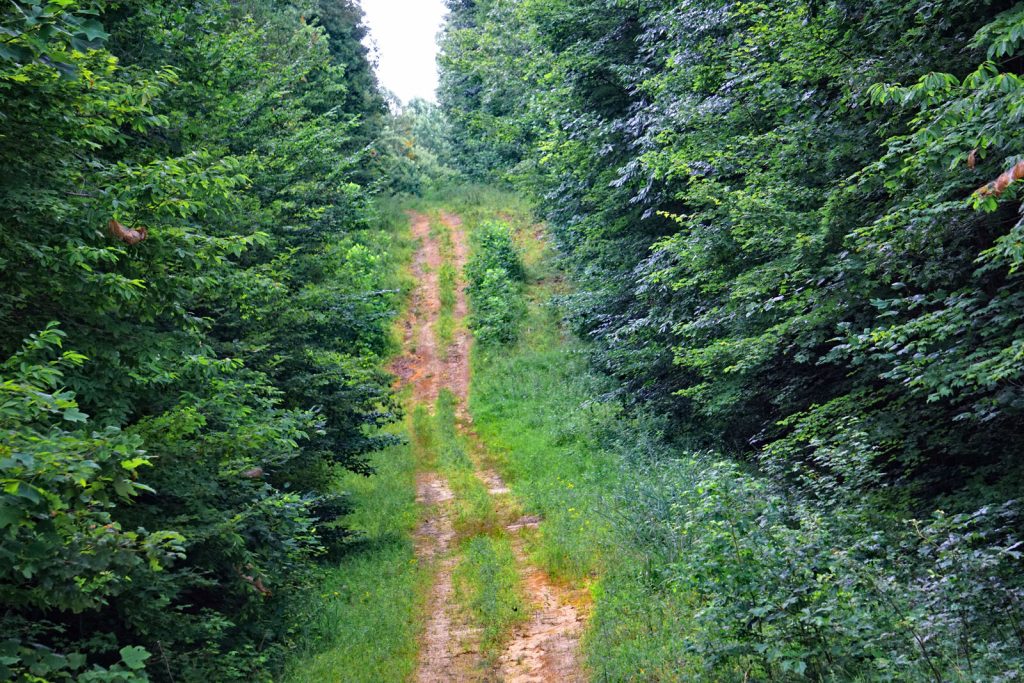
Methane gas pipeline buildout in Tennessee
Sexton’s mother is one of many landowners, neighbors and community advocates dealing with the repercussions of the massive buildout of methane gas — dubbed “natural gas” by the fossil fuel industry — in Tennessee. This huge increase in gas infrastructure is driven in large part by the TVA.
TVA wants to retire the Kingston and Cumberland coal power plants and build new methane gas facilities, which would require installing new pipelines. TVA has contracted with major pipeline companies, Enbridge and Kinder Morgan, to construct and operate the pipelines. Enbridge’s Ridgeline pipeline, which is 30 inches in diameter, will run through eight counties, crossing hundreds of waterways and numerous private properties, including on Sexton’s family land.
The Southern Environmental Law Center sued TVA on behalf of Appalachian Voices, the nonprofit that produces this publication, and two other environmental organizations, alleging that the utility violated federal law by contracting with Enbridge before considering cleaner and more affordable power alternatives. Pipeline construction began in October 2025, and the lawsuit is still pending as of publication.
In Middle Tennessee, the Tennessee Gas Pipeline Company, owned by Kinder Morgan, is constructing a 32-mile pipeline that spans three counties. On behalf of Appalachian Voices and the Sierra Club, the SELC and Appalachian Mountain Advocates filed a lawsuit challenging permits issued by the U.S. Army Corps of Engineers and the Tennessee Department of Environment and Conservation required for the Cumberland Pipeline. In April 2025, the court ruled in favor of the agencies, allowing pipeline construction to proceed.
Another smaller methane gas pipeline, not associated with any TVA project, was built and operated by Enbridge and became operational in July 2025. The East Tennessee Natural Gas System Alignment Program involves four projects across Tennessee, Virginia and North Carolina, including 16.5 miles of new methane gas pipeline in Knox and Sevier counties, as well as a compressor station in Jefferson County.
‘They’re bullies’
When Teresa and her partner purchased property in Seymour, Tennessee, they were aware of an existing easement for a 16-inch-diameter pipeline. They didn’t know Enbridge was planning to build a new 24-inch-diameter pipeline right next to it.
According to Enbridge’s System Alignment project’s website, the pipeline will be “located along the existing pipeline system’s right-of-way where possible to minimize impacts to landowners and the environment.”
But for Teresa, the impact of the project by Enbridge has been anything but minimal. Teresa is a pseudonym for a source who requested anonymity from The Appalachian Voice due to fear of retribution from Enbridge.
“We had no idea what we were dealing with,” Teresa says, emphasizing that Enbridge did not prepare her or her neighbors for what would occur. “What they said and what they’ve done are kind of two different things, and our experience has just — really, for a lot of people — has been a nightmare.”
Enbridge’s existing easement on Teresa’s land was 50 feet wide, but Enbridge wanted even more land, requiring the developer to cut down dozens of trees on her property. She refers to Enbridge’s first proposal as a “joke.”
“They tried giving me just the timber price instead of what we really deserved,” Teresa says.
Teresa refused the developer’s initial offer of less than $3,000, but this didn’t stop Enbridge representatives from showing up at odd hours, including one Sunday afternoon while she was away from home. The representative left his card and didn’t securely latch Teresa’s front gate, allowing her dogs to escape her yard. Her neighbors had to track down and return her pets.
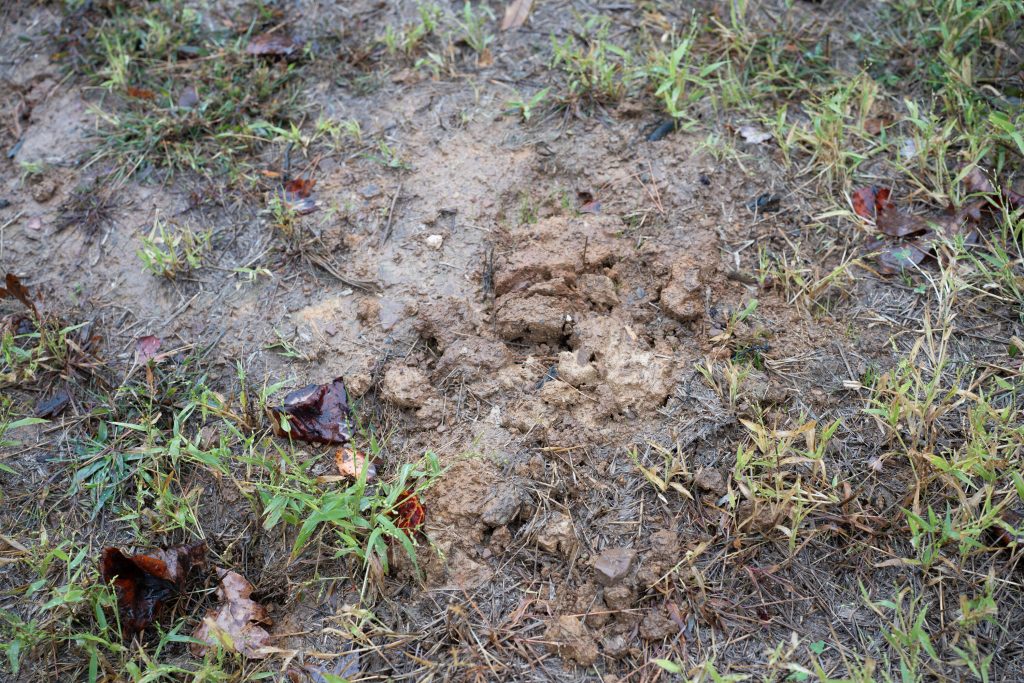
Sexton has had a similar experience with Enbridge in Morgan County. “They’re bullies,” Sexton says about the developer. “I’ll just — that’s the nicest thing I can call them.”
At first, a representative “hounded” Sexton’s mother nonstop to sign property agreements. These offers, she explains, weren’t even enough to cover property taxes on the land.
“He thought she was a little old lady [who] didn’t know anything,” Sexton says. They hired a lawyer to help them navigate the mountains of paperwork and understand precisely what they were agreeing to.
“What about some of these people who didn’t know what they were signing?” she asks.
Enbridge has reported strong quarterly earnings this year and, as of this writing, has been attracting significant investor attention.
“Our all-of-the-above approach to energy investment continues to surface value for shareholders,” says President and CEO Greg Ebel in an August 2025 press release about the company’s second quarter 2025 financial results.
For Teresa, who has advocated for herself and her neighbors, the disparity between Enbridge’s high profits and the low first offers she and others received, especially for those struggling financially, is troubling.
“There are a lot of people hurting right now,” Teresa says about neighbors who took low offers or didn’t receive payment at all because they didn’t own their property. “Some of the people’s property that they went through were hurting, and yet they didn’t take care of them.”
Ultimately, she wishes she and her neighbors were treated with more respect.
“The number of times that I was told, ‘I would never lie to you,’” Teresa says. “The number of times that we were promised something that we didn’t get — the not keeping us updated on what was happening, or we would find out, like the day before, something major was happening.”
Currently, Enbridge is wrapping up construction for its System Alignment project. However, for Teresa, the process is not over — from concerns about erosion caused by its construction to the need to keep trespassers off the right-of-way on her property.
Lack of transparency and information in the ‘impact zone’
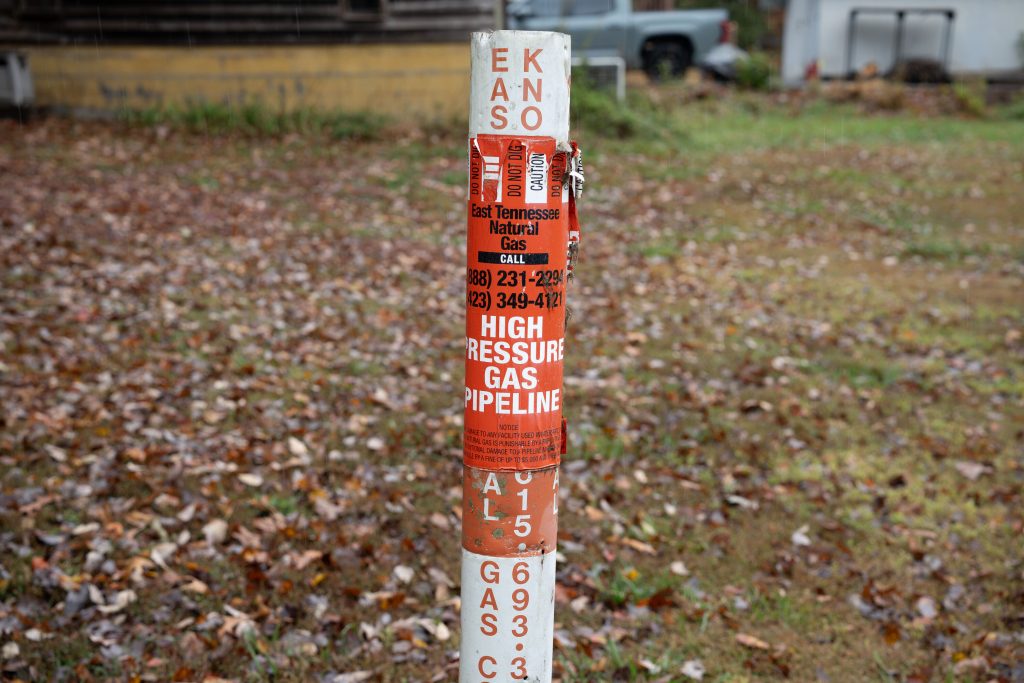
Barbara Miller owns a 40-acre property — her own “little slice of paradise” — near her daughter in Dickson County, Tennessee. The Cumberland pipeline will run right beside her property, so she is in the “impact zone” if something goes terribly wrong. After serving in the U.S. Army as a psychiatric nurse for years, she is no stranger to the term.
“[Impact zone] means don’t be in that zone if something happens, and hopefully nothing will,” Miller says. “But you never know. You can’t. Nobody can make that promise to you.”
Miller’s fear is not unfounded in Dickson County. In 1992, two Tenneco Inc. gas pipelines exploded, destroying three homes and more than 400 acres of farmland — at least five people were injured. Miller has friends and family who still remember that day.
“Nobody needs that kind of trauma in their life, because that’s never going to leave you — it’s always going to be there in the back of your mind for the rest of your life,” Miller says. “You don’t want to think you’re suddenly going to be immolated because of something that has gone wrong with something that you didn’t really want there in the first place.”
For residents like Miller who live near pipeline projects, the lack of information and transparency from TVA, which is a federally owned utility, and private pipeline developers has been challenging.
“There’s no transparency,” Miller says. “Supposedly, there is [transparency] from TVA. We need more transparency from TVA, which I don’t think has ever existed. And a private company like Kinder Morgan feels that they don’t owe the public anything in terms of transparency, because they’re a private company.”
In Seymour, Tennessee, Rich and Lucy Henigan have lived across the road from the old East Tennessee Natural Gas pipeline for nearly 50 years.
“We get a letter once or twice a year, just reminding us that the pipeline is here and telling us what we should be worried about,” says Rich Henigan. Other than a passing thought about what to do if they smell gas or if it explodes, he explains that they have “sort of gotten used to it.”
The couple is not in favor of investing in fossil fuels, including Enbridge’s System Alignment project, which is located across the road from their home. They attended community meetings to learn more about it before the project was approved.
“They should have, could have, done a better job at explaining why they needed to put in another pipeline,” Rich Henigan says. When he did sign up to receive additional information, it was very technical and regulatory in nature.
“It didn’t mean anything to me,” he says.
Once construction began, Lucy Henigan shared that the area was “noisy all the time.” Ultimately, they got used to the ruckus — though she doesn’t love the result.
“We now can see houses you couldn’t see before because they took down all these trees, which seemed unnecessary to me,” she says. “Obviously, this is not vital to my life — survival and stuff — but it changes things that I didn’t ask for.”
‘Everything that I possibly could’
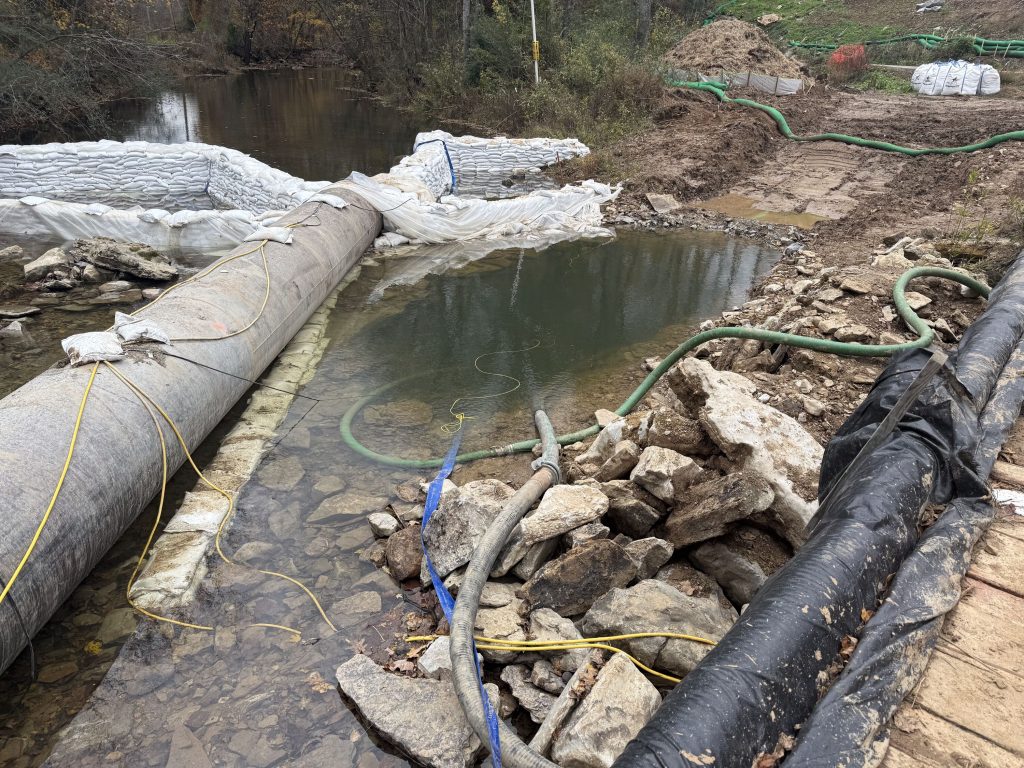
Miller used to play in Big Bartons Creek as a child in Dickson County, Tennessee. It was a magical place where she spent her summers frogging and wading in the pristine water. Soon, the Cumberland pipeline will run through the creek bed, with tree removal along the banks increasing erosion and removing a natural filter for pollutants.
“In spite of all of the assurances people want to give you, you can’t project into the future that something is not going to happen or is going to happen,” Miller says. “But things decay and degrade, and things do happen.”
Enbridge and Kinder Morgan have poor track records when it comes to pipeline leaks and explosions. Among other incidents, one of Enbridge’s oil pipelines caused a massive 2010 oil spill in Michigan, and a methane gas pipeline exploded in Kentucky in 2019 that killing one person and hospitalizing six more. Meanwhile, a Kinder Morgan pipeline station exploded in Middle Tennessee in August 2023.
Beyond safety concerns, many residents, like Miller, want the region’s power providers to consider renewable energy sources, rather than rely on fossil fuels.
“We need to think greener; we need to think cleaner,” Miller says. “There are ways to have the energy we want.”
Recent data indicate that renewables are more cost-effective than fossil fuel alternatives. For instance, a 2024 International Renewable Energy Agency report concluded that “91% of newly commissioned utility-scale renewable capacity” provided cheaper power than even the lowest-priced fossil fuel alternative. Meanwhile, a 2023 International Energy Agency report found that “an estimated 96%” of new utility-scale solar and onshore wind offered “lower generation costs than new coal and natural gas plants.” And a 2022 Appalachian Voices report found that TVA could create 20 to 30 times more jobs if it replaced the Cumberland coal-fired power plant with clean energy instead of methane gas.
Sue and Keith Havens live a quarter of a mile upstream of the proposed Ridgeline pipeline in Morgan County, Tennessee. The couple, who lived in Michigan during Enbridge’s Line 6 2010 oil spill, aren’t confident in the pipeline developer’s track record for environmental safety, nor do they believe methane gas is the answer to the region’s energy demands. They are part of Ridgeline Voices, a grassroots group dedicated to fighting the Ridgeline pipeline.
Ridgeline Voices recently held a rally with other partners, including Appalachian Voices, to protest the start of its construction. The group also raised funds to purchase water monitoring equipment to hold Enbridge accountable for protecting local water during Ridgeline’s construction.
“We’re trying to set up citizen water monitoring systems to make sure that when they do cross the waterways, that they do it according to all the rules and regulations that they’re supposed to follow,” Keith Havens says.
Keith Havens explains that, though the fight against massive corporations like Enbridge might feel daunting, he had to take action. He fondly shares that their children are proud of them for “trying to fight the good fight.”
“Down the road, I want to know that I tried to do everything that I possibly could,” Sue Havens says.
Related Articles
Latest News

Leave a comment
Your email address will not be published. Required fields are marked *
Leave a Comment