
Navigating Long-Term Hurricane Helene Recovery: A Day-in-the-Life of a Disaster Case Manager in Cocke County, Tennessee
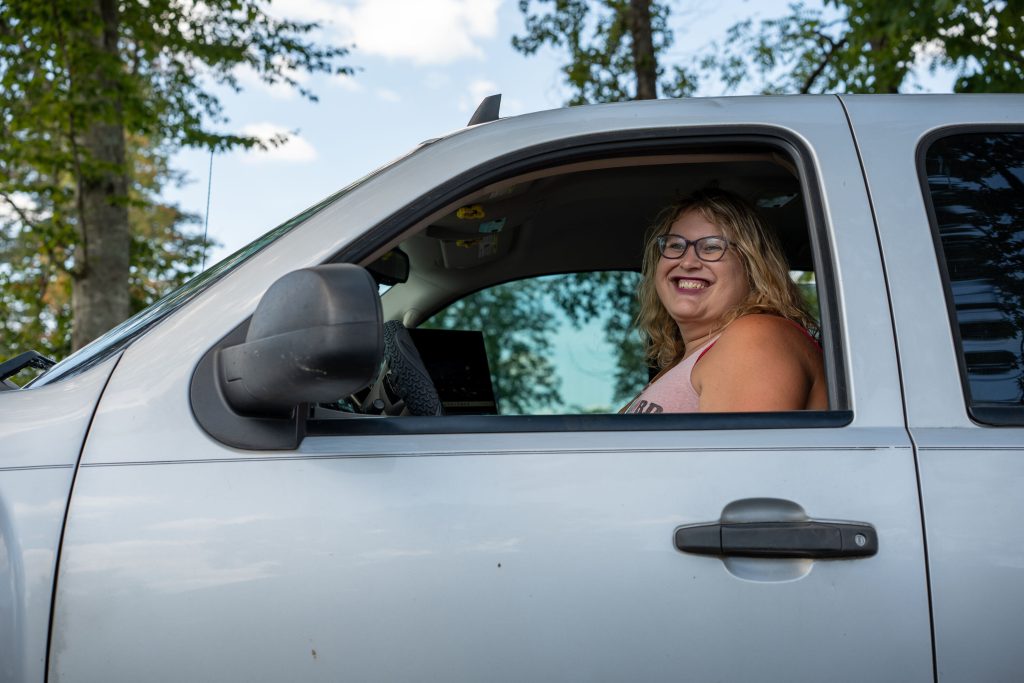
Chrissy Miller is a disaster case manager in Cocke County, Tennessee, who helps survivors of Hurricane Helene access resources, fulfill unmet needs, develop recovery plans and try to make sense of difficult situations. For Miller, who was also impacted by the storm, it’s hard to rein in the scope of her work.
“I get paid for 40 hours a week, and I work probably 80 hours a week, because I have too much passion for everybody,” Miller jokes.
On Sept. 17, 2025, she started the day early with one of her clients, Bobarosa Saloon, a motorcycle-friendly campground, bar and restaurant along the French Broad River in Del Rio, Tennessee. The business had been devastated by floodwaters and is still in the process of rebuilding.
The owners, Bob and Jessica Recchia, were hosting hundreds of bikers for lunch along their route for an antique motorcycle ride. Miller offered to help them wrap a few hundred pulled-pork BBQ sandwiches — not part of her regular disaster-case manager job description.
“They were a little stressed out this morning,” Miller says, so she offered to help. She’s wearing a pink tank top that reads “Thicker Than Water” from Bean Trees Cafe, one of her other clients. Bean Trees Cafe is slowly reopening after being shut down by Hurricane Helene in Hartford, Tennessee.
Officially, one of the ways Miller is helping the Recchias is with housing. The couple and their adult daughter live on the property and lost their homes due to Helene. They are currently living in campers on the property. Miller is working with other nonprofit partners to help them get back into more permanent housing.
“That way they can both have their houses back, and even though they lost, like all the other property, at least they’ll have those choices,” Miller says. “And then they can start building back the business and not focus on the housing part.”
For their businesses, Miller has directed them to small business grants and resources, including the Governor’s Response and Recovery Fund and FoundersForge, a nonprofit entrepreneur center serving Northeast Tennessee.
Jessica Recchia is grateful for the support she has received from Miller and many others; however, she has been surprised by the slow pace of the overall recovery process.
“For those of us [who] have been through it, we’re trying to get our lives back together,” she says.

What does a disaster case manager do?
Disaster case managers like Miller serve clients who are impacted by natural disasters, assessing survivors’ situations, helping them develop recovery plans, connecting them with resources and advocating for their needs.
Some disaster case management programs are federally supplemented at a state level through FEMA, such as the North Carolina Disaster Case Management Program. Others, like Miller’s, may operate in tandem with long-term recovery groups, or LTRGs, as outlined in the National Voluntary Organizations Active in Disaster framework. Miller works for the United Methodist Committee on Relief, which is partnered with the county’s LTRG.
While the Cocke County Long-Term Recovery Group’s role is to gather resources and funding, Miller meets with her clients to identify unmet needs and then presents those needs in the LTRG’s committee meetings.
“Hopefully, with all of our groups of partners there, we can solve these problems,” Miller says.
Following a holistic approach to long-term recovery, Miller explains that the work is not only about helping people rebuild their homes but also addressing all the fallout issues that arise from experiencing natural disasters. From directing people to mental health services to walking people through endless piles of regulatory red tape, she hopes to alleviate some of her clients’ stress.
“What I see the most with a lot of clients is we’re getting resources for them, but they’re not in their home — they’re not recovered yet,” Miller says.
One of the main refrains she hears from homeowners and small business owners is how exhausted everyone is, having worked hard for over a year to get to some semblance of “recovered.”
“Day and night, they’ve been doing construction projects on top of their jobs … or running their families,” Miller continues. “And, oh, when they get done with that, on their days off, they’ve got to think about how they can fix their house or fix their business and keep things rolling. I’ve relieved a lot of that stress, but I don’t relieve it all for them.”
‘I relate with them’
After Bobarosa Saloon, Miller checked in on Theo Crouse-Mann, a homeowner whose historic home was severely damaged by flooding in Del Rio, Tennessee. Despite having flood insurance, Crouse-Mann and his family were left to fund and handle a lot of the rebuilding on their own if not for the generosity of individuals, faith institutions and nonprofits like the county’s LTRG.
Speaking to Crouse-Mann about his troubles from the past year and how some of the trauma from the experience is starting to bubble up, Miller says, “You’re getting to a stage where you’re close to knowing that you’re almost back to living in your house, and you’re almost done.
“And it’s like you can stop from all this hard work you’ve done, and then you’re just exhausted — I am — and that’s where you’re able to think about that mental side of it, and that trauma that still comes from it,” she continues.
Miller was already volunteering and coordinating resources before she was hired as a disaster case manager. She was also personally impacted and displaced by the flood.
“I really work hard on getting everybody back into their places, because I relate with them,” Miller says.
Before Hurricane Helene, Miller worked as a whitewater rafting guide and lived in Del Rio, Tennessee. Early in the morning of the flood, she woke up to find her yard completely underwater. Once it rose to her chest, she knew it was time for her and her neighbors to leave.
“I know water, and I knew what it was doing at the time,” Miller says. “I was prepared, but not that prepared. I didn’t think it was going to be that bad.”
Thankfully, she had two rafting trips scheduled for later that day and had access to her gear for her and her neighbors, a husband, wife and young child.
“When I realized we had to evacuate, I went and got all my gear and geared up their kid and as much as I could of them and myself,” Miller says. “It was a swift water rescue walk for us to even get out of the property.”
She hasn’t and won’t return to her previous home. Currently, she’s living in Hartford, Tennessee.
“There was not much we could do about my spot,” she says. “So I focused on building back [my neighbor’s] house, because they had a kid and never went through anything like this … We actually flipped their home within three weeks and got them back into the house, which I find that pretty awesome.”
Door-to-door support

Much of Miller’s time is spent checking in on her clients, including areas of the county that lack reliable cellphone access. There, Miller may go door-to-door along rural roads, visiting, sharing resources and taking stock of unmet needs. Several of her clients live on Pond Curve Way along the French Broad River, which was entirely underwater during the storm.
“Every home on this road was uninhabitable,” says Michele Martin, a resident who runs a mobile dog grooming business with her husband. Originally from Charleston, South Carolina, Martin is no stranger to the power of hurricanes.
“We lived through a bunch of hurricanes there — never in a million years thought this would happen,” Martin says, but contends, “We always knew if something parked over Asheville, we were going to be in trouble.”
Before Helene, they had a small cabin, a pavilion home, an apartment and a couple of rental properties on their land. Only the pavilion home remains. Martin’s 88-year-old mother-in-law lived in a small home next to their property, which was also washed away; she has been living in a camper on the property ever since.
Currently, the Appalachia Service Project, a faith-based organization committed to rebuilding or repairing hundreds of homes in impacted areas, is building Martin’s mother-in-law a new home.
“I have about 20 more of these lined up across the county,” Miller says about future ASP projects.
On the same road, Marsha and Mark Galyon are getting a new home from the Appalachia Service Project. Mark Galyon is retired from the United States Marine Corps, while Marsha Galyon works at the University of Tennessee’s College of Veterinary Medicine. Before the flood, they had recently sold their home in Knoxville, Tennessee, to move to their property full-time.
“We’ve kind of decided that this was where we wanted to be,” Marsha Gaylon says. “We loved the people. We love the nature.”
For several months after the storm, they lived with Mark Galyon’s mother while they determined their next steps. The same day they bought a camper to put on the property, they got a call from Appalachia Service Project that they qualified for a new home. They’re still living in the camper while the home is being completed.
“This is our community,” Marsha Galyon says. “This is our family.”
Beyond housing, Miller shares that the secondary financial needs add up and wear people down, such as an unexpected $30,000 well or septic tank repair.
“That’s where we come into play,” Miller says about the LTRG. “But if we don’t have the funds to pay for some of those things, then we’re now trying to figure out where to resource that. And it might take time. And so the more people that can help in that situation and help speed those processes up.”
‘It’s nice to have people on your side’
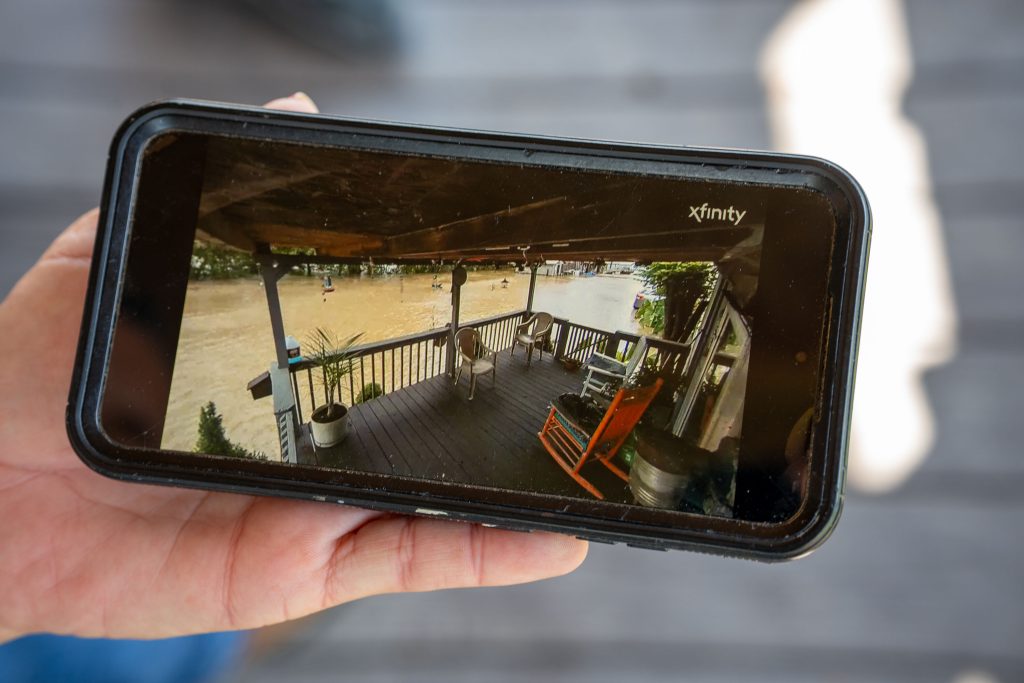
Driving down a winding, pothole-ridden road, Miller visits another client, Amanda Forrester, who lives on a small plot of land along the Pigeon River. Her husband’s family owns the property, which also houses several other family members. Before the storm, her front porch, facing the river, was her favorite place.
Now, being there is too stressful. She won’t even sleep at her home at night. Instead, she’ll stay at the house during the day, and every evening, she goes to stay at her sister’s house on her family’s land, away from the river.
“I don’t stay here,” Forrester says. “It got to where I was having to literally get up in the middle of the night, in my sleep, and leave because of the nightmares.”
Miller is helping Forrester with an application for a home from God’s Pit Crew, a faith-based nonprofit based in Danville, Virginia. The nonprofit aims to build over 30 homes in communities impacted by Helene.
Forrester’s trailer suffered significant damage, but she wants to build a new home on her family’s property, where she currently sleeps, not her husband’s family’s riverfront land.
“I grew up out there,” Forrester says. Her grandmother gifted Forrester and her two sisters three-acre lots when they graduated from high school. Later, they received the whole property.
“It’s ours — nobody can take it away from us,” Forrest continues. “I’d given it to my niece because I didn’t ever think I’d move up there. And then, after the flood, she gave it back to my name.”
In the meantime, she’s trying to find peace and beauty where she can. She even planted succulents in a piece of hollowed-out wood that washed up after the storm.
“It’s nice to have people on your side,” Forrester says about Miller and others who are helping her navigate a challenging time. “It’s a true blessing.”

At the end of the day
The rest of Miller’s day is spent visiting with other clients: advocating for an older, veteran homeowner who is dealing with difficulties around flood insurance regulations; handing out flyers about a riverbank restoration project; talking with her new next-door neighbor and long-time friend, John McPherson.
McPherson had just purchased his home in Hartford, Tennessee, a few months before Hurricane Helene flooded it and the entire town. He called up Miller, who was able to coordinate the demolition of McPherson’s house and connect him with the Appalachia Service Project.
“I was in a bad, dark place and just feeling like, ‘Oh, there’s too much to do. I’ll never get caught up. I’ll never get this fixed,’” McPherson says. “And then Chrissy showed up.”
Related Articles
Latest News


Leave a comment
Your email address will not be published. Required fields are marked *
Leave a Comment